
Repair the original module
For a confirmed, repairable internal electronic fault. The scope identifies unit repair, removal/refitting and verification. Hydraulic damage or additional setup can change the estimate.
ABS or stability-control warning? Our independent VW workshop in Al Quoz 4 checks the module, pump, wheel-speed signals and electrical supply before recommending a repair. Get the findings, compatible repair or replacement choices and a written quote before work begins.
Red brake warning or a changed pedal? Stop safely and arrange assistance.

A warning light can lead to a sensor repair, an electronic repair or a complete hydraulic assembly. These indicative budgets help you compare the work after the fault is identified.
For a confirmed, repairable internal electronic fault. The scope identifies unit repair, removal/refitting and verification. Hydraulic damage or additional setup can change the estimate.
Matched replacement unit, fitting and the required completion work. Part condition and specification matter; some new genuine assemblies exceed this guide.
A standard compatible sensor and fitting guide when that sensor is confirmed faulty. Bearing/encoder, wiring and difficult extraction are separate findings.
Send your VW model, year and the warning message. A scan report helps if available; you do not need to diagnose the module before contacting us.
Call for an ABS repair quoteThe message, warning colour and actual braking behaviour determine the next step. A normal-feeling pedal does not confirm that ABS or stability assistance is working.
Ordinary braking may remain, while ABS and electronic stability functions may not operate. Follow the vehicle's handbook and arrange prompt assessment. Do not assume an amber warning proves the car is safe to drive in every condition.
A red warning remaining with the parking brake released, low fluid, leakage, a soft/sinking pedal or reduced braking needs urgent attention. Stop safely and arrange assistance or recovery instead of continuing to the workshop.
Pulsation during genuine ABS intervention can be normal. Unexpected activation during gentle, low-speed braking needs investigation of wheel-speed signals and the brake system. Grinding, pulling or vibration can also involve mechanical brake parts.
For pad, disc, caliper or hydraulic brake complaints, see our Volkswagen brake repair service. A mechanical braking problem still needs attention even when no ABS fault code is stored.
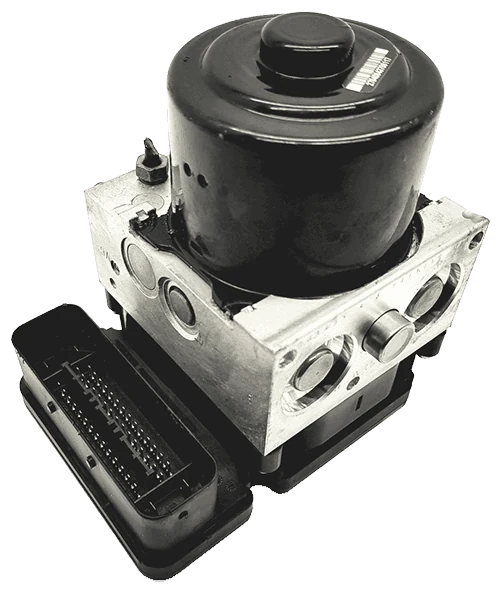
“ABS module” is often used for the whole assembly, although its parts do different jobs. Identifying the failed section helps avoid paying for components that remain serviceable.
We start with the exact warning and fault entries, then test the circuits and signals that support the repair decision. A generic engine-only scan can miss important brake-electronics information.
Resolve a supply or wiring fault before purchasing another controller.
A damaged encoder can leave a warning after a new sensor is fitted.
Separate a signal or setup problem from an internal hydraulic defect.
A warning reset cannot correct a fluid leak or a binding brake.

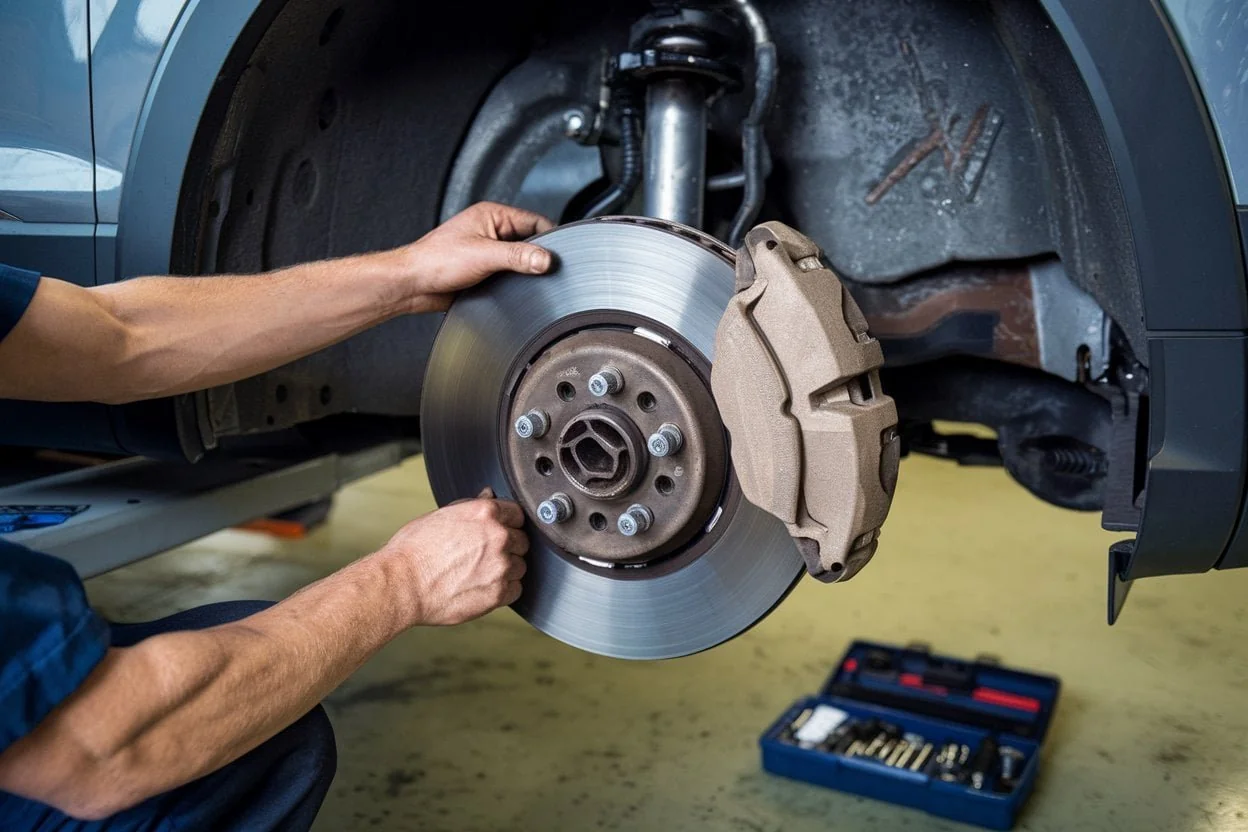
The number, description, fault status and vehicle specification belong together. Save the original scan when possible, especially before a unit is disconnected or replacement coding is attempted.
The choice depends on the confirmed defect, unit condition and available parts. Repair is useful when it can address the fault and be verified; replacement is appropriate when the original cannot be restored reliably.
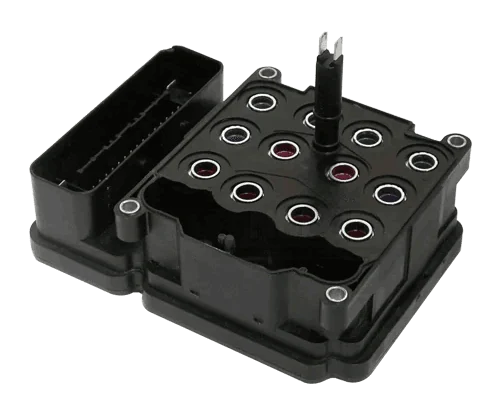
It can help assess a unit's repairable condition. It does not prove that the car's wheel signals, wiring, hydraulics or installation are correct. Final checks must consider the complete vehicle.
Golf, Polo, Jetta, Passat, Tiguan, Touareg and Transporter brake systems vary by generation and equipment. Bosch and ATE/Continental assemblies, including different MK60-family units, are not interchangeable solely because they fit the bracket.
Hybrid and fully electric Volkswagen models also need the correct brake-system procedure. Regenerative braking and different brake-control equipment do not remove the need for hydraulic safety and compatibility checks.
The written quote should distinguish a repaired original, a new part, a remanufactured exchange unit and a used assembly. Identify any exchange-core charge, required return of the original and applicable parts/labour warranty conditions before approval.
A fitted unit is only part of the repair. The work needed to complete it depends on what was replaced and whether the hydraulic circuit was opened.
Read the original identification and coding where accessible. Select a compatible repair or replacement and follow the applicable installation requirements.
If lines or the hydraulic unit were opened, use the specified fluid and bleeding sequence, including diagnostic pump/valve operation where required. Inspect for leakage and verify pedal condition.
Carry out required coding and basic settings. Steering-angle, brake-pressure and other stability-sensor procedures vary; a repaired original and a replacement assembly do not always need identical work.
Review relevant faults, wheel-speed and input data, braking behaviour and warning status. Complete the applicable controlled checks and road test only when the vehicle is safe.
Clearing warning lights is not the acceptance test. The confirmed fault, required setup and relevant hydraulic or signal checks must support the result. A normal diagnostic report does not replace a mechanical brake inspection.
Tell us the model, year, warning message and whether the pedal or braking has changed. A safe dashboard photo or existing scan is helpful if available.
We explain the likely test path and findings, then quote the repair and parts route. Further investigation is agreed separately if the fault is intermittent or the unit needs specialist assessment.
Removal access, parts supply, repairability, configuration and repeat testing determine the timeline. For an unsafe vehicle, provide location and access details so suitable transport and charges can be arranged.
The quote or invoice records applicable parts/labour coverage and exclusions. A repaired electronic unit, replacement assembly and unrelated sensor fault may have different warranty terms.
Clear answers before you approve a module or pump.
Indicative budgets are AED 1,200 to 2,500 for a repairable electronic module and AED 2,500 to 6,000+ for a compatible replacement assembly. A confirmed wheel-speed sensor repair has a separate AED 400 to 800 each guide. Diagnosis, unit condition, fitting, setup and hydraulic work determine the complete written quote and VAT treatment.
No. Wheel-speed sensors, encoder rings, wiring, power supply, brake inputs or required basic settings can produce warnings. The exact fault entries and measured signals help distinguish those problems from an internal controller, pump or hydraulic-unit defect.
With an amber ABS fault, ordinary braking may remain but anti-lock and stability functions may not operate. Follow your handbook and arrange assessment. Stop safely and seek assistance if a red brake warning remains, braking changes, fluid leaks or the pedal becomes soft or sinks.
Some confirmed internal faults are repairable, depending on the assembly and damage. A supported pump or hydraulic repair may also be possible on certain units. Assessment establishes the suitable route; a successful electronic repair cannot cure an unrelated sensor, wiring or hydraulic fault.
Not necessarily. Hardware/software identity, part-number suffix, vehicle equipment and coding requirements affect compatibility. The supplied unit's condition, configuration route and warranty must be assessed before fitting; physical fit alone is insufficient.
A replacement often needs vehicle-specific coding and basic settings. An original repaired unit can have a different setup requirement. Required steering-angle, pressure-sensor or other procedures depend on the brake system and work performed, and are identified in the repair plan.
The hydraulic work determines that. If the circuit or hydraulic unit was opened, the specified bleeding procedure and leak/pedal checks are required. Some electronics-only work may leave the fluid circuit sealed. Diagnosis and the fitted assembly establish the correct procedure.
ABS and ESC/ESP share wheel-speed and brake-control information. A common signal, supply or module fault can affect several functions. Multiple lights do not automatically mean several controllers have failed; investigate the shared cause and the exact fault entries.
Contact Volkswagen Repair Dubai for a clear assessment, suitable repair choices and a written quote. Mention any red warning or change in braking first.
Al Quoz 4, Dubai · Monday to Saturday, 9 am to 7 pm