
Radiator replacement
Typical replacement unit, removal and refitting, specified coolant, air bleeding and post-repair checks.
Leaking radiator, damaged cooling fins or repeated overheating? Our independent VW workshop in Al Quoz 4 checks the cause, compares a targeted repair with replacement and sends you a written quote before work starts.
Typical fitted replacement: AED 1,200–3,500.
Indicative budget with radiator, fitting, coolant refill and testing. See scope below.
Red coolant warning or steam? Stop safely, switch off and call before travelling.
Know what the quote covers
These are indicative Dubai repair budgets, rather than fixed offers. The failed component and your VW’s cooling-pack specification determine the right option.
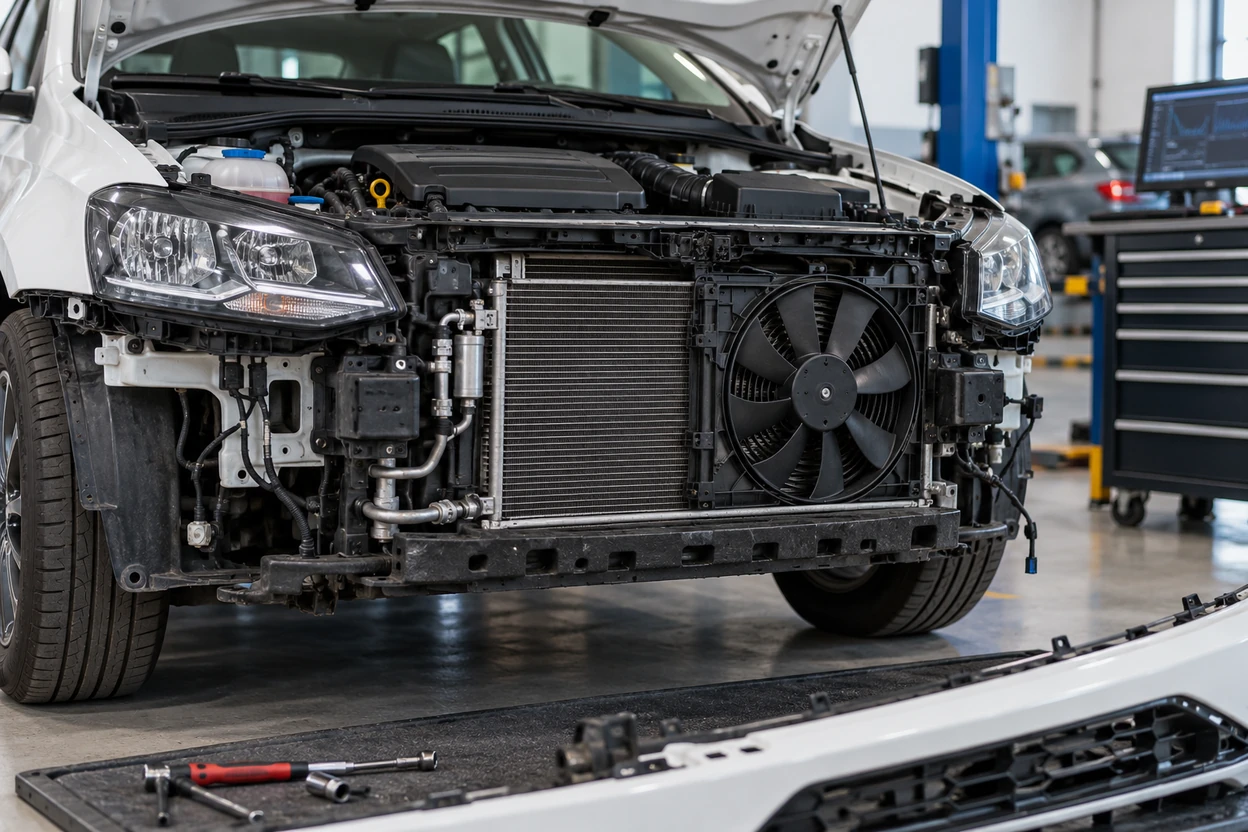
Typical replacement unit, removal and refitting, specified coolant, air bleeding and post-repair checks.
Typical accessible hose or seal replacement, fitting, appropriate refill and leak check; radiator retained if sound.
Touareg and other versions with extra heat exchangers, substantial front-end work or additional damage need an application-specific estimate.
A price for your Volkswagen. Tell us where coolant is escaping and whether the engine has overheated. We list the proposed parts before you authorise replacement.
Keep sound parts where practical
The decision starts with the leak location and the condition of the radiator, rather than replacing the whole cooling system on suspicion.
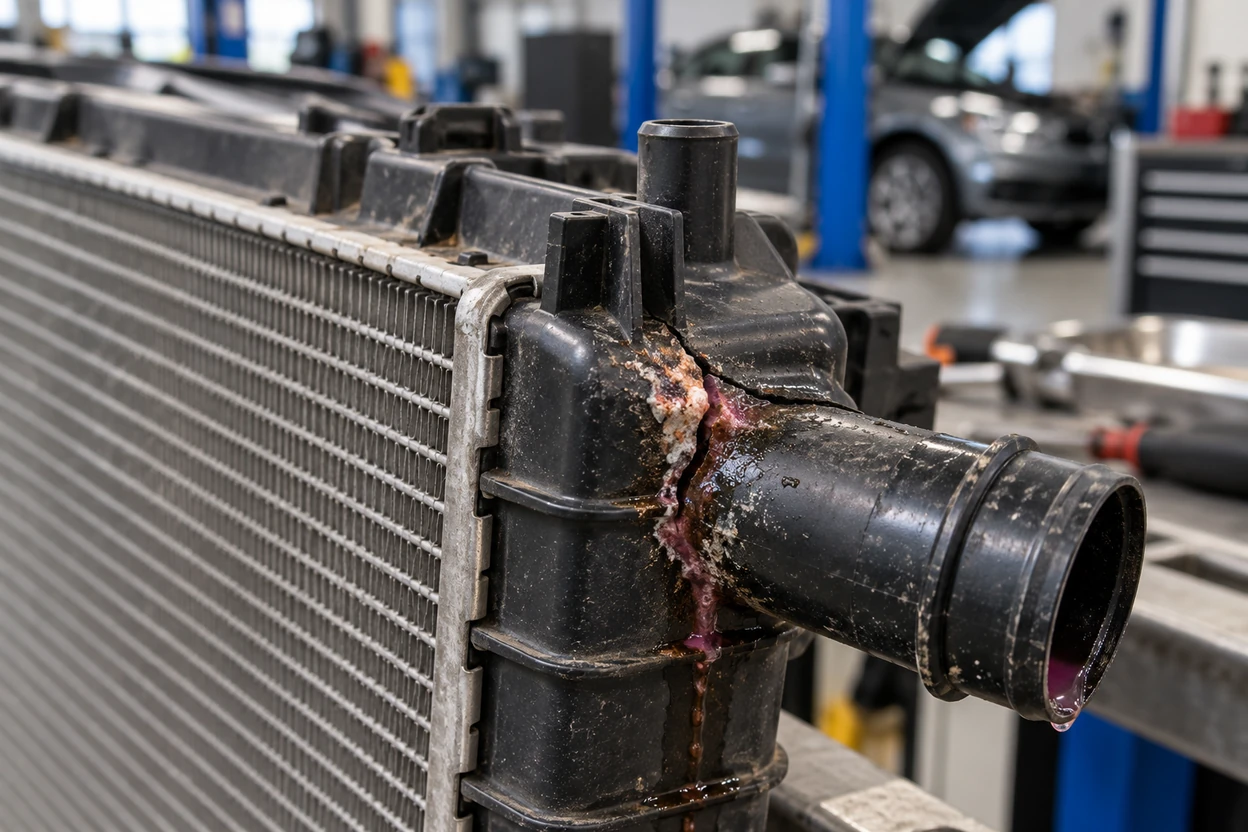
A worn upper or lower hose, quick-connect O-ring, retaining clip or serviceable drain plug may be the source. Replace the failed serviceable part and pressure-test the sound radiator.
A split plastic end tank, brittle hose neck, leaking crimp seam, corroded aluminium core or accident damage usually makes a complete unit the more dependable choice.
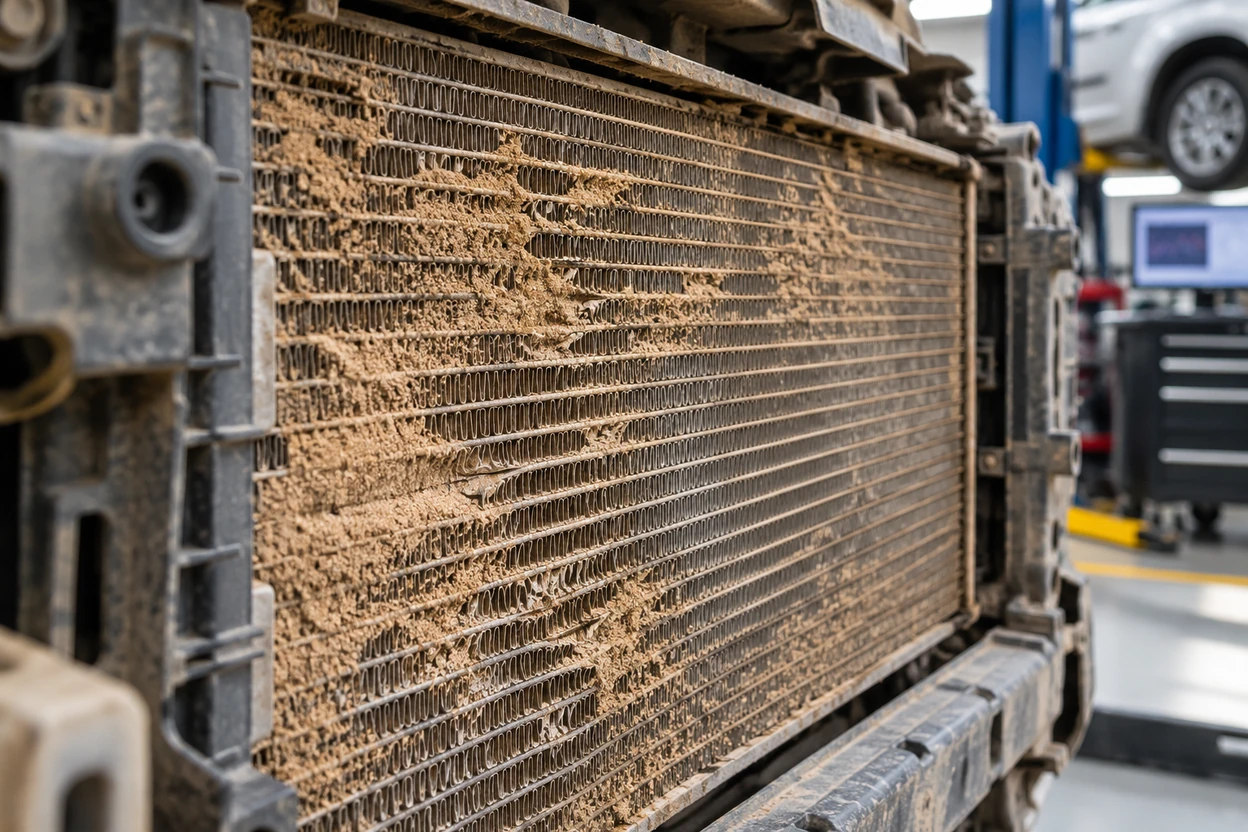
External sand and debris can obstruct airflow through the fins. Cleaning a sound cooling pack may help; it cannot restore a leaking core or reverse major corrosion.
Modern aluminium radiators are often unsuitable for a durable welded repair. Stop-leak residue can obstruct narrow passages, so sealing fluid is not a substitute for assessing the damage.
Red coolant warning, steam or a rapidly rising temperature? Stop safely and switch off. Never open a hot coolant reservoir. Continued overheating can damage the engine; call before arranging a journey.
Call for the next stepSee Volkswagen’s cooling warning guidance and your model’s handbook.
Find the cause before ordering parts
Coolant loss, a sweet smell, dried residue or a wet undertray help direct the inspection. They do not prove that the radiator has failed. We connect these clues with cooling-system tests.
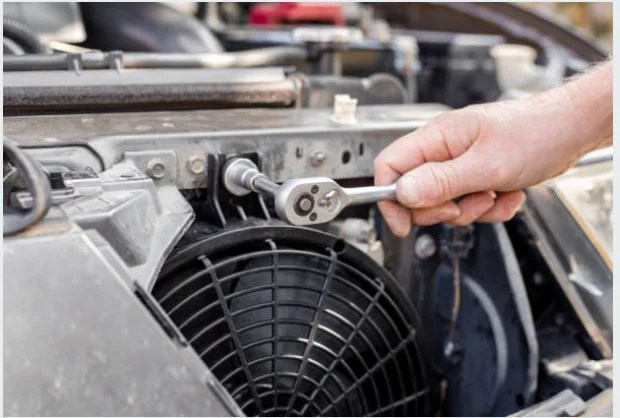
Inspect tank seams, core tubes, hose joints and drain fittings. Test the reservoir cap separately when indicated. A pressure test at the vehicle’s specified limit helps locate leakage; a pressure drop alone does not name the failed part.
Check fins and debris trapped between heat exchangers. Where indicated, assess fan operation, control signals, fuses and wiring. Overheating mainly at idle makes airflow important, but does not prove a fan failure.
Compare coolant temperature data and the radiator’s temperature pattern with thermostat operation and pump circulation. Uneven cooling may indicate restricted flow, trapped air or another fault requiring investigation.
An undertray may retain coolant and a hot-only leak can evaporate. If external checks do not explain it, investigate internal leakage or contamination before fitting a radiator.
Find the leak before the part
A wet radiator does not always mean the radiator has failed. Coolant can run from a hose, the water pump or a housing above it. Each test answers a different question, so the right one is chosen for the symptom.
Cleaning the area and checking again shows fresh coolant, dried residue on tank seams and wet hose joints.
Pressurising the cold system reproduces leaks that only appear when the engine is hot and the system is under pressure.
A cap that does not hold its rated pressure can let coolant escape or boil, even when the radiator itself is sound.
A dye added to the coolant glows under UV light, showing where a slow or intermittent leak starts.
Comparing temperatures across the radiator and with live data shows cold areas from internal blockage or poor flow.
Where coolant is lost with no external leak or bubbles appear, this test checks for combustion gas entering the cooling system.
Coolant at a tank seam, crimp joint or core, a split plastic end tank, or cold areas across the core.
Coolant at a hose, clip or quick connector, at the water pump, or loss with no external leak at all.
For overheating warnings and when to stop driving, see our guide to VW engine overheating. Hose and connector leaks are covered on our coolant leak repair page.
The right unit, not just the right model name
A Golf, Jetta or Tiguan can use different radiators across engines and generations. Model year alone does not establish compatibility.
A VW-branded replacement matched to the vehicle’s parts catalogue. The quote identifies the unit and any separately supplied seals or fittings.
Compare an identified manufacturer and exact application where available. Supplier branding alone does not prove that two radiators have identical construction or coverage.
Prior corrosion, hidden seam damage and ageing plastic can be difficult to judge. Compare those risks with a new unit before choosing a used part solely on purchase price.
Fluid and airflow both matter
Match the VW approval and current replacement guidance, including G13 or G12evo where applicable. Colour is not a specification. Tell us if plain water, mixed fluid or a leak-sealing additive has been added.
Refill and bleed using the procedure for the engine, including vacuum filling or diagnostic functions where required. An air pocket can interrupt circulation and cause repeat overheating.
An external fin clean addresses airflow. A coolant flush concerns fluid and internal contamination. Neither replaces a cracked radiator, and severe oil contamination needs its source repaired first.
From assessment to handover
You receive a written parts-and-labour quote before work. Old parts are returned on request.
Model, year and what you have noticed are enough to start. A photo of the warning or leak can help. We may request the VIN to identify the correct radiator.
Al Quoz 4, Dubai
Monday–Saturday, 9am–7pm
Locate the fault, identify the radiator and agree any additional investigation. Compare the relevant parts choices, warranty and expected collection time.
Drain the coolant and gain access as required. Fit the specified unit with the agreed seals and mounts, checking adjacent hoses, fan shroud and condenser for damage.
Fill and bleed correctly, check for leaks and verify temperature stability and fan operation. Complete the appropriate running or road checks and explain the findings at handover.
Repair choices, coolant, cost and arranging the right work.
Allow an indicative AED 1,200–3,500 for a typical fitted radiator replacement, including the replacement unit, removal and installation, engine-matched coolant refill, bleeding and final checks. Model, part specification and front-end access affect the total. Some compact models cost less; larger or complex cooling packs can cost more. Assessment, additional faulty parts and VAT treatment are itemised in the written quote.
A leaking detachable hose, connector seal or serviceable drain fitting can often be replaced while retaining a sound radiator. A cracked plastic tank, brittle outlet, leaking aluminium core or multiple corroded areas usually favours a complete replacement. We compare the location and extent of damage with the cost and reliability of the proposed work before you approve it.
No. The engine radiator contains coolant, while the AC condenser contains refrigerant. They can sit close together in the front cooling pack, alongside an intercooler on some versions. Identifying the leaking circuit prevents the wrong heat exchanger being replaced. An AC recharge does not repair engine coolant loss.
A coolant flush can address unsuitable fluid or some deposits after the cause is assessed; it cannot rebuild a cracked tank or leaking core. Sealant can restrict narrow radiator and heater passages. Tell us about any additive already used so the quotation can account for cleaning and possible contamination elsewhere.
The applicable VW approval and current replacement guidance determine the fluid, rather than its pink, purple or other colour. G13 and G12evo are not labels to choose between without checking the vehicle. We match the coolant specification, quantity and dilution requirements to the engine and fill procedure.
Only when testing identifies a fault or there is a clear application-specific reason for combined work. A fan-control problem can cause overheating in traffic, and a thermostat or water-pump fault can restrict circulation even with a new radiator. These components are assessed separately and any additional replacement is listed for approval.
The collection estimate depends on parts availability, bumper or front-carrier access, coolant filling and temperature checks. We give you the expected timing with the assessed repair. The written quote states the applicable parts and repair warranty, including its conditions; it does not assume one duration for every radiator or parts choice.
With a red coolant warning, rising temperature, steam or rapid coolant loss, stop safely and switch off the engine. Never remove a hot expansion-tank cap. Call before travelling and arrange assistance when needed. A small leak or a gauge that later returns to normal does not establish that the journey is safe.
Send your model, year and symptoms. We identify the likely assessment, match the parts and quote before approved work. If the engine is overheating, call before travelling.