
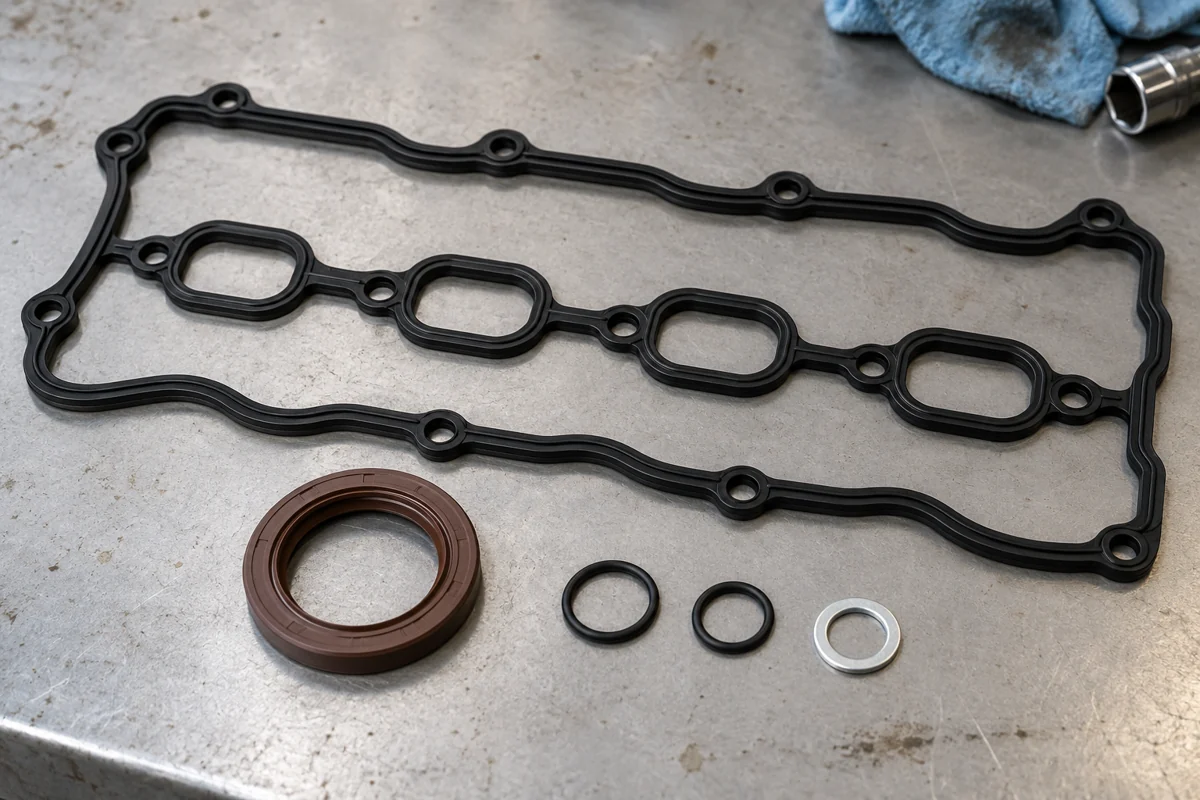
Valve-cover gasket
Usually the lower-cost option when the cover and sealing surfaces remain serviceable. A complete cover or integrated breather costs more.
Oil spots, a burning smell or repeated top-ups? Our independent VW workshop in Al Quoz 4 traces external engine oil leaks and quotes the repair before replacing parts. We check the source, the sealing surfaces and any related crankcase-ventilation fault.
Red oil-pressure warning? Stop safely, switch off the engine and arrange assistance.
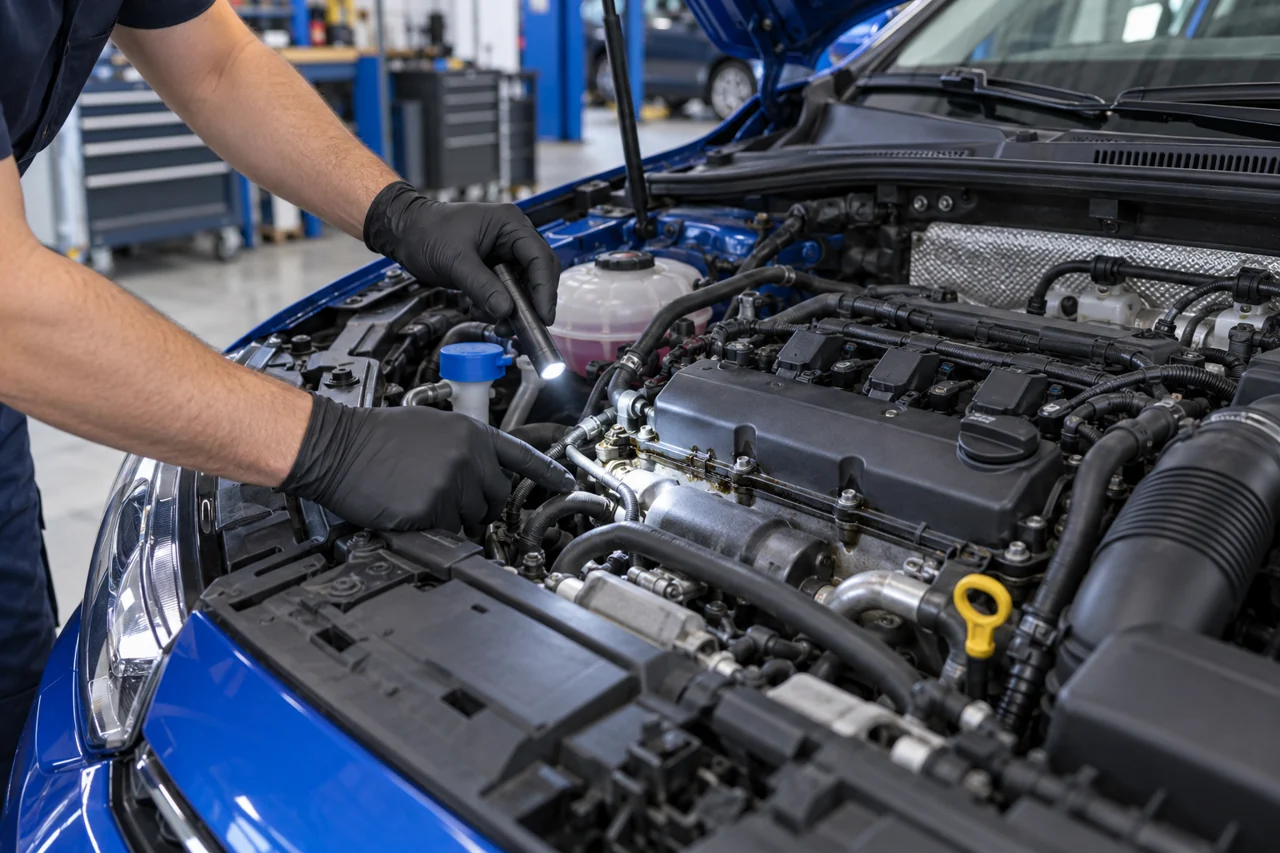
A small seal can require considerable access work. Use these Dubai planning ranges to compare likely repairs, then get a quote for the confirmed source and your engine.
Usually the lower-cost option when the cover and sealing surfaces remain serviceable. A complete cover or integrated breather costs more.
Seal replacement on a suitable housing. Cracks, oil-cooler faults and difficult access change the scope.
Access, pan condition and the specified gasket or sealant determine the work. Pan replacement is a separate option.
Allow for the required dismantling and associated seals. Timing-system repairs are additional if findings justify them.
Labour is significant because the gearbox must be separated from the engine. Confirm the leak before this work.
Leak rate, warning messages and where the oil lands matter more than the size of one parking stain. If the vehicle is unsafe to run, arrange recovery before workshop assessment.
Stop as soon as it is safe, switch off and seek assistance. A normal oil level does not prove that oil pressure is adequate. Do not keep the engine running to see whether the warning clears.
Follow the vehicle's message and handbook. Check the level safely and use the correct oil if topping up is required. A flashing level warning may involve the sensor; it still needs investigation.
Heavy loss or oil reaching hot components needs urgent attention. Tell us about smoke, belt contamination or oil dropping quickly between checks. A slow seep still needs assessment; topping up does not repair it.
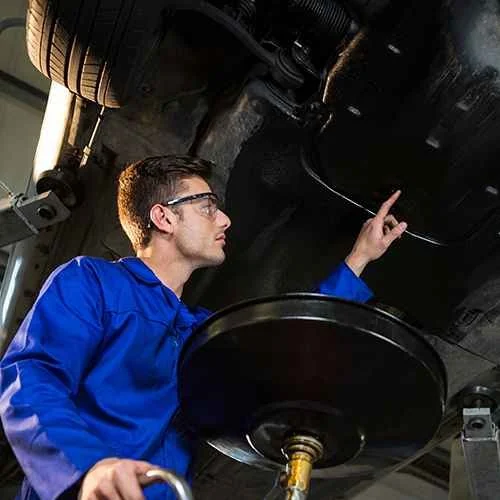
Oil runs down the engine and spreads across the undertray while driving. A drip near the gearbox or sump may have started higher up. We trace fresh leakage rather than choosing a part from the puddle position.
Check which fluid is being lost, the level, recent servicing and when the leak appears. Colour alone cannot reliably separate engine oil from transmission or other lubricants.
Inspect above and below, remove covers or the undertray as needed and clean the affected area. Controlled running and suitable UV dye can help reveal an intermittent source where appropriate.
Assess the seal, mating surface, housing and relevant breather operation. Fault codes can guide related investigation, but a scan alone cannot locate every external oil leak.
Where you see oil and what you notice while driving give useful first clues. They narrow the search, but the source is confirmed by tracing fresh oil, because oil runs back and down while the car moves.
Drips near the front of the engine bay can come from the valve cover, the oil filter housing, the timing cover or the front crankshaft seal, often running down from higher up.
Oil under the centre of the engine can come from the sump joint, the drain plug or the oil level sensor seal, or it can be oil that has run down from above.
Oil at this joint can point to the rear main seal, but it can also be gearbox fluid or oil from higher on the engine. It is confirmed before any gearbox removal.
Oil reaching a hot exhaust or turbo area, often from a valve cover, filter housing or oil feed connection.
When the smell appears and any smokeOil burning on hot parts. Heavy smoke needs urgent attention, so stop safely and switch off.
How much smoke and from whereOil in the spark plug wells can point to the valve cover gasket area and can upset the ignition coils.
Any engine light or shakingA slow seep that spreads across the undertray while driving. It still needs tracing to the source.
How often you top up the oilPossible oil consumption rather than an external leak, which needs different checks.
Oil added and distance drivenUsually AC condensate, which is normal after using the AC. An oily or coloured fluid should be identified.
A photo of the patchA photo of the patch under the car and of the engine area helps us plan the checks. If the engine also misfires, see our VW engine misfire guide, and for oil grade questions see the risks of using the wrong oil.
The installed engine determines the leak points and repair method. These checks cover the source, its surrounding parts and what changes the repair decision.
Oil around the cylinder head or spark-plug wells can involve the cover gasket, cover damage or an integrated ventilation assembly. Check the cover's condition before fitting another gasket; not every VW has the same serviceable arrangement.
Inspect the filter-cap O-ring, housing joint, cooler seals and the housing itself. Tightening a cap cannot cure a cracked housing. Oil in coolant requires separate checks; it does not establish a failed head gasket by itself.
Check the drain-plug seal and threads, pan damage, joint and oil-level-sensor seal where fitted. Some pans use formed-in-place sealant rather than a separate gasket. Our oil-pan gasket and resealing service covers that repair in more detail.
Confirm which joint is active before dismantling. Oil near the timing area can come from a cover joint or shaft seal. Inspect any affected belts and related components; resealing a cover does not automatically require replacing the timing system.
Trace oil from the pump seal, pump body or a leak above it. Identify the fitted pump and fluid first; tandem-pump fuel leakage needs different work.
Reseal a serviceable joint where permitted, or replace a damaged or non-serviceable pump. The engine and pump determine the quote for parts, access, fluids and the final leak check.
Inspect pipe unions, sealing washers, return connections and the surrounding engine. A restricted drain or abnormal crankcase pressure can affect turbo oil control. See turbo oil-leak diagnosis before assuming the complete turbocharger needs replacement.
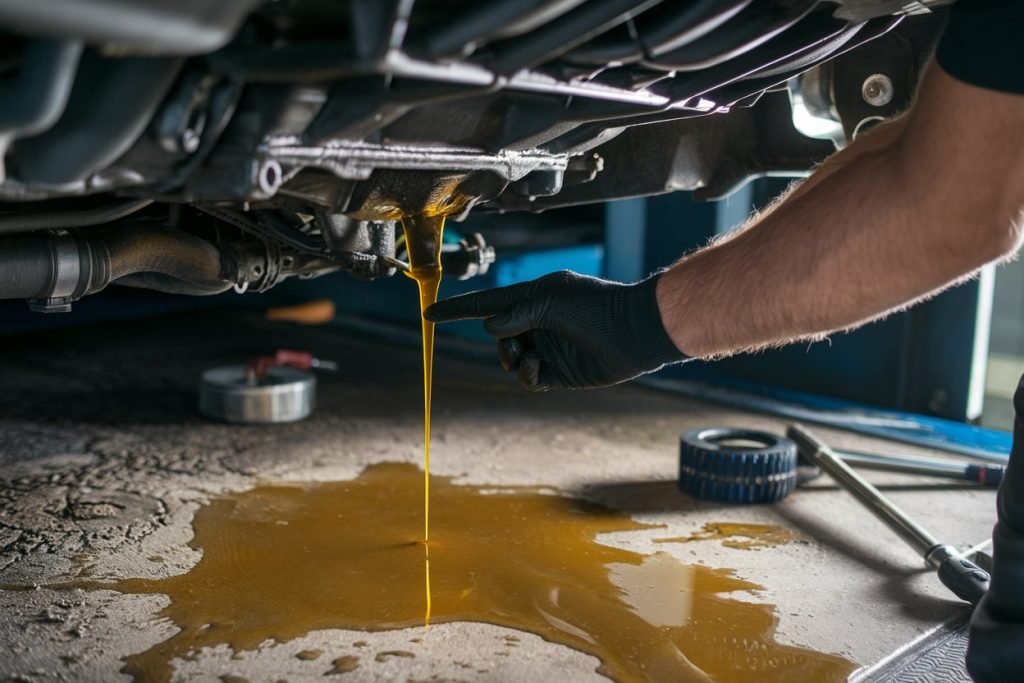
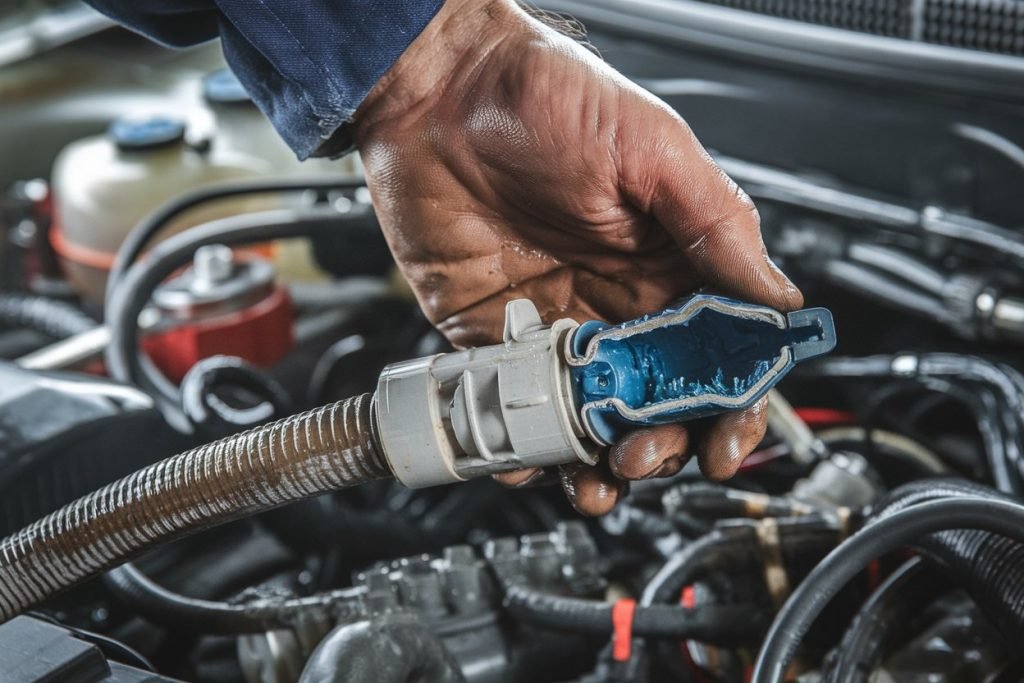
Oil near the turbo does not automatically mean the turbocharger has failed. We distinguish an external pipe or joint leak from oil entering the intake or exhaust, then quote the confirmed repair.
Pressure warning, substantial loss or oil smoking on hot parts? Stop safely, switch off and arrange assistance. Do not keep running the engine to demonstrate the leak.
A confirmed sump-joint leak needs the sealing method specified for that engine. Some VW applications use a separate gasket; others use formed-in-place sealant. We identify the pan, joint and engine before choosing the repair.
The rear main seal surrounds the crankshaft at the engine-to-gearbox connection. Oil at this joint can also arrive from higher on the engine, so the source needs confirmation before gearbox removal is authorised.
Use AED 2,000–4,000+ as a guide. Ask for a written quote identifying gearbox access, the seal or flange, any required fasteners and fluids, and the final leak check. The fitted engine and gearbox determine the work.
Call for a seal repair quoteChoose the smallest complete repair supported by the findings. Replacing only a gasket is poor value when the cover is cracked; replacing the whole assembly is unnecessary when a serviceable seal has failed.
A suitable gasket, O-ring, washer or shaft seal can resolve a confirmed leak when the surrounding parts are sound. Correct surface preparation, installation and tightening are essential.
A warped cover, cracked filter housing, damaged pan or non-serviceable pump may require replacement. The quote identifies why a seal alone would be insufficient.
Address an applicable ventilation fault, damaged thread, restricted return or installation problem. Additional work should solve an established cause, rather than being bundled into every leak repair.
Golf, Polo, Jetta, Passat, CC, Tiguan, Touareg, Beetle and Transporter engines vary by year and market. VIN, engine code and the installed assembly help select the correct parts; a TSI, TDI, GTI or R badge alone is insufficient.
Hybrids still have a combustion engine to check. A fully electric ID model has no combustion-engine oil system; fluid beneath it needs identification within its actual cooling or driveline systems.
Tell us your VW model, where you see the oil and any warning message. A photo or recent service invoice helps if available; you do not need a diagnosis before contacting us.
Receive the findings and written estimate before repair. The proposed scope identifies access work, parts, fluids and testing, with any further investigation agreed separately.
Use the specified installation method, fasteners and sealant where required. Refill oil to the correct level and VW approval for the engine; one viscosity does not suit every Volkswagen.
Clean residual oil and recheck the affected area under appropriate running conditions. Confirm fluid levels and inspect for fresh leakage; undertake a road test when safe and appropriate.
Access, parts supply, sealant requirements and repeat checks affect turnaround. The quote sets the expected timing and applicable repair warranty, including its covered parts and labour.
A service is not the same as a leak repair. An oil change may be required by the work, but it does not reseal a failed joint. Mention recent servicing or previous leak repairs so we can distinguish fresh loss from old residue.
Clear answers before you authorise a repair.
Indicative budgets include AED 600 to 1,200 for a serviceable valve-cover gasket repair, AED 800 to 2,000 for a sump reseal and AED 2,000 to 4,000+ for a rear main seal. Your engine, access and complete fitted scope determine the written quote. Diagnosis, recovery and VAT treatment are identified separately.
A small stain does not establish that driving is safe. Check the warning message, oil level and rate of loss, and arrange assessment. Stop safely and switch off for a red oil-pressure warning, knocking, substantial loss or smoke from oil reaching hot components. Arrange recovery when needed.
No. Engine oil can run down from a cover, pump or housing above the gearbox joint. The fluid could also belong to the transmission. Cleaning and tracing the source helps avoid unnecessary gearbox removal or replacement of the wrong seal.
Possible reasons include another nearby leak, a damaged or warped mating part, installation problems or abnormal crankcase ventilation. Residual oil can also keep dripping from an undertray. Reinspect for fresh leakage and establish the cause before repeating the repair.
No. An external leak can reach hot surfaces and produce a smell or smoke in the engine bay. Oil entering the combustion process may produce blue exhaust smoke and rising consumption. These symptoms can overlap, so the source and oil-loss history need assessment.
The required fluid work depends on the repair. A sump repair usually involves draining oil, while some upper-engine sealing work has a different scope. The estimate identifies oil, filter, coolant and quantities where required. Topping up alone does not fix an active leak.
Sometimes. A separately serviceable gasket can be suitable when the cover and sealing surfaces are sound. Cracks, warping or an integrated non-serviceable component can make a complete cover necessary. We explain which condition applies before you approve replacement.
Most Volkswagen valve cover gasket jobs fall within our AED 400 to 1,200 gasket repair guide. Typical signs are oil on top of the engine, oil in the spark-plug wells, a burning smell after driving or a misfire caused by oil on the ignition coils. On many TSI engines the crankcase ventilation is built into the cover, so a cracked cover or failed valve means replacing the cover rather than only the gasket. We confirm which applies before quoting.
No. Oil around the pump is an external fluid leak. Hissing or rough running can involve an intake-air leak and need separate diagnosis. Where the pump supplies the brake booster, an unusually hard pedal or reduced assistance needs urgent assessment; stop safely and arrange recovery. An oil stain alone does not confirm loss of brake vacuum.
Call 056 464 6081 or WhatsApp your model, symptom and any warning message. The workshop is in Al Quoz 4, Dubai, open Monday to Saturday, 9 am to 7 pm. If the car is unsafe to run, describe that first so the next step can be planned safely.
Bring the symptom to Volkswagen Repair Dubai. We explain the findings, suitable repair options and written price before work begins.
Al Quoz 4, Dubai · Monday to Saturday, 9 am to 7 pm