
Brake pads
AED 350 to 800Standard pad set, fitting and functional checks. Disc replacement and extra wear-sensor hardware are separate if needed.
Squealing, judder, pulling or a brake warning? Our independent workshop in Al Quoz 4 checks the cause and quotes the work your Volkswagen needs, from pads and discs to calipers, fluid and electronic faults.
Pad replacement guide AED 350 to 800 per axle.
Parts and fitting for standard applications. Vehicle-specific written quote before work.
Reduced braking or a red brake warning? Stop safely. Call before moving the car.
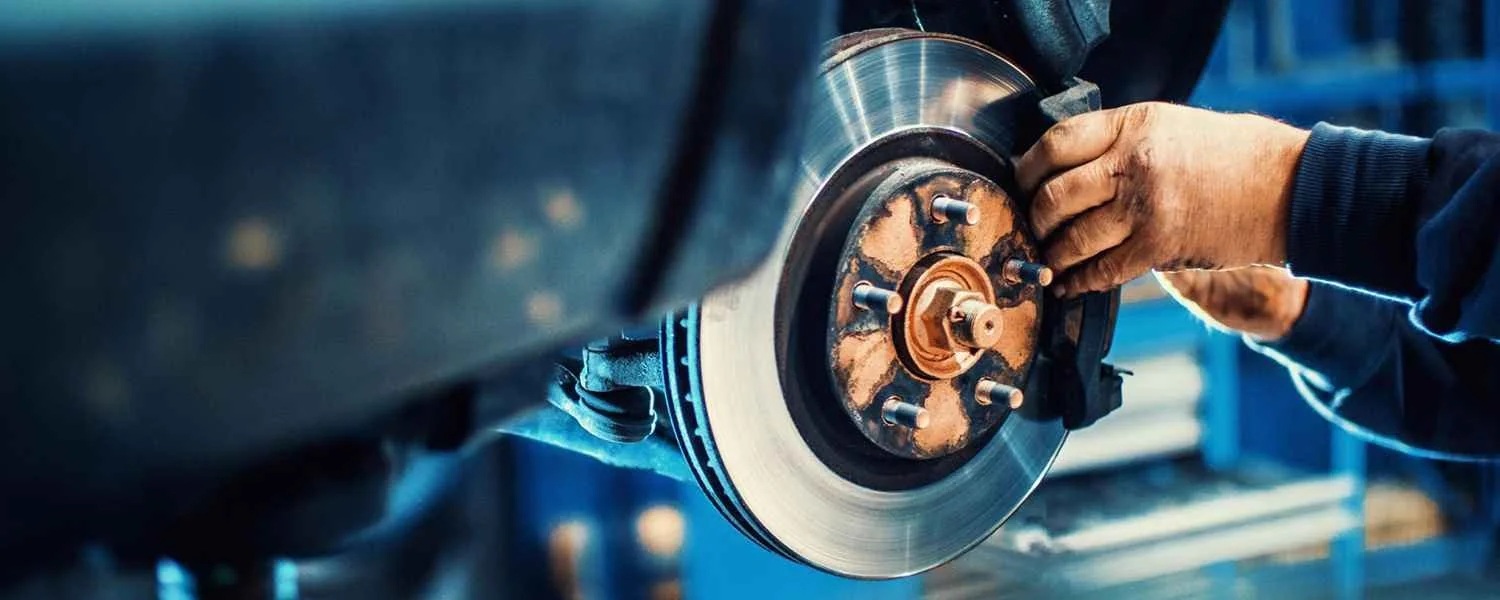
These are indicative Dubai budgets, not fixed workshop offers. The price depends on your brake size, parts choice and what inspection finds.
Standard pad set, fitting and functional checks. Disc replacement and extra wear-sensor hardware are separate if needed.
Conventional disc pair, matching pads, fitting and checks. Larger SUV or performance brakes can cost more.
Correct-specification fluid and routine replacement/bleeding. Leak repair or additional ABS bleeding is separate.
A red brake-system warning that remains after the parking brake is released needs immediate attention. Follow the dashboard message and your model’s manual.
A brake-lamp message concerns the exterior stop lights. It is different from a red brake-system warning or a pad-wear alert. Send the exact wording, affected side and whether the lamps stay on, flicker or fail to light, including any “two-stage” message.
Bulb, LED assembly, wiring and pedal-signal work have different costs. The confirmed repair and required testing receive a separate written quote; pad and disc package prices do not apply.
A noise, vibration or warning can come from different components. We assess the relevant system before recommending a repair.
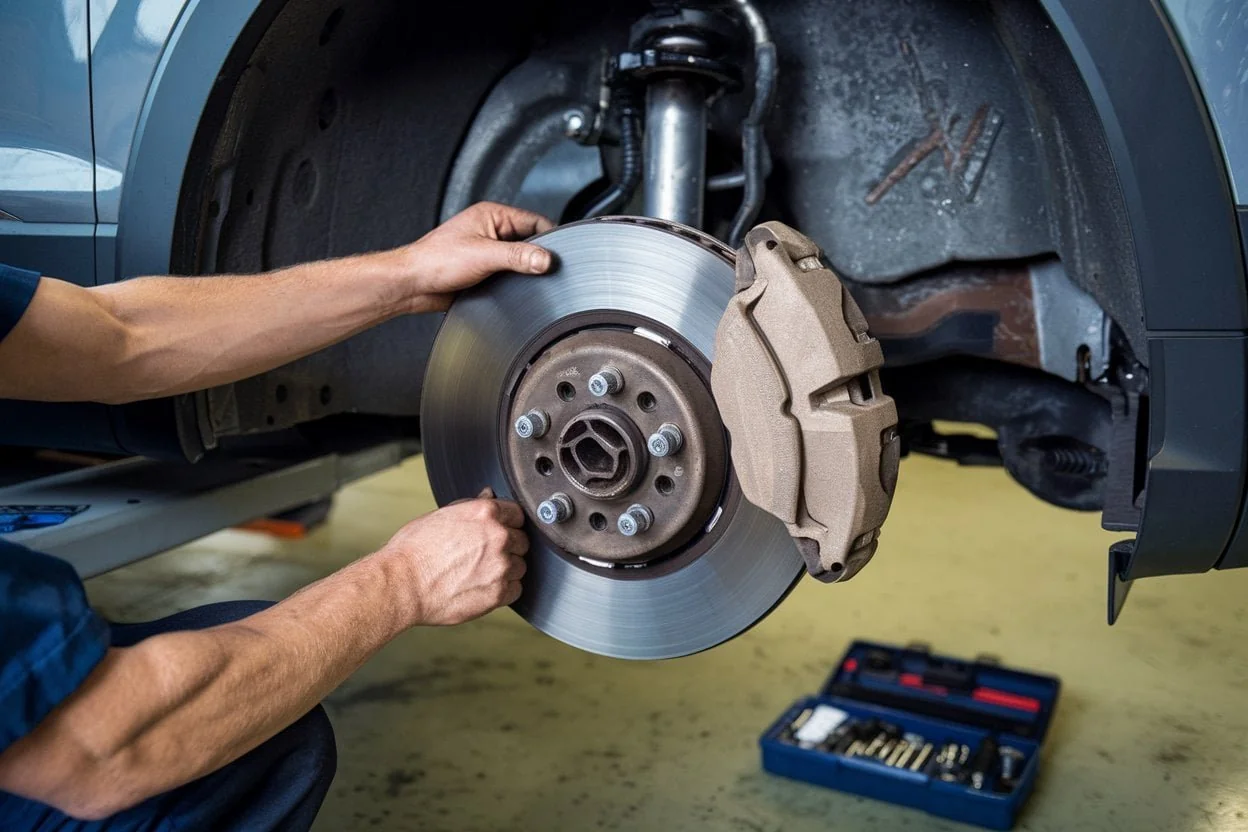
Pad thickness, uneven wear, disc (rotor) thickness and surface condition guide the decision. For judder, disc runout, thickness variation and hub condition may need measurement; “warped discs” should not be assumed from vibration alone.
A sticking slider or piston can create drag, pulling and uneven pad wear. We assess movement, seals and leakage before proposing caliper servicing, repair or replacement.
Hoses, pipes, connections, wheel cylinders where fitted, the master cylinder and brake booster are relevant to leaks and abnormal pedal feel. Tyre or suspension faults can also contribute to pulling and vibration.
Volkswagen-specific fault codes and live data help distinguish sensor, wiring and hydraulic-unit faults. Our ABS module and pump repair service explains the checks and repair options. Pad-wear sensors and the brake-light switch are separate circuits, not interchangeable diagnoses.
A caliper that does not release fully keeps the pads rubbing on the disc. It wears pads and discs early and can overheat the brake, so it is diagnosed rather than fixed by fitting new pads alone.
A collapsed flexible brake hose can also hold pressure on one caliper, so the hoses are checked too. If a dragging brake has overheated the discs, they are measured before deciding whether to keep them. Pad wear signs are explained in our VW brake pad guide.
Brake fluid transmits hydraulic pressure. Moisture absorption lowers its boiling point over time, so the service history and specified replacement interval matter even when the reservoir looks full.
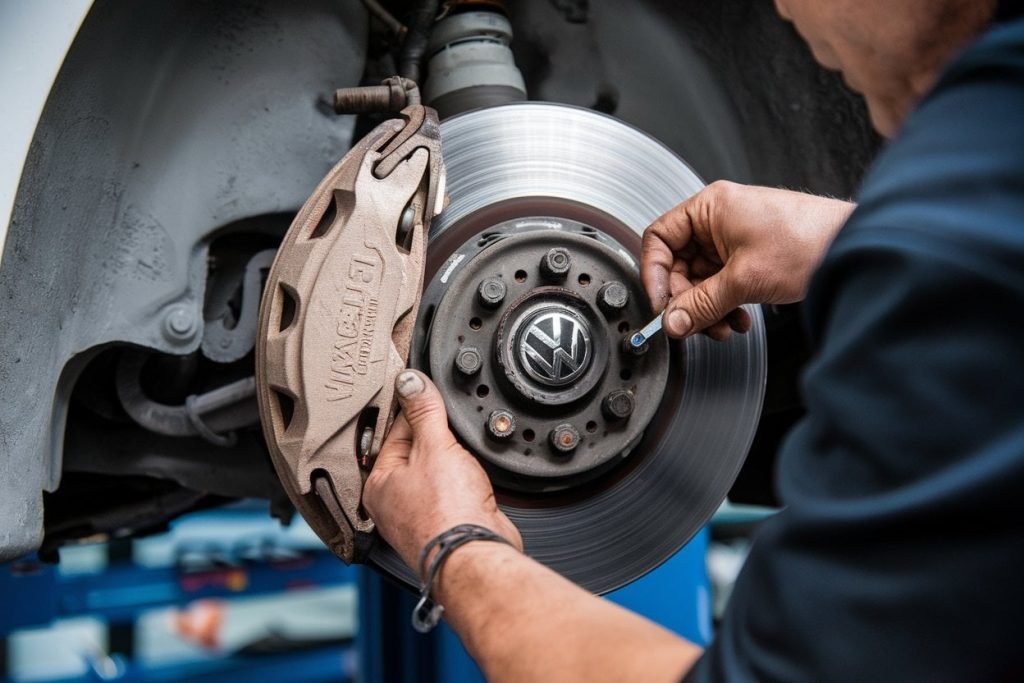
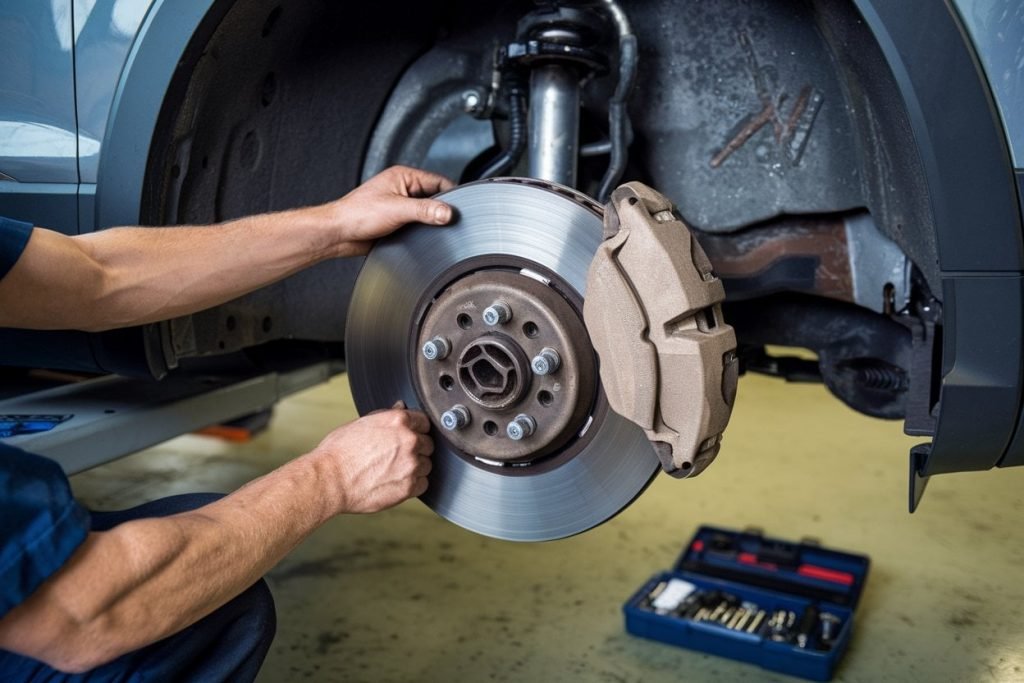
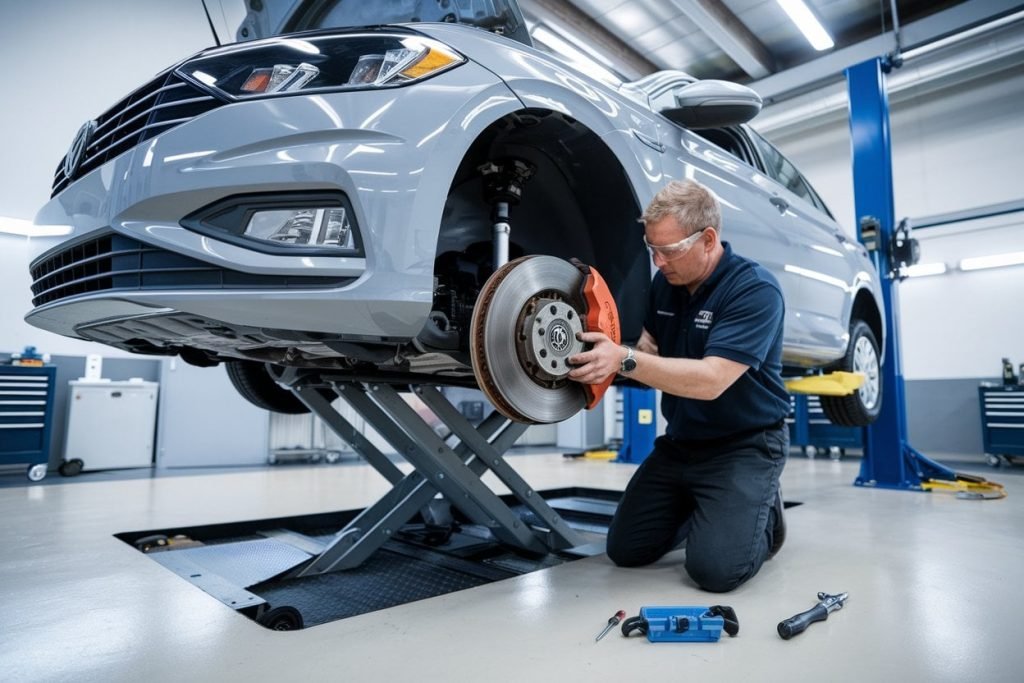
Volkswagen recommends changing the brake fluid of a new car first after three years, then every two years. Brake fluid absorbs moisture over time, which lowers its boiling point even when the reservoir looks full.
On a new Volkswagen, the first brake fluid change is due after three years.
After the first change, Volkswagen recommends replacing the fluid every two years.
The US standard sets at least 230 degrees C dry and 155 degrees C when the fluid has absorbed moisture.
The fluid slowly absorbs water from the air.
Wet fluid boils at a lower temperature.
Long descents and repeated stops heat the fluid.
Vapour bubbles can make the pedal soft.
The interval is time based, so it applies even to cars with low mileage. Our guide price for a routine brake fluid change is AED 200 to 400, using the fluid specification for your car. Sources: Volkswagen brake fluid guidance and the US federal brake fluid standard.
Model and year are a starting point. VIN and the factory brake specification, including PR equipment codes where applicable, help identify the correct components.
Polo, Golf/GTI/R, Jetta, Passat, Tiguan, Teramont and Touareg can use different brake packages. A performance trim or larger SUV may need a different budget from a standard hatchback.
ID. models and plug-in hybrids also need friction-brake checks despite regenerative braking. Some ID. applications use rear drums and shoes, so a rear-disc package is not appropriate for every vehicle.
Send your model, year and symptom first. We request VIN or brake-code details when needed to establish fitment.
A parking brake that drags, fails to hold or will not release needs assessment alongside the service brakes.
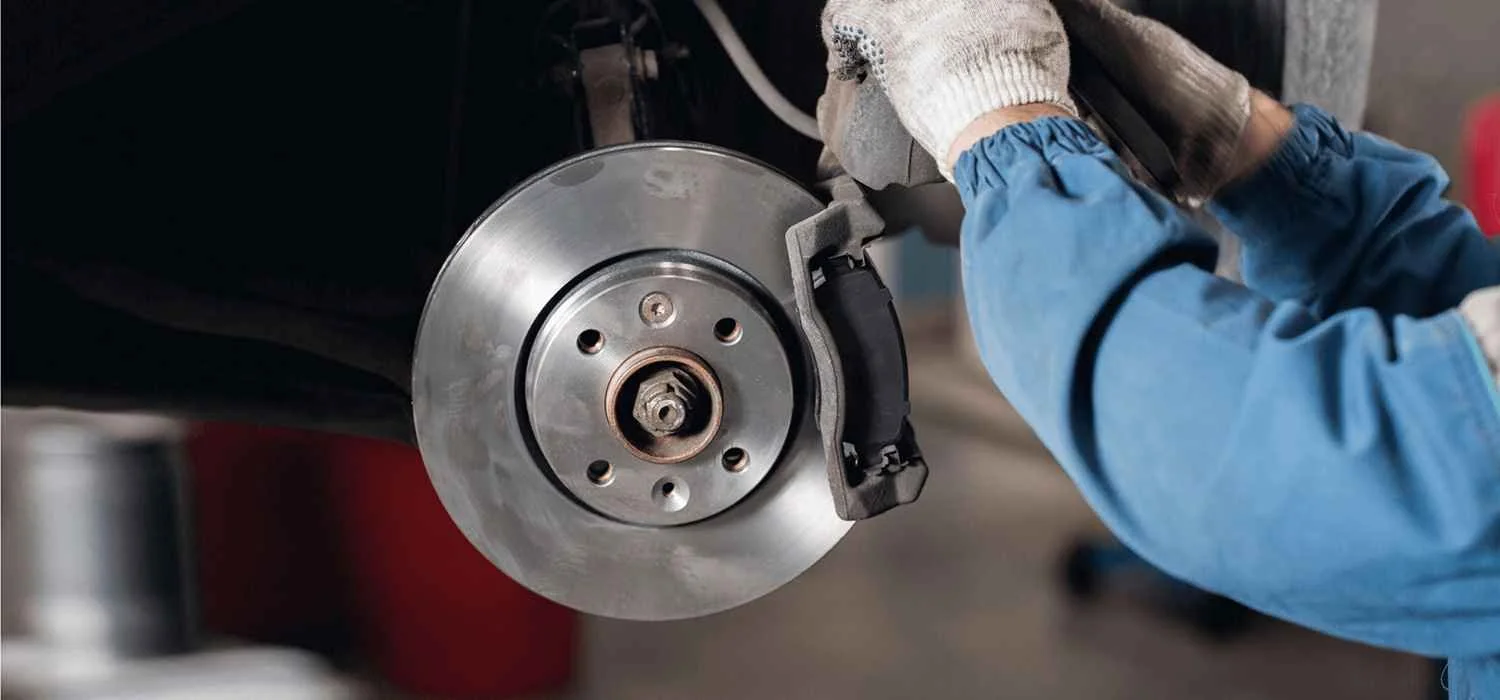
We identify the affected axle or system and explain the findings. You receive the parts choices and a written quote before work starts.
The approved work can include friction parts, caliper or hydraulic repairs, fluid service, sensors or parking-brake work. Extra work needs approval.
Relevant pedal, leakage, warning and parking-brake checks follow the repair, with a road test when safe. We explain running-in (bedding-in) guidance for the fitted friction parts.
Independent Volkswagen workshop · Al Quoz 4, Dubai · Monday to Saturday, 9 am to 7 pm. Completion time depends on findings and parts availability.
Clear answers on replacement decisions, warning lights, fluid and what your quote covers.
No. Disc thickness, surface condition and runout decide whether the existing discs can be retained. Runout means how evenly the disc rotates. Discs below the specified minimum or with unsuitable damage need replacement; fitting pads alone will not correct every cause of judder.
Not automatically. Pad sets and disc pairs are normally replaced across the affected axle to maintain balanced friction, but the other axle is inspected and quoted according to its condition. Your estimate should identify front, rear or both, rather than describing an unspecified “full brake job”.
Only if the component manufacturer permits machining and the finished disc remains within every required limit. A skim is not a remedy for cracks, excessive wear or an unsuitable remaining thickness. We explain whether retaining, machining or replacing the discs is appropriate after measurement.
Air or a hydraulic leak can cause a soft pedal; a sinking pedal also needs hydraulic assessment, including the master cylinder. A hard pedal can involve brake-assistance or booster faults. These symptoms do not establish that the pads need replacing. If braking is reduced, stop safely and call before moving the car.
Follow the schedule for your exact Volkswagen and its service history. The interval is time-based as well as condition-related; a pad change does not automatically make fluid replacement due. Heat-related brake fade needs assessment too: a fluid change is not a cure for every overheating or braking fault.
No. A pad-wear circuit reports pad wear where fitted; ABS uses wheel-speed information to help prevent wheel lock-up. An ABS warning needs fault-code and live-data checks, including sensors, wiring and the hydraulic control system. The light alone does not identify a failed ABS module.
The completion estimate depends on the confirmed work and parts availability. Routine friction work is simpler than tracing an intermittent ABS fault or repairing a hydraulic leak. Request written warranty coverage and exclusions for the selected parts and labour with your quote; ordinary friction wear should not be confused with a parts defect.
No. A brake-lamp warning concerns the exterior stop-light function. A red brake-system warning, reduced braking or a substantially changed pedal needs the separate urgent braking assessment described above. Lamp faults also need prompt attention because following drivers rely on the stop lights. Follow the exact message and your vehicle handbook.
A brake-light switch or pedal-position input may affect the lamps and systems that use the brake signal. It is different from worn pads or a leaking caliper. Tell us whether the concern is a warning message, lamps that stay on or lamps that do not illuminate so the correct circuit is checked.
Send your Volkswagen model, year and symptoms, plus a photo of any warning message. If braking is reduced, call before moving the car.