
Strong airflow, warm air
Check refrigerant quantity, leaks, compressor operation and temperature-control flaps. Moving air does not prove the refrigeration circuit is working.
Refrigerant and cooling checksWarm air, weak airflow or cooling that disappears in traffic? Our independent VW workshop in Al Quoz 4 diagnoses the fault, explains the repair choices and gives you a written quote before work begins. We handle refrigerant leaks, AC compressors, condensers, evaporators and cabin climate-control faults.
Fan not blowing? See blower motor repair choices.
The right price depends on the fault. A gas refill, a leaking evaporator and an electrical control problem need different work. These budgets help you compare the likely repair before assessment.
| Work | Guide budget |
|---|---|
| Refrigerant recovery and rechargeConventional R134a application; leak repairs are separate. | 250 to 600 |
| Accessible leak repair and rechargeSeals, a service valve or an accessible hose fault, depending on parts. | 350 to 1,600+ |
| Compressor replacementCompatible unit, fitting and refrigerant service; contamination can add work. | 1,600 to 4,500+ |
| Condenser replacementFitting, seals and refrigerant service for a conventional application. | 900 to 2,500+ |
| Evaporator replacementAccess, replacement, reassembly and refrigerant service. | 1,800 to 4,500+ |
| Heater-core replacementConventional coolant-heated system; part, access and refitting determine the quote. This is separate from a refrigerant refill. | 1,800 to 3,500 |
Planning estimates, not fixed offers. R1234yf, R744 heat-pump systems, high-voltage compressors, extensive corrosion and additional electrical work need a separate quotation. The rows are alternatives, not charges to add together.
Blower, speed-controller and flap-actuator repairs are quoted after airflow, circuit and movement checks. Recharge budgets do not include this work. Compare blower repairs or flap-actuator work.
Tell us the symptom, even if you do not know which part has failed. When it happens often helps distinguish an airflow issue from a refrigerant or control fault.
Check refrigerant quantity, leaks, compressor operation and temperature-control flaps. Moving air does not prove the refrigeration circuit is working.
Refrigerant and cooling checksCondenser airflow, radiator/condenser fan operation and pressure control need attention. The fan command and its actual response should agree.
Fan and heat-rejection checksA blocked cabin filter, blower motor, speed controller or air-distribution flap can reduce flow. Adding gas does not repair these components.
Blower and air-path checksCompare left/right outlet temperatures, actuator movement, sensor readings and compressor shut-off information. Reproduce a hot or intermittent fault before selecting parts.
Climatronic and live-data checksSwitch the AC off and arrange a safe assessment. A red temperature warning or coolant loss belongs to the engine cooling system; it is different from an AC refrigerant leak.
Our VW-specific diagnostic approach checks the mechanical circuit and the electronics that command it. The aim is a repair that addresses your complaint, including faults that appear only after the cabin or engine bay gets hot.
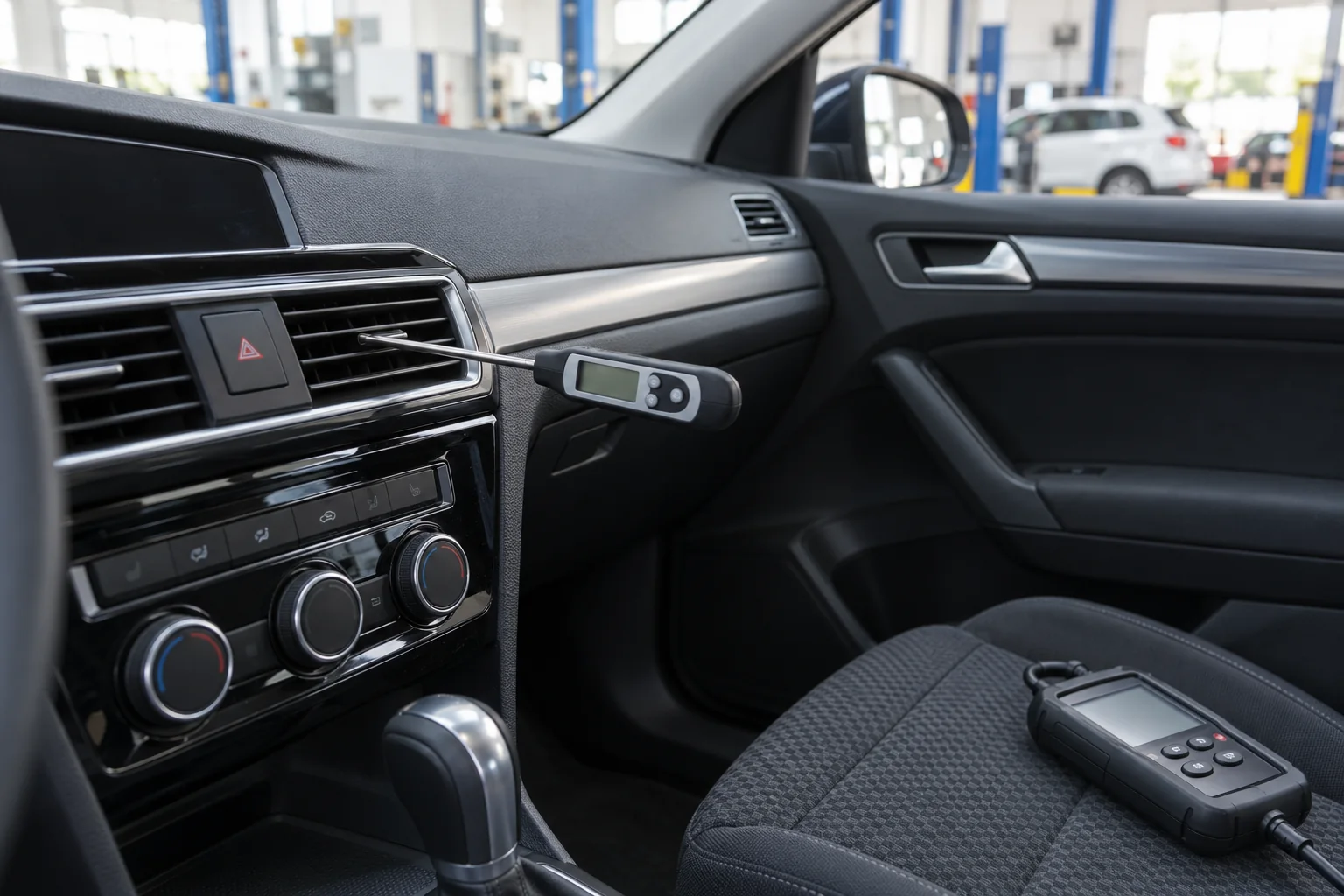
Record ambient conditions, vent temperatures, fan settings and cooling behaviour at idle. Check both sides and rear outlets where fitted, rather than relying on how cold one vent feels.
Read relevant HVAC faults, refrigerant-pressure information, evaporator temperature and compressor requests or shut-off reasons. Check supplies, wiring and sensors against the actual circuit conditions.
Assess high/low-side behaviour where appropriate, condenser airflow and the recovered refrigerant amount. Locate suspected leaks with a suitable test method before deciding whether a recharge is sufficient.
Distinguish a service need, repairable connection or control fault from a failed major component. You receive the proposed work, relevant parts choices and quote before replacements begin.
For example, an 00819/G65 pressure-sensor fault can involve refrigerant pressure, the sensor or its wiring, depending on the exact fault text. A scan result alone does not justify replacing the compressor.
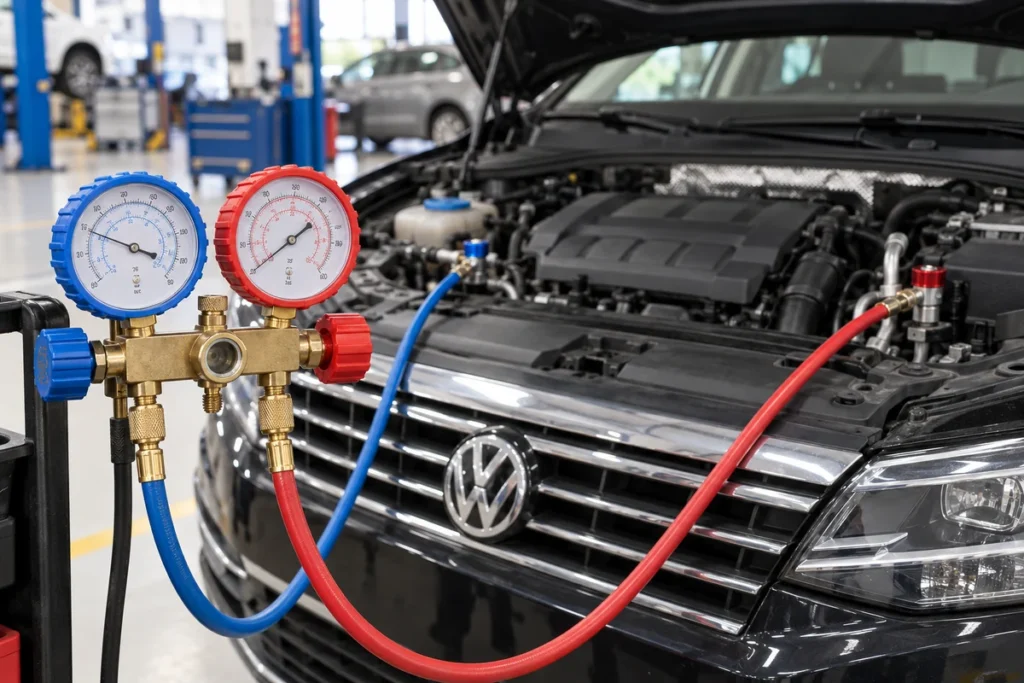
AC refrigerant carries heat out of the cabin. It is different from the water-based coolant used by the engine. “Regas,” “gas refill” and “recharge” usually describe refrigerant service, but they do not include repairing every possible leak.
If cooling faded after a recent refill, report when it returned. Repeated topping-up can leave the original leak unresolved and makes the total cost harder to control.
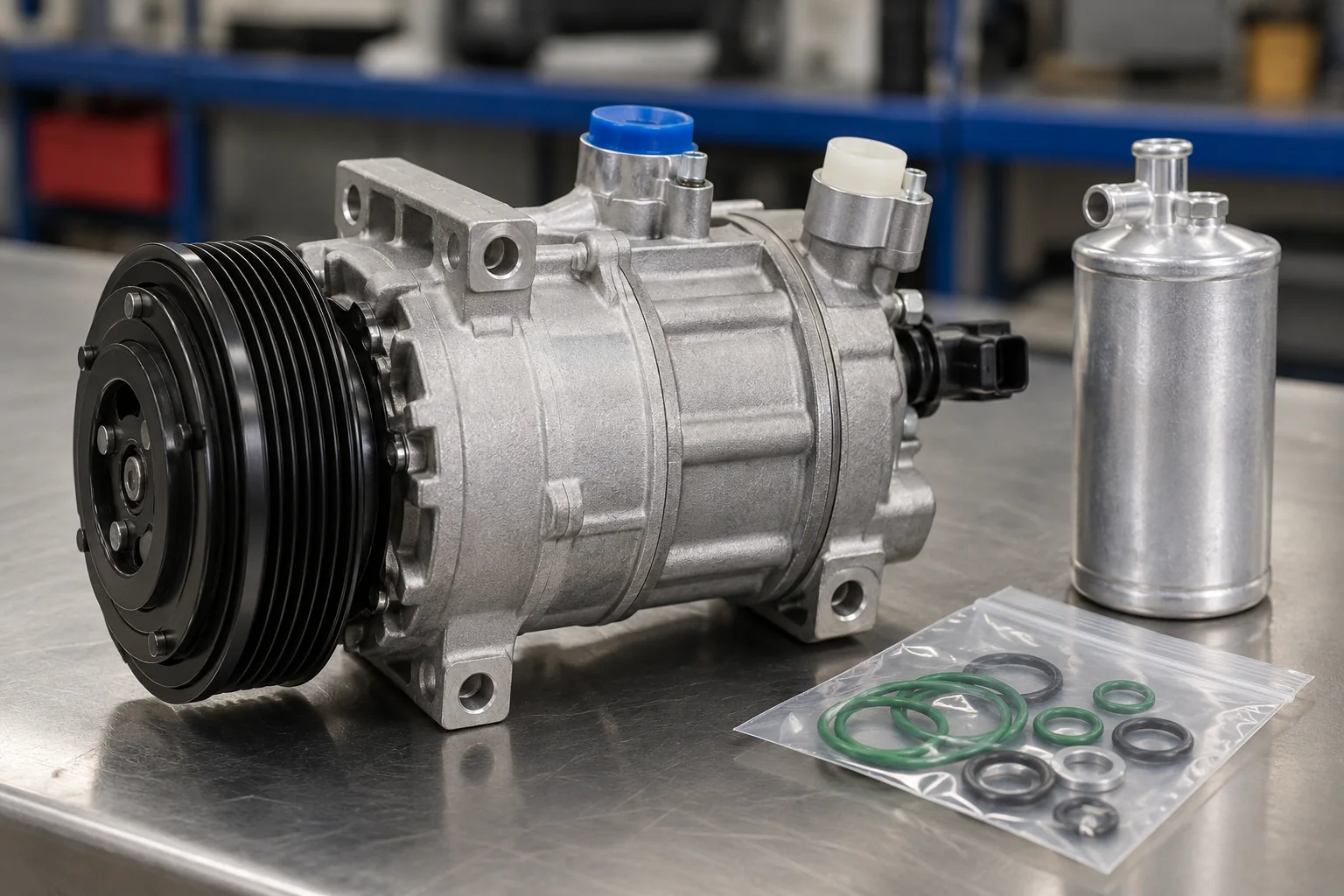
A seized or internally damaged compressor may leave debris in the circuit. The repair must address contamination, the required drier and any affected components, not simply install another compressor.
The compressor circulates refrigerant. Poor cooling can come from its controls or from another part of the system, so the most expensive component is not automatically the correct repair.
Genuine or OEM? We explain the available part brand and specification. An original-equipment supplier's box does not by itself establish that every part is identical to the Volkswagen-boxed version. Reconditioned or used parts, when proposed, must be clearly identified with their own terms.
The condenser, evaporator and pipework do different jobs. Locating the fault matters because their replacement labour and related parts can differ greatly.
The condenser releases heat ahead of the radiator. Stone damage, corroded joints, hoses, O-rings and service valves can leak. Check fan operation and external blockage as well as refrigerant loss; pressure can be abnormal even without a leak.
The evaporator cools cabin air; the expansion valve meters refrigerant into it. Their faults and replacement labour differ. See the evaporator repair choices and quotation details before agreeing to major access work.
The receiver-drier removes moisture. Replacement and cleaning requirements depend on how the circuit was opened and how a component failed. Some contaminated multi-flow condensers cannot be effectively flushed and need replacement under the applicable repair procedure.
Leak finding may use an electronic detector, suitable trace dye or a controlled test-gas method. The method depends on the refrigerant and suspected location. Do not use a leak-sealer additive as a substitute for locating a repairable fault.
Losing cooling after a refill does not prove that the evaporator has failed. We check the suspected leak before recommending major access work, then quote the replacement and reassembly together.
No air from the vents, missing fan speeds or a noisy cabin fan? We check the blower circuit and air path before choosing a motor, speed controller or filter repair. A refrigerant refill will not fix a failed cabin fan.
Front and rear blowers, access and part numbers vary by model and equipment. We match the installed assembly and test fan speeds and outlet airflow after repair.
Clicking behind the dashboard, air stuck on hot or cold, or outlets that ignore your selection? An actuator is a small motor that moves an air flap. We check the motor, flap mechanism and controls before recommending replacement.
A different actuator problem? Door-lock faults belong with door-handle and lock assessment, boost or wastegate faults with turbo diagnosis, and parking-brake actuator concerns with brake-system assessment.
Weak cabin heat, a sweet smell or coolant beneath the dashboard? On conventional engine-coolant heating systems, the heater core, also called the heater matrix, transfers coolant heat to cabin air. We confirm the fault before replacing it; an AC gas refill addresses a different circuit.
Stop safely for a red coolant-temperature warning, overheating or impaired visibility. Switch off the engine for a cooling-system warning and arrange assistance; never open a hot coolant cap. For coolant loss beyond the cabin, see our coolant-leak assessment.
Golf, GTI, Polo, Jetta, Passat, Tiguan, T-Roc and Touareg applications vary by generation, engine and market. Teramont/Atlas, Sharan and Transporter variants may also have different rear-cabin equipment. Rear vents alone do not prove that a separate rear evaporator is fitted.
Start with your model and symptom. We identify the equipment and request additional details when needed; you do not need to diagnose the system before contacting us.
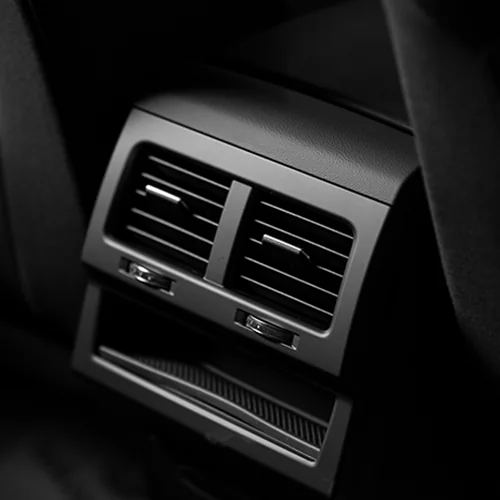
The final check should repeat the conditions that caused your complaint, rather than stop when the AC briefly blows cold in the workshop.
Compare outlet temperatures with ambient conditions and settings. Check idle/traffic behaviour, fan operation, left/right balance and rear cooling where fitted. There is no single vent-temperature promise suitable for every humidity and operating condition.
Recheck repaired connections, pressures or operating data as appropriate, blower speeds, airflow distribution and relevant faults. Verify any required actuator settings and that the condensate drains correctly.
We explain the repair, fitted parts and service work, plus any unresolved intermittent behaviour. Keep the invoice and written warranty terms, and report a returning symptom promptly rather than arranging another blind refill.
Answers before you approve a refill or repair.
Independent Volkswagen workshop in Al Quoz 4, Dubai. Monday to Saturday, 9:00 am to 7:00 pm.
No. Low refrigerant is one possibility, but fan, compressor-control, wiring, sensor or temperature-flap faults can also produce warm air. A recharge is appropriate only after the fitted system and relevant findings have been assessed.
A straightforward service usually involves less work than an evaporator replacement or an intermittent electrical investigation. The completion plan is given after assessment and parts checks. A same-day outcome should not be assumed before the fault is established.
Poor cabin cooling needs prompt attention in hot weather, especially with vulnerable passengers. Stop and arrange a safe assessment if there is smoke, a burning smell, belt noise or an engine-temperature warning. A mechanical or overheating fault needs separate attention.
A leak may still be present, or the original complaint may involve controls, airflow or an intermittent component. Bring the previous invoice if available and explain how long cooling lasted. The next step should investigate the returning fault rather than repeat the same refill automatically.
No. Regulating-valve service depends on the exact compressor and confirmed fault. Valve compatibility and repair procedures vary between applications and suppliers. Internal damage, contamination or another system fault can require a different repair.
Access depends on the model and HVAC layout. Many evaporator replacements involve substantial dashboard and heater-box work, which is why the leak should be confirmed first. The quote identifies the access labour, seals, refrigerant service and reassembly checks.
No. Odours can involve the cabin filter, moisture, drainage or other water entry. These need assessment separately from a refrigerant leak. Cleaning may address suitable contamination, but it cannot repair a leaking evaporator core.
These are separate operations unless your quote combines them. Cleaning addresses suitable air-path contamination; a cabin filter traps incoming particles; refrigerant service addresses the sealed cooling circuit. The written inclusions show which work is proposed for your complaint.
Your VW model and a short description of the problem are enough to start. Mention if it happens in traffic, after a long drive or on only one side. A previous estimate, invoice or warning photo is helpful if available.
Tell us what your Volkswagen's AC is doing. We will explain the assessment and quote the appropriate service or repair before you approve the work.