
Cooling
Coolant loss or overheating
Repeated top-ups, rising temperature or coolant being expelled.
Also consider
Hoses, water pump, thermostat, radiator and fans.
Engine sealing · Al Quoz 4
Coolant disappearing, repeated overheating or persistent white exhaust? Our independent Volkswagen workshop investigates the cause before recommending cylinder-head removal and head gasket replacement.
A planning guide for four-cylinder work. Engine type and head condition change the scope; major head or engine damage can take the total outside this range.
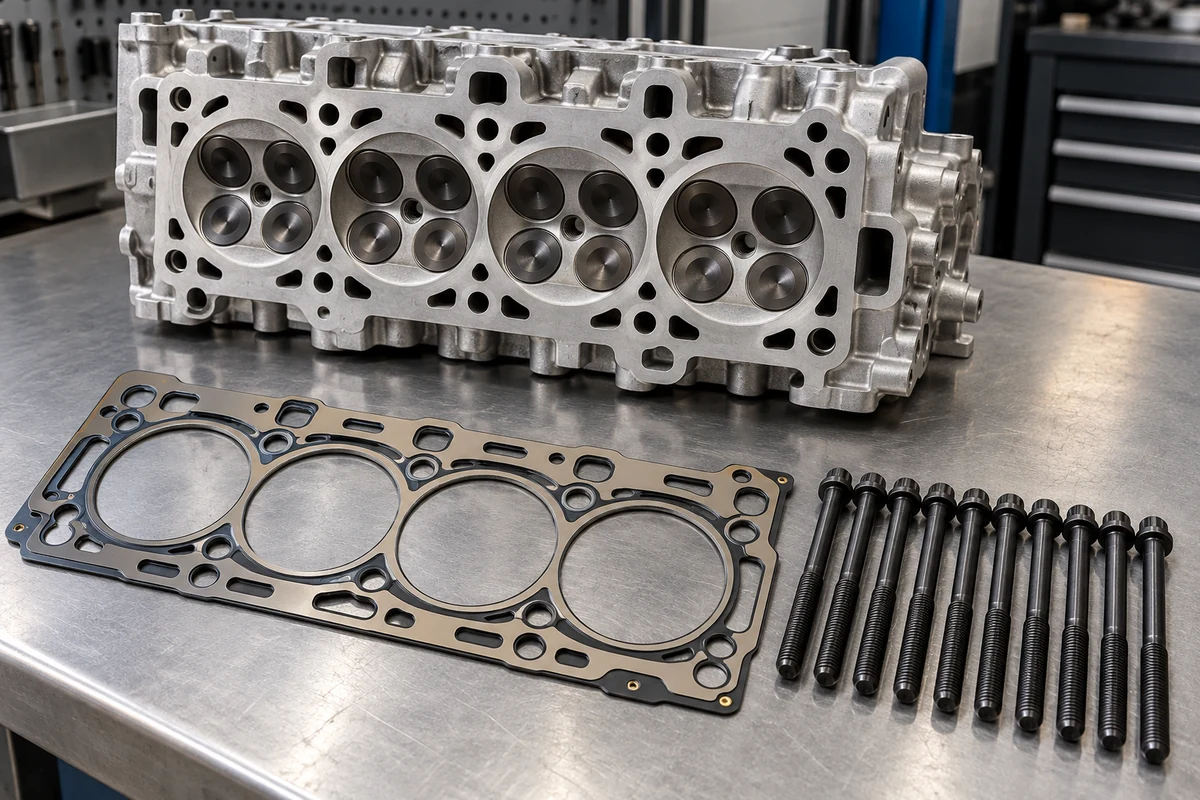
Plan the repair
The gasket is only one part of the job. Access, cylinder-head condition and the original overheating fault determine the repair bill.
Use this to plan for a confirmed fault, rather than as a fixed price for every Golf, Polo, Jetta, Passat, Tiguan or other VW.
A vehicle-specific written quotation identifies the agreed parts and labour. Diagnostic assessment, dismantling and any transport charges are agreed separately before those stages begin.
Discuss your model and symptomsEngine-matched gasket, required seals and specified single-use fasteners, plus removal and refitting labour.
Testing and measurements, any permitted machining, or a replacement head if the original cannot be reused. These are different scopes.
Oil, filter, approved coolant, contamination cleaning and any separately needed cooling-system or timing components.
Bleeding, leak and operating-temperature checks, applicable warranty terms and VAT treatment shown with the final quoted total.
If inspection exposes a cracked head, block damage or wider engine wear, the findings and revised price come to you for approval before additional repair work.
Recognise the pattern
The head gasket separates combustion pressure, oil and coolant. These signs need testing before a failed gasket is confirmed.
Repeated top-ups, rising temperature or coolant being expelled.
Hoses, water pump, thermostat, radiator and fans.
Persistent heavy white vapour, particularly alongside coolant loss.
Brief cold-start condensation is a different pattern.
Contaminated fluids can point to an internal leak.
An oil cooler or damaged casting; cap residue alone may be condensation.
Unusual cooling pressure or cylinder misfires can support further tests.
Bubbles or a fault code alone do not identify the failed part.
Visible external coolant leak? Start with coolant leak diagnosis and repair to identify its source.

Test before dismantling
We start with the symptoms, overheating history and engine identification. The aim is to justify the next stage, rather than remove the cylinder head on the strength of one warning sign.
Inspect the circuit and pressure-test as appropriate. Check likely cooling faults, such as the pump, thermostat, radiator or fans, before treating coolant loss as an internal engine leak.
A suitable gas test can support a combustion-to-cooling leak. It does not distinguish a failed gasket from a cracked cylinder head or block; an intermittent leak may need further investigation.
Compression, leak-down or borescope checks may help locate the problem. Fault codes and live temperature data add context, but a diagnostic scan alone cannot test the gasket’s physical seal.
Head removal allows inspection of the gasket, mating faces and surrounding damage. We explain the proposed dismantling stage and its cost before proceeding.
Choose the right repair
A failed gasket normally means removing the cylinder head. Measurements and damage checks decide the rest of the repair.
We explain the findings and any revised repair price before additional work proceeds.
A lasting seal needs sound surfaces
Replacing the gasket cannot compensate for a cracked casting or an unsuitable sealing surface. Measurements guide reuse, machining or replacement.

Match the engine
The model name alone is not enough. Parts are selected for the exact engine, then identified in your written quote.
The same Volkswagen model can use different engine families.
Volkswagen-branded parts matched to the application and listed in the quote.
A suitable OEM option can be discussed, with its manufacturer and specification identified.
Correct material, thickness and orientation for the engine.
Renew specified single-use bolts and disturbed seals.
Follow the engine’s tightening procedure; assess the timing drive separately.
Different repair: a valve-cover gasket seals the top cover; the head gasket seals the head to the block.
Combustion engines only: a fully electric VW has no engine head gasket.
Repair and handover
The repair addresses the sealing fault and the conditions that caused it.
Address the identified cooling or other root fault so it does not undermine the new gasket.
Prepare the faces, fit the gasket and fasteners, and set the timing to the engine procedure.
Replace agreed fluids and filters, deal with contamination, then refill and bleed the cooling circuit.
Check leaks, temperature and cooling operation; carry out running or road checks suited to the vehicle.
Agreed once parts, dismantling findings and specialist head work are understood.
Warranty terms on the quote or invoice. Old parts returned on request.
Before you book
Practical answers about cost, diagnosis and the repair decision.
Use AED 4,500–8,000 as an indicative four-cylinder replacement budget. Engine type, access, cylinder-head condition and related damage affect the total. Assessment and dismantling stages are agreed before proceeding; the written repair quote identifies parts, labour, any extra head work and VAT treatment.
Do not continue driving with overheating, a red coolant warning or significant coolant loss. Stop safely, switch off and let the engine cool. Never open the coolant cap while hot. Call to discuss assessment and vehicle transport before further driving.
No. Condensation, an oil-cooler fault and other problems can overlap with these signs. The symptom pattern, cooling checks and appropriate sealing tests guide diagnosis. Even combustion gases in coolant do not identify whether the leak is through a gasket, cylinder head or block.
A pour-in additive cannot restore a warped sealing face or repair a cracked cylinder head. It is not equivalent to replacing a failed gasket and assessing the mating surfaces. Tell the workshop if any sealant has already been added to the cooling system.
No. Flatness, cracks, surface finish and dimensional limits determine the decision. Machining is appropriate only where permitted and within specification. A head that remains serviceable may be reused; a head that cannot be restored within limits needs replacement.
No. The valve-cover gasket seals the cover at the top of the engine. The cylinder-head gasket seals between the head and block, including combustion, oil and coolant passages. The repair scope and labour are different, so the leak source must be identified.
Not automatically. Head removal can involve the timing drive, but replacement depends on the engine procedure, component condition, service history and any single-use parts. Required timing work is identified in the agreed scope rather than assumed to be included in a general gasket price.
Timing depends on the engine, dismantling findings, parts availability and any specialist head testing or machining. The workshop gives a repair schedule after those requirements are understood and explains any change in scope before extra work proceeds.
Volkswagen Repair Dubai
Al Quoz 4, Dubai · Monday–Saturday, 09:00–19:00.
Tell us your model, year and what happened before the symptoms started.