
Flickering lights
Unstable supply can affect lamps and accessories. We check output and connections rather than judging the alternator by brightness alone.
Battery light on, charging fault or repeated flat battery? Our independent Volkswagen workshop in Al Quoz 4 tests the charging system and explains whether you need an alternator repair, replacement or a vehicle-side electrical fix.
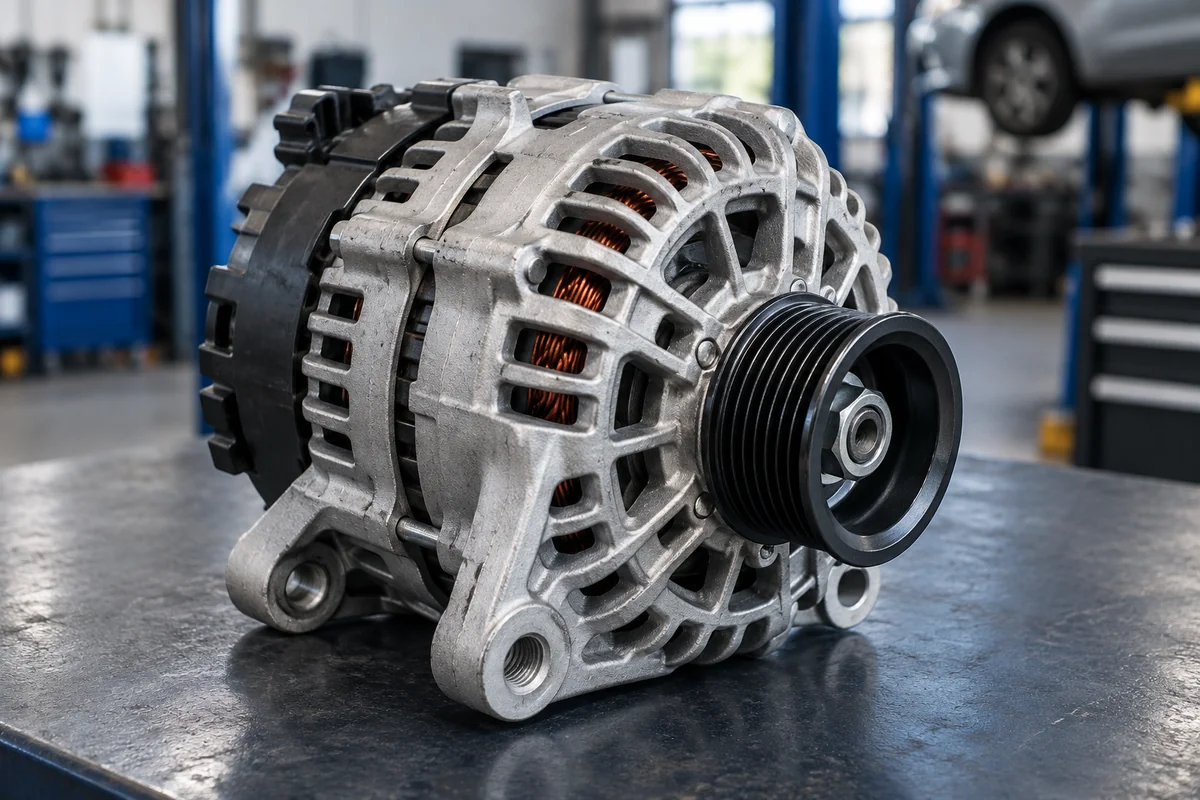
The replacement guide covers one conventional alternator and fitting. An external charging fault can lead to a different repair; a special high-output or water-cooled unit needs a vehicle-specific price.
Selected conventional replacement applications
The allowances above make up the guide total. They are not universal prices for all models or a diagnosis of your car.
A battery, belt, pulley, tensioner, cable repair or recovery is additional when needed. We explain those items before expanding the job.
Send the VIN, model and year. Add the warning message, when it appears and whether the battery has already been replaced. We provide a fixed written quote before work; nothing is replaced without approval.
A battery warning while driving and a car that will not charge from a plug need different checks. Tell us the model, year and exact message before choosing a repair.
On a conventional petrol or diesel VW, the battery, alternator, belt drive, wiring and charging control work together. A flat battery or charging warning does not identify which part failed.
Our charging-system tests establish whether the alternator needs work or a sound unit can be retained. A battery that goes flat after parking may need a separate drain investigation.
Record whether AC charging, DC charging where supported, or both are affected. Include the charger message, charge level, any scheduled charging or target limit, and whether the problem occurred at one or several compatible chargers.
Supply, cable, connector and vehicle-side charging faults need to be distinguished. The symptom alone does not prove that the high-voltage battery needs replacing. For ID.4-specific assessment, see ID.4 charging fault checks.
Use the correct system and price. The alternator budget above covers conventional applications. EV, plug-in and 48V faults need a separate assessment and quote. Do not use damaged or overheating charging equipment, force a connector or attempt high-voltage repairs yourself.
Follow the exact dashboard instruction and your owner's manual. A charging failure can leave the car running on its remaining battery energy; a jump start does not restore charging.
Call from a safe place and describe the warning. Arrange recovery if the car cannot be driven safely. Smoke, a burning smell, a damaged belt or an overheating warning needs prompt attention.
Call about your warningUnstable supply can affect lamps and accessories. We check output and connections rather than judging the alternator by brightness alone.
A weak battery, poor charging or an electrical drain can cause repeat discharge. When it goes flat helps us choose the right test.
Noise near the accessory drive can come from the belt, tensioner, pulley or a bearing. It does not automatically require a complete alternator.
A discharged battery is an outcome. These checks separate a supply, drive or control problem from a failed alternator.
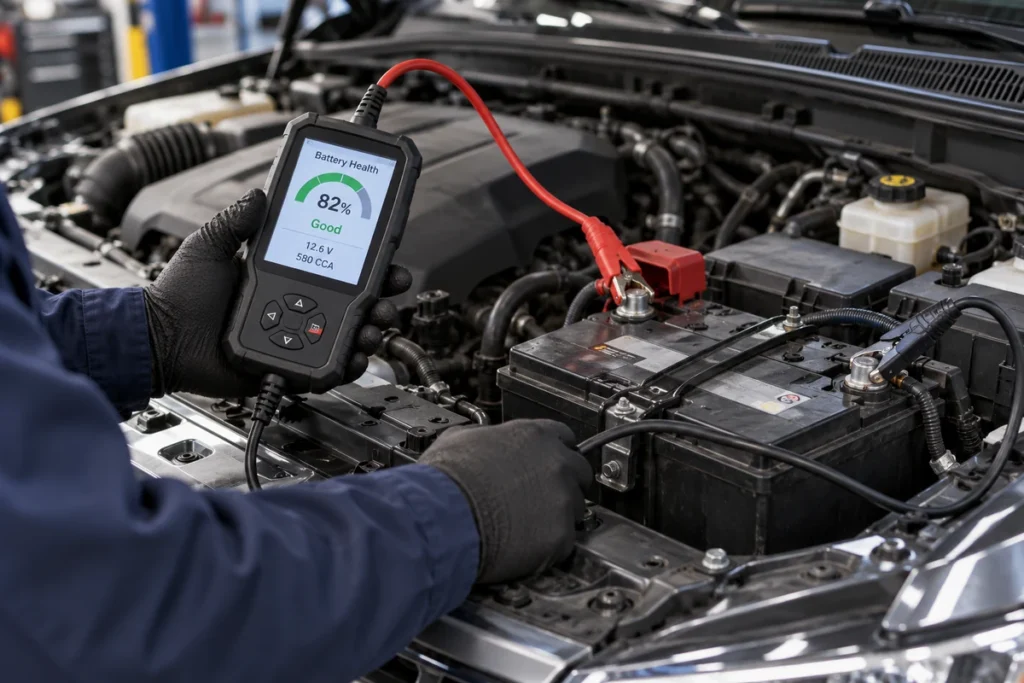
On equipped VWs, charging voltage changes with battery state and the vehicle's command. One idle voltage reading, or a missing start-stop function, is not enough to condemn the alternator.
Assess state of charge and starting capacity; recharge and retest where appropriate. A healthy but discharged battery may not need replacement.
Inspect the auxiliary belt, pulley and tensioner, plus terminals, earth paths and the main B+ output cable.
Compare voltage and current with the system specification at appropriate speeds and with electrical consumers operating.
Check loss through positive and earth paths, fuses and fusible links. Resistance can prevent a healthy unit from charging the battery.
Read relevant faults and live data with VW-specific diagnostics. Check regulator communication over its control wire (LIN), plus battery-sensor data where fitted.
AC ripple is an unwanted fluctuation in the electrical output. Its pattern can help identify failed rectifier diodes or internal windings. Hot-running faults and parked drains need testing under the reported conditions.
Tell us about recent work: a new battery, accessory installation, belt repair or previous alternator replacement can help explain a repeat fault. Never disconnect a battery with the engine running to “test” the alternator.
We explain which route addresses the cause and what each proposed part contributes.
A VW-branded unit selected by the correct vehicle application.
A named supplier and exact compatible specification, priced where available.
These are different conditions. Any proposed exchange or used unit needs its condition, test basis, core-return terms and warranty explained in writing.
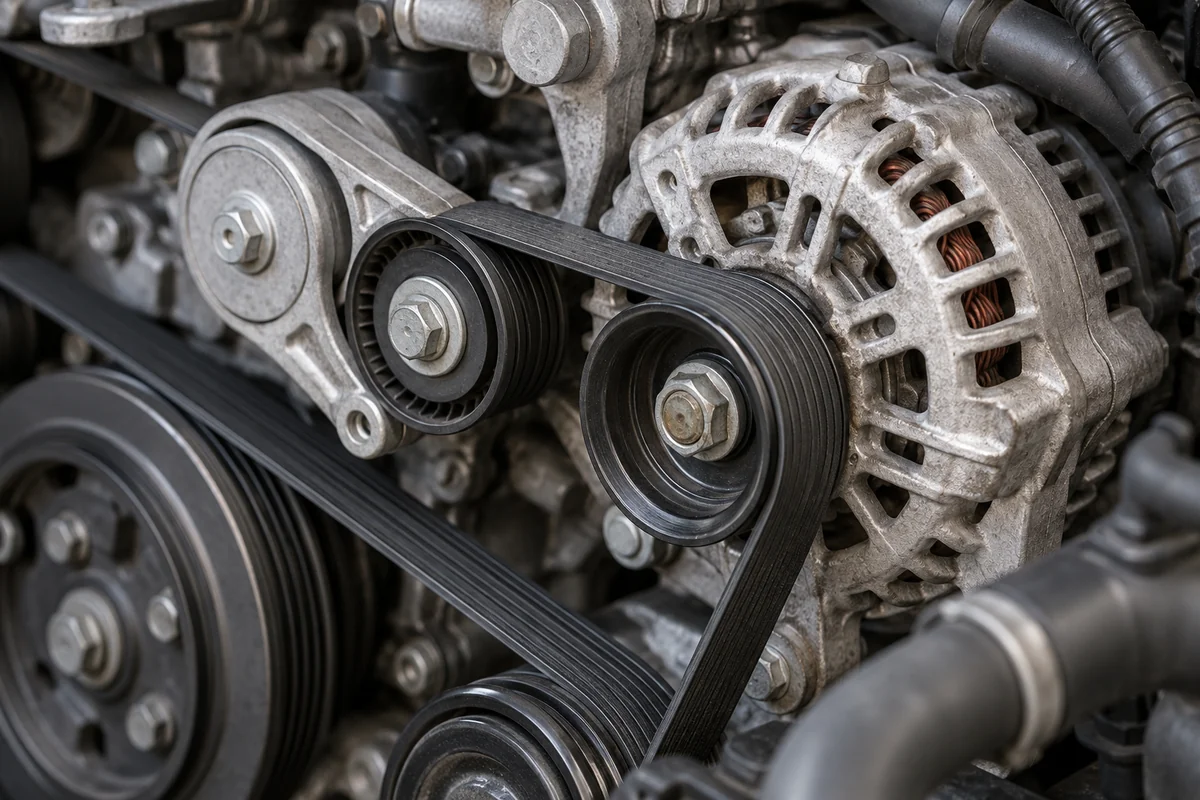
The auxiliary or serpentine belt drives the alternator on conventional applications. It is separate from the engine's timing belt or chain.
A damaged cable, failed battery or unresolved belt-drive problem needs its own correction. Oil or coolant contamination also needs its source investigated.
Golf, Polo, Jetta, Passat, Tiguan, Touareg, Transporter and other engine-driven models can use different alternators within the same model range. Year and engine matter as much as the badge.
Check the application and original part number before ordering.
Match the required output and regulator/control interface.
Match fixing points, belt grooves, pulley type and connectors.
Water-cooled and other specialist units need their own parts and access assessment.
A belt starter-generator can replace the conventional alternator's role on mild-hybrid applications. Identify the system first; this replacement budget does not cover 48V starter-generator work.
Fully electric VWs use a DC/DC converter for the low-voltage supply. For a charge-port or traction-battery concern, use the plug-in charging guidance and send the exact warning before booking.
Describe the symptom, bring relevant repair history and approve the diagnosed work and written total.
Use the correct procedure, check secure connections and belt operation, and carry out required vehicle-specific setup.
Recheck charging under load, battery condition and relevant faults. We explain the result and road-test the repair before collection.
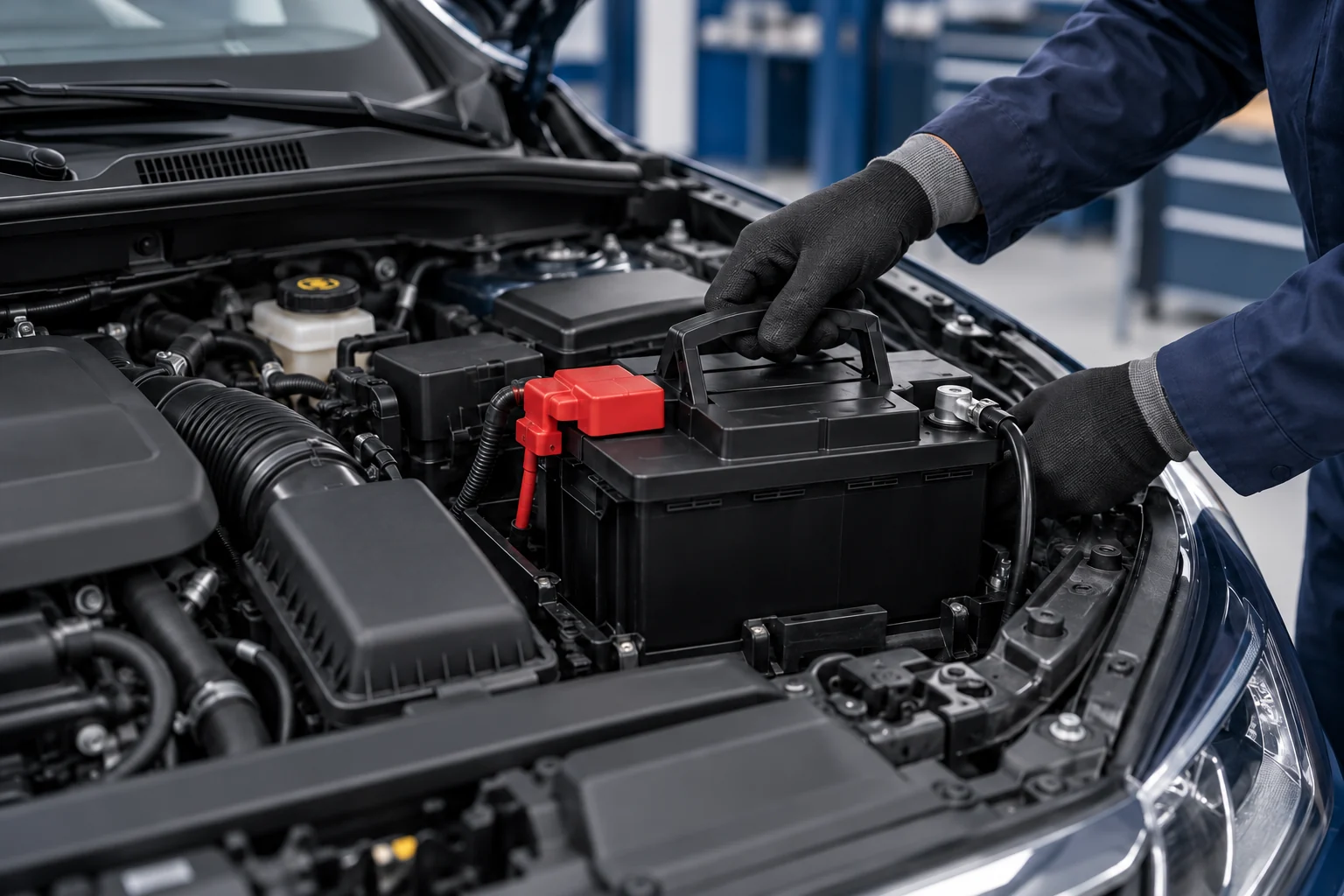
A flat battery may need charging and retesting. Replace it only when condition warrants it; match AGM/EFB requirements and complete registration if the vehicle requires it.
Battery testing and replacementIndependent VW workshop · Al Quoz 4, DubaiMonday–Saturday, 9am–7pm. Contact us with the VIN for the visit and completion plan. Workshop hours are separate from any recovery arrangement.
Unable to start?For the wider starting problem, see Volkswagen no-start diagnosis.
Practical answers about charging faults, repair choices and your workshop visit.
Use AED 1,800–3,600 as an indicative parts-and-fitting budget for selected conventional applications, not a fixed price for every VW. The correct alternator, engine access and any related faults determine your quote. Diagnosis, belt or tensioner work, battery replacement, required setup and VAT treatment are identified separately.
No. With the engine running, a red battery-shaped warning can indicate that the charging system is not working correctly. Alternator output, its drive, wiring and control need assessment alongside battery health. Stop safely, follow the exact dashboard instruction and call for advice about recovery if the car cannot be driven safely.
Sometimes. A separately serviceable regulator, brush assembly or pulley may be a repair option when the rest of the unit is sound. Internal winding damage, several failed components or an uneconomic repair can favour a complete replacement. We explain the findings and quote the suitable option before work.
There is no universal coding requirement for every Volkswagen alternator. The regulator, output rating and communication interface must match the installed system. We check the vehicle-specific procedure and include required setup or adaptation in the quote. Battery registration is a separate requirement when a battery is also replaced on a model that needs it.
Timing depends on the engine layout, diagnosis, the correct unit being available and whether other charging-system repairs are needed. Your written quote sets out the expected completion plan and the parts and workmanship terms for the chosen repair. Contact the workshop with your VIN before arranging the visit; a generic same-day promise would overlook those differences.
A supply, cable, connector or charging-setting issue can affect a session. Record the station message and whether AC or DC charging is affected, where supported. This alone does not establish a failed high-voltage battery. Do not use damaged or overheating equipment; a vehicle-side charging fault needs system-specific diagnosis.
A fully electric ID.4 does not use a conventional engine-driven alternator. Its low-voltage electrical supply uses a DC/DC converter. Plug-in charging problems and 48V eTSI starter-generator faults need their own system-specific assessment; the conventional alternator price guide on this page does not apply to them.
Send your model, year, VIN and a safe photo of the warning. We will explain the next diagnostic step and the repair choices before you commit to replacement.