
Early engines most at risk
Built from 2009 to 2015. Engines from 2009 to 2012 are the most vulnerable, with a reinforced chain and redesigned guides introduced in late 2012.
A rattle for a few seconds on a cold start is the classic sign of a worn Volkswagen timing chain or tensioner. Early EA888 1.8 and 2.0 TSI and EA111 1.2 and 1.4 TSI engines are the ones we check most. Fitted chain work starts from AED 1,800 on a Polo and rises with the engine.
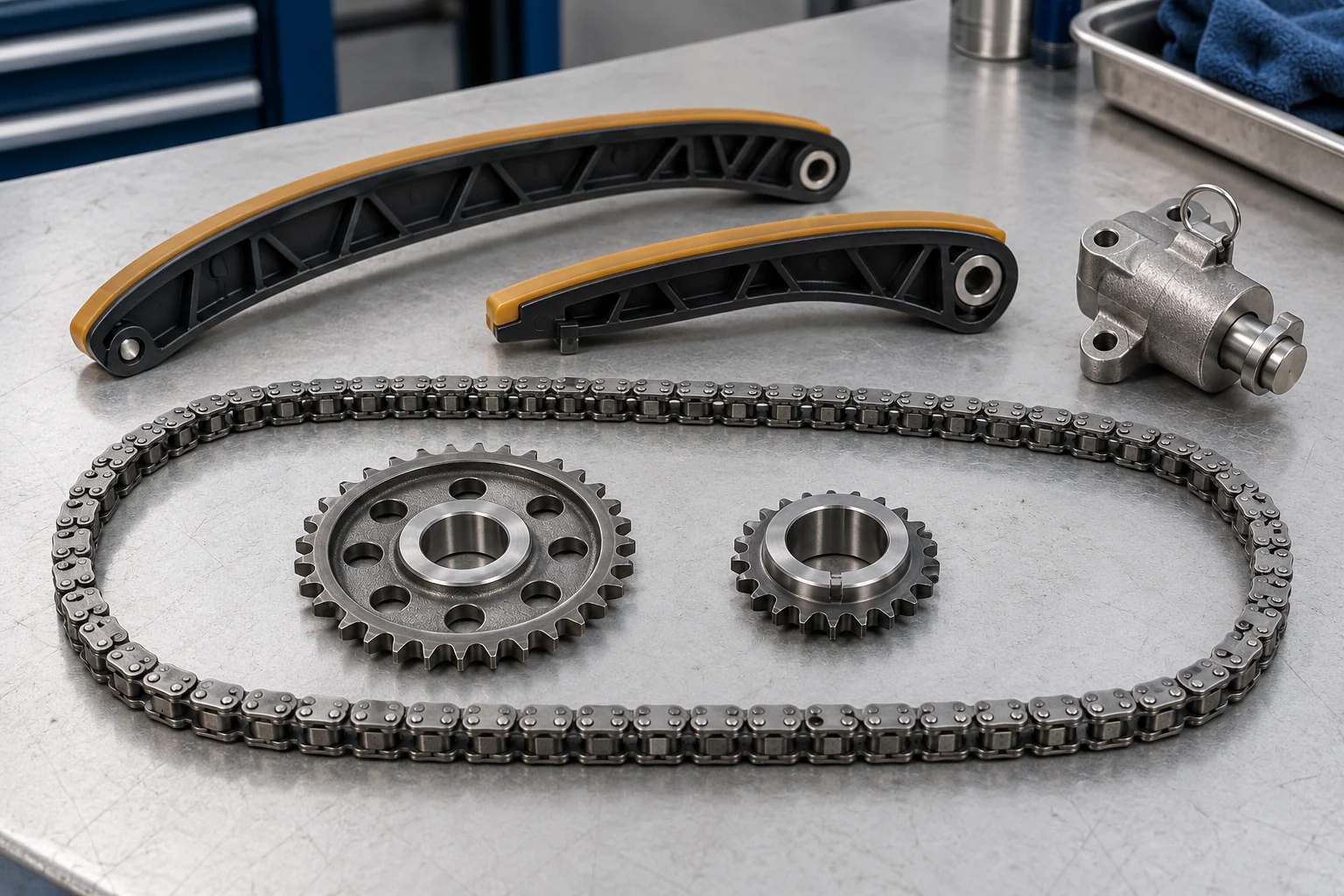
A short cold start rattle is the most common early warning.
Early EA888 tensioners and EA111 chains are the most reported problem areas.
EA211 engines use a timing belt, not a chain.
There is no fixed chain replacement mileage, it is changed on condition.
Cam and crank data confirm stretch before parts are ordered.
Fitted work runs from AED 1,800 to 12,000 by model.
The model badge is not enough, because the same Golf, Jetta or Tiguan can have different engines by year. This table shows the main petrol engine families we see, what drives the camshafts and where the risk sits.
Send your VIN or engine code and we confirm which family your car has before any advice on parts. Belt engines are covered in our VW timing belt interval guide.

On early EA888 engines the timing chain system, including the tensioner, became the subject of a class action in the United States. The settlement extended cover on affected cars to 10 years or 100,000 miles, which shows how widely the issue was recognised.
If the tensioner does not hold the chain properly, the chain can run slack, especially at start up before oil pressure builds.
A slack chain rattles against its guides, which is the noise most owners notice on a cold start.
In the worst case the chain skips on the sprocket, the timing is lost and valves can hit pistons.
Model years are those listed in the US settlement. That settlement applied to US cars and its cover periods have now largely run out, so Dubai owners should not rely on it. The engine code, not the market, is what matters for the repair.
The earlier EA111 small TSI engines use a timing chain, and chain stretch is a known complaint. The later EA211 engines that replaced them use a timing belt.
Built from 2009 to 2015. Engines from 2009 to 2012 are the most vulnerable, with a reinforced chain and redesigned guides introduced in late 2012.
A rattle lasting more than a couple of seconds after a cold start, sometimes described as diesel like, is the sign to book a check.
The chain driven 1.4 TSI is checked the same way, with cam and crank data and a listen on a cold start, before any parts are ordered.
A cold start rattle has other possible causes too. Our VW engine rattling guide explains how a chain rattle differs from other engine noises.
These are the signs that point us to the timing drive. Each one is confirmed with data and an inspection before a repair is quoted.
A metallic rattle just after starting a cold engine that fades as oil pressure builds.
Camshaft and crankshaft correlation faults such as P0016 or P0017 can light the warning.
Timing that has moved can make the engine run unevenly or lose power.
Long cranking before the engine fires can follow a change in timing.
A noise that once faded quickly but now lasts longer often means wear is growing.
After a loud rattle this can mean the chain has jumped, so stop cranking and call.
Loud new rattle, sudden stall or a red oil pressure warning? Stop safely, switch off and do not keep cranking the engine. If the timing has jumped, every attempt to start it can add damage. Arrange recovery to the workshop.
The engine layout decides most of the price, because access ranges from the front of a small TSI to the back of a VR6. These fitted ranges come from our model pages.
Book a check before the chain has a chance to jump. Send these details and a short recording if the noise happens naturally, and we will tell you what the next step should be.
Volkswagen does not set a fixed replacement mileage for its timing chains. A chain is designed to last, but it is replaced on condition when data or noise shows wear. A timing belt is different and has a set interval.
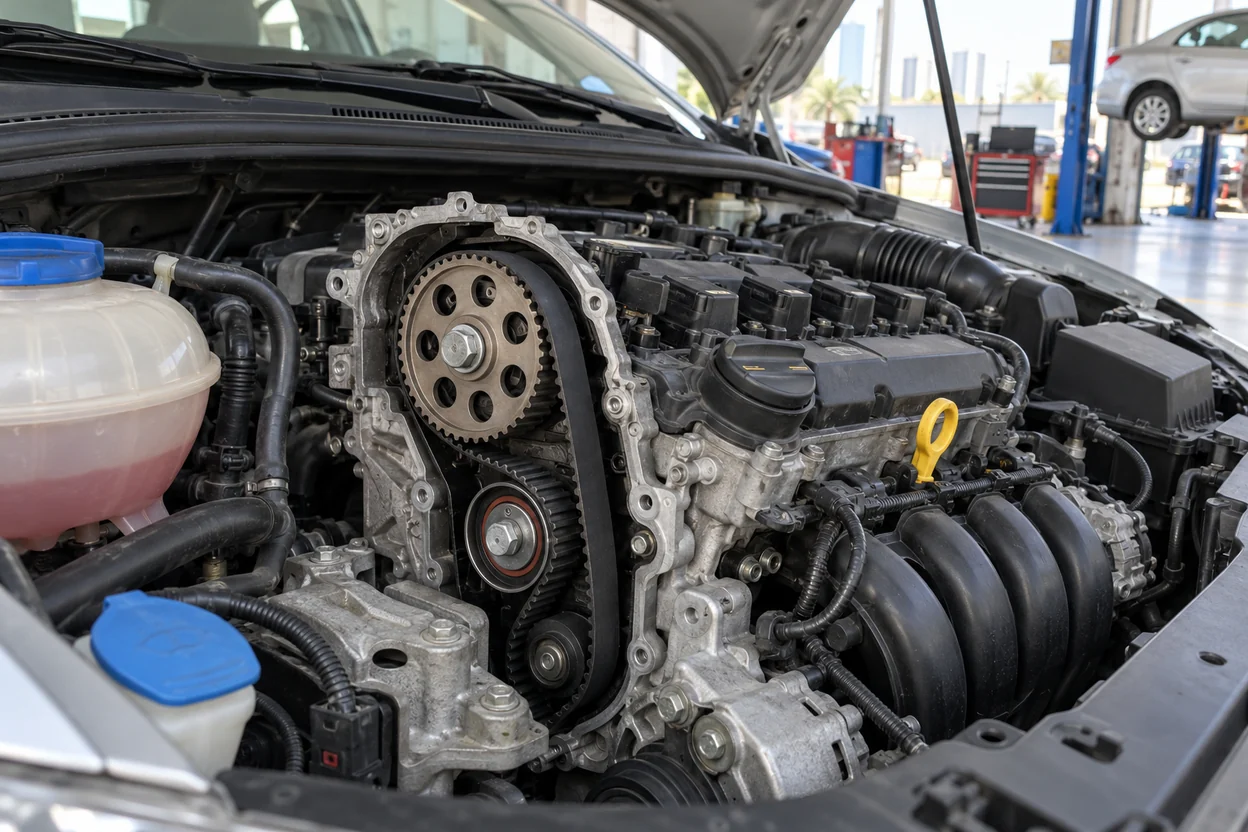
Clean oil of the right VW approval matters most for chain life, because the tensioner works on oil pressure. Our VW oil change interval guide explains the service schedule, and belt work is on our timing belt replacement page.
A noise or a code alone does not prove the chain is worn. We follow the same steps on every car, and our VW EPC light guide explains the warning lamps that can come with timing faults.
Confirm the engine code and production version from the VIN.
Save camshaft and crankshaft correlation faults and their conditions.
Compare the cam and crank relationship values against the engine limits.
Oil level, approval and pressure, because the tensioner depends on them.
Where needed, inspect the tensioner, chain and guides, then quote the repair.

A kit is not the same from every supplier. Your quote names each part, so you can see what is renewed as standard and what is only checked and quoted if it needs work.
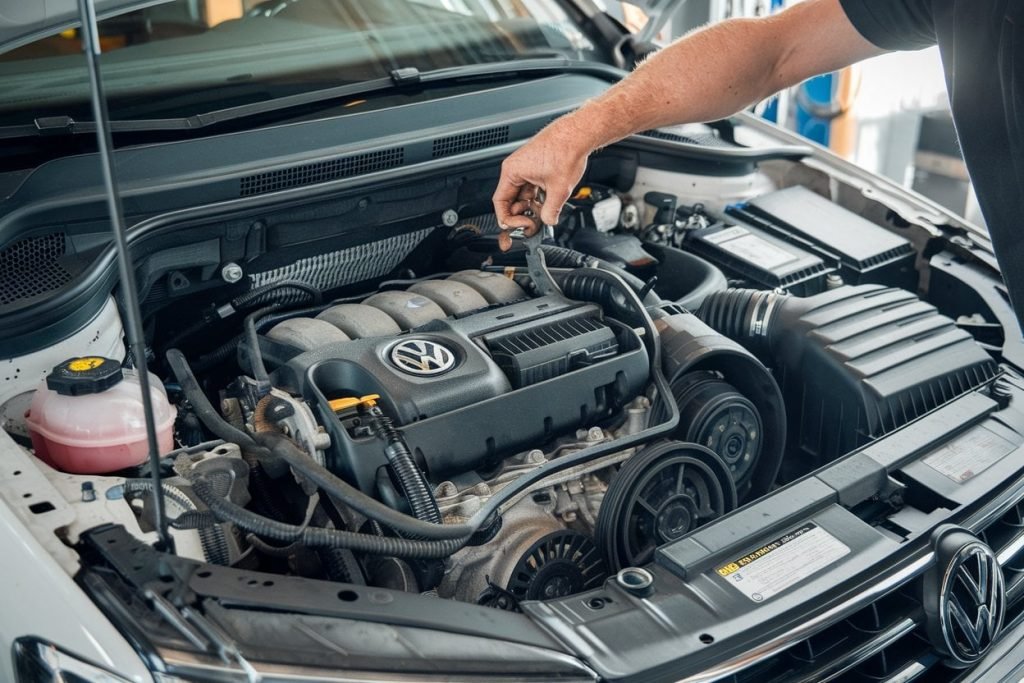
Compare kits fairly. Ask for the kit brand and its contents on the quote, because a genuine Volkswagen kit and a named OEM supplier kit can include different parts.
Most chain wear we see is linked to oil. These habits help in Dubai heat and traffic.
Old oil loses its protection and can affect how the tensioner works.
Use the oil approval your engine is specified for, not just any grade.
Check the oil level, as low oil means less pressure for the tensioner.
Notice whether a rattle lasts longer than before and book a check early.
A cam and crank correlation fault is worth checking straight away.
A clear oil service history helps diagnosis and future resale.
Straight answers before you book the work.
Our fitted guides run from AED 1,800 to 3,000 for a Polo chain kit and AED 2,500 to 5,000 for a Golf GTI, up to AED 3,500 to 7,500 for a CC and AED 5,500 to 12,000 for a Touareg. Engine access, the kit chosen and any damage found decide the final written quote.
The most common sign is a metallic rattle for a few seconds after a cold start, which fades as oil pressure builds. Others include an engine or EPC warning with camshaft and crankshaft correlation codes such as P0016, rough running and hard starting. A loud rattle followed by a stall can mean the chain has jumped.
The most widely reported are early EA888 1.8 and 2.0 TSI engines, which were the subject of a US settlement covering cars from about 2008 to 2014, and the EA111 1.2 TSI, where 2009 to 2012 engines are most vulnerable. The chain driven EA111 1.4 TSI is checked the same way. EA211 engines use a belt instead.
Volkswagen does not set a fixed replacement mileage for timing chains. They are replaced on condition, when live data, noise or an inspection shows wear. This is different from a timing belt, which has a set interval. Changing the oil on time with the correct approval does the most to protect the chain and tensioner.
A short rattle on a cold start should be checked soon, because wear can grow until the chain jumps. Avoid long or hard drives until it is checked. If the rattle becomes loud, the engine runs badly, a red oil warning appears or the car stalls, stop and arrange recovery rather than restarting the engine.
Not by itself. P0016 reports that the crankshaft and camshaft positions do not agree as expected. Chain stretch is one cause, but camshaft adjuster faults, oil supply problems and sensor or wiring faults can set the same code. Live data, oil checks and an inspection where needed confirm the real cause before any parts are ordered.
Sometimes, if inspection shows the chain and guides are within limits. If the chain has stretched or the guides are worn, replacing only the tensioner can lead to repeat work. We inspect the drive and explain whether a full kit or a single part is right for your engine before you approve the quote.
When the chain skips a tooth, the valves and pistons lose their timing and can hit each other. The engine may stall or not start, and repeated cranking can add damage. We check the timing and test for valve or piston damage before quoting, because a new chain alone does not repair bent valves.
Straightforward chain work on CC and Tiguan engines takes about 6 to 10 workshop hours. Engines with chains at the back, such as the VR6, V6 and V8, take longer because the engine or gearbox may need to come out. Parts supply and any extra damage also affect timing, and we confirm it with the quote.
We offer genuine Volkswagen parts and suitable OEM supplier kits for applicable repairs. The kit must match the VIN, engine code and current part revisions, especially for the tensioner. Each part is named on your quote, together with the warranty terms that apply to the parts and the labour, so you can compare before approving.
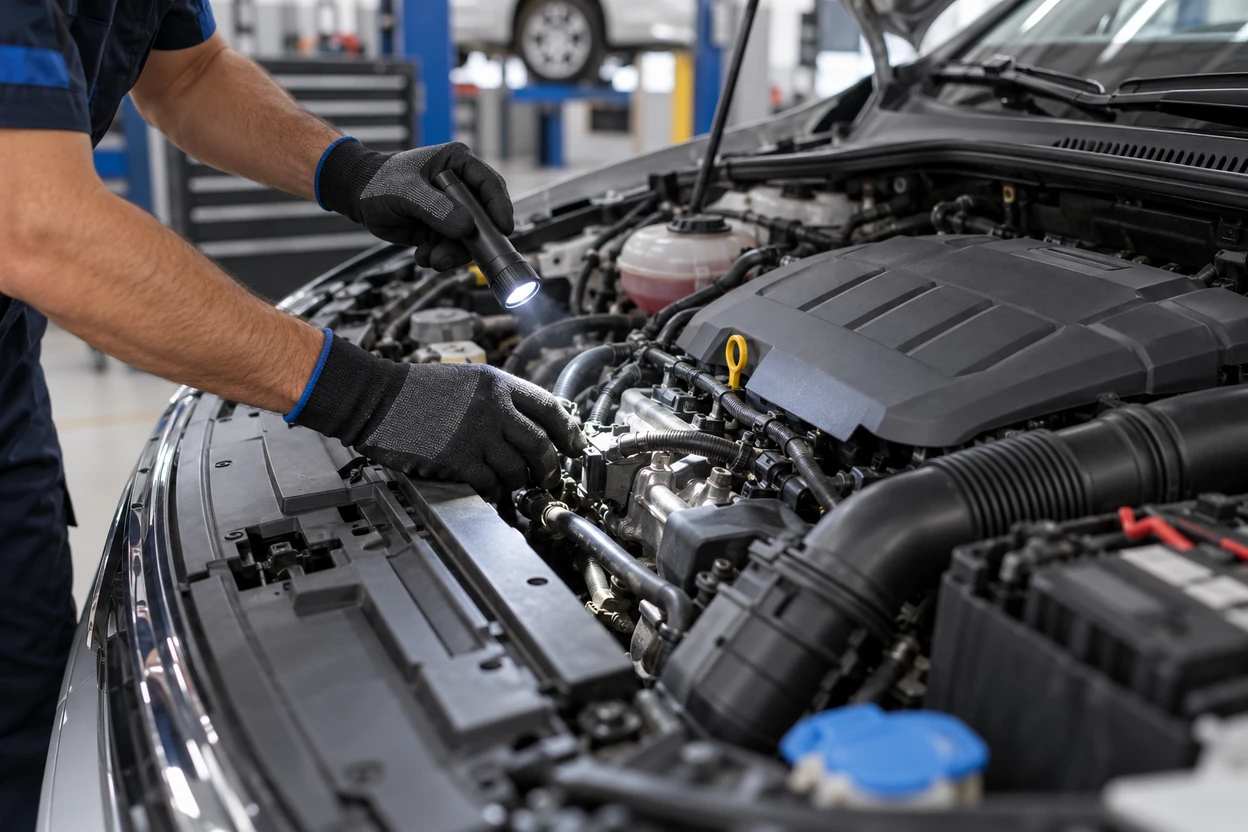
Volkswagen Repair Dubai is an independent VW workshop. We confirm the engine code, read the cam and crank data and quote the repair before any work starts.
How this page was written. Prepared by the Volkswagen Repair Dubai workshop team in Al Quoz 4 and reviewed in October 2026. Prices are the indicative fitted guide ranges published on our own model pages, not fixed tariffs. Engine fitment differs by model, year and market, so the VIN and engine code always come first. For larger engine work see our Volkswagen engine repair page.
Sources. Volkswagen Timing Chain settlement summary, for the EA888 models, years and extended cover. Volkswagen Group warranty bulletin filed with NHTSA, for the timing chain and tensioner coverage terms. 1.2 TSI EA111 engine profile, for the chain revisions and cold start rattle.