In this guide
EPC means Electronic Power Control. On applicable Volkswagens, the amber EPC light indicates an engine-control fault. It does not identify one broken part. If it remains on after starting, or appears while driving, read the dashboard message and assess the car’s behaviour before deciding what to do.
Stop in a safe place and seek assistance. A flashing engine-shaped lamp with rough running, a red oil-pressure/coolant warning, overheating, smoke or a fuel smell needs urgent attention. Do not try to reproduce the fault in traffic.
What the EPC light means
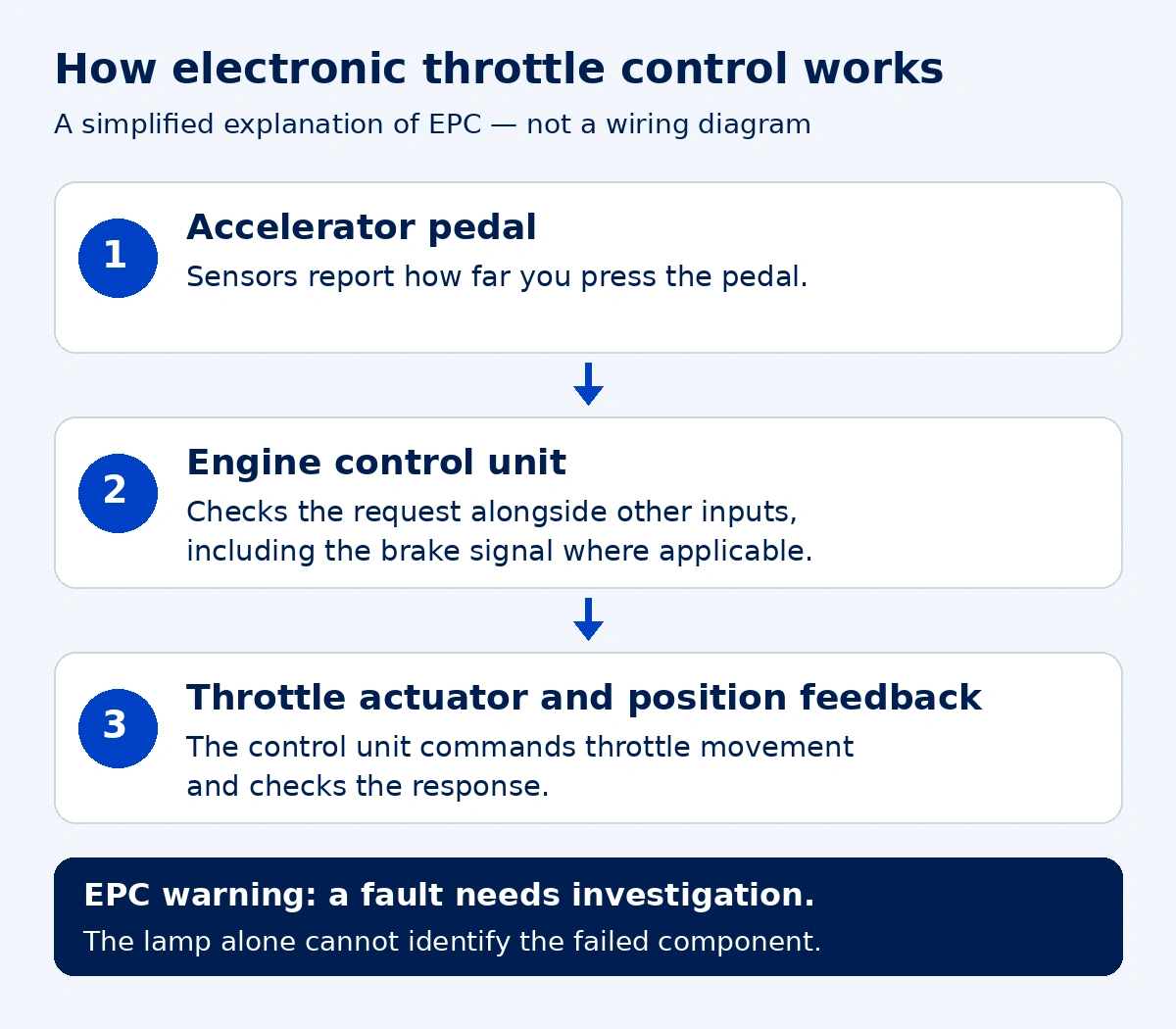
EPC concerns electronic engine-power control. In a petrol electronic-throttle system, pedal sensors tell the engine control unit what the driver is requesting; the control unit commands the throttle and checks its response. The engine controller also uses other relevant inputs. A problem in that control path can bring on the warning.
The EPC letters are therefore a warning category, rather than a diagnosis of a throttle body, pedal sensor or brake switch. The same visible lamp can need different repairs on two cars. Your model year, engine and stored fault information matter more than a photo of the lamp alone.
Warning lamps can illuminate briefly during the ignition-on self-check. A lamp that remains lit after the engine starts, or appears during a journey, needs the response described in your vehicle’s handbook. Do not treat every light shown before starting as an active failure.
Can you drive with EPC on?
There is no universal safe driving distance for an EPC warning. A car that cannot accelerate reliably may be unsafe to merge into moving traffic even if it still moves. The colour of one lamp cannot settle that decision.
The car behaves abnormally
Severe shaking, stalling, loss of normal throttle response or inadequate power for safe progress calls for a safe stop. For an engine-management warning with vibration and reduced power, Volkswagen advises contacting roadside assistance.
Amber light, no obvious symptoms
Check the exact cluster message and your model’s instructions. Arrange prompt assessment and discuss the route before travelling. If you cannot establish a safe next step, seek assistance instead of testing the car on the road.
A red oil-pressure, coolant or brake-system warning takes priority over interpreting EPC. Follow that warning’s stop instruction. Do not open a hot cooling system or keep the engine running to see whether a serious warning disappears.
EPC versus other warning lights
| What you see | What it tells you | What it cannot prove |
|---|---|---|
| Amber EPC letters | An engine-control malfunction on applicable models. | Which component has failed or whether travel is safe. |
| Engine-shaped lamp | An engine/emissions-monitoring warning; flashing can indicate misfire. | That an oxygen sensor or catalytic converter needs replacement. |
| EPC plus ESC/ABS messages | More than one system reports a condition that needs assessment. | That the ABS module is necessarily the cause of EPC. |
| Diesel glow-plug or drive-system message | A different indicator with model-specific instructions. | That petrol EPC advice covers every TDI, hybrid or ID. vehicle. |
Send the exact symbols and words after parking. “Engine malfunction” and “reduced power” describe a condition, not a part to order. An engine-power restriction is often called limp mode, but a warning does not guarantee the car can complete a journey safely.
What can cause the warning?
The likely test path comes from the fault memory and symptoms. These are systems to investigate, not a ranking of the most common failure for every Volkswagen.
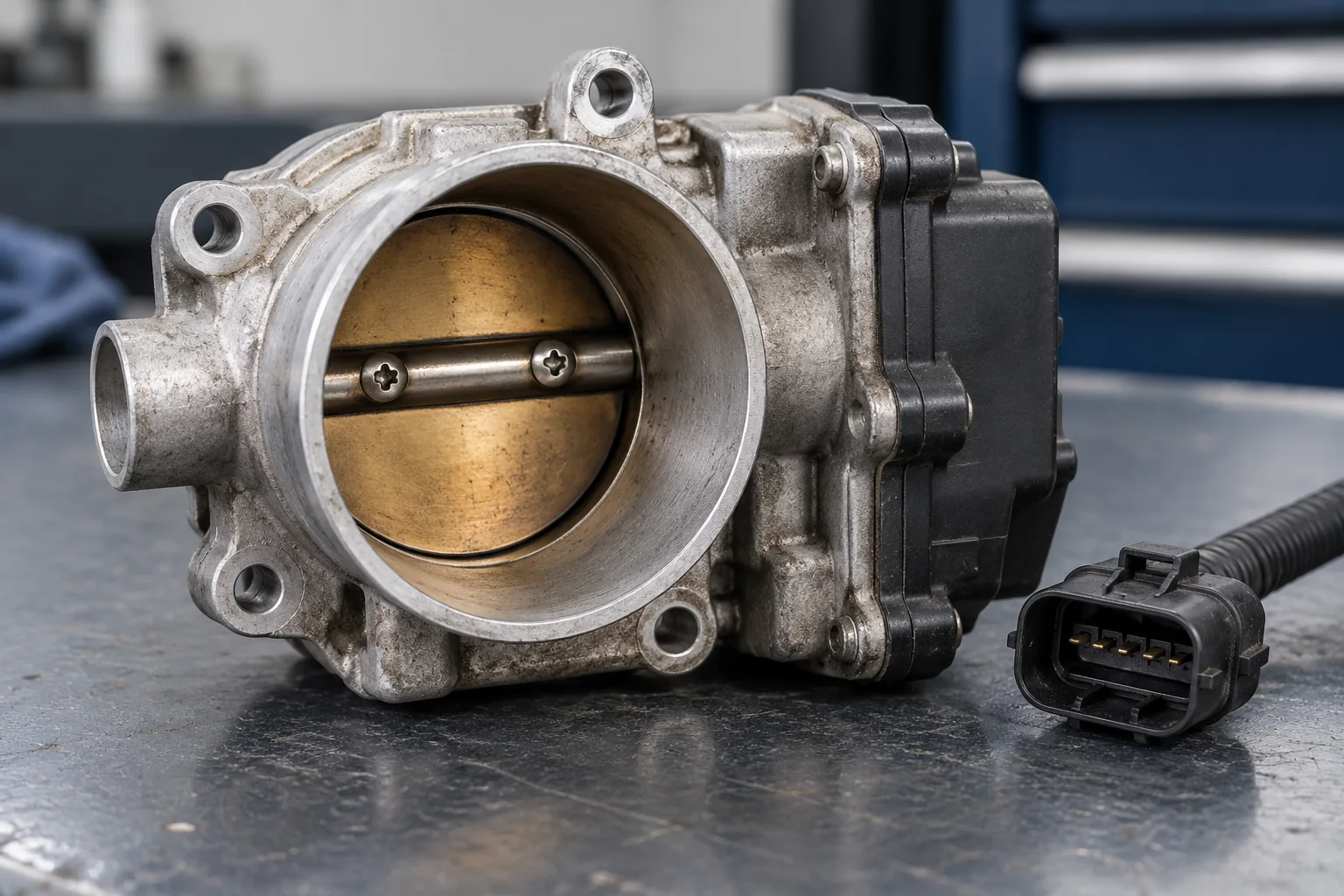
Throttle movement and position feedback
The control unit needs to compare its request with the throttle’s reported position. The actuator, feedback, connector or wiring can require investigation. Deposits may be relevant in some applications, but cleaning is not a universal EPC repair. Required settings after work follow the procedure for the fitted system.
Pedal signals and related inputs
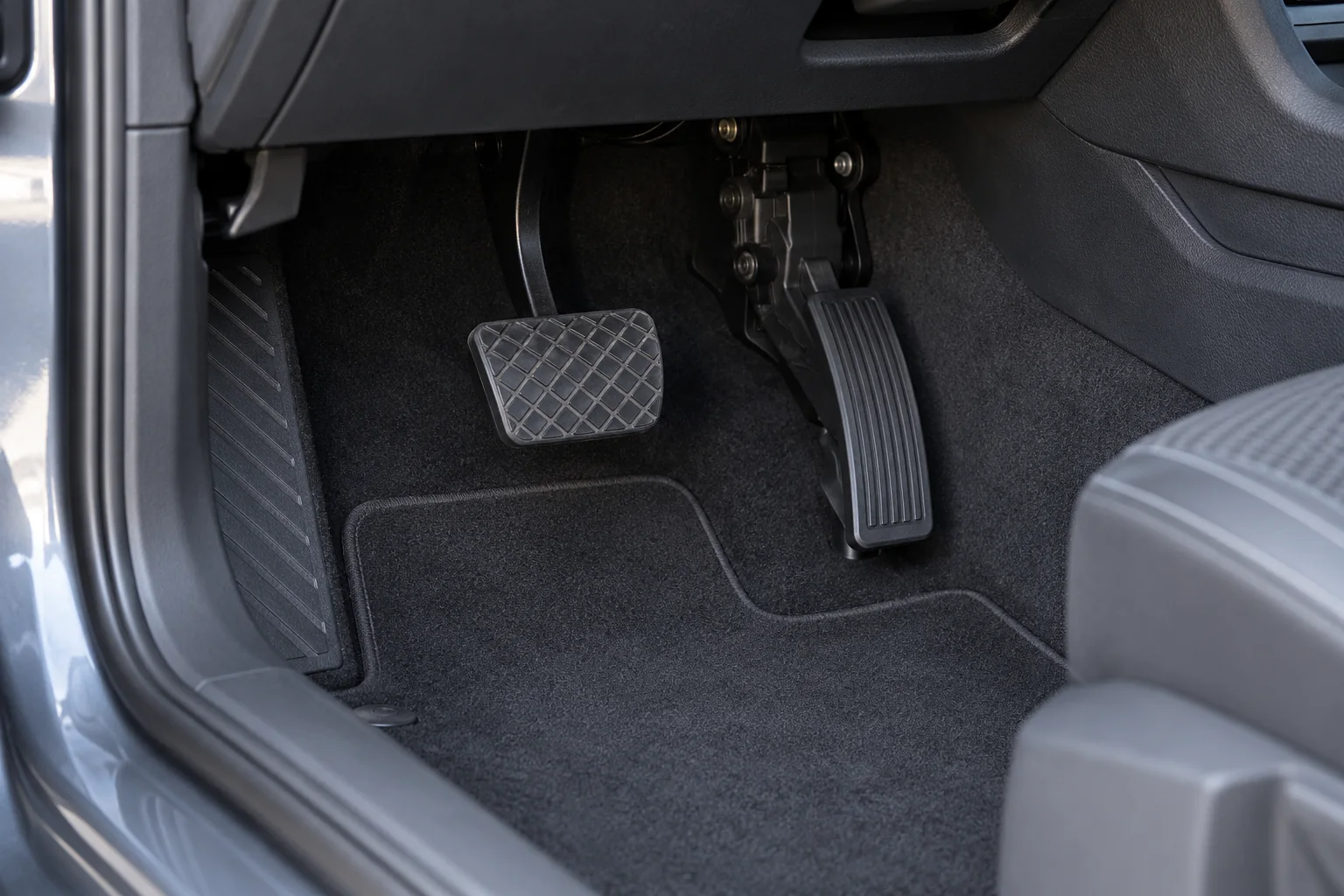
The accelerator pedal is an electrical input. If its reported position is unreliable, the cause may involve the sensor assembly, connections, supply or earth path. Applicable brake-switch signals also form part of electronic power-control logic; an implausible brake input needs the correct tests rather than an automatic switch replacement.
An engine-running or electrical fault
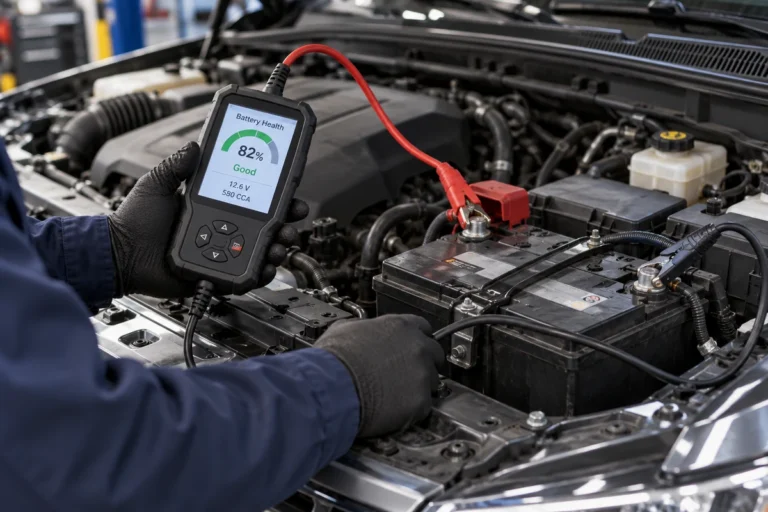
EPC can be reported alongside a rough-running engine or other control faults. Misfire, fuel-pressure or boost findings need their own checks. Multiple warnings can also justify testing supply voltage and connections. Do not decide that a weak battery, a coil or a turbo is the cause merely because another owner had a similar light.
Dubai heat, traffic and dust are useful context to describe, but “it happened in summer” is not a diagnostic result. Note the actual conditions: cold or hot engine, idle or acceleration, recent work, fuel stop, wet weather or a battery event. Avoid turning a local driving condition into a claim that a specific sensor has failed.
Why does EPC go away after restarting?
A restart can end a temporary operating restriction or leave an intermittent fault inactive for the moment. The cause may still exist. Record when the warning first appeared, whether power changed and what made it return. Do not assume that an extinguished lamp means a completed repair.
Repeatedly cycling the ignition, disconnecting the battery or clearing codes may remove useful information without correcting the fault. If you already have a scan report, save it with the exact codes and descriptions. A code naming a circuit does not prove its most expensive component needs replacing.
What to record after parking
- The warning itself. Photograph the dashboard message and all relevant lamps with the vehicle safely stationary. Say whether the engine-shaped lamp was steady or flashing.
- The symptoms. Note shaking, poor acceleration, stalling, unusual sounds or smells. Say whether it happened at idle, when cold, when hot or under load.
- The vehicle details. Share model, year, engine, gearbox and mileage. Recent repairs, tuning, a flat battery or other electrical work can help direct testing.
- The safe arrival plan. Discuss your location and symptoms before travelling. If brake lamps do not work, the brake pedal feels abnormal or power delivery is unreliable, seek assistance.
Keep observations simple. Do not unplug sensors, force the throttle flap, spray cleaner into the intake or work around a running engine to diagnose an EPC lamp at the roadside.
How a workshop finds the cause
A useful assessment preserves the fault history before erasing it, checks relevant live data and follows the actual circuit or system. A generic code reader may give a useful starting point; Volkswagen-capable diagnostics and physical measurements help explain the result.
Depending on the evidence, the checks can include pedal/throttle signal plausibility, the applicable brake input, electrical supplies and connections, or an engine-running investigation. The purpose is to confirm a cause before replacing parts. An intermittent complaint may need further observation rather than a same-visit declaration that everything is fixed.
After a repair, required settings and a suitable recheck matter. The light being switched off is only one observation; the original symptom and returning fault information also need review.
Why repair prices vary
Diagnosis, parts and labour answer different questions. An accessible confirmed electrical connection fault and a failed throttle assembly are different jobs. Ask what the initial assessment covers, when extra testing needs approval and what the written repair estimate includes.
A useful quote names the part and quantity, fitting, any required setup, VAT treatment and applicable warranty terms. Recovery and extended tracing should be clear rather than assumed to be included. For budgeting and booking, use our Volkswagen EPC and engine-warning diagnosis service.
Need help with a current warning?
Call with the symptoms before travelling. Our independent VW workshop is in Al Quoz 4, Dubai, open Monday–Saturday, 9am–7pm. Assistance arrangements and charges are confirmed separately.
Other EPC questions
Does EPC mean the engine needs replacing?
No. It indicates a control fault that needs assessment. Engine rebuilding or replacement requires evidence of mechanical damage or wear; it is not a default response to the warning.
Can the brake light switch cause EPC?
On applicable systems, an implausible brake input can affect electronic power control. That makes it a possible test path. It does not mean every EPC lamp is a switch fault, or that working brake lamps prove every related signal is correct.
Is the advice identical for Golf, Jetta and Tiguan?
The principles of reading the warning, judging symptoms and preserving evidence apply broadly. Exact equipment and procedures vary. Use the handbook for your VIN and tell the workshop the generation and powertrain.
Technical references
- Volkswagen warning and indicator lights — symbol meanings and model-specific handbook advice.
- Volkswagen engine-management warning guidance — vibration, reduced power and seeking assistance. Local assistance arrangements differ.
- Volkswagen Self-Study Programme 210 (PDF) — historical EPC design principles; current vehicle procedures take precedence.
- HELLA accelerator-pedal sensor explanation — function and diagnostic principles; its worked example is not a VW test specification.