
Surface transfer and light marks
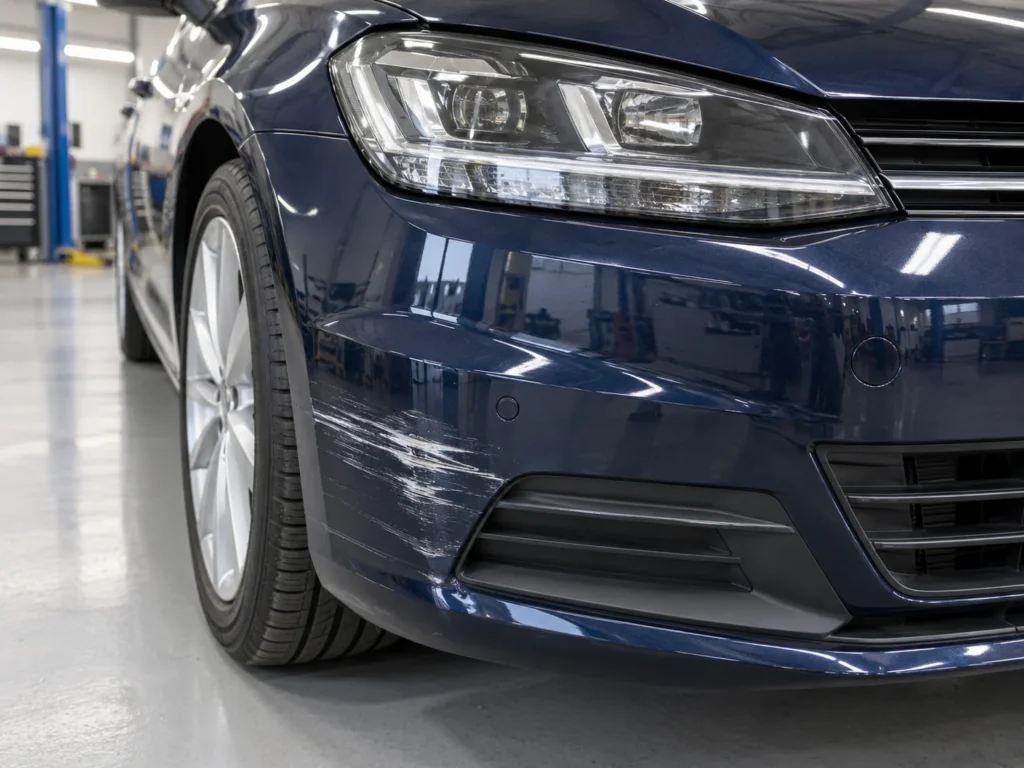
Cleaning and controlled polishing may improve eligible clearcoat marks. The remaining finish limits correction; polishing cannot replace missing colour or remove every deep scratch.
Dented door, scraped bumper or damage after a collision? Our independent Al Quoz 4 workshop assesses your Volkswagen's bodywork, explains the repair and paint options, and sends a written quote before work starts.
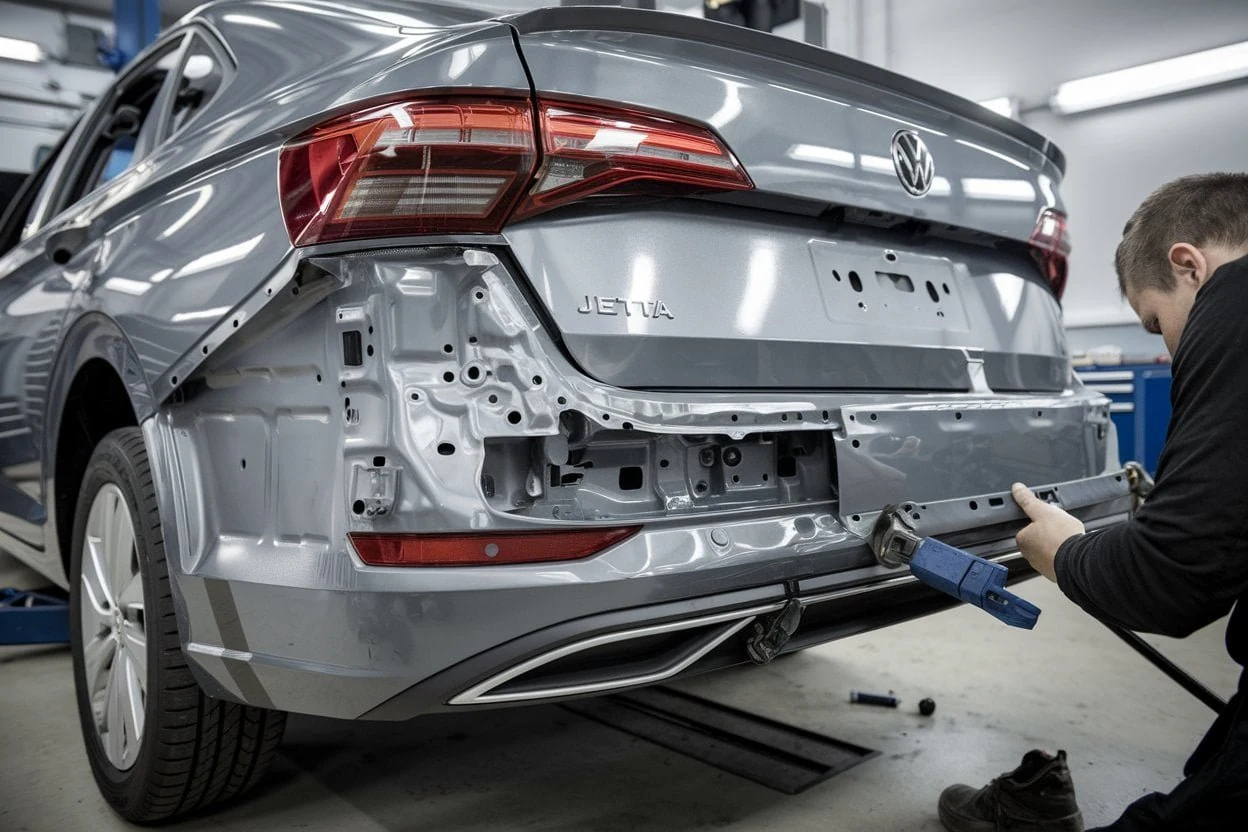
Use these planning ranges to understand the likely scale of the work. Inspection establishes the repair method, panel count, parts and paint requirements.
| Repair and quantity | Guide budget |
|---|---|
| Eligible paintless dent repairOne small or medium accessible dent with suitable existing paint; no refinishing. | AED 200 to 800 |
| One-panel scratch or dent repair and paintRepairable exterior panel, preparation and ordinary refinishing. Replacement panel and adjacent blends extra. | AED 700 to 1,800 |
| Repairable bumper cover and paintOne cover with ordinary repair and refinish; reinforcement, sensors and replacement parts are separate. | AED 800 to 2,500 |
| Bonnet or hood replacementMatched panel, access and fitting, transferred fittings, paint and relevant latch/support checks. Release-cable, catch and strut repairs are priced separately when needed. | Vehicle-specific quote |
| Door shell or assembly replacementDoor position, compatible parts, transferred fittings, paint and required functional checks determine the complete job. A handle-only price is a different repair. | Vehicle-specific quote |
| Door handle replacement, eachIndicative parts and fitting guide. Door position, trim, Keyless Access equipment and paint requirements affect the total; related cable, latch or electrical work is itemised when needed. | AED 300 to 1,000 |
| Sunroof and panoramic roof repairLeak tracing, drainage, mechanism, glass or sunshade work; diagnosis, parts, access and fitting are itemised for the fault. | Fault-specific quote |
| Interior trim repair or replacementMatched insert, panel or lining; parts, clips, removal/refitting, finish and related work are identified in the quotation. | Vehicle-specific quote |
| Side-mirror glass, component or assembly replacementMatched left/right specification, parts and fitting; paint, wiring, door or required camera work identified separately. | Vehicle-specific quote |
| Interior rear-view mirror repair or replacementMatched mirror or serviceable mounting, fitting and functional checks; windscreen, wiring or sensor work itemised separately. | Vehicle-specific quote |
| Cup-holder repair or replacementFront console or rear armrest; matched part, access and fitting determine the work. | Vehicle-specific quote |
| Emblem or badge replacementMatched part and fitting; paint correction, camera or release-mechanism repairs and required electronic work are itemised separately. | Vehicle-specific quote |
| Grille replacement partIndicative part-only guide; some assemblies cost more. Fitting, bumper access, clips, badges, active shutters and required sensor work are additional. | AED 100 to 500+ |
| Multi-panel cosmetic bodyworkSeveral repairable panels and painting; not a structural collision or airbag-replacement package. | AED 3,000 to 10,000+ |
| Same-colour exterior repaintPlanning allowance across common car sizes; major body correction, hidden surfaces and colour changes extra. | AED 3,000 to 6,000+ |
Repair versus replacement follows the damage, material and repair procedure. A small-looking crease is not always the simplest job.
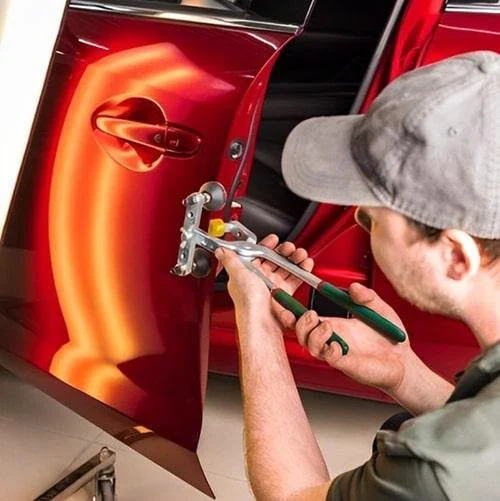
Paint transfer, a shallow scuff and a scratch through the colour need different work. We assess the depth, affected panel and existing finish before recommending correction or paint.
Send a close photo and a wider panel view with your model and year. We explain the repair area, colour matching, any blend and the complete price before work. Alloy-wheel scratches and curb damage need their own assessment.
Tell us where the impact happened and what changed afterwards. Noise, warning lights, water entry or a difficult-to-close door help define the assessment.
Stop safely if a bonnet will not latch, a tyre rubs, the car pulls severely, fluids leak or bodywork obstructs your view. Arrange appropriate recovery and assessment. Injuries, smoke or an immediate danger require the emergency services first.
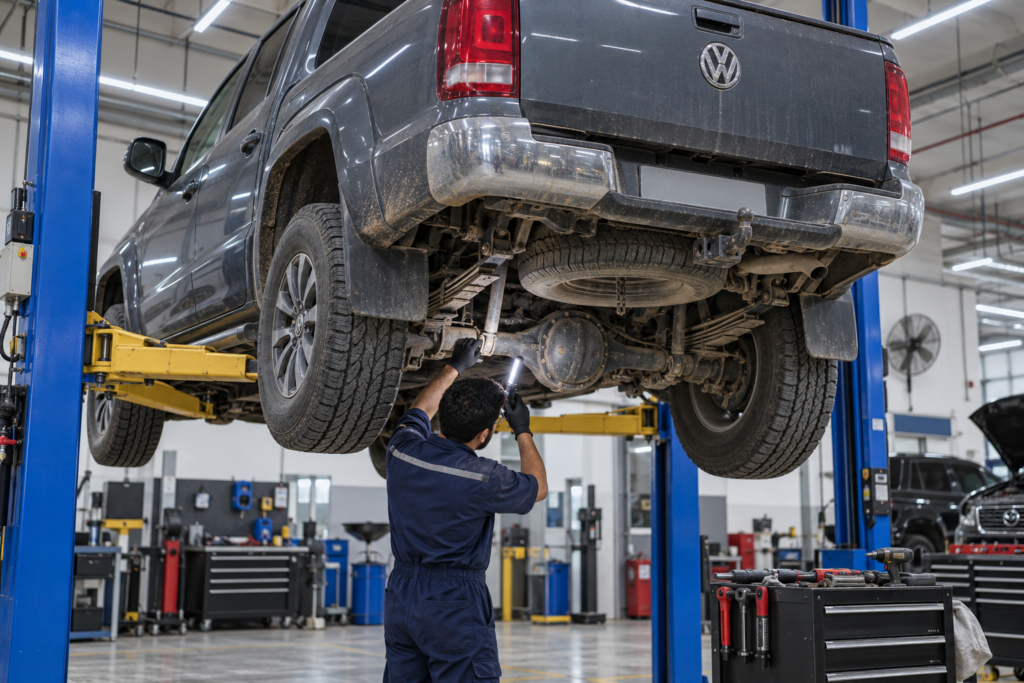
A dented bonnet, a stuck release and a bonnet that will not stay open need different work. We assess the panel and its fittings before recommending repair, component replacement or a new bonnet.
Arrange assistance rather than drive with an unsecured bonnet. For a quote, send your model, year and photos, and tell us whether the problem concerns the panel, opening, closing or support.
A dented skin, a door that drops when opened and a door that will not latch need different work. We assess the panel, hinges, latch and surrounding opening before recommending repair or replacement.
The written quote separates the panel or assembly, transferred fittings, paint, seals and any mechanical or electrical work. If the door will not latch securely, arrange assistance rather than drive with it unsecured.
A loose, broken or unresponsive handle needs a different assessment from a dented door. We check how the affected door opens, closes and locks before recommending parts.
Door position, model year, VIN, trim colour and fitted equipment identify the correct part. The quote names the handle, cover or carrier and explains the genuine or suitable supplier option where available.
Rear door opens only from outside? Check the child-lock setting against your vehicle handbook before assuming the inside handle has failed.
Do not drive with an unsecured door. Arrange assistance and describe whether the problem affects opening, closing or locking so we can plan the next step.
Water on the headlining, a roof that sticks or a sagging sunshade? We identify the fitted roof and the fault before quoting drain, mechanism, glass or shade work.
Loose glass or a roof that will not close? Keep clear of the mechanism and call before moving the vehicle. Fix water entry before replacing a damaged roof lining. A dry trim repair alone does not resolve the leak.
Peeling inserts, a loose door card or sagging roof lining? We assess the affected surface, backing and fixings before recommending a local repair or replacement panel. Water-stained lining needs the roof leak assessed before retrimming.
Airbag damage or a warning? Decorative trim work does not repair the restraint system. Arrange airbag and restraint-system assessment separately; do not conceal damaged airbag areas with cosmetic trim.
Broken glass, a damaged cover or a wing mirror that will not fold? We identify the failed part before quoting glass, a serviceable component or the complete door-mirror assembly.
Warning light or camera? Side Assist can display its warning in the door mirror while using radar elsewhere on the car. An Area View side camera is different equipment. Where fitted, inspect the affected function and follow vehicle-specific camera checks or calibration requirements after relevant work. A mirror replacement does not automatically require replacement of a radar sensor.
Cracked glass, a loose mirror or failed auto-dimming? We assess the interior mirror and its mounting before proposing a repair or matched replacement.
Keep the systems separate. Door mirrors and reversing cameras are different jobs. Rain/light sensors or a front camera near the interior mirror may be separate components. If their mountings or the windscreen are disturbed, follow the vehicle-specific checks and any required calibration; mirror replacement alone does not mean every sensor needs replacing.
A jammed cover, loose grip or broken holder needs a trim assessment. We distinguish sticky residue from a damaged spring, latch, retaining arm or housing before recommending a replacement.
Missing, peeling or loose VW badge? We identify the correct emblem and check its mounting before replacing it, with the surrounding paint and fitted equipment in mind.
Front grille logos, rear boot badges and model lettering use different parts and fixings. VIN, model year, position, dimensions and finish help confirm the match; appearance alone is not enough.
Assess the paint, adhesive and clips before removal. Fit the matched part with the specified fixings and alignment; damaged paint, broken mounts or corrosion need separate work. A peeling finish may need replacement rather than polishing.
On equipped vehicles, the rear badge can house the camera or tailgate-release mechanism. Check operation after fitting. Front badges near radar need equipment-compatible parts and the applicable procedure; coatings or overlays need a compatibility check.
Key-fob logos, wheel centre caps and steering-wheel or airbag-cover damage are separate fittings. Identify the location when enquiring. For a rear camera that fails to display, see our parking-sensor and camera diagnosis.
Cracked slats, a loose front grille or a damaged lower insert? We check the grille and its mounts before deciding what can be retained. Upper and lower sections do not automatically need replacement together.
Good refinishing depends on preparation, colour selection and a complete coating system. A paint code or a glossy surface alone is not the whole quality check.
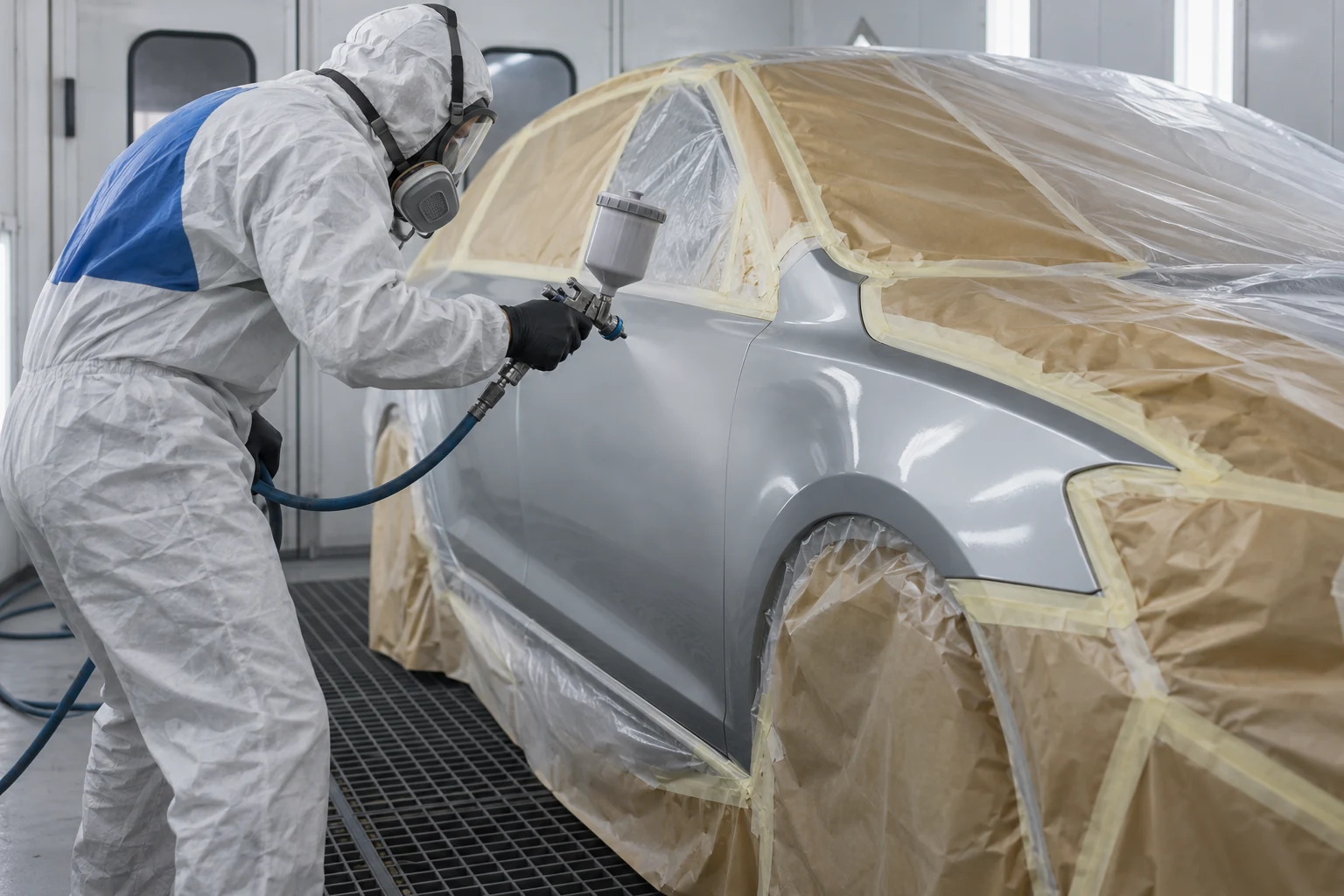
The factory colour code starts the selection. Variants, fading, earlier refinishing and the angle of metallic or pearl effects can change the visible match. A trial spray-out and comparison with the surrounding finish help establish a suitable formula.
Local damage usually starts with a defined panel repair. A same-colour exterior repaint may make sense for widespread deteriorated finish, but it does not automatically include door shuts, the engine bay, hidden surfaces or major body correction.
The work order records the panels, blend areas, trim removal and finish being supplied. We assess colour, gloss, texture, overspray and fit at handover without promising an undetectable repair or a change to the car’s recorded history.
A torn seat, worn driver's bolster or flattened cushion needs a different repair from dirty upholstery. We assess the material and underlying support before recommending a repair, replacement cover or replacement seat component.
Send a close-up and a wider photo, your model and year, and which seat is affected. The price depends on the damaged area, material, foam, removal and refitting. Timing and the agreed work are set out in the written quote before repair.
Adjustment faults or a warning light? A stuck electric seat, failed heater, occupancy-sensor fault or seat-belt problem needs separate diagnosis. Tell us about it before upholstery work. Airbag-related damage is assessed through our restraint-system service; a cosmetic repair does not resolve a safety fault. For stains and routine cleaning, see interior detailing.
The extent of structural work is established separately from dent removal and painting. Manufacturer methods and the required parts determine whether and how the job proceeds.
Rails, pillars, sills, quarter panels and floor sections can be part of the vehicle's load paths and occupant protection. A cosmetic estimate does not establish how these areas should be repaired.
For collision and restraint components, a generic “OEM quality” label is not enough. The specified genuine part, application and repair procedure take priority over a general parts comparison.
A repaired panel can look correct while a damaged bracket, restraint component or assistance system still needs attention. We connect those checks to the actual impact.
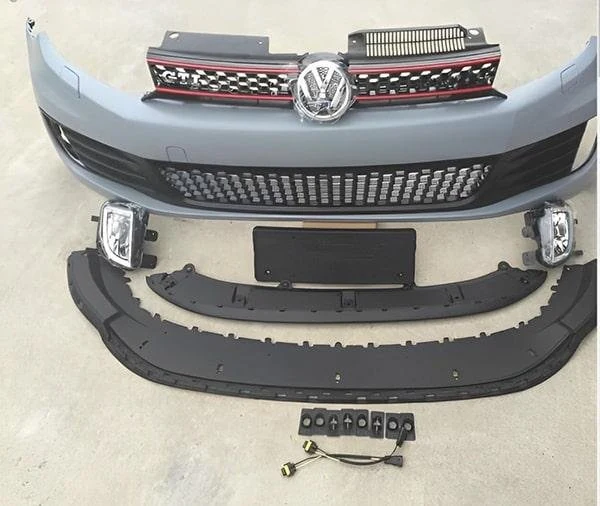
For isolated front or rear cover damage, see our Volkswagen bumper repair service. A cover repair price does not include every component behind it.
Bodywork on an ID. or plug-in hybrid must account for the electrical system as well as the visible panels.
Tell us if the vehicle is electric or hybrid and whether the battery area or underbody was struck. Damage assessment, isolation, storage, transport and body-repair methods need the vehicle-specific high-voltage precautions and appropriately trained personnel.
Battery or high-voltage work is separately assessed and arranged before body repairs proceed. Do not attempt to isolate, open or repair the battery yourself. A car that still switches on has not thereby passed a post-collision battery check.
Photos start the discussion. Inspection and any authorised dismantling establish the final scope, then you approve the written quotation.
For an insurance claim, establish the repair approval, applicable excess, permitted parts and nominated repairer arrangements with your insurer. Keep the accident report or other required documentation and damage photographs. Use the official reporting process applicable to the incident.
An enquiry or workshop estimate is not insurer authorisation. Cover, payment and replacement decisions depend on the policy and claim assessment. We do not promise direct billing or approval on an insurer's behalf.
Self-pay work still needs a written scope. Compare the total repair, parts and checks rather than choosing from an unexplained paint-only amount.
You stay in control of the authorised repair. Additional findings are explained before the work or price is expanded.
Record visible damage, relevant warnings and existing condition. Agree inspection or dismantling charges before that work.
List panels, parts, repair method, paint areas and checks. Confirm availability, timing and the total; obtain approval for later variations.
Carry out the approved work with the required methods and parts. Preparation, drying, refitting and specialist checks determine progress.
Review the finish and relevant functions, explain the work and any outstanding issue, and provide the agreed care and warranty information.
Collection is a chance to review what changed, what was checked and how to care for the repaired area.
Follow the instructions for the actual coating system. Dry to handle is not the same as ready for aggressive cleaning, machine polishing, wax, ceramic coating or paint-protection film.
Use the agreed washing method, and wait for the specified period before applying pressure jets, chemicals or additional protection. Fresh refinishing does not automatically include ceramic coating or PPF.
The job documentation identifies the applicable parts, paint and workmanship terms and how to report a problem. New impact damage and a concern about the completed work need separate assessment; the applicable cover is stated for your repair.
VIN, model year, factory equipment, body material and the existing repair history help establish the right components and method.
Answers about dents, paint, accident repairs and the complete job price.
No. We trace the water-entry path and assess the fitted drainage system, connections, frame, glass position and seals as indicated. A damaged hose or frame needs different work from a blockage. The quote identifies the repair and sealing checks; wet trim, cabin drying and affected electrics are assessed separately.
Not automatically. The glass, shade, guides, cables, motor and cassette can have different serviceable arrangements. We identify the roof version and failed component before recommending parts. A torn blind does not by itself justify replacing the glass mechanism, and a reset cannot repair broken tracks or cables.
No. Paint transfer and some shallow clearcoat marks may improve with controlled correction, but polishing cannot replace missing colour. A small chip may suit a visible touch-up; deeper or wider damage can need preparation and refinishing. Our AED 700 to 1,800 guide concerns one repairable panel with ordinary repair and paint, not a fixed charge for every scratch. Inspection establishes the method and complete quote.
Often, if the backing, housing and adjuster are serviceable and the correct glass is available. Heated, auto-dimming and blind-spot display versions must match the car. Broken hinges, a damaged base or extensive wiring damage can change the repair. The written quote separates glass or component work from a complete assembly, paint and any required electronic checks.
Not automatically. The mirror, rain/light sensor and front-camera hardware can be separate fittings. We identify the damaged part and the equipment installed before quoting. A mirror fault does not by itself justify replacing every nearby component. Related windscreen work, wiring repairs or required calibration are itemised separately. Door mirrors and reversing-camera faults need their own assessment.
Sometimes. PDR depends on paint condition, access, stretch, crease shape, edges and earlier repairs. It can preserve suitable existing paint, but it is not the correct answer for every dent. We assess the panel before recommending the method.
The colour code, paint variant, previous refinishing and the surrounding finish are considered. A spray-out and colour comparison help choose a suitable formula, and adjacent blending may be necessary. The estimate identifies the areas to be painted; an invisible repair is not guaranteed.
No. A repairable cover may be retained, subject to the manufacturer limits and any sensor-related restrictions. The reinforcement, absorber, brackets and sensors behind it are assessed separately. A sound-looking cover does not establish that the whole bumper assembly is undamaged.
Photos can support an initial estimate for visible damage. Inspection confirms material, access, repairability and the hidden work. Any dismantling is authorised first, and additional findings are documented before the scope and quotation are changed.
No. The vehicle procedure determines which restraint-system components require inspection, testing or genuine replacement. Belts, pretensioners, airbags, sensors, wiring and related components can be involved. Clearing the warning alone does not establish a completed restraint repair.
It is included when the agreed damage and repair plan require it, and the quote identifies the charge. Structural body measurement, wheel geometry and camera or radar calibration are different operations; none automatically replaces the others.
No. Insurer approval depends on the policy and claim assessment, and an inspection result concerns the vehicle as presented. We document the agreed repairs and relevant checks, explain remaining issues and provide the work record without promising either outcome.
Not necessarily. The release lever, cable, latch, hinges or alignment may need attention while the panel remains serviceable. We identify the fault before recommending parts. If the bonnet will not latch securely, arrange assistance rather than drive with it unsecured.
Not automatically. Hinges, the latch or striker, seals and damage to the door or surrounding opening can affect how it closes. Inspection determines whether adjustment, a component repair, panel work or replacement is appropriate. Do not drive with a door that will not latch securely.
No. A loose or broken lever, release cable, mounting carrier, latch or Keyless Access fault can need different work. We check the affected door and its locking functions before recommending parts. If the door will not latch securely, arrange assistance rather than drive it.
Follow the refinishing system and fitting team’s instructions for the actual repaired paint. The coating may need further curing after the car is ready for collection. Confirm the appropriate timing before polishing, waxing or applying film; a universal waiting period is not suitable for every product.
Send your model, year and photos, or call to discuss an assessment. Our Al Quoz 4 workshop is open Monday to Saturday, 9:00 am to 7:00 pm.