• Al Quoz 4, Dubai
  • Monday to Saturday, 9am to 7pm

Volkswagen Body Shop in Dubai

Dented door, scraped bumper or damage after a collision? Our independent Al Quoz 4 workshop assesses your Volkswagen's bodywork, explains the repair and paint options, and sends a written quote before work starts.
Panel repair and paint guide: AED 700 to 1,800For one repairable exterior panel. Replacement parts, structural damage and required electronic checks are different work.
  • Damage assessed before repair
  • Written approval before work
  • Al Quoz 4, Dubai
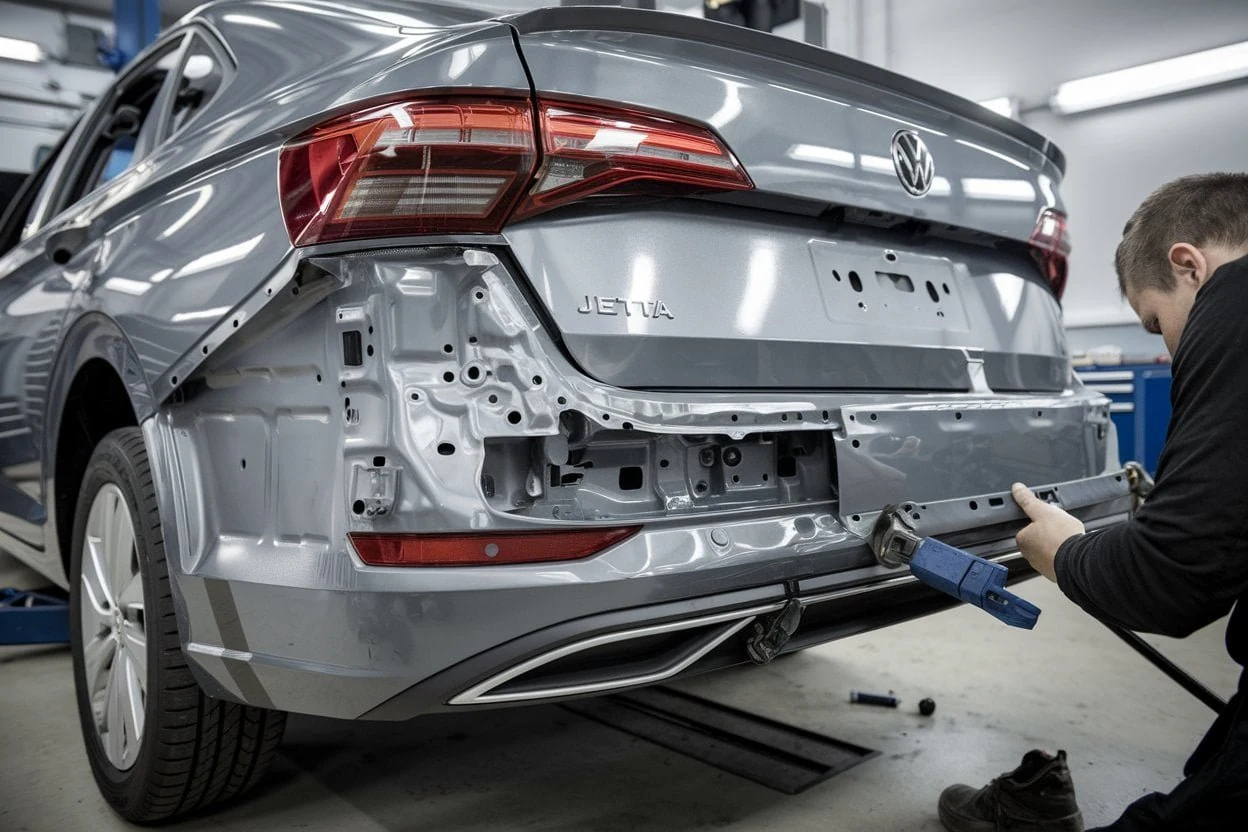
Illustrative rear-body access view with a bumper cover removed
Illustrative rear-body access view. Fittings and repair methods vary by model.

Volkswagen body repair prices

Use these planning ranges to understand the likely scale of the work. Inspection establishes the repair method, panel count, parts and paint requirements.

Indicative AED budgets, not fixed packages. Final scope, parts and tax treatment are identified in the written quotation.
Repair and quantityGuide budget
Eligible paintless dent repairOne small or medium accessible dent with suitable existing paint; no refinishing.AED 200 to 800
One-panel scratch or dent repair and paintRepairable exterior panel, preparation and ordinary refinishing. Replacement panel and adjacent blends extra.AED 700 to 1,800
Repairable bumper cover and paintOne cover with ordinary repair and refinish; reinforcement, sensors and replacement parts are separate.AED 800 to 2,500
Bonnet or hood replacementMatched panel, access and fitting, transferred fittings, paint and relevant latch/support checks. Release-cable, catch and strut repairs are priced separately when needed.Vehicle-specific quote
Door shell or assembly replacementDoor position, compatible parts, transferred fittings, paint and required functional checks determine the complete job. A handle-only price is a different repair.Vehicle-specific quote
Door handle replacement, eachIndicative parts and fitting guide. Door position, trim, Keyless Access equipment and paint requirements affect the total; related cable, latch or electrical work is itemised when needed.AED 300 to 1,000
Sunroof and panoramic roof repairLeak tracing, drainage, mechanism, glass or sunshade work; diagnosis, parts, access and fitting are itemised for the fault.Fault-specific quote
Interior trim repair or replacementMatched insert, panel or lining; parts, clips, removal/refitting, finish and related work are identified in the quotation.Vehicle-specific quote
Side-mirror glass, component or assembly replacementMatched left/right specification, parts and fitting; paint, wiring, door or required camera work identified separately.Vehicle-specific quote
Interior rear-view mirror repair or replacementMatched mirror or serviceable mounting, fitting and functional checks; windscreen, wiring or sensor work itemised separately.Vehicle-specific quote
Cup-holder repair or replacementFront console or rear armrest; matched part, access and fitting determine the work.Vehicle-specific quote
Emblem or badge replacementMatched part and fitting; paint correction, camera or release-mechanism repairs and required electronic work are itemised separately.Vehicle-specific quote
Grille replacement partIndicative part-only guide; some assemblies cost more. Fitting, bumper access, clips, badges, active shutters and required sensor work are additional.AED 100 to 500+
Multi-panel cosmetic bodyworkSeveral repairable panels and painting; not a structural collision or airbag-replacement package.AED 3,000 to 10,000+
Same-colour exterior repaintPlanning allowance across common car sizes; major body correction, hidden surfaces and colour changes extra.AED 3,000 to 6,000+
Hidden damage can change the estimate. Photos support an initial budget. Any authorised dismantling may reveal damaged brackets, impact absorbers, wiring or body structure. We document the finding and obtain approval for a revised quotation before extra work.

Choose the right dent and panel repair

Repair versus replacement follows the damage, material and repair procedure. A small-looking crease is not always the simplest job.
Keep sound panels where appropriate

Paintless dent repair (PDR)
A suitable ding may be reshaped without filler or repainting. Paint condition, stretch, crease depth, body lines, edges and access behind the panel decide suitability. Old repairs or brittle paint can limit the method.
Conventional dent correction
Where paint is broken or the shape cannot be restored by PDR, the proposed work can include metal correction, limited filling where appropriate, preparation and refinishing. Filler does not replace damaged structure.
Panel or assembly replacement
Torn metal, damaged reinforcements, severe deformation or a manufacturer restriction can require a replacement. We explain whether the quote concerns an outer skin, a complete assembly or associated components.
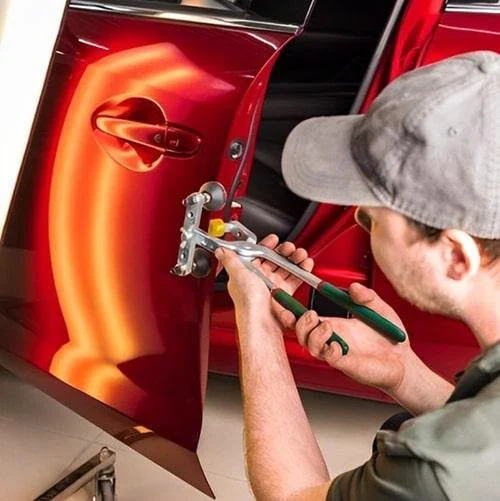
Reference view of a technician working on a small door dent
Dent-repair reference image. The actual damage and access determine the method.

Volkswagen scratch repair

Paint transfer, a shallow scuff and a scratch through the colour need different work. We assess the depth, affected panel and existing finish before recommending correction or paint.

01 · Retain suitable paint

Surface transfer and light marks

Cleaning and controlled polishing may improve eligible clearcoat marks. The remaining finish limits correction; polishing cannot replace missing colour or remove every deep scratch.

02 · Local cosmetic improvement

Small paint chips

A matched touch-up may suit a small chip when the finish expected is agreed. It can remain visible. A broad scrape or a consistent panel finish may call for refinishing instead.

03 · Prepare and refinish

Deep scratches or exposed material

Assess damaged coating, any dent and the underlying metal or plastic. Where paint is missing, prepare the surface and restore the applicable coating system. Exposed steel needs timely attention to corrosion.

Send a close photo and a wider panel view with your model and year. We explain the repair area, colour matching, any blend and the complete price before work. Alloy-wheel scratches and curb damage need their own assessment.

Look beyond the visible dent

Tell us where the impact happened and what changed afterwards. Noise, warning lights, water entry or a difficult-to-close door help define the assessment.

Doors and side panels
Door skins, hinges, latches and intrusion beams have different roles. A dented skin can coexist with damaged internal fittings. A door that does not close correctly needs more than an outer paint repair.
Bonnet, wings and tailgate
Assess panel shape, edges, mounts and shut lines. Bonnet latches and hinges, lamp mounting points and tailgate sealing are checked when affected. Gaps alone cannot establish that the underlying body is correctly aligned.
Front or rear impact
A flexible bumper cover may spring back while clips, crash absorbers or reinforcement behind it remain damaged. Front damage may also affect cooling or air-conditioning components; rear damage can extend towards the boot floor.
Wheel or underbody contact
A wheel pushed out of position, steering pull, rubbing or a damaged sill calls for suspension, steering and underbody assessment. Wheel alignment and structural body measurement answer different questions. A visibly marked alloy also needs rim damage assessment before deciding on cosmetic refinishing or replacement.

Loose panels, leaks or unsafe steering?

Stop safely if a bonnet will not latch, a tyre rubs, the car pulls severely, fluids leak or bodywork obstructs your view. Arrange appropriate recovery and assessment. Injuries, smoke or an immediate danger require the emergency services first.
Call for repair guidance
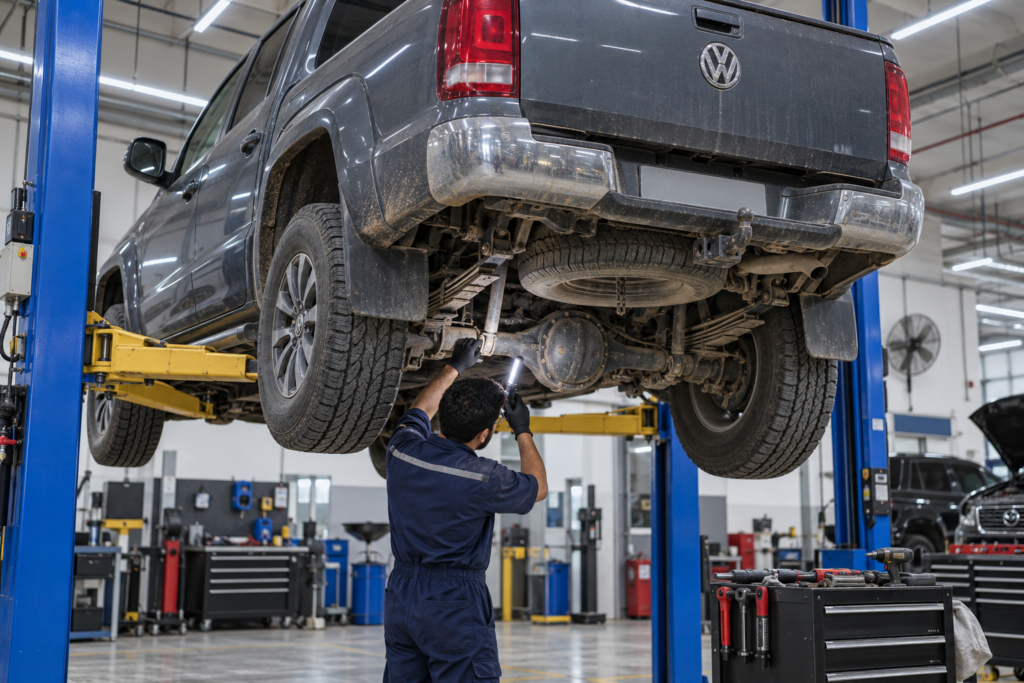
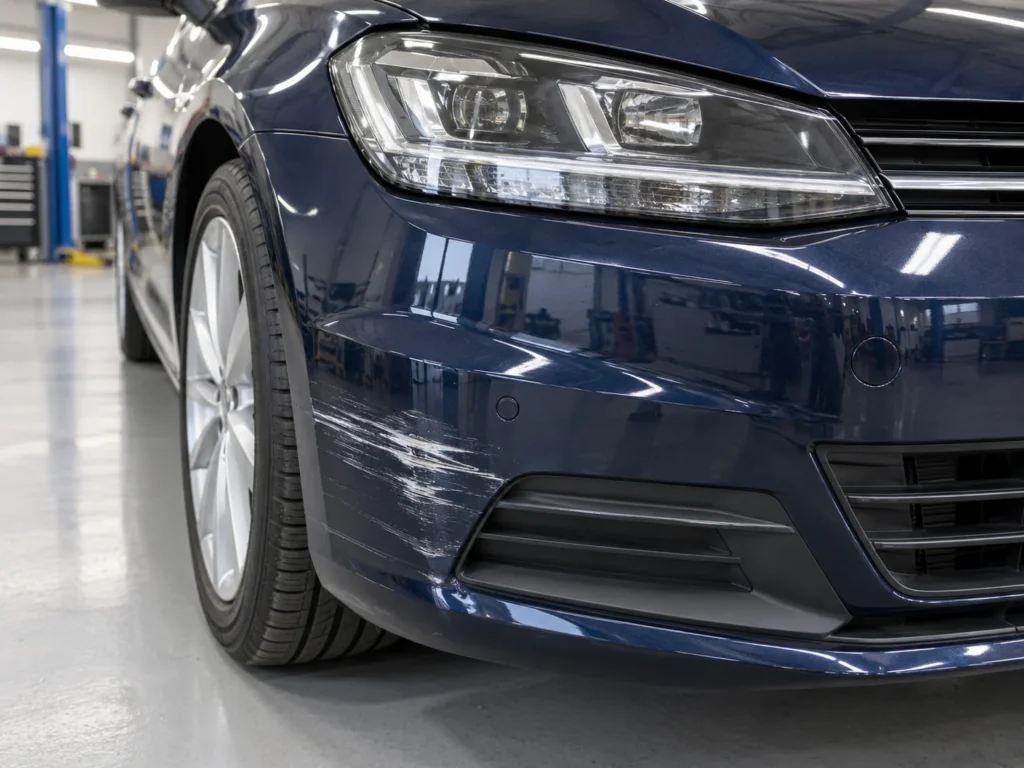
Volkswagen raised on a lift for body and underbody inspectionShallow scuff on a Volkswagen bumper before repair

Bonnet repair and hood replacement

A dented bonnet, a stuck release and a bonnet that will not stay open need different work. We assess the panel and its fittings before recommending repair, component replacement or a new bonnet.

Panel damage and replacement

Repair or replace?
Panel material, creasing, corrosion, inner-frame damage and the applicable repair method determine whether the bonnet can be retained. A surface dent is different from damage around a hinge or catch mounting.
Match the correct bonnet
Check the VIN, model year, body version and fitted equipment before ordering. The quote identifies the replacement panel and any transferred insulation, seals or other fittings; a bare panel price is not the complete fitted job.
Paint and panel fit
Agree preparation, the areas to be refinished and any adjacent colour blending. Check the surrounding panels and mounts after an impact; fitting a new bonnet alone does not establish that hidden damage is resolved.

Release, catch and support faults

Release cable and latch
A loose lever, stretched or broken cable, latch or alignment fault can stop the bonnet opening or closing correctly. Diagnose the affected mechanism before ordering a complete panel.
Hinges and bonnet supports
Check damaged hinges and the fitted support arrangement. A failed gas strut, where fitted, is a separate repair from panel replacement. Do not work beneath a bonnet that cannot be supported securely.
Checks after fitting
Review panel gaps, clearance, secure latching and release operation, support function and any relevant bonnet-open indication. Badges are covered separately in our emblem replacement guidance.

Bonnet will not latch securely?

Arrange assistance rather than drive with an unsecured bonnet. For a quote, send your model, year and photos, and tell us whether the problem concerns the panel, opening, closing or support.

Call about bonnet repair

Door repair and replacement

A dented skin, a door that drops when opened and a door that will not latch need different work. We assess the panel, hinges, latch and surrounding opening before recommending repair or replacement.

Closing, locking and water entry

Alignment and latching
Check hinge condition, the latch and striker, and panel gaps. After an impact, assess the door opening and surrounding structure before treating the problem as a simple adjustment.
Seals and moisture protection
Trace the water-entry path before replacing a weather seal. Check disturbed trim, internal moisture protection and drainage as indicated; a wet carpet alone does not identify the failed seal.
Handles, locks and windows
A release cable, lock actuator or window mechanism can need a separate repair. For a loose or broken lever, see our door-handle repair guidance.

Compare the complete door job

Panel repair or replacement
A repairable outer skin is different from a damaged frame or intrusion beam. The damage and applicable repair procedure decide whether the existing door can be retained.
Shell or complete assembly
Confirm whether the supplied door is a bare shell or includes glass, trim, locks and wiring. Model year, body style, door position and fitted equipment must match; transferred parts and painting belong in the quote.
Fit, finish and function
Review panel fit and the agreed paint finish, then check opening, secure latching, locking, windows and relevant electrical functions. Disturbed seals and trim need correct refitting.

Get the whole door repair quoted

The written quote separates the panel or assembly, transferred fittings, paint, seals and any mechanical or electrical work. If the door will not latch securely, arrange assistance rather than drive with it unsecured.

Call about door repair

Door handle repair and replacement

A loose, broken or unresponsive handle needs a different assessment from a dented door. We check how the affected door opens, closes and locks before recommending parts.

Handle, release cable or latch?

Inside release lever
A loose lever or one that moves without opening the door can involve the handle, release cable or latch. Check the connection and mounting points before choosing the replacement.
Grab handle and worn trim
The grip used to pull the door shut is separate from the release lever. Peeling, sticky surfaces or broken fixings need a trim assessment; check whether the grip or insert is available separately from the door card.
Exterior handle and carrier
A damaged lever, cover or mounting carrier can need a matched replacement. A handle that moves without opening the door can also involve the release cable or latch mechanism.
Keyless Access not responding
On equipped vehicles, compare remote unlocking with the affected handle’s touch function. Check the key, handle sensor, connectors and wiring as indicated; a failed touch function does not by itself prove a broken mechanical handle.

Match the part and finish

Door position, model year, VIN, trim colour and fitted equipment identify the correct part. The quote names the handle, cover or carrier and explains the genuine or suitable supplier option where available.

Replacement budget
The indicative guide above is AED 300 to 1,000 per handle for parts and fitting. Paint matching, difficult access and related cable, latch or electrical repairs can change the total; the written quotation identifies each item.
Targeted repair where appropriate
A sound handle may need a serviceable cable or attachment repaired instead. A broken handle or damaged carrier needs the corresponding part rather than a cosmetic cover over the fault.
Checks after fitting
Verify opening from inside and outside, secure latching and the relevant locking, keyless and child-lock functions. Restore disturbed trim and moisture protection, and agree any remaining work before collection.

Rear door opens only from outside? Check the child-lock setting against your vehicle handbook before assuming the inside handle has failed.

Door will not latch securely?

Do not drive with an unsecured door. Arrange assistance and describe whether the problem affects opening, closing or locking so we can plan the next step.

Sunroof and panoramic roof repair

Water on the headlining, a roof that sticks or a sagging sunshade? We identify the fitted roof and the fault before quoting drain, mechanism, glass or shade work.

01 Leaks and damp trim
Trace the water-entry path. Check the drainage channels, hoses and connections where fitted, plus the frame, glass position and seals as indicated. Drain cleaning will not repair a split hose or damaged frame; sealing over the roof is not a diagnosis.
02 Sticking, grinding or reversal
Assess guides, tracks, cables, drive mechanism, motor and electrical control. A failed component does not automatically require a complete cassette. Required setup and obstruction-protection checks follow the vehicle procedure; repeated resets cannot repair broken parts.
03 Damaged glass or sunshade
Match the glass panel, seal and mounting to the roof version. A torn fabric blind, failed roller or shade guide is separate from the glass mechanism. Assess whether the affected part is serviceable before replacing a larger assembly.

Loose glass or a roof that will not close? Keep clear of the mechanism and call before moving the vehicle. Fix water entry before replacing a damaged roof lining. A dry trim repair alone does not resolve the leak.

Interior trim repair and replacement

Peeling inserts, a loose door card or sagging roof lining? We assess the affected surface, backing and fixings before recommending a local repair or replacement panel. Water-stained lining needs the roof leak assessed before retrimming.

Wood trim and decorative inserts
Match colour, grain, gloss and part code for wood-effect, aluminium or other cabin finishes. A cracked insert or lifting finish may need replacement rather than polishing.
Door cards, dashboard and console
A serviceable insert or clip can be a smaller job than a complete panel. Check broken mounting points and any switches, wiring or moisture protection disturbed during fitting.
Roof lining and pillar trim
Sagging fabric needs its backing assessed, not just more adhesive. Pillar trims and nearby curtain airbags require the vehicle-specific removal, fixing and refitting procedure.

Airbag damage or a warning? Decorative trim work does not repair the restraint system. Arrange airbag and restraint-system assessment separately; do not conceal damaged airbag areas with cosmetic trim.

Side-mirror repair and replacement

Broken glass, a damaged cover or a wing mirror that will not fold? We identify the failed part before quoting glass, a serviceable component or the complete door-mirror assembly.

Glass and backing
Glass-only replacement may suit an intact mounting and working adjuster. Match the glass shape, backing and any heating, auto-dimming or blind-spot warning display fitted to the car.
Cover and indicator
A damaged painted cap or integrated indicator may be separately serviceable. Check clips and the housing underneath; paint matching and additional broken fittings are identified in the quote.
Loose or broken assembly
Assess the base, hinge, door mounting and housing. A cracked support or extensive impact damage can require a complete assembly. Door damage and exposed wiring need their own attention.
Adjustment or folding fault
Check the switch, supply, connectors, wiring and relevant motor before replacing the mirror. Heated-glass, memory or reverse-tilt faults also depend on the equipment installed.

Warning light or camera? Side Assist can display its warning in the door mirror while using radar elsewhere on the car. An Area View side camera is different equipment. Where fitted, inspect the affected function and follow vehicle-specific camera checks or calibration requirements after relevant work. A mirror replacement does not automatically require replacement of a radar sensor.

Interior rear-view mirror replacement

Cracked glass, a loose mirror or failed auto-dimming? We assess the interior mirror and its mounting before proposing a repair or matched replacement.

Loose or detached
Check the mirror joint, bracket and windscreen mounting base. A serviceable fixing may need repair; damage to the bonded base or glass needs assessment before refitting.
Cracked or cloudy
Assess the reflecting surface, housing and adjustment. Glass is not separately serviceable on every assembly; a damaged or deteriorated unit may need complete replacement.
Auto-dimming fault
Check the fitted function, supply, connector and relevant wiring before condemning the mirror. Match the manual day/night or auto-dimming version and any additional fitted functions.

Keep the systems separate. Door mirrors and reversing cameras are different jobs. Rain/light sensors or a front camera near the interior mirror may be separate components. If their mountings or the windscreen are disturbed, follow the vehicle-specific checks and any required calibration; mirror replacement alone does not mean every sensor needs replacing.

Cup-holder repair and replacement

A jammed cover, loose grip or broken holder needs a trim assessment. We distinguish sticky residue from a damaged spring, latch, retaining arm or housing before recommending a replacement.

Cleaning, small part or assembly?
A sound mechanism may need cleaning or a separately available insert, spring or latch. Cracked housings, broken mountings or a mechanism without serviceable parts may require the matching assembly. Do not force a jammed cover.
Match the location and trim
Front centre-console and rear armrest holders are different applications. Model year, VIN, trim colour and fitted console equipment help identify the correct part. Send a close-up and a wider photo so the affected fitting is clear.
Quote fitting and final checks
The written quote identifies the part, trim removal/refitting and any related work. After fitting, check opening, closing, retention and secure surrounding trim. Tell us about spills near switches or sockets so electrical concerns can be assessed separately.

Volkswagen emblem and badge replacement

Missing, peeling or loose VW badge? We identify the correct emblem and check its mounting before replacing it, with the surrounding paint and fitted equipment in mind.

  1. 01

    Match the badge and mounting

    Front grille logos, rear boot badges and model lettering use different parts and fixings. VIN, model year, position, dimensions and finish help confirm the match; appearance alone is not enough.

  2. 02

    Protect the finish during fitting

    Assess the paint, adhesive and clips before removal. Fit the matched part with the specified fixings and alignment; damaged paint, broken mounts or corrosion need separate work. A peeling finish may need replacement rather than polishing.

  3. 03

    Check connected equipment

    On equipped vehicles, the rear badge can house the camera or tailgate-release mechanism. Check operation after fitting. Front badges near radar need equipment-compatible parts and the applicable procedure; coatings or overlays need a compatibility check.

Key-fob logos, wheel centre caps and steering-wheel or airbag-cover damage are separate fittings. Identify the location when enquiring. For a rear camera that fails to display, see our parking-sensor and camera diagnosis.

Volkswagen grille repair and replacement

Cracked slats, a loose front grille or a damaged lower insert? We check the grille and its mounts before deciding what can be retained. Upper and lower sections do not automatically need replacement together.

Match the upper or lower grille
VIN, model year, part number and bumper specification identify the correct part. GTI, R-Line and other trim versions can have different shapes, finishes and openings. Genuine parts or a suitable identified alternative are quoted where available; a similar-looking grille is not enough.
Check clips and surrounding damage
Inspect slats, tabs, clips, brackets and the adjacent bumper before removal. Suitable minor trim damage may be repairable; broken mounts or a distorted grille can need replacement. Fitting includes securing the matched part and checking its alignment. Bumper access, paint damage and hidden impact repairs are separate work.
Protect the fitted equipment
Where fitted, check radar, camera and sensor mounts affected by the damage or removal. A Front Assist warning needs assessment, not just a new decorative grille. Keep sensor areas clear of incompatible covers or coatings; required diagnostics and calibration are itemised for the vehicle.
Separate trim from active shutters
Active grille shutters are moving airflow-control components, not the decorative grille itself. A shutter fault needs its own assessment of the mechanism, actuator, wiring and fault information where fitted. Styling changes must preserve the required airflow, mountings and fitted equipment.
Grille part guide: AED 100–500+. Indicative parts only; some assemblies cost more. Fitting, bumper removal, clips, badges, active shutters and required electronic checks are quoted separately. Send the model, year, damaged section and close-up and wider photos for a written total, availability, timing and applicable parts/workmanship terms.

Paint repair with a defined finish

Good refinishing depends on preparation, colour selection and a complete coating system. A paint code or a glossy surface alone is not the whole quality check.
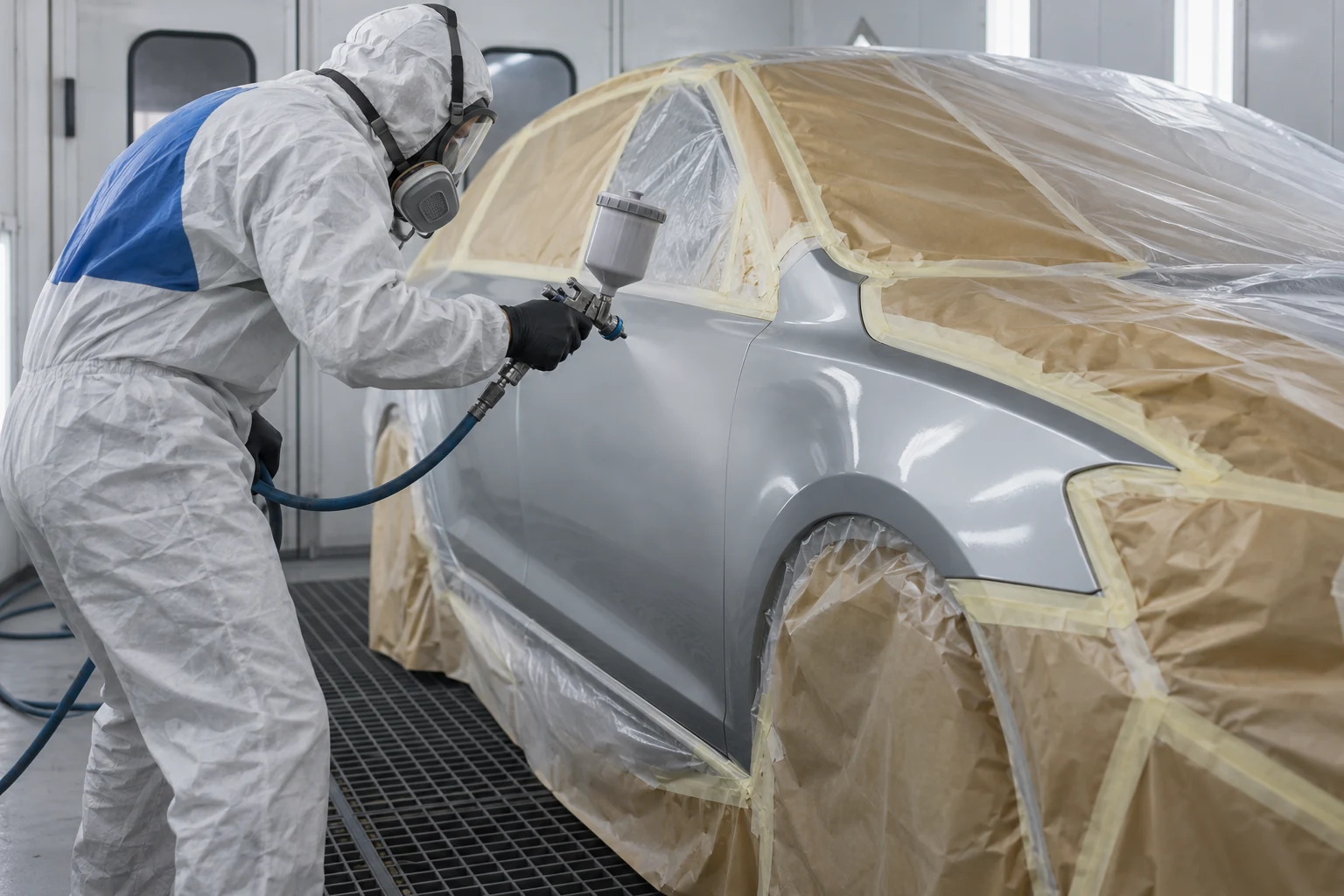
Illustration of a protected technician refinishing a masked car panel in a paint booth
Paint-refinishing illustration; not a photograph of a completed workshop job.

Match the finish, not just the paint code

The factory colour code starts the selection. Variants, fading, earlier refinishing and the angle of metallic or pearl effects can change the visible match. A trial spray-out and comparison with the surrounding finish help establish a suitable formula.

Preparation and substrate
Clean, correct and prepare the affected surface. Primer and any surfacer or sealer must suit the material, repair and selected coating system. Rushing this stage can leave defects that gloss initially hides.
Solid, metallic or pearl
Metallic, pearlescent and multi-stage finishes need the correct colour and application method. Matte finishes have different sheen and repair requirements; ordinary gloss polishing can change their appearance.
Colour blending
An adjacent panel may need a controlled colour blend to achieve a consistent appearance. This is different from repainting the whole vehicle. The additional panel area belongs in the estimate before approval.
Clearcoat and curing
For the applicable Volkswagen refinish procedure, the final clearcoat extends to the panel boundary. A small colour repair does not justify a thin solvent-blended clearcoat edge. Follow the coating system for application, drying and finishing.

One panel or a full repaint?

Local damage usually starts with a defined panel repair. A same-colour exterior repaint may make sense for widespread deteriorated finish, but it does not automatically include door shuts, the engine bay, hidden surfaces or major body correction.

Agree the visible result

The work order records the panels, blend areas, trim removal and finish being supplied. We assess colour, gloss, texture, overspray and fit at handover without promising an undetectable repair or a change to the car’s recorded history.

Volkswagen seat and upholstery repair

A torn seat, worn driver's bolster or flattened cushion needs a different repair from dirty upholstery. We assess the material and underlying support before recommending a repair, replacement cover or replacement seat component.

Leather and fabric damage

Small scuffs, tears, burns and opened stitching are assessed for a local repair. Split seams or badly worn panels may need a replacement upholstery section rather than surface recolouring.

Colour, grain, fabric pattern and stitching are compared with the surrounding seat. We explain the achievable match before you approve it.

Cushions and side bolsters

If the seat has lost its shape or support, we assess the foam cushion and side bolster as well as the cover. Cleaning or recolouring alone does not restore collapsed padding.

The quote separates foam or cushion work from the upholstery repair so you can compare the proposed result and cost.

Repair or replacement

A local repair can retain sound original material. Extensive wear or several damaged sections may justify a replacement cover or reupholstery.

A damaged frame, rail or complete seat needs its own assessment. Model, year, trim and fitted equipment determine compatible parts; upholstery replacement does not automatically mean replacing the whole seat.

Get a quote for the affected seat

Send a close-up and a wider photo, your model and year, and which seat is affected. The price depends on the damaged area, material, foam, removal and refitting. Timing and the agreed work are set out in the written quote before repair.

Adjustment faults or a warning light? A stuck electric seat, failed heater, occupancy-sensor fault or seat-belt problem needs separate diagnosis. Tell us about it before upholstery work. Airbag-related damage is assessed through our restraint-system service; a cosmetic repair does not resolve a safety fault. For stains and routine cleaning, see interior detailing.

Collision repair goes beyond appearance

The extent of structural work is established separately from dent removal and painting. Manufacturer methods and the required parts determine whether and how the job proceeds.

Structural damage needs a repair plan

Rails, pillars, sills, quarter panels and floor sections can be part of the vehicle's load paths and occupant protection. A cosmetic estimate does not establish how these areas should be repaired.

Measurement and access
The relevant Volkswagen procedure identifies measurement points, mounting requirements and permitted correction. Wheel geometry alone cannot prove that the body structure is within specification.
Material and joining method
Steel, high-strength and ultra-high-strength steel, and aluminium require different repair decisions. Heat, pulling, welding, bonding or sectioning must follow the instructions for the specific component.
Confirmed repair capability
Structural work is accepted only after the required procedure, measuring equipment, joining process and specialist arrangements have been confirmed. The written plan identifies what is proposed and where it will be carried out.

Parts and protection matter

For collision and restraint components, a generic “OEM quality” label is not enough. The specified genuine part, application and repair procedure take priority over a general parts comparison.

Genuine collision parts
Volkswagen collision guidance calls for new genuine replacement parts. A salvaged reinforcement or a cut section from another crashed vehicle is not treated as an equivalent structural repair.
Replacement boundaries
Any permitted local sectioning follows the manufacturer method. Joining a salvaged front or rear vehicle section to another body is a different practice and is not an acceptable shortcut.
Corrosion protection
The plan covers affected seams, joints and cavities with the specified protection after repair. Sealers, coatings and drainage must be restored where disturbed; paint on the outside does not protect every hidden surface.
Your written plan identifies the parts, permitted repair method and any specialist work before you decide. We explain the proposed arrangements before accepting a structural job.

Electronics and safety checks after an impact

A repaired panel can look correct while a damaged bracket, restraint component or assistance system still needs attention. We connect those checks to the actual impact.
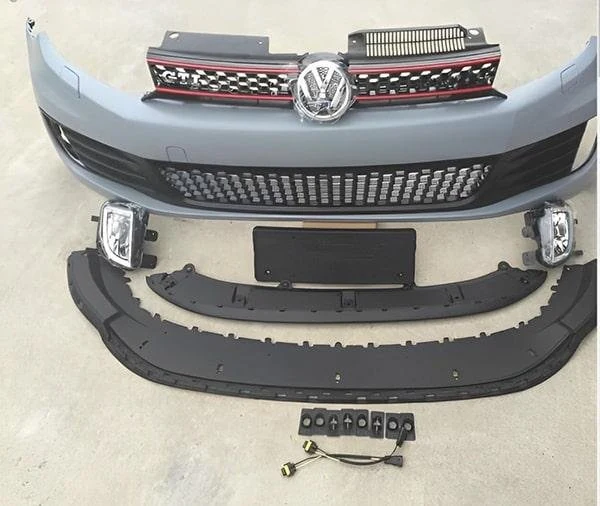
Reference bumper cover, grille, lower trim and associated fittings
Bumper-component reference. Cover, fittings and impact protection are different parts.

For isolated front or rear cover damage, see our Volkswagen bumper repair service. A cover repair price does not include every component behind it.

Check the systems affected by the impact

Airbags and seat belts
The supplemental restraint system (SRS) includes airbags, belts, pretensioners, sensors and related wiring. The procedure determines what needs inspection or genuine replacement, even when no airbag deployed. Clearing a fault or crash record is not a complete repair. For warnings or deployed components, arrange Volkswagen airbag and restraint-system assessment.
Radar, cameras and parking aids
Inspect affected sensor mounts, brackets, connections and permitted bumper repair areas. Filler, coating thickness or a displaced mount can matter. Required calibration is planned and separately identified; the quote confirms the arrangement.
Diagnostic records
Volkswagen-specific diagnostics support the assessment of relevant modules. Pre- and post-repair checks, physical inspection and required basic settings or calibration have different purposes. A code-free scan alone cannot certify every repaired system.
Lights, cooling and running gear
Affected lamps, aiming, wiring, cooling packs, AC components, steering and suspension are assessed as needed. Mechanical repairs, leak tests, wheel alignment and road testing are included only where the agreed job requires them.
Glass work can affect a camera. A damaged screen, its mounting or the surrounding opening needs its own assessment. Our Volkswagen windshield replacement service explains glass compatibility and the required camera checks.

Electric and hybrid collision assessment

Bodywork on an ID. or plug-in hybrid must account for the electrical system as well as the visible panels.

ID. models and plug-in hybrids

Tell us if the vehicle is electric or hybrid and whether the battery area or underbody was struck. Damage assessment, isolation, storage, transport and body-repair methods need the vehicle-specific high-voltage precautions and appropriately trained personnel.

Confirm the specialist assessment

Battery or high-voltage work is separately assessed and arranged before body repairs proceed. Do not attempt to isolate, open or repair the battery yourself. A car that still switches on has not thereby passed a post-collision battery check.

Agree the work before repair

Photos start the discussion. Inspection and any authorised dismantling establish the final scope, then you approve the written quotation.

Self-pay or insurance

For an insurance claim, establish the repair approval, applicable excess, permitted parts and nominated repairer arrangements with your insurer. Keep the accident report or other required documentation and damage photographs. Use the official reporting process applicable to the incident.

An enquiry or workshop estimate is not insurer authorisation. Cover, payment and replacement decisions depend on the policy and claim assessment. We do not promise direct billing or approval on an insurer's behalf.

Self-pay work still needs a written scope. Compare the total repair, parts and checks rather than choosing from an unexplained paint-only amount.

From assessment to collection

You stay in control of the authorised repair. Additional findings are explained before the work or price is expanded.

  1. 1

    Assess and record

    Record visible damage, relevant warnings and existing condition. Agree inspection or dismantling charges before that work.

  2. 2

    Quote and approve

    List panels, parts, repair method, paint areas and checks. Confirm availability, timing and the total; obtain approval for later variations.

  3. 3

    Repair and refinish

    Carry out the approved work with the required methods and parts. Preparation, drying, refitting and specialist checks determine progress.

  4. 4

    Check and hand over

    Review the finish and relevant functions, explain the work and any outstanding issue, and provide the agreed care and warranty information.

How long will the car be needed? A suitable PDR job involves fewer stages than panel replacement and painting. Parts supply, paint complexity, curing, hidden damage, insurer approval and required calibration set the schedule. Your quotation gives the job-specific timing; a photograph alone cannot promise same-day completion.

Check the result and protect the finish

Collection is a chance to review what changed, what was checked and how to care for the repaired area.

Inspect the completed work

Finish and alignment
Review colour, texture and gloss in suitable light, along with panel gaps, trim fit and overspray. Open and close affected doors, bonnet or tailgate to check the relevant latch and seal operation.
Functions and records
Review lamps, locks, windows, sensors and warnings relevant to the repair. Required alignment, diagnostic or calibration results should be explained. Keep the invoice, parts list, repair photographs and any specialist reports.
A concern after collection
Report new water entry, unusual noise, peeling, lifting trim, an assistance warning or an operating problem. Avoid covering the area with film or another repair before the issue is assessed.

Look after fresh paint

Follow the instructions for the actual coating system. Dry to handle is not the same as ready for aggressive cleaning, machine polishing, wax, ceramic coating or paint-protection film.

Use the agreed washing method, and wait for the specified period before applying pressure jets, chemicals or additional protection. Fresh refinishing does not automatically include ceramic coating or PPF.

Keep the terms in writing.

The job documentation identifies the applicable parts, paint and workmanship terms and how to report a problem. New impact damage and a concern about the completed work need separate assessment; the applicable cover is stated for your repair.

Match the repair to the Volkswagen

VIN, model year, factory equipment, body material and the existing repair history help establish the right components and method.

Hatchbacks and saloons
Golf, GTI, Polo, Jetta and Passat panel shapes, trims and equipment vary by generation. A body kit or R-Line designation can change cover, grille and mounting requirements.
SUVs and larger vehicles
Tiguan, Touareg, T-Roc and Teramont can have larger panels and different sensor or lighting arrangements. Panel size, material and access affect the job, not the badge alone.
Commercial and older models
Caddy, Transporter, Amarok and classic Volkswagens need their own parts and repair identification. Import specification, previous paint and parts availability are checked before the work is confirmed.

Body shop questions

Answers about dents, paint, accident repairs and the complete job price.

Will drain cleaning stop every sunroof leak?+

No. We trace the water-entry path and assess the fitted drainage system, connections, frame, glass position and seals as indicated. A damaged hose or frame needs different work from a blockage. The quote identifies the repair and sealing checks; wet trim, cabin drying and affected electrics are assessed separately.

Does a stuck panoramic sunroof need a complete new assembly?+

Not automatically. The glass, shade, guides, cables, motor and cassette can have different serviceable arrangements. We identify the roof version and failed component before recommending parts. A torn blind does not by itself justify replacing the glass mechanism, and a reset cannot repair broken tracks or cables.

Can every Volkswagen scratch be polished out?+

No. Paint transfer and some shallow clearcoat marks may improve with controlled correction, but polishing cannot replace missing colour. A small chip may suit a visible touch-up; deeper or wider damage can need preparation and refinishing. Our AED 700 to 1,800 guide concerns one repairable panel with ordinary repair and paint, not a fixed charge for every scratch. Inspection establishes the method and complete quote.

Can you replace only the side-mirror glass?+

Often, if the backing, housing and adjuster are serviceable and the correct glass is available. Heated, auto-dimming and blind-spot display versions must match the car. Broken hinges, a damaged base or extensive wiring damage can change the repair. The written quote separates glass or component work from a complete assembly, paint and any required electronic checks.

Does an interior mirror replacement include the camera or rain sensor?+

Not automatically. The mirror, rain/light sensor and front-camera hardware can be separate fittings. We identify the damaged part and the equipment installed before quoting. A mirror fault does not by itself justify replacing every nearby component. Related windscreen work, wiring repairs or required calibration are itemised separately. Door mirrors and reversing-camera faults need their own assessment.

Can you repair a dent without repainting?+

Sometimes. PDR depends on paint condition, access, stretch, crease shape, edges and earlier repairs. It can preserve suitable existing paint, but it is not the correct answer for every dent. We assess the panel before recommending the method.

Will the repaired paint match the rest of the car?+

The colour code, paint variant, previous refinishing and the surrounding finish are considered. A spray-out and colour comparison help choose a suitable formula, and adjacent blending may be necessary. The estimate identifies the areas to be painted; an invisible repair is not guaranteed.

Does a damaged bumper always need replacement?+

No. A repairable cover may be retained, subject to the manufacturer limits and any sensor-related restrictions. The reinforcement, absorber, brackets and sensors behind it are assessed separately. A sound-looking cover does not establish that the whole bumper assembly is undamaged.

Can you quote bodywork from photographs?+

Photos can support an initial estimate for visible damage. Inspection confirms material, access, repairability and the hidden work. Any dismantling is authorised first, and additional findings are documented before the scope and quotation are changed.

Is clearing an airbag warning enough after a collision?+

No. The vehicle procedure determines which restraint-system components require inspection, testing or genuine replacement. Belts, pretensioners, airbags, sensors, wiring and related components can be involved. Clearing the warning alone does not establish a completed restraint repair.

Is wheel alignment included in body repair?+

It is included when the agreed damage and repair plan require it, and the quote identifies the charge. Structural body measurement, wheel geometry and camera or radar calibration are different operations; none automatically replaces the others.

Do you guarantee insurance approval or an inspection pass?+

No. Insurer approval depends on the policy and claim assessment, and an inspection result concerns the vehicle as presented. We document the agreed repairs and relevant checks, explain remaining issues and provide the work record without promising either outcome.

Does a bonnet that will not open need complete replacement?+

Not necessarily. The release lever, cable, latch, hinges or alignment may need attention while the panel remains serviceable. We identify the fault before recommending parts. If the bonnet will not latch securely, arrange assistance rather than drive with it unsecured.

Does a misaligned door need complete replacement?+

Not automatically. Hinges, the latch or striker, seals and damage to the door or surrounding opening can affect how it closes. Inspection determines whether adjustment, a component repair, panel work or replacement is appropriate. Do not drive with a door that will not latch securely.

Does a door that will not open always need a new handle?+

No. A loose or broken lever, release cable, mounting carrier, latch or Keyless Access fault can need different work. We check the affected door and its locking functions before recommending parts. If the door will not latch securely, arrange assistance rather than drive it.

How soon can I apply PPF or a ceramic coating?+

Follow the refinishing system and fitting team’s instructions for the actual repaired paint. The coating may need further curing after the car is ready for collection. Confirm the appropriate timing before polishing, waxing or applying film; a universal waiting period is not suitable for every product.

Show us the damage

Send your model, year and photos, or call to discuss an assessment. Our Al Quoz 4 workshop is open Monday to Saturday, 9:00 am to 7:00 pm.