Tiguan AC blowing warm air, cooling poorly in traffic or making a new noise? We check refrigerant charge, leaks, airflow and compressor control before recommending parts. Compressor replacement is estimated at AED 2,200–5,500 fitted, with contamination repairs quoted separately. A suitable control-valve repair may cost less.
Replacement fromAED 2,200
Tiguan AC compressor replacement from AED 2,200 fitted; diagnosis from AED 200. Indicative Dubai guide. The quote lists the compressor, specified oil, seals and recharge. Cleaning, a condenser or other extra parts are listed separately when required.
Poor cooling does not automatically require a new compressor. Volkswagen Repair Dubai in Al Quoz 4 checks leaks, charge, airflow and compressor control. Conventional compressor replacement is estimated at AED 2,200–5,500 fitted; a suitable valve repair at AED 600–1,100. Diagnosis and contamination-related work are listed separately.
1Top faults
Common Tiguan AC compressor faults
Several faults can cause poor cooling. These examples show the different checks and repair budgets; symptoms alone do not identify the failed part.
Check control
Control valve failure
You notice Cooling is weak or comes and goes, but the compressor is quiet.
Usual cause The valve, its wiring or compressor control may not regulate output correctly. Charge and mechanical condition also need checking.
Serious
Seized or noisy compressor
You notice Grinding, rattling or a loud knock when the AC runs, or the belt squeals.
Usual cause Internal wear from low oil or long service in heat, often leaving metal debris in the system.
Check charge
Low refrigerant from a leak
You notice Cooling slowly fades over weeks.
Usual cause A leak at a pipe joint, the condenser or the compressor shaft seal. The compressor is often fine.
Check first
Cold at speed, warm in traffic
You notice AC is cold on the highway but warm at lights.
Usual cause Condenser airflow, fan operation, charge and compressor regulation all need checking.
Less common
Weak airflow, cold air
You notice Air is cold at the vents but there is little of it.
Usual cause Cabin-filter restriction, blower operation and the air path need checking. Poor airflow alone does not identify the part.
2How it works
How the Tiguan AC compressor works
The compressor circulates refrigerant through a system that moves heat out of the cabin. Poor cooling can involve several parts of that system.
One cooling circuit, four main stages
01
Compress
The compressor draws in low-pressure refrigerant gas and sends it out at higher pressure.
02
Release heat
The condenser in front of the radiator releases heat from the refrigerant.
03
Reduce pressure
The expansion valve meters refrigerant into the low-pressure side.
04
Cool the cabin
The evaporator absorbs cabin heat as the blower moves air across it. Refrigerant returns to the compressor.
The control valve regulates output
Many conventional Tiguans use a belt-driven variable compressor. A control valve adjusts output, so a control fault can cause weak cooling without proving the whole compressor has failed.
Heat can expose an existing fault
Dubai heat and limited condenser airflow in traffic increase cooling demand. We check charge, leaks, airflow and control together rather than treating repeated top-ups as the repair.
Internal debris changes the repair
A damaged compressor may leave metal contamination. Oil inspection, cleaning requirements and non-flushable components all affect what must be done before a replacement is fitted.
3By generation
Tiguan AC compressor by generation
The compressor type and refrigerant decide which parts and gas we use.
2008 to 2016Tiguan Mk1
Compressor
Variable displacement, clutchless with control valve
Refrigerant
R134a
What it means for this job
Control valve faults are common with age, compressor oil leaks at the shaft seal also seen
2016 to 2024Tiguan Mk2
Compressor
Variable displacement on MQB, clutchless with control valve
Refrigerant
R134a or R1234yf depending on the car
What it means for this job
We check the label under the bonnet and use the correct gas and oil
Mk2 variantsTiguan Allspace and R
Compressor
Identify the fitted compressor by vehicle specification
Refrigerant
As fitted from the factory
What it means for this job
Confirm the fitted cooling equipment, refrigerant and charge quantity
We identify the compressor, refrigerant and charge quantity from the fitted system and vehicle information. Hybrid and electric-compressor circuits require the correct high-voltage procedure and compatible oil; conventional belt-drive advice does not apply to every Tiguan.
4How we fix it
How we test and replace a Tiguan AC compressor
Testing takes about an hour. A compressor replacement is usually a one day job, longer if a full flush is needed.
1
Pressure and vent test
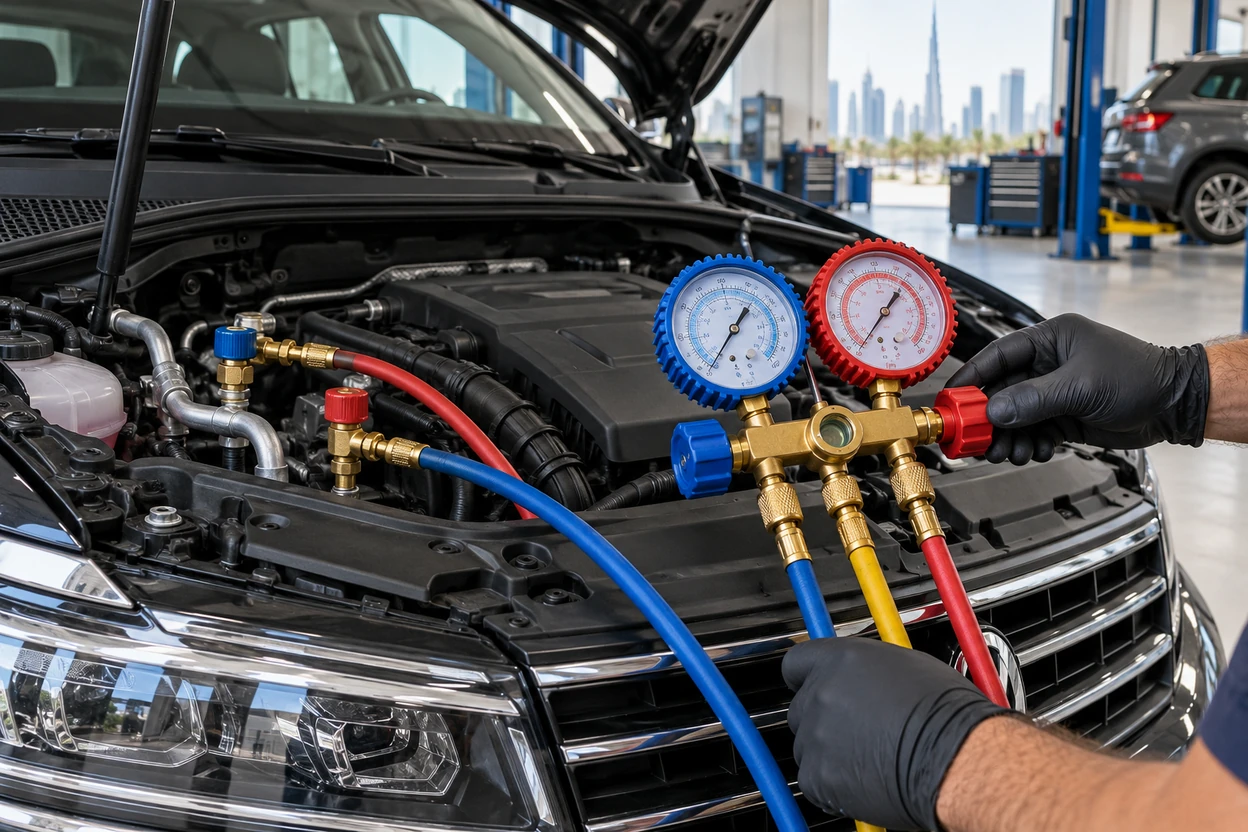
Measure high and low side pressures and vent temperature with the engine at idle and at higher speed.
2
Read the control signal
Use VW diagnostic software to read the climate module data and the control valve current.
3
Leak test
Use a suitable approved leak-detection method, such as electronic detection, compatible dye or dry nitrogen testing, following the system procedure.
4
Recover and inspect
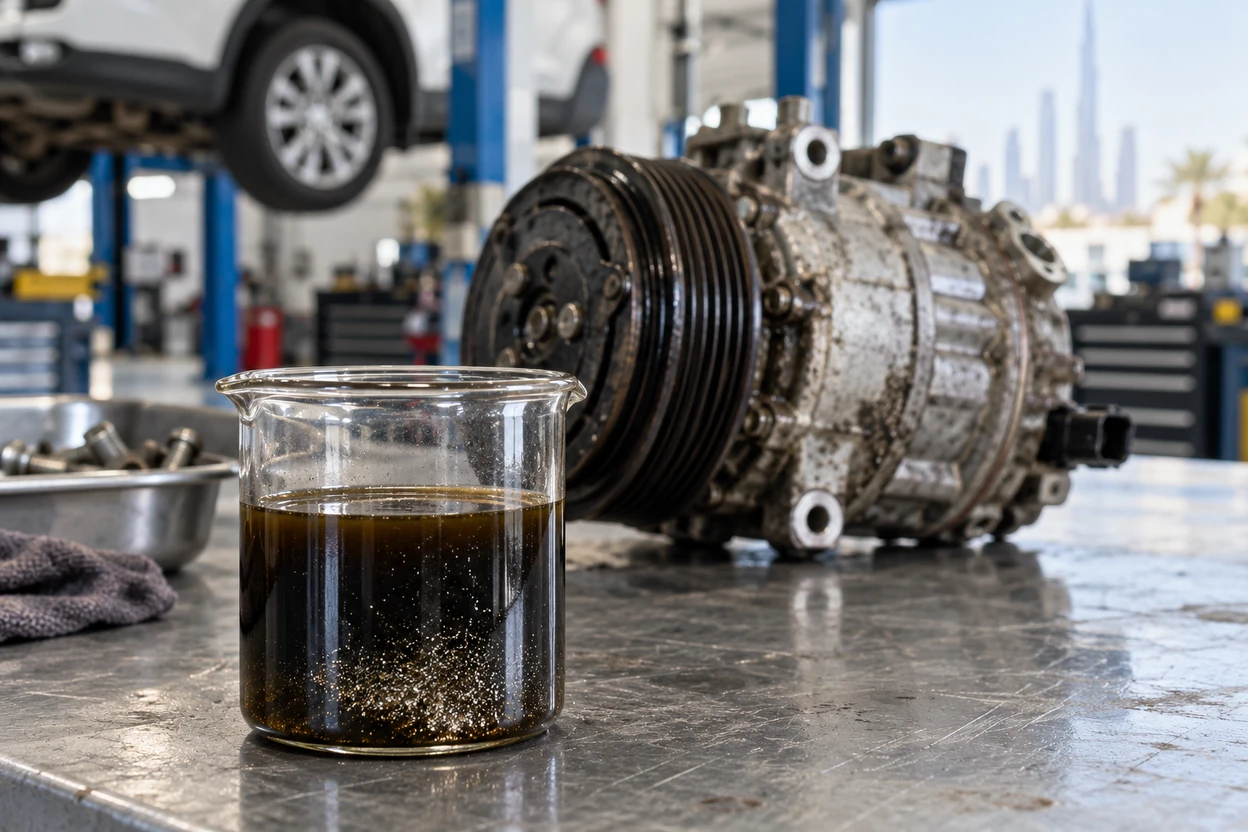
Recover the refrigerant and check the old oil for metal debris.
5
Replace and flush
Clean only components that can be flushed, and replace contaminated or non-flushable parts as required. Fit the compressor with the specified oil balance and new seals.
6
Vacuum and recharge
Pull a deep vacuum, recharge by weight and confirm vent temperature on a road test.
Volkswagen Repair Dubai, independent workshop in Al Quoz 4. Updated 20 October 2026. About our workshop.
Compressor fitted and lines reconnected with new O rings.
5In the workshop
Tiguan AC compressor checks and components
These checks help distinguish a control fault, refrigerant loss and internal compressor damage before you approve parts.
Check 01
Pressure and temperature
We compare pressure readings with vent temperature, operating conditions and control data. One gauge reading alone does not decide the repair.
Check 02
Control valve and wiring
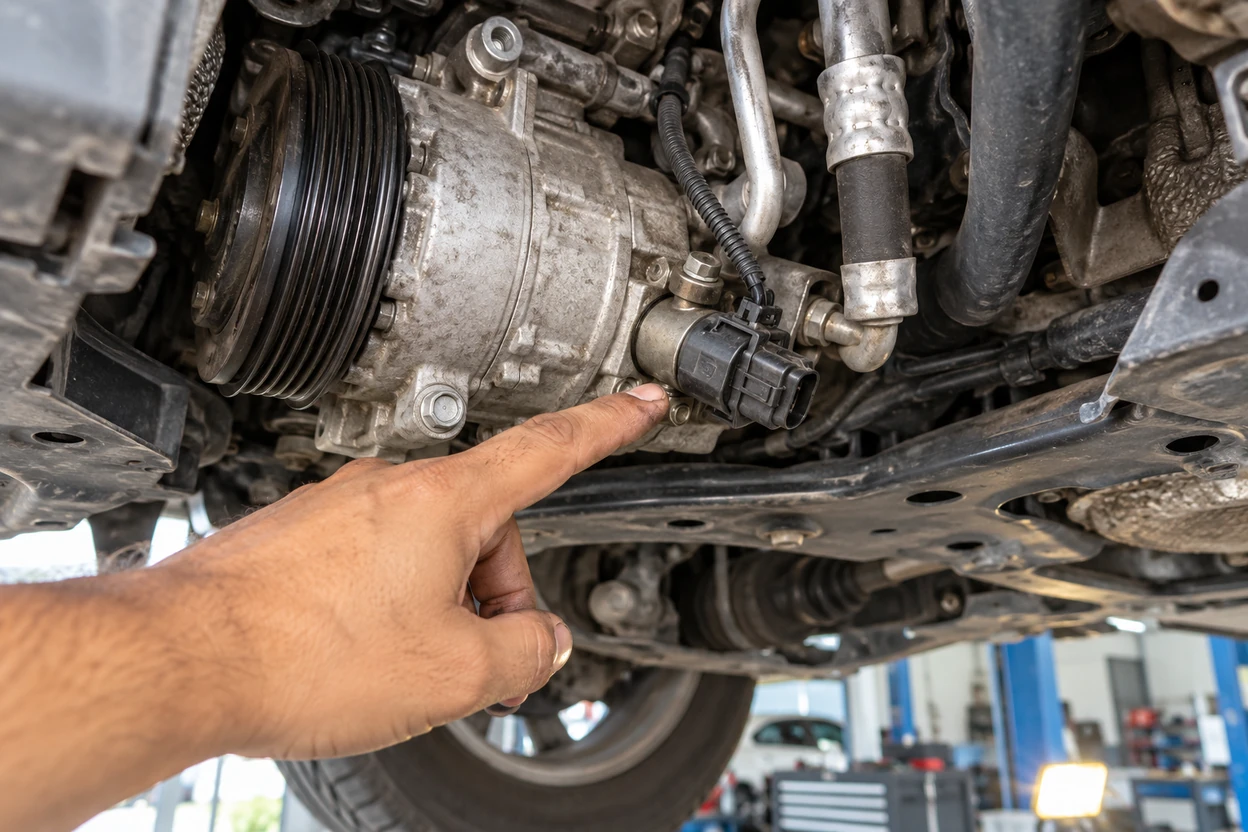
We check the valve command and electrical connection alongside the refrigerant charge and mechanical condition.
Check 03
Oil and contamination
Debris can affect the pipes, condenser and valves. The repair plan follows the manufacturer’s cleaning and parts-replacement requirements.
Testing comes before replacement.
We explain the findings and whether a valve repair, leak repair or replacement suits the confirmed fault.
Three very different repairs that can look the same from the driver seat.
Gas
Leak repair and recharge
Cooling faded slowly over weeks
Pressures low but compressor quiet
Leak found and fixed before refilling
Cheapest fix when the compressor is healthy
Valve
Control valve replacement
Gas charge correct but pressures do not change
Compressor quiet and turning normally
Valve swapped after recovering the gas
Saves the cost of a full compressor
Compressor
Compressor replacement
Grinding, knocking or seized
Internal leak or no pumping at all
Cleaning and replacement parts as required
New or quality remanufactured unit
7Price factors
What affects the price of a Tiguan AC compressor
The right budget depends on the fault, the fitted system and whether contamination or leaks need additional work.
01
The repair actually needed
A suitable control-valve repair differs from a complete compressor replacement. We test before recommending either.
02
Compressor choice
Compare the named genuine, OEM supplier or suitable remanufactured unit, its condition and the applicable warranty terms.
03
Contamination and related parts
Metal debris may require cleaning, a condenser, drier or other parts. Not every component can be flushed.
04
Refrigerant and oil specification
The fitted gas type, charge quantity and required oil affect the work. R1234yf and R134a are priced differently.
05
Leaks and belt condition
A leaking pipe, condenser or worn auxiliary belt is assessed and quoted separately where relevant.
8Price guide
How much does a Tiguan AC compressor cost?
Testing is estimated at AED 200–350. Compressor replacement is AED 2,200–5,500 for the listed conventional systems, before additional contamination work. The listed AED 800–1,500 cleaning/drier/valve work can bring these combined items to AED 3,000–7,000; a condenser or wider damage costs extra.
Replacement fromAED 2,200
AC diagnosis and leak testPressures, control data and appropriate leak checks
AED 200 to 350
Control valve replacementValve, recovery and recharge
AED 600 to 1,100
Compressor, OEM supplierCompressor, oil, O rings and recharge
AED 2,200 to 3,800
Compressor, genuine VWCompressor, oil, O rings and recharge
AED 3,500 to 5,500
Cleaning, drier and valve workEstimated additional work; condenser or wider damage priced separately
AED 800 to 1,500
Indicative guides, not fixed tariffs. Gas type and part choice are confirmed on your written quote.
Estimates vary with the fitted parts and work required. Your written quote lists parts, labour, diagnostic charges, VAT treatment and any extra repairs. Ask about the applicable parts and labour warranty terms before approving work.
Tell us whether it is weak all the time, fades gradually or changes between traffic and normal driving. These patterns help guide testing.
02
Describe any new noise
Report when a rattle, grinding or belt noise occurs. The compressor, pulley, belt or another accessory may be involved. Do not repeatedly run a noisy system to test it.
03
Compare airflow and temperature
Is the air warm, or is it cold but barely blowing? Weak airflow also needs checks of the cabin filter, blower and air path; it does not identify a compressor fault.
04
Mention any visible oily staining
If you have already noticed oily staining around an AC pipe or compressor, mention it. The source needs confirmation; do not reach into the engine bay to find it.
01How do I know if my Tiguan AC compressor is bad?
Warm air or noise can involve the compressor, charge, control valve, fans or other parts. We compare pressures and temperatures with control data, check leaks and airflow, and inspect the belt drive where fitted before choosing a repair.
02How much is a Tiguan AC compressor in Dubai?
The listed fitted estimates are AED 2,200–3,800 for an OEM-supplier compressor and AED 3,500–5,500 for genuine VW, including specified oil, seals and recharge. Diagnosis and contamination repairs are additional. Confirm the refrigerant, complete repair total, VAT and warranty terms in the quote.
03Can I just regas my Tiguan AC?
A recharge is not a substitute for investigating a low charge. We check for leakage and previous servicing errors, then repair the cause and charge by the specified weight. The refrigerant type and amount must match the car.
04What is the AC control valve?
On relevant variable-displacement compressors, an electrically controlled valve regulates output. A valve-only repair is considered when testing confirms the fault, the compressor remains serviceable and a compatible repair is available.
05Can I drive with a noisy AC compressor?
Do not assume switching the AC off makes a noisy compressor safe: many belt-driven versions keep turning. With grinding, belt damage, smoke or a burning smell, stop the engine safely and seek recovery advice. Do not repeatedly restart it to test the noise.
06Does the Tiguan compressor have a clutch?
Many conventional Tiguans use clutchless variable compressors, but the exact type depends on the fitted system. Hybrid versions may have an electric compressor. We identify the unit before applying a test or replacement procedure.
07Why does my AC work on the highway but not in traffic?
Condenser airflow and fan faults are possibilities, but charge, compressor regulation and other faults can behave similarly. We test under the conditions that reproduce the problem rather than selecting a part from this symptom alone.
08Do I need a system flush with a new compressor?
Cleaning and replacement requirements depend on the failure, oil condition, contamination and manufacturer instructions. Some parts cannot be effectively flushed. A contaminated condenser may need replacement; flushing alone is not a complete repair plan.
09Which refrigerant does my Tiguan use?
Check the under-bonnet refrigerant label and vehicle information. Many Mk1 cars use R134a; later cars can use R134a or R1234yf depending on market and production version. Use the stated charge weight and compatible oil.
10How long does compressor replacement take?
A straightforward conventional compressor replacement may take one working day after diagnosis and parts confirmation. Contamination, additional leaks, electric-compressor procedures or extra parts can extend the time.
11Is a remanufactured compressor a good idea?
A suitable remanufactured unit may be an option when compatible and available. Compare its supplier, testing, included parts and written warranty conditions with a new unit. We quote the applicable options without treating them as identical.
Tell us what the AC is doing and we will help arrange a check. The model year is useful if known. We explain the findings and fitted repair cost before you approve work.