Valve cover gaskets
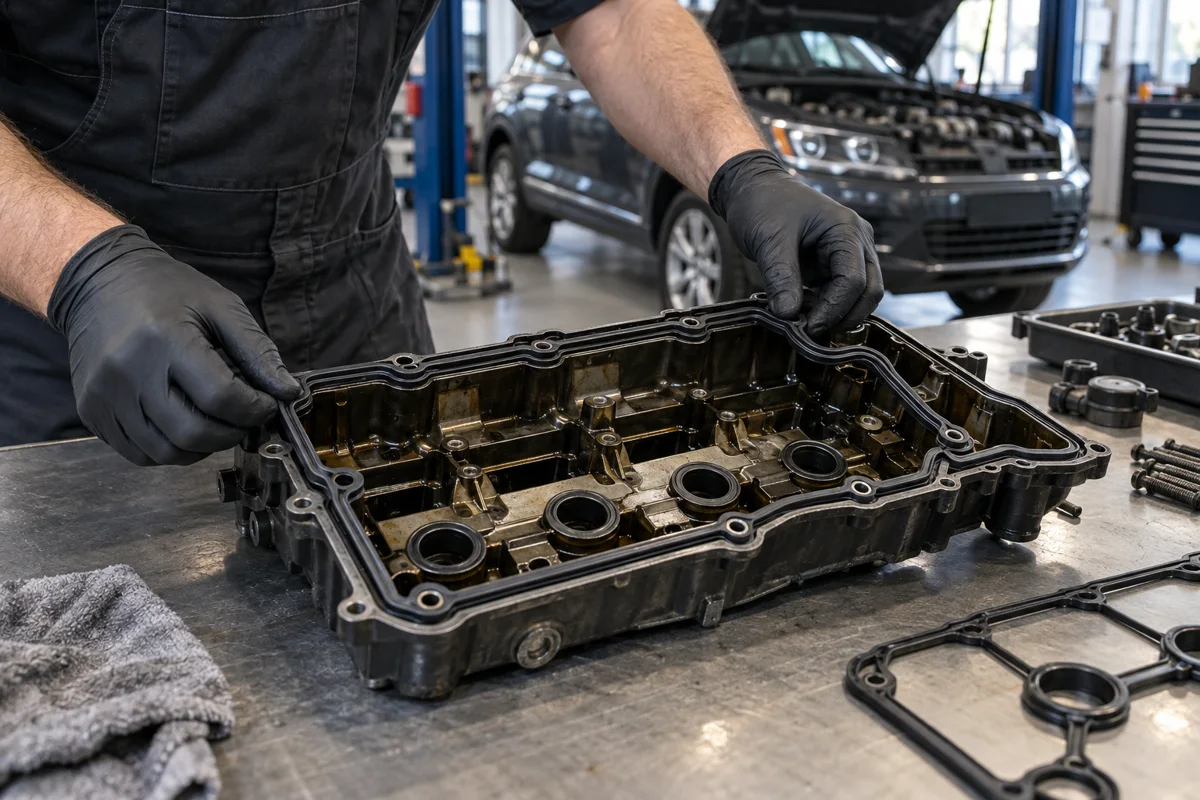
Top of the engine. Oil seeps down the sides and can smoke on the exhaust manifold.
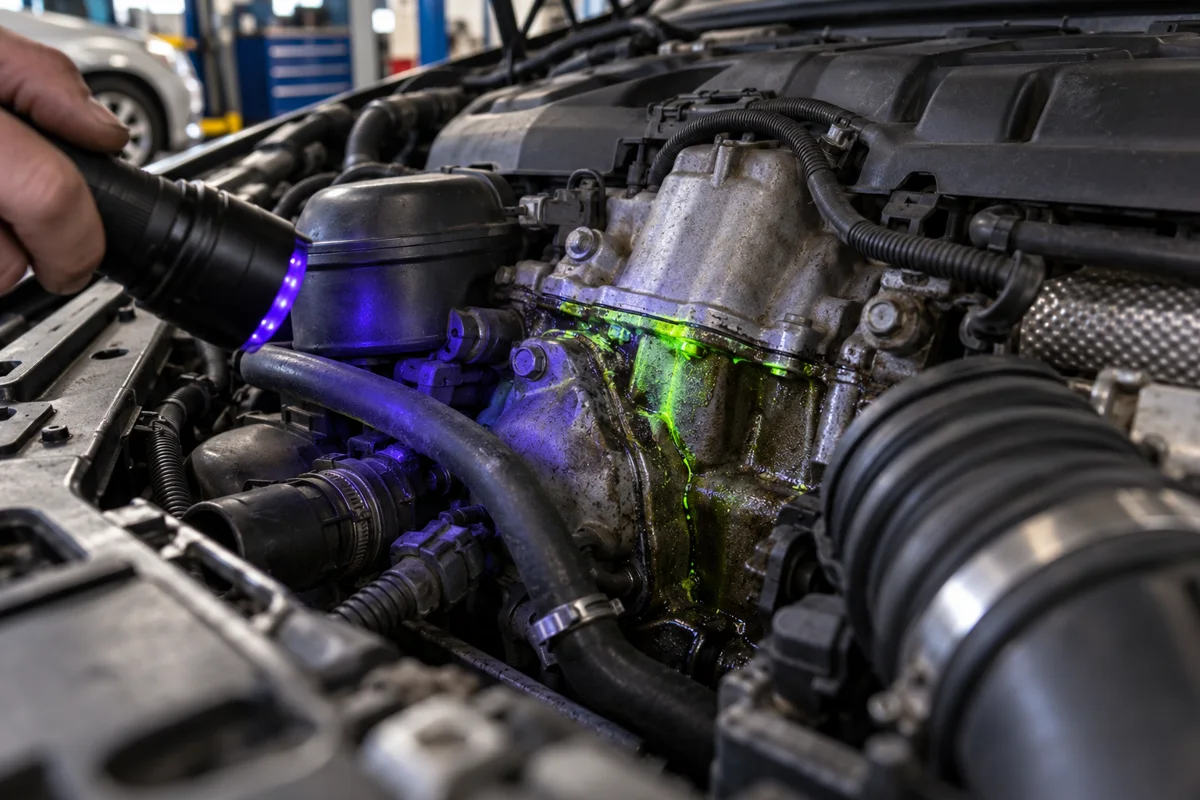
AED 750 to 1,500 per sideOil spots on your parking space, a burning smell after a drive or the oil level dropping between services? Oil can travel from several places to one drip point. We inspect the engine, clean the affected area and use compatible UV dye where needed before quoting the confirmed repair.
Touareg oil leak repairs from AED 550. Indicative Dubai guide. The leak source, engine and parts decide the final price.
Volkswagen Repair Dubai, independent workshop in Al Quoz 4. Updated 20 October 2026. About our workshop.
Possible sources include covers, filter housings, cooler connections, pan seals and crankshaft seals. Indicative repairs start at AED 550, with listed examples up to AED 3,300; complex access or other faults can cost more. Volkswagen Repair Dubai in Al Quoz 4 diagnoses the source before quoting.
Where the drip lands gives the first clue, but oil runs down the engine before it falls. These are six areas to inspect; the drip location alone cannot identify the leaking part.
Top of the engine. Oil seeps down the sides and can smoke on the exhaust manifold.
AED 750 to 1,500 per sideFront or side of the engine. Often wets the area below the filter after an oil change.
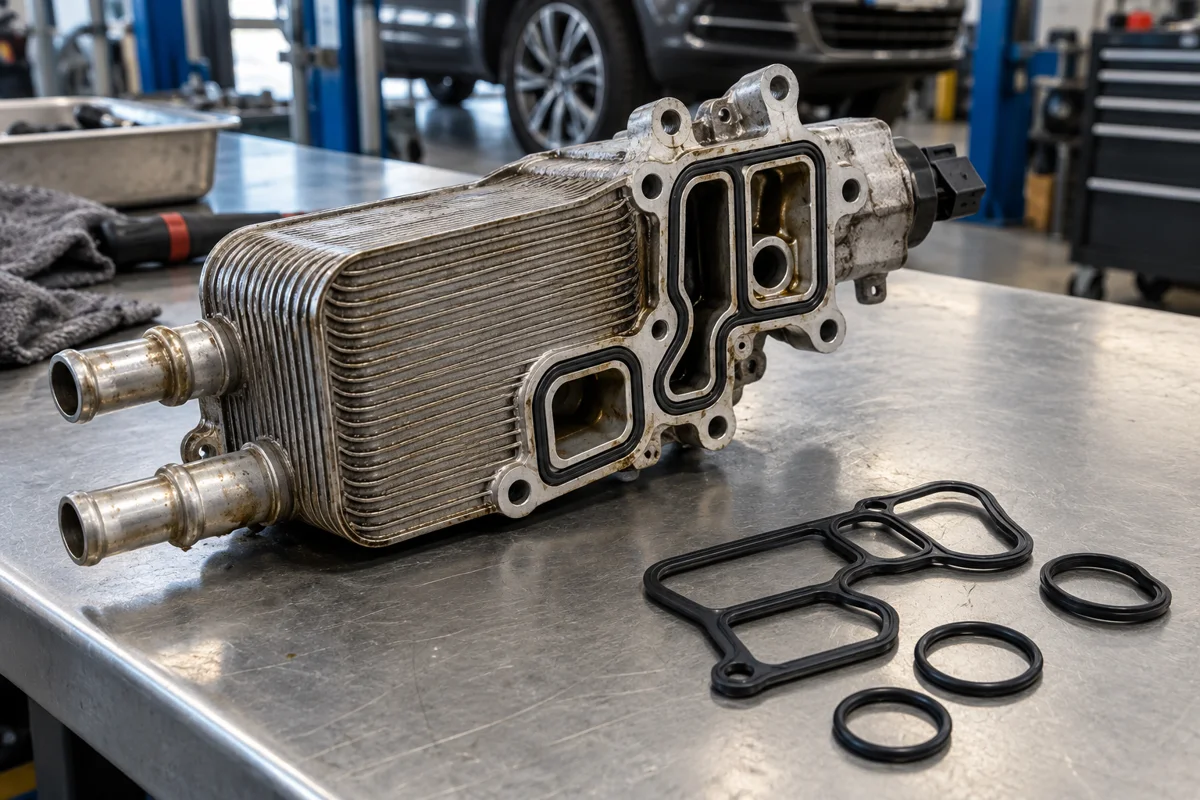
AED 550 to 1,100Next to the filter housing. External leakage and internal oil/coolant mixing are different faults. Inspect the cooler, seals and other possible causes before quoting.
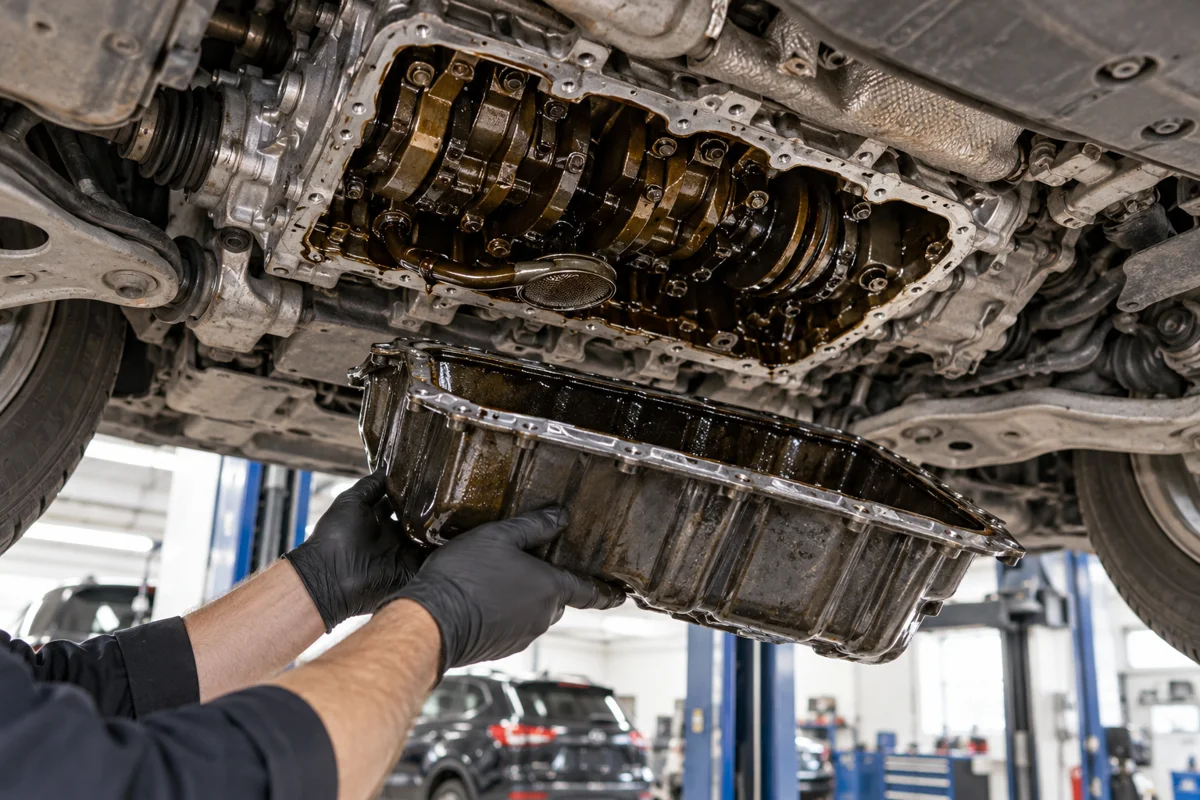
AED 900 to 2,000Bottom of the engine. Drips straight down under the front of the car.
AED 900 to 2,200Where the engine meets the gearbox. Oil collects under the middle of the car.
AED 1,500 to 3,300High crankcase pressure pushes oil past healthy seals, so we check it first.
AED 600 to 1,500Observe the drip location and photograph stains without touching or tasting fluids. Colour is only a clue: ageing, contamination and different fluid specifications can change it.
Brown to black, slippery, smells burnt when hot.
Book a leak tracePink or purple, thin, sweet smell. Watch the temperature gauge.
Check soonColour varies by fluid specification and age; a leak under the middle can have several sources.
Check soonClear to yellow, near a wheel. Do not drive.
Stop and callClear, no smell, under the front passenger side.
Often AC condensate; check if uncertainUse the VIN and engine code to identify the layout. These are inspection areas, not a diagnosis or a ranking of failure rates.
A repeat leak can involve an incorrect diagnosis, another leaking joint or an underlying pressure fault. Establish the source and cause before choosing a seal.
Inspect and clean the affected area. Use compatible oil dye only where it helps locate the source.
Inspect for fresh leakage during a controlled running check. Road-test only if oil level, pressure and leak location make it safe.
Crankcase pressure and the breather are tested so new seals are not pushed out.
Use the specified gasket or sealant, preparation and fastener procedure. Recheck the repair and oil level; road-test where safe and appropriate.
Guide prices with parts and labour for typical applications. The written quote lists the exact gaskets, labour and VAT for your engine.
Guide prices, not fixed tariffs. If two seals are leaking we quote them separately so you can decide what to do now.
Confirm the diagnostic charge, VAT treatment and total payable in your written quote. Ask for the applicable parts and labour warranty terms, including exclusions, before authorising work. Additional repairs require approval.
It depends on how fast the oil is going and where it lands. Use this as a guide, and keep checking the dipstick or oil level display.
Inspect the cover, gasket, nearby wiring and breather system. Replace the confirmed faulty component and clean residual oil before checking for fresh leakage.
Identify whether the leak comes from the housing, seal, connection or cooler body. Suspected fluid mixing requires its own diagnosis; an external pressure test alone does not rule out every internal fault.
Confirm the upper or lower pan joint and required access. Some engines use sealant rather than a separate gasket. Follow the specified preparation, curing and tightening procedure.
Listed repair guides range from AED 550 to 3,300 for selected jobs, depending on engine and source. Complex access, damaged housings or additional faults can cost more. Confirm diagnosis, parts, labour, VAT and total payable in the written quote.
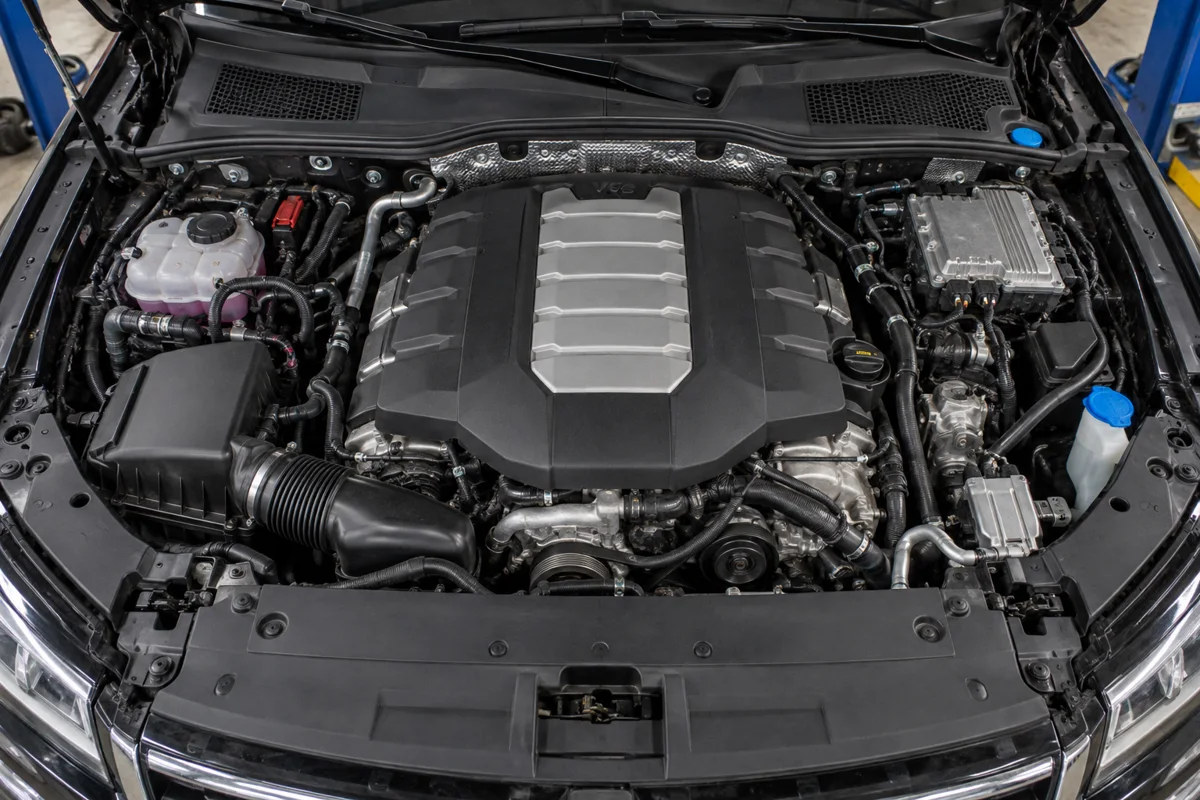
Inspect the covers, filter housing, cooler connections, pan joints and crankshaft seals for the exact engine. Oil can run from above or collect in an undertray before dripping. Cleaning and, where useful, compatible dye help identify fresh leakage.
Oil reaching a hot surface is one possibility, but spilled fluid or another fault can smell similar. Active leakage onto hot parts, smoke or a strong burning smell needs urgent advice; stop safely and switch off rather than assuming it is a harmless seep.
There is no universal safe distance. Stop safely and switch off for a red oil-pressure warning, rapid loss, a fresh pool, smoke or oil contacting hot parts. Have a mild seep assessed and follow engine-specific level checks; topping up does not make every leak safe.
An additive does not repair a damaged seal, cover or housing and can complicate diagnosis. Identify the leak and any breather or pressure fault, then use the correct oil and repair method.
An accessible cover or housing repair may be completed the same day after diagnosis and parts confirmation. Pan, cooler or rear crankshaft-seal access can take longer. Agree timing for the exact engine and approved work before leaving the car.
Send the year, engine and a photo of where it drips. We discuss the next inspection and guide price; a photo cannot confirm the leaking seal.