• Al Quoz 4, Dubai
  • Monday to Saturday, 9am to 7pm

VW Oxygen Sensor Replacement in Dubai

An O2 fault code, rising fuel consumption or a persistent engine light? Our Al Quoz 4 workshop diagnoses the cause, identifies the correct lambda sensor and quotes replacement when the tests justify it.

One-sensor replacement guide: AED 650 to 1,300Indicative budget for the part and ordinary fitting. Diagnosis, difficult extraction and related repairs are identified separately.
  • VW-specific diagnostics
  • Written quote before work
  • Independent Al Quoz workshop
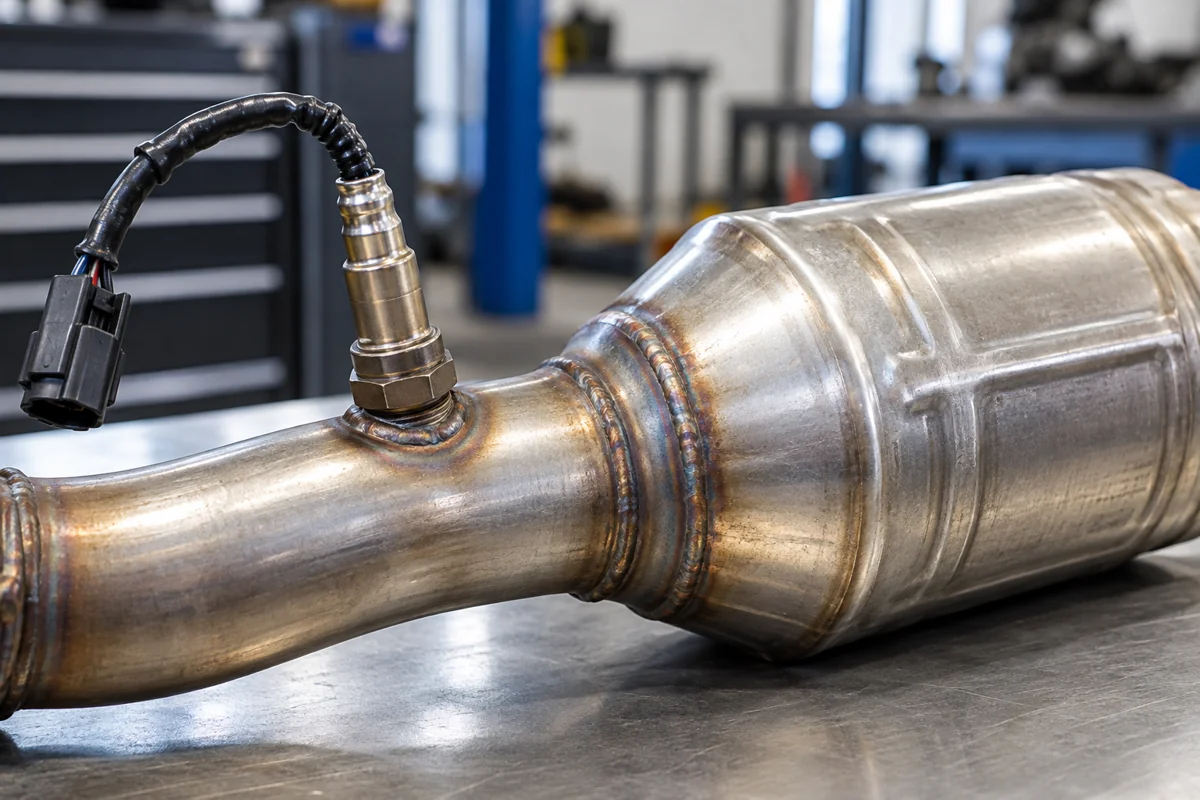
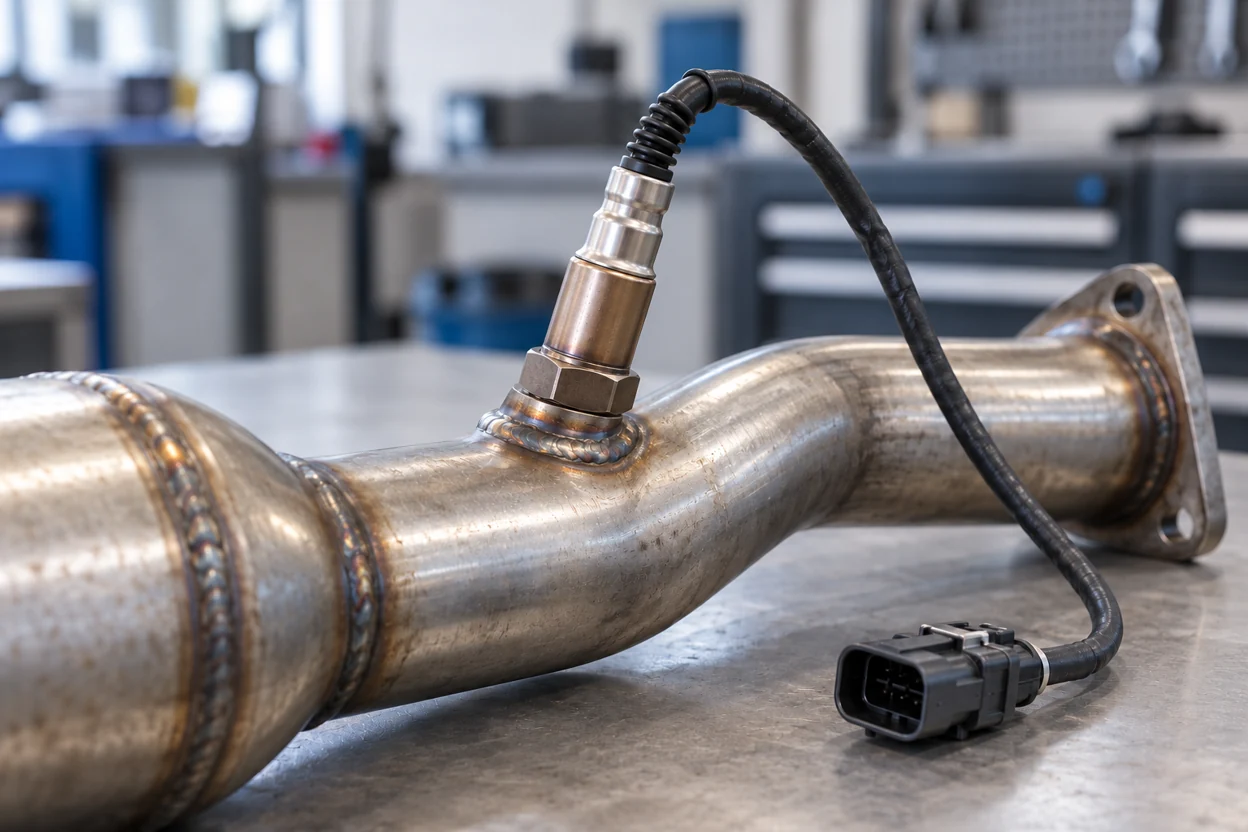
Illustration of an oxygen sensor mounted in an exhaust pipe with its cable and connector
Generated exhaust-sensor illustration. Actual VW positions and fittings vary; not a completed customer job.

Oxygen sensor replacement cost

Use this guide for a confirmed sensor fault. A cheap scan, a supplied sensor and a completed replacement are different purchases.

Indicative Dubai budgetAED 650 to 1,300

For one suitable sensor and ordinary replacement labour

What the guide allows for
A correctly matched replacement, straightforward removal and fitting, connection and an ordinary post-repair recheck. It is a planning estimate, not a fixed package for every Volkswagen.
What can change the total
Genuine-part pricing, wideband sensor type, difficult access, seized threads or a damaged mounting point can put the job outside the guide. Two sensors are not included in a one-sensor figure.

Get the right repair priced

An upstream control sensor and a downstream monitoring sensor can use different parts and test procedures. We identify the location and application before quoting; the cheapest listing with a similar connector may be the wrong sensor.

Fault diagnosisAgree the assessment work and charge before testing. A stored code alone is not a confirmed replacement diagnosis.
Related repairsLoom or connector repair, intake/exhaust leaks, engine faults and catalytic-converter work are separate unless itemised.
The written totalThe quotation identifies the part, sensor position, labour, checks, VAT treatment, timing and applicable parts and workmanship terms.
Approve the work before replacement. Send the model, year and any fault-code report. We explain the findings and send a fixed written quote before work starts, with additional findings agreed before the repair is expanded.

Upstream or downstream sensor?

Oxygen sensor, O2 sensor and lambda sensor describe the same sensor family. Position and technology determine its role and the correct replacement.

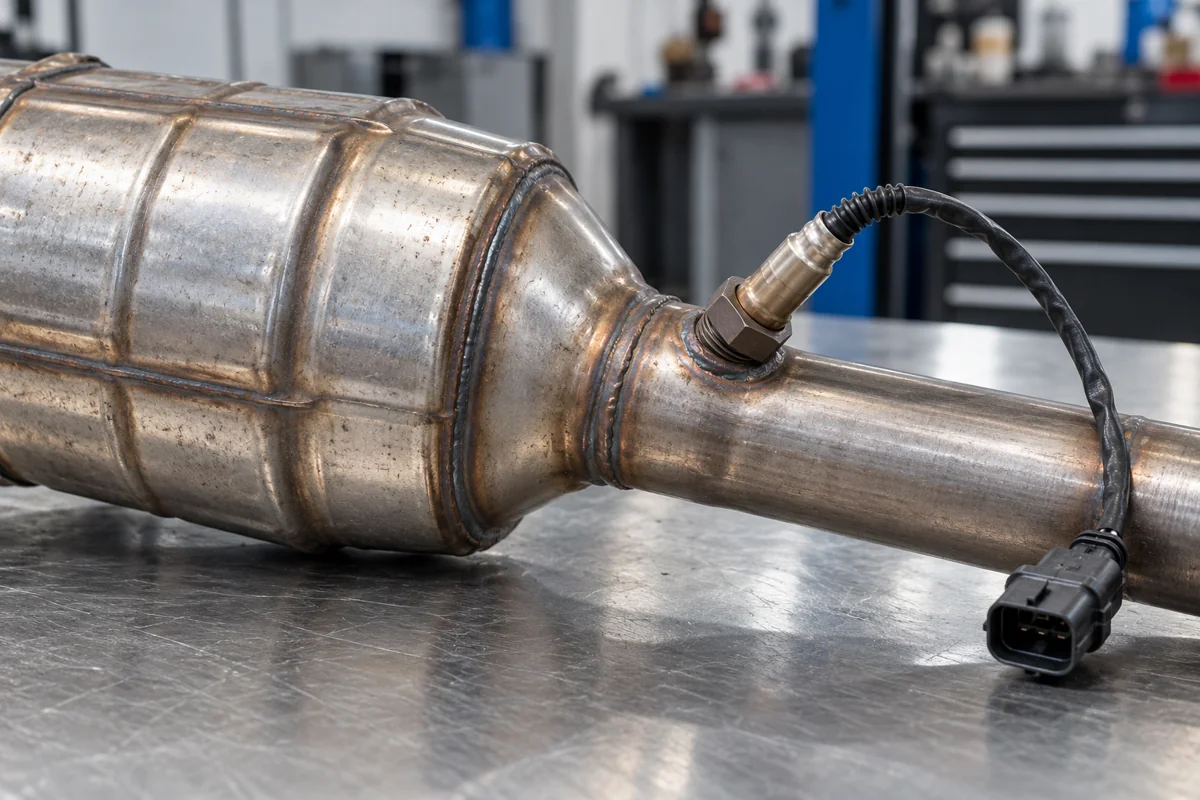
Illustration of an upstream oxygen sensor in the pipe before a catalytic converter
Before the catalytic converter

Upstream sensor

The pre-cat sensor gives the engine control unit (ECU) exhaust-oxygen feedback for mixture control. Many later engines use a wideband air/fuel sensor, which measures across a broader operating range than a switching sensor.

A poor reading may affect fuelling or reflect a real mixture problem. We interpret the signal alongside engine operation before recommending replacement.

Illustration of a downstream oxygen sensor in the pipe after a catalytic converter
After the catalytic converter

Downstream sensor

The post-cat sensor primarily supports catalyst monitoring. A catalyst-efficiency complaint calls for assessment of the converter, sensor signals and possible exhaust leaks.

Replacing the rear sensor on assumption may leave the warning unchanged. The test findings determine whether the sensor or another component needs attention.

Generated location illustrations. Actual sensor count, catalyst arrangement and access vary with the Volkswagen engine.

What do Bank 1, Sensor 1 and Sensor 2 mean?

Bank 1 is the cylinder group containing cylinder 1. In a common arrangement, Sensor 1 is upstream and Sensor 2 is downstream. Confirm the actual engine layout, especially on more complex exhaust systems, rather than assume left, right or four sensors on every VW.

Different signals need different tests

A narrowband (switching) sensor and a wideband sensor should not be judged by the same voltage pattern. We identify the fitted technology and use its applicable readings rather than one “healthy voltage” for every Volkswagen.

What has changed in your Volkswagen?

An engine light or a change in how the car runs deserves diagnosis. These symptoms alone do not prove that an oxygen sensor has failed.

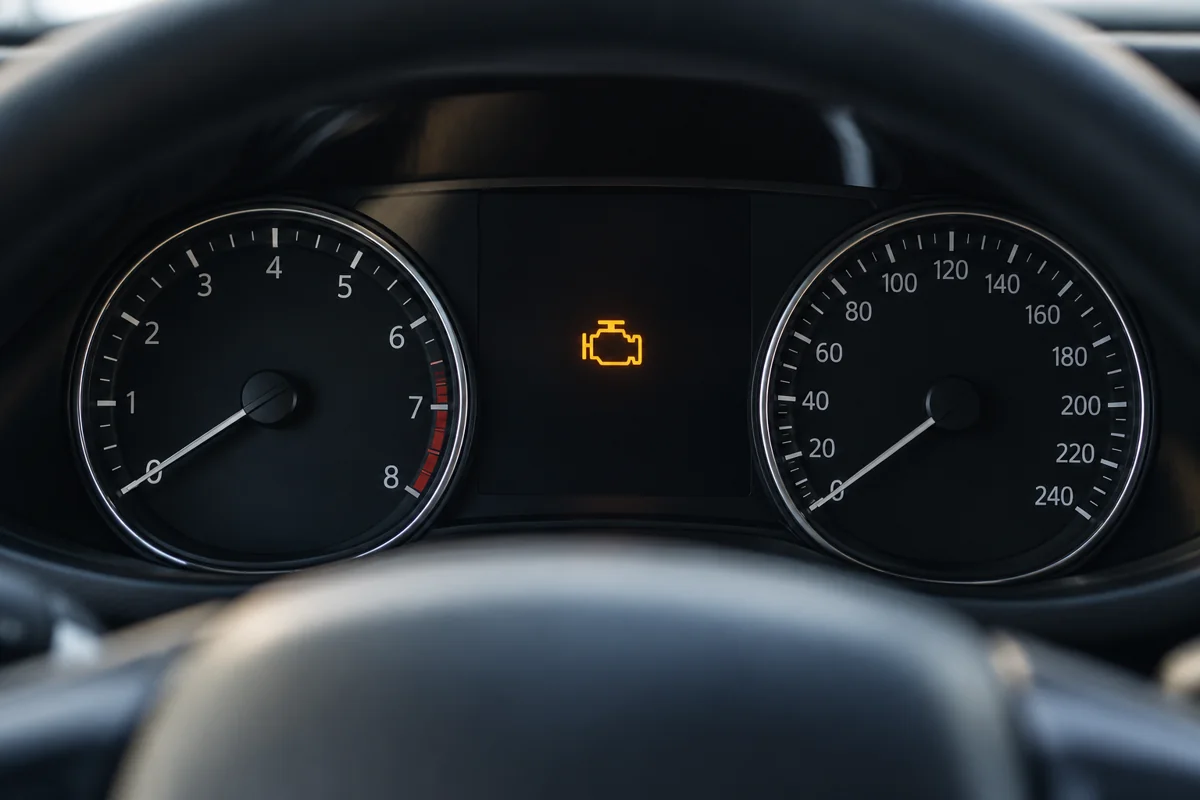
Illustration of an amber check-engine warning light on a parked car dashboard
Generated dashboard illustration. Record the warning and when it appears; a light alone does not identify the failed part.

Engine light or stored code

An oxygen-sensor circuit, heater or response complaint gives us a test direction. Keep the exact code, its description and any scan report. Avoid repeatedly clearing it: the recorded operating conditions help the investigation.

Higher consumption or poor running

Rough idle, hesitation, a fuel smell or changed economy can involve mixture control. Ignition, air leaks and fuel-delivery faults can look similar. Tell us whether it happens cold, warm, at idle or under load.

Emissions or repeat failure

A fault returning after replacement needs evidence before another sensor is fitted. Bring the emissions result, scan report and previous invoice so we can identify the fitted sensor and checks already completed.

When to stop driving

Flashing light with shaking or loss of power?

Stop safely and arrange appropriate assistance if the engine runs severely unevenly, vibrates or loses power. With a steady light and no severe symptoms, follow the vehicle handbook and contact us about safe assessment.

Call for guidance

Diagnosis before sensor replacement

Our VW-specific diagnostic software helps identify the affected circuit and operating conditions. Physical and electrical checks decide whether the repair concerns the sensor or something around it.

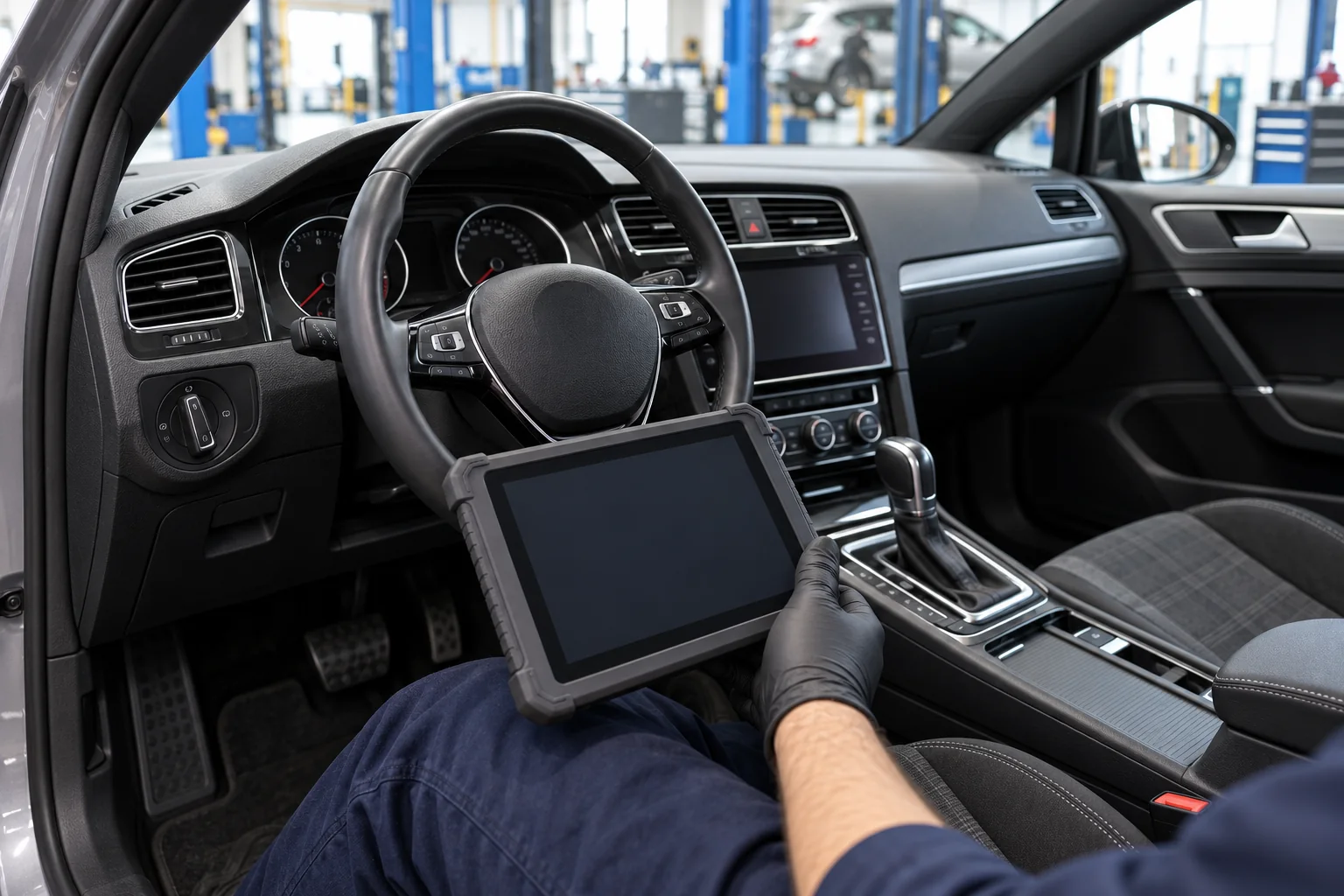
Diagnostic illustration showing a tablet beside a Volkswagen steering wheel
Generated diagnostic illustration. The blank screen does not represent a customer's test results or a particular diagnostic tool.
Codes and freeze-frame information
Record stored and pending faults and the conditions captured when they set. Temperature, load and related faults help distinguish a cold-start heater complaint from a warm-running mixture or response issue.
Connector, harness and heater
Inspect heat damage, chafing, moisture and poor terminal contact. Test the heater supply, ground or controlled circuit as the vehicle wiring diagram requires; a heater code can originate outside the sensor.
Live readings and fuel trims
Review lambda/air-fuel readings, response and fuelling corrections in the relevant conditions. In closed-loop operation the ECU uses sensor feedback; fuel trims show its corrections. These values guide diagnosis rather than prove the sensor is faulty.
Leaks and engine operation
Consider an intake or PCV leak, an exhaust leak near the sensor, airflow/pressure measurement, fuel supply and injector behaviour. Misfire or contamination can change the exhaust reading even when the sensor is responding correctly.
Examples guide testing; the vehicle's complete report and repair information govern the diagnosis.
Reported faultWhat it means for the decision
P0130: Bank 1 Sensor 1 circuitCheck the relevant sensor and its wiring. A circuit description is not a parts-order instruction.
P0030: B1 S1 heater circuitAssess the heater and its electrical circuit. Confirm the cause before replacing a sensor or considering control-unit work.
P0420: Bank 1 catalyst efficiencyInvestigate catalyst performance, leaks and oxygen-sensor operation. This is not simply a “replace the rear O2 sensor” code.
A confirmed finding changes the repair. A failed sensing element may need a new sensor; a damaged plug or supply circuit needs electrical repair. A genuine lean/rich condition or catalyst fault needs its own treatment rather than a speculative sensor.

Choose the correct sensor

We match the application before quoting a part. Model name, thread size or plug appearance alone cannot establish that two lambda sensors are interchangeable.

Genuine Volkswagen part

Identify the correct VW part number for the engine and position. This is an original-brand parts choice; the quotation should name the part and show the fitting work rather than use “genuine” as a substitute for compatibility.

Suitable direct-fit supplier part

A correctly catalogued supplier alternative can be considered where available. Match the operating type, heater requirements, connector and cable length. A known brand name alone does not make every sensor in its range suitable.

Vehicle identification
Model, year, engine code, VIN and emissions specification help identify the application. A parts supersession or a different engine in the same model can change the correct number.
Position and connection
Confirm the bank and sensor position, signal technology, lead length, plug keying and routing clips. Do not rely on wire count alone or assume upstream and downstream parts can swap positions.
Universal or previously modified wiring
A universal sensor requires an application-approved connection method and is not automatically equivalent to a direct-fit assembly. Tell us about splices, extensions, exhaust modifications or earlier replacement parts before approval.
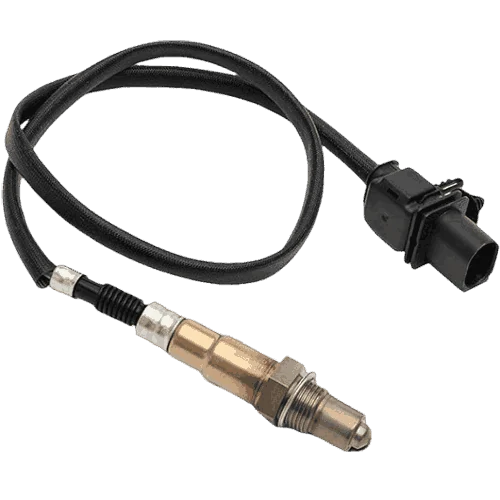
Existing site reference of a threaded oxygen sensor with a cable and electrical connector
Sensor and connector reference. This image is not a catalogue match, price or stock confirmation for your car.

Address the cause of repeat failures

Replacing a contaminated or damaged sensor without addressing the cause can bring the car back with the same complaint. We explain related findings before recommending additional work.

Oil, coolant and unsuitable chemicals

Oil burning, coolant contamination, soot or unsuitable sealants can affect the sensor. Deposits are clues to investigate; appearance alone should not be used to diagnose a head gasket or condemn the engine.

Tell us about coolant loss, rising oil consumption, additives or recent engine work. Where a mechanical cause is indicated, engine diagnosis and repair is a separate decision from replacing the sensor.

Air, fuel and ignition problems

A crankcase-ventilation (PCV) leak, incorrect mass-airflow (MAF) or manifold-pressure (MAP) information, fuel-pressure issue, injector fault or misfire can alter the mixture or exhaust oxygen reading. These possibilities are checked when the evidence points to them, rather than added as routine replacement extras.

Correcting a confirmed underlying fault matters more than buying repeated sensors. We distinguish findings from possibilities in the repair recommendation.

Heat, cable damage and cleaning

Incorrect routing can expose wiring to exhaust heat or movement. Damaged insulation, a strained lead or a wet connector needs assessment along with the sensor itself.

Cleaning or soaking a failed sensor is not our substitute for a correctly diagnosed replacement. Preserving the sensing element and connection matters; a visually cleaner surface does not establish restored performance.

From the approved quote to fitting

The work follows the correct vehicle and part instructions. Access, exhaust condition and the required checks determine the job rather than a universal replacement time.

  1. 01

    Confirm the repair

    Explain the test result, sensor location and parts choice. Agree the itemised total and timing before replacement begins.

  2. 02

    Remove carefully

    Allow safe access and temperature, release the connector and fixings, then remove the sensor with suitable tooling. Assess the mounting threads and any seizure.

  3. 03

    Install correctly

    Fit the matched part using its specified thread treatment, sealing and tightening requirements. Keep contamination away from the sensing area and do not twist the lead.

  4. 04

    Connect and secure

    Restore the cable route and clips with clearance from heat and moving parts. Confirm connector engagement and proceed to the relevant post-repair tests.

If the sensor will not release normally

A seized sensor or damaged exhaust mounting thread can require additional work. We explain the condition and revised cost before expanding the repair. It does not automatically mean the entire catalytic converter must be replaced.

The collection plan accounts for that possibility and correct-part availability. Photos or a generic code cannot establish extraction difficulty in advance.

Checks after sensor replacement

A successful replacement needs the relevant electrical and operating checks. A dashboard light going out immediately after codes are erased is only part of that picture.

Sensor and heater operation
Review the fitted sensor's readings, response and heater operation under the appropriate conditions. Recheck associated faults and the complaint that brought the car in.
Guided procedures when required
Carry out the reset, basic setting or adaptation specified for the application where needed. Routine sensor replacement is not an automatic ECU remap, and software changes should have a separate documented reason.
Relevant running checks
Assess mixture behaviour and a safe road check where appropriate. Explain any remaining engine, wiring or catalyst issue rather than promise a particular fuel-saving percentage from the new sensor.

Match the work to your engine

The badge does not identify the exhaust arrangement. Send your model and year first; we can request the engine code or VIN privately to confirm the part.

Petrol and TSI engines
Golf, Polo, Jetta, Passat, Tiguan and other models can have different sensor types and positions across engine generations. Confirm the actual engine and fitted exhaust instead of ordering from a model-only listing.
Diesel and TDI engines
Where fitted, a lambda sensor has a different role from a nitrogen-oxide (NOx) sensor, exhaust-temperature sensor or diesel particulate-filter pressure sensor. Identify the named component and test result before treating every emissions fault as an O2 replacement.
Hybrids and electric models
A hybrid's combustion engine can still use exhaust oxygen sensing. A battery-only ID. model has no combustion exhaust oxygen sensor. Keep the engine/emissions complaint distinct from electric-drive or high-voltage diagnosis.

Oxygen sensor questions

Clear answers about replacement, repeat warnings and what your quotation should cover.

How much is a Volkswagen oxygen sensor replacement?+

A useful guide is AED 650 to 1,300 for one suitable sensor with ordinary replacement labour and recheck. Exact part choice and access can change the price. Diagnosis, seized extraction and related repairs are separate unless itemised, and the written quote identifies VAT treatment.

Does an O2 fault code mean I need a new sensor?+

No. A circuit, heater or response fault needs the relevant sensor, wiring and operating conditions assessed. A genuine mixture problem or exhaust leak may affect the reading. The repair should follow the confirmed cause rather than the name of a component in a code description.

Should all the oxygen sensors be replaced together?+

Not automatically. Identify the failed sensor and evaluate the others where relevant. Similar age alone does not establish that every sensor has failed. If more than one replacement is recommended, the quotation should identify each position and the reason for the additional work.

Will replacing the sensor fix P0420?+

Only if testing shows the relevant sensor is responsible. P0420 concerns catalyst efficiency, and possible causes include leaks, catalyst condition and sensor operation. A rear sensor is not a guaranteed cure, so the complete fault needs to be assessed.

Does a new lambda sensor need coding or remapping?+

Follow the applicable VW procedure for fault clearing, checks and any required basic setting or adaptation. Do not assume that every sensor requires coding, or that tuning is part of replacement. The job should identify any justified software work separately.

How often should the sensor be changed?+

There is no single replacement mileage for every Volkswagen oxygen sensor. Use the applicable maintenance information and the sensor's tested condition. Investigate an active fault when it appears; a generic mileage interval should not replace diagnosis or justify changing serviceable parts.

How long will you need the car?+

Diagnosis, sensor access, exhaust temperature, thread condition, parts supply and verification set the timing. An accessible confirmed replacement involves less work than a repeated intermittent fault or seized sensor. The written quotation gives the collection plan for the actual job.

Can you guarantee better fuel economy or an emissions pass?+

Correcting a proven sensor fault can restore its intended operation, but other engine problems and driving conditions also affect fuel use. Emissions results and readiness need their own checks. We explain the findings and outcome rather than promise a fixed saving or an automatic inspection pass.

Get your oxygen sensor quote

Send your Volkswagen model, year and any scan report, or describe the warning and symptoms. We will explain the assessment and provide a written repair quote before replacement.

Volkswagen Repair Dubai · Al Quoz 4 · Monday to Saturday, 9:00 am to 7:00 pm.