In this guide
The right VW battery is the technology the car was built with, matched on capacity, cranking rating and case size, then coded to the car. Cars without start stop take a standard flooded battery, simple start stop systems take EFB, and extended start stop with braking energy recovery takes AGM. An AGM car must stay on AGM, and many modern VWs need the new battery registered in their software.
Written by the Volkswagen Repair Dubai workshop team in Al Quoz 4. Reviewed by the technical team, updated October 2026.
Key takeaways
- Standard, EFB and AGM are all 12 volt lead acid batteries, built for very different workloads.
- Start stop and braking energy recovery decide the type. Extended start stop cars are fitted with AGM from the factory.
- Only an AGM battery may replace an AGM battery. EFB up to AGM needs a compatibility check and coding.
- VW group cars record the battery in a battery management system, so a new battery is coded with its part number, maker and type.
- Ah, cold cranking rating, case size, terminal layout and vent connection all have to match, not just the 12 volt label.
- Heat shortens battery life, so test the battery at each service instead of replacing it at a fixed age.
What is the difference between AGM, EFB and a standard battery?
All three are 12 volt lead acid batteries, but they are built for different jobs. A car with start stop restarts the engine many times on every trip and keeps lights, fans, screens and the AC blower running while the engine is off. That cycling wears out a conventional starter battery quickly, so Volkswagen fits stronger technologies to the cars that need them.
Standard flooded
The traditional starter battery with liquid electrolyte. It suits cars built without start stop, but it is never a substitute for EFB or AGM.
EFB
Enhanced flooded battery. A further development of the flooded design that Varta rates at twice the charge cycles of a conventional starter battery.
AGM
Absorbent glass mat. The electrolyte is held in a glass fibre fleece, so the battery is sealed and copes with deep cycling and energy recovery.
EV and hybrid 12 volt
Electric and hybrid VWs still carry a separate 12 volt battery that powers the electronics and wakes the high voltage system.
Battery maker Varta explains the same split in its guide to EFB and AGM differences. It rates EFB at twice the charging cycles of a conventional starter battery under the EN 50342 1 test standard, and places AGM in upper mid range cars, SUVs and premium cars with start stop and braking energy recovery.
The practical difference shows up over time. Put a standard battery into a start stop Golf or Tiguan and it may start the car perfectly for a few weeks, then lose capacity fast because it was never designed for hundreds of shallow discharges a week. An EFB is built for that work with about twice the cycle life. An AGM goes further again and copes with deep cycling and energy recovery, which is why it costs more and why the car electronics expect it where it was fitted at the factory.
How do start stop and braking energy recovery decide the battery type?
Two systems on a modern VW put the most strain on the battery. Start stop switches the engine off at the lights and restarts it when you lift off the brake. Braking energy recovery, also called recuperation, puts energy back into the battery when the car slows down or coasts, so the battery is charged and discharged far more often than in an older car.
- No start stop means the battery mainly starts the engine and is then recharged while driving. A standard flooded battery is built for that.
- Simple start stop adds many restarts and engine off periods. Varta lists EFB for cars with simple automatic start stop systems.
- Extended start stop is the more advanced version of the system. Varta states cars with an extended automatic start stop system are equipped with an AGM battery.
- Braking energy recovery cycles the battery hardest. Varta places AGM in cars with start stop and recuperation.
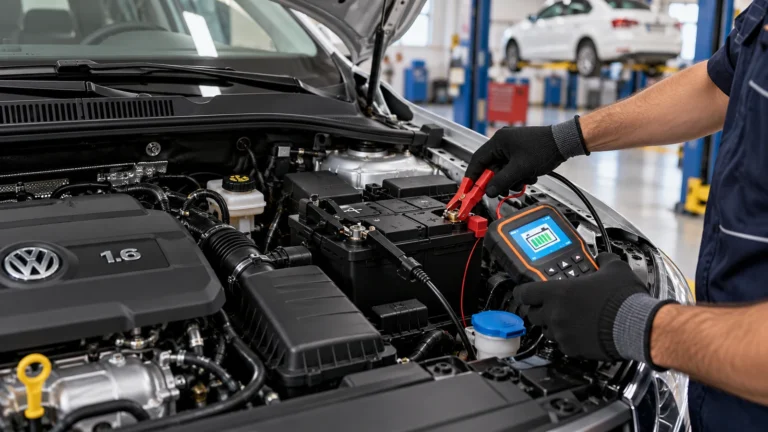
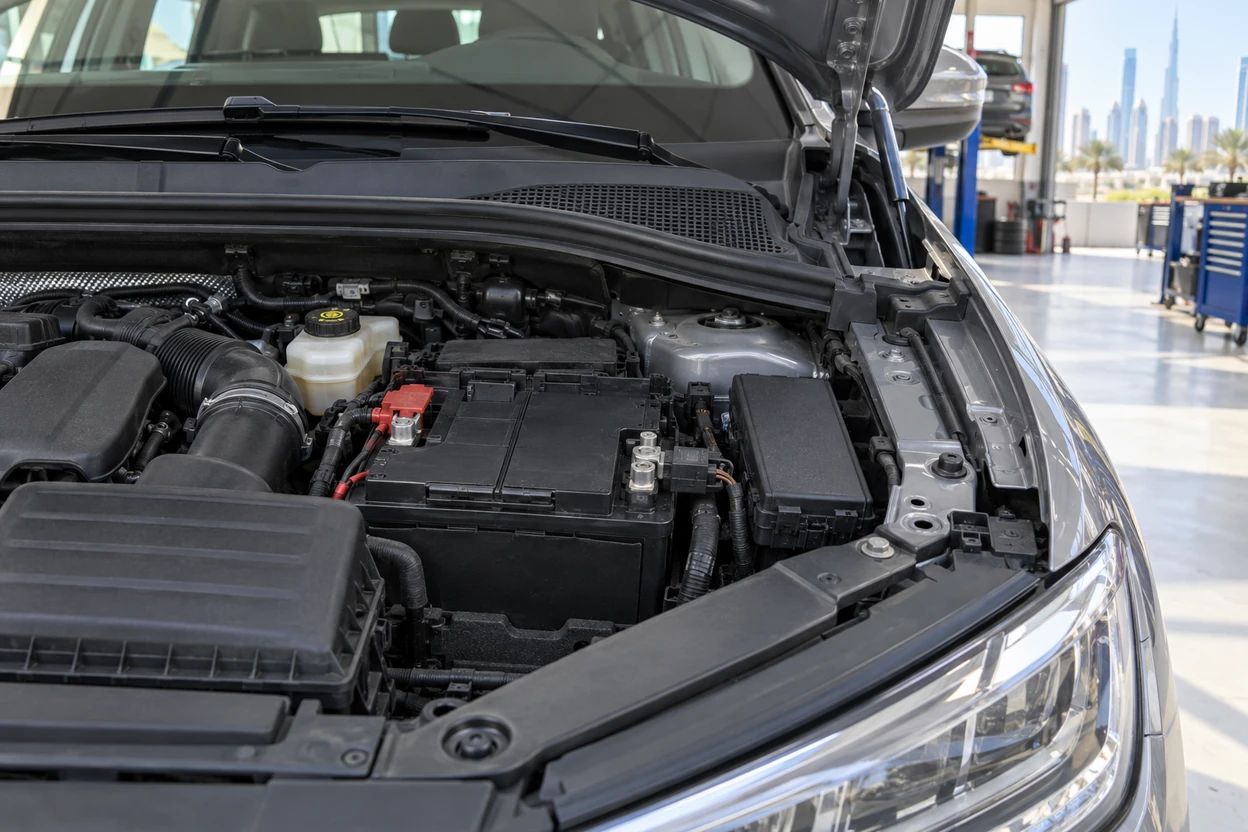
- Battery sensor on the negative terminal monitors the battery for the battery management system, which decides how it is charged.
The button that switches start stop off does not change any of this. The car still manages the battery as the type it was built with, so the specification stays the same.
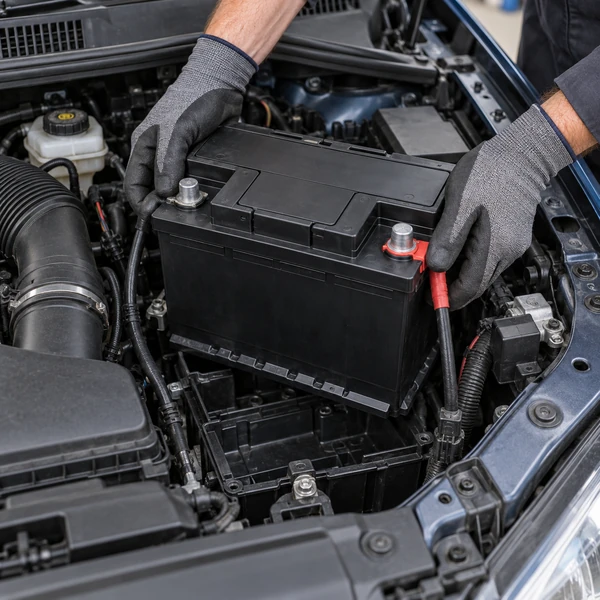
Which battery type does your VW need?
Start from the equipment on the car, not the badge. Two cars with the same model name can leave the factory with different batteries depending on engine, start stop, energy recovery and trim.
Standard flooded
Older or simpler VWs without start stop. A standard battery with the right capacity, cranking rating and case size is correct here.
EFB
Cars that stop the engine at the lights but have no extended coasting or heavy energy recovery. EFB replaces EFB, or AGM after a check.
AGM only
Cars with extended start stop or braking energy recovery. They leave the factory with AGM, and only AGM may be fitted as the replacement.
If the car has no start stop button and no start stop message in the instrument cluster, it is likely a standard battery car, but the label and the VIN settle it. For the battery each model usually carries, by generation, with the guide price for each, see the model table on our Volkswagen battery replacement page.
Can you swap EFB for AGM, or AGM for EFB?
Some swaps are fine, some need checks and some cause problems. This is where most battery mistakes happen, because a cheaper battery often fits the tray perfectly well.
Match or move up, never down
Fit the technology the car was built with. Moving up is sometimes possible, moving down is not.
Like for like
EFB to EFB, AGM to AGM, or standard to standard on a car without start stop. Match capacity, cranking rating and size, then code it if required.
EFB up to AGM
Can suit a car with heavy electrical use or many short trips. The car must accept it, and the software must be told the new technology.
AGM down to EFB or standard
Varta states only an AGM battery may replace an AGM battery. A cheaper type wears out early and start stop can stop working.
Varta also notes that start stop batteries are monitored by a battery sensor and are closely linked with the battery management system. That is why a wrong type can lead to start stop faults, comfort features switching off and a shorter battery life, even if the car starts normally on day one.
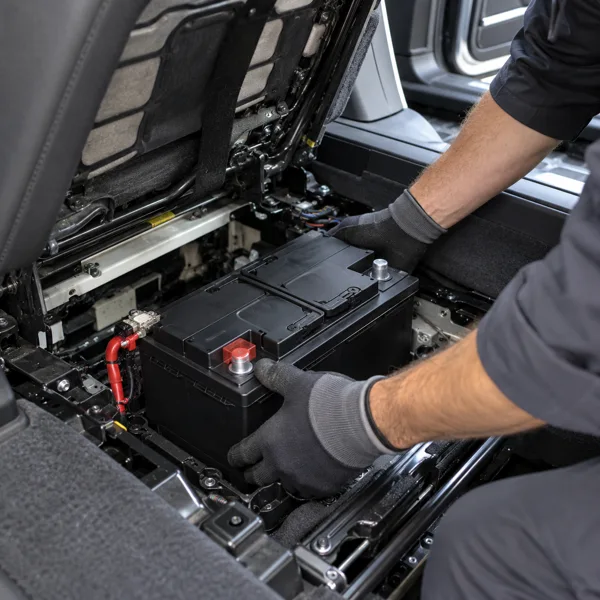
Not sure what is fitted? Send a photo of the battery label with your model, year and engine, and we will tell you which technology and rating to match.
Why does a new VW battery need coding or registration?
Many modern VWs have a battery sensor on the negative terminal and a battery management system that controls charging. Over the years it learns how the old battery has aged and charges it to suit. Varta explains that the behaviour of a battery changes with age, so the management system must be reprogrammed with the new battery to learn its characteristics. Fit a new battery without telling the car, and it may keep charging as if the old, worn battery were still there.
-
Identify the system
The procedure depends on the generation and equipment, not just the model name. Older or simpler VWs may not need it at all.
-
Keep power during the swap
A memory saver or support supply keeps the electronics powered, which helps avoid lost settings and stored low voltage faults.
-
Fit and secure
The battery is clamped down, the terminals are tightened correctly and the vent tube is connected where fitted.
-
Code the battery
VW diagnostic software records the new battery so the car knows its type, capacity and maker, and resets its ageing data.
-
Check and clear
Starting, charging and start stop are checked. Stored low voltage codes are read and explained, not simply wiped.
Coding tells the car about the new battery. It does not repair a weak alternator, a parasitic drain or damaged wiring. If the old battery died early, the cause needs finding first, which our alternator replacement page and our post on common VW battery issues explain.
Varta warns that a battery that is not coded correctly can cause restriction or even failure of the start stop function, and can also raise fuel consumption and limit comfort features. Start stop may still stay unavailable for a while after a correct fit, because the system also checks charge level and temperature before it allows the engine to stop.
What does battery coding record in VW software?
On VW group cars the battery is identified by what Varta calls the BEM code, a two line code printed on genuine and OE supplier batteries. The first line holds the OE spare part number. The second line identifies the battery maker, the manufacturing date and a part that makes the code unique to that battery.
Depending on the diagnostic tool and the car, the technician enters the full code, or selects capacity, maker and technology from a list and adds a serial number. Varta notes that the serial number is mainly for traceability, and that the QR code on its own AGM and EFB batteries does not contain the same information as an OE BEM code. Changing any of these values tells the car a new battery is fitted and resets its usage counter. Varta explains the details in its article on the right BEM code for battery replacement.
This is also why the capacity entered must match the battery actually fitted. If a 70 Ah AGM is coded as a 60 Ah EFB, the car manages it as the wrong battery, which can shorten its life much like fitting the wrong type.
Get the correct battery matched and coded
Our Al Quoz 4 workshop reads the label and the VIN, matches the technology, capacity and cranking rating your VW was built with, and codes the battery with VW specific diagnostic software, with a written quote before work.
What do Ah, CCA and the other battery ratings mean?
Two batteries can both say 12 volt and still be very different. These are the ratings a replacement has to match, and what each one tells you.
- Ah
- Amp hours, the stored capacity. The battery management system is coded for a capacity, so the replacement should match the specified figure rather than simply be bigger.
- CCA
- Cold cranking amps, a measure of starting performance. Diesels and larger engines usually need a higher figure than a small petrol engine.
- EN rating
- Many European batteries print the cranking figure to the EN standard. The rating and the standard it was tested to both matter, so compare like with like.
- Technology
- Standard, EFB or AGM. This sets how the battery copes with cycling and how the car charges it.
- Case size
- Length, width and height must fit the tray and the hold down clamp. A battery that moves in the tray can be damaged by vibration.
- Terminal layout
- Which side the positive terminal sits on, and the terminal type, must suit the cables and the battery sensor.
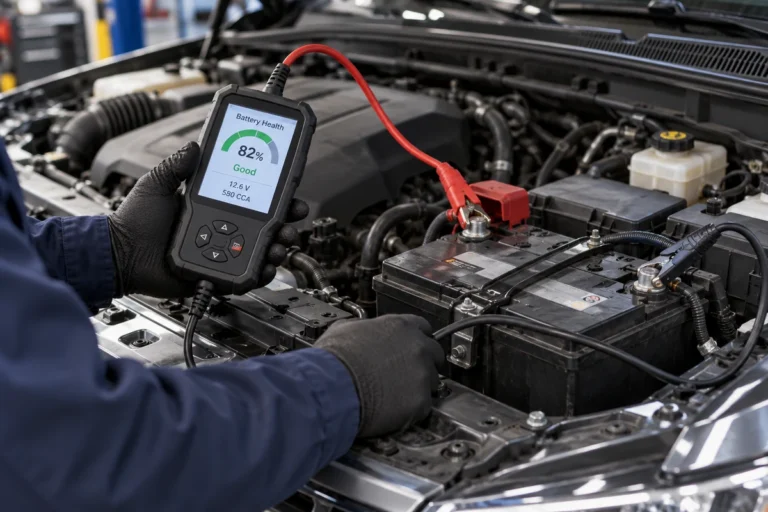
A bigger capacity is not automatically better. A much larger battery may not fit the tray or clamp, and if the car is coded for a smaller capacity it may never charge the larger one fully. The cranking figure works the other way, as a replacement should meet or exceed the specified figure for the engine. When a workshop tests a battery, it enters the technology and cranking rating into the tester, which is why a clear label matters even for a simple health check.
How do you read the label on your VW battery?
The label on top of the battery tells you most of what a replacement must match. A clear photo of it saves time when you ask for a quote, and it shows straight away if the wrong type has been fitted before.
- Technology
- Look for AGM or EFB printed on the label. If neither appears, it may be a standard battery, so check whether your car has start stop.
- Capacity in Ah
- A figure such as 60 Ah or 70 Ah. The battery management system is set up for that capacity, so the replacement should match it.
- Cranking rating
- Shown as CCA or with an EN figure in amps. It describes starting power, and a diesel or larger engine usually needs a higher number.
- Part number and BEM code
- A VW part number or a two line BEM code identifies the exact specification and is used when the battery is coded.
- Case size and terminals
- Dimensions and the position of the positive terminal must fit the tray, clamp and cables. Supplier codes on the label describe the case.
- Vent connection
- Batteries mounted in the cabin or the boot may need a vent tube. The replacement must have the same connection.
An old label is a strong clue but not proof. If a previous owner fitted a cheaper type, the label shows that mistake rather than the factory specification, which is why we also check the VIN and the equipment on the car.
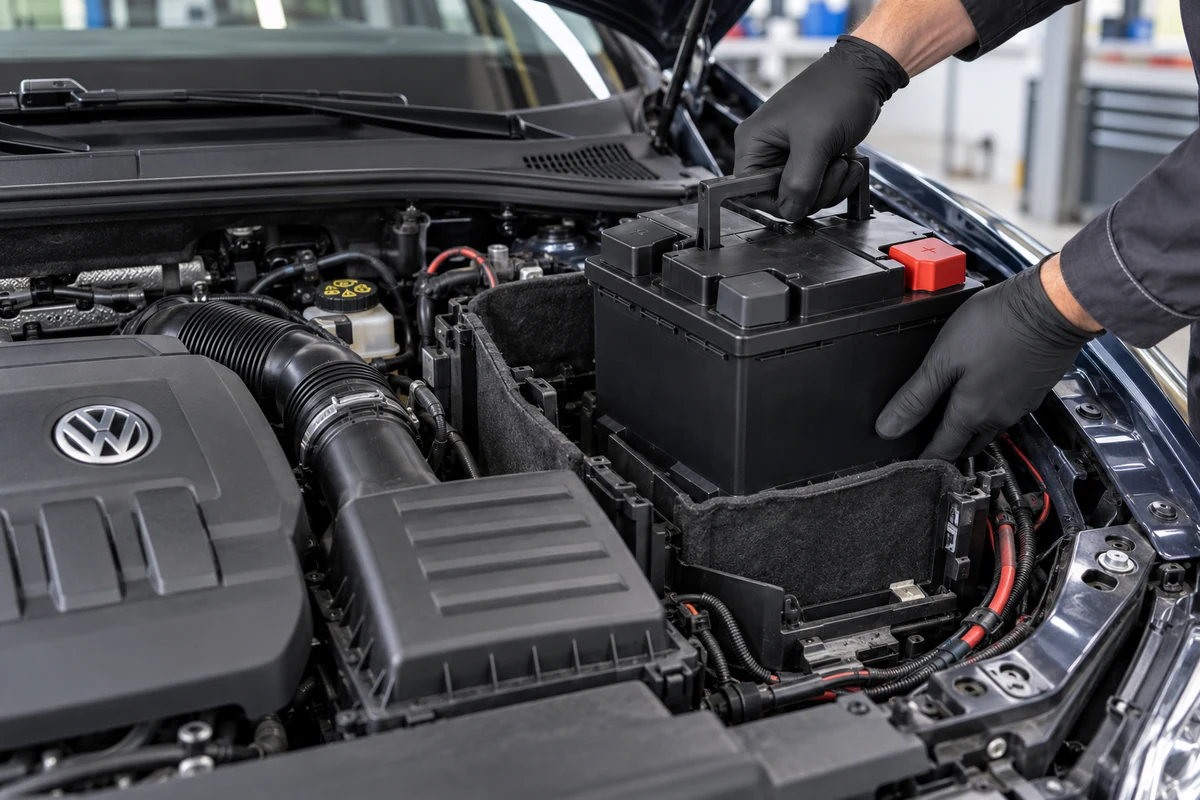
Do electric and hybrid VWs need a special 12 volt battery?
Yes, they still have one, and it matters more than many owners expect. If the 12 volt battery goes flat, an ID model or a hybrid may not switch on at all, even with a fully charged traction battery.
| Battery | What it does | What to match |
|---|---|---|
| 12 volt battery | Powers the electronics, locks and screens and wakes the high voltage system | Technology, capacity, case and coding, as on a petrol car |
| High voltage traction battery | Drives the electric motor on ID models and plug in hybrids | A separate diagnosis by qualified technicians, never a 12 volt job |
| 48 volt mild hybrid battery | Supports the engine on eTSI mild hybrids | Identified separately from the 12 volt battery |
High voltage faults are assessed separately on our hybrid battery page.
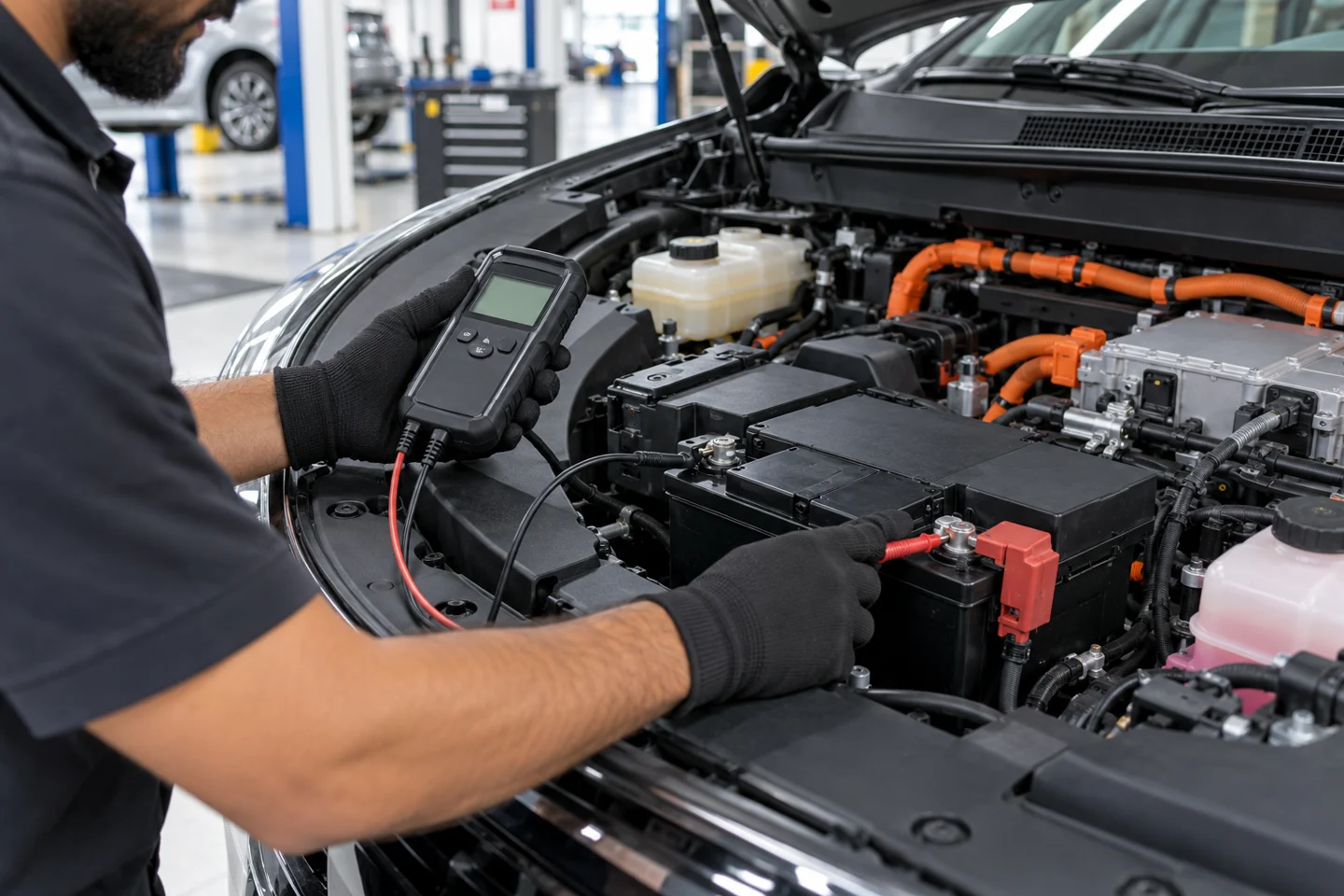
How does Dubai heat affect VW battery life?
Hot climates are hard on batteries. Battery tester maker Midtronics explains that heat speeds up the chemical reactions inside a lead acid battery, speeds up corrosion of the positive grid and drives water out of the electrolyte in a flooded battery. Its estimates of battery life in months of normal use show the effect clearly.
Midtronics adds a rough rule of thumb that every rise of about 8 degrees Celsius in average operating temperature above 25 degrees Celsius can cut battery life roughly in half. It recommends testing in late summer so a battery weakened by heat is found before it causes a no start. Read more in Midtronics on why hot temperatures reduce battery life.
Local habits add to the heat. Short trips with the AC on draw a lot of power without giving the battery time to recharge, long periods parked during travel let it run down while modules stay awake, and dash cameras wired to stay on drain it overnight. Heat does not change which type your car needs. It makes matching the right type, coding it correctly and testing it at each service more important. Our post on using a VW battery tester explains what each reading means.
What do we check before choosing a battery?
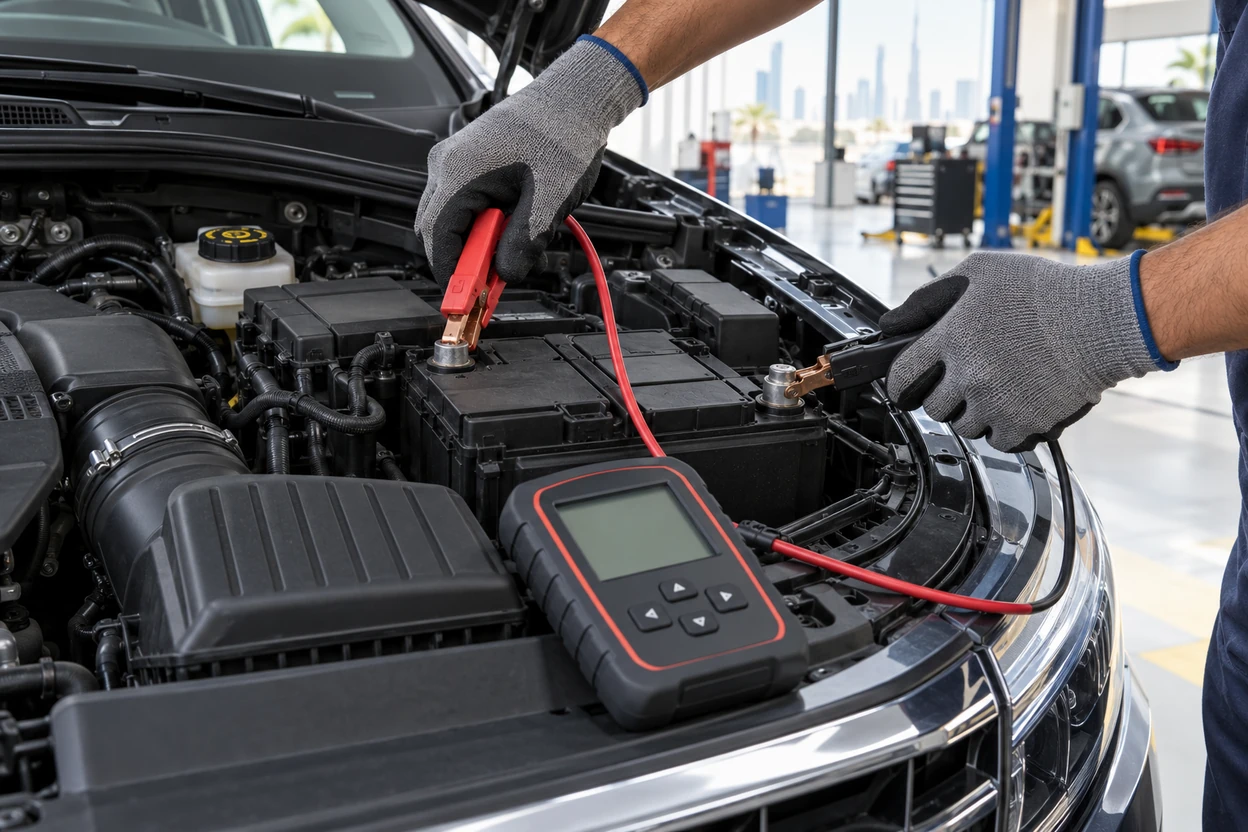
Every battery job in our Al Quoz 4 workshop starts with the same checks, so the specification is right before anything is fitted.
Specification first, battery second
The cheapest battery that fits the tray is rarely the right one.
-
We read the label on the old battery and note the technology, capacity, cranking rating and part number or BEM code.
-
We check the VIN and the equipment, such as start stop and energy recovery, to confirm the factory specification.
-
We test the old battery and the charging system, because a battery that died early often has a cause elsewhere.
-
We match case size, terminal layout, hold down and vent connection, then code the battery with VW specific software.
-
We check starting, charging and start stop, and read any stored low voltage faults before handing the car back.
Battery spec mistakes we see on VWs in Dubai
The same model can need different batteries. Match the label and the VIN, not the badge.
A cheaper type in an AGM car wears out early and can upset start stop.
The car may keep charging as if the old battery were still fitted.
The car charges to the wrong strategy and shortens battery life.
Disabling the button does not make a standard battery suitable.
Cabin and boot mounted batteries need the vent reconnected.
If your VW will not start even with a good battery, our Volkswagen no start diagnosis page covers the wider causes.
What should you send to get the right battery quoted?
These details let us confirm the specification before you book, so the correct battery is ready when the car arrives.
- Model, year and engine
- A clear photo of the battery label
- Whether the car has start stop
- The VIN if you have it
- How long the old battery lasted
- Any warning messages shown
- Accessories such as a dash camera
- Where the car is parked now
For guide prices by model and how replacement and fitting work, see our Volkswagen battery replacement service. If you are stranded with a flat battery, our roadside assistance service can help.
Questions about VW battery types
How do I know if my VW has an AGM or EFB battery?
Look at the label on top of the battery, where AGM or EFB is usually printed clearly. If you cannot reach or read it, a workshop can confirm the type from the part number, the BEM code or the vehicle specification from the VIN. If the car has start stop and the label shows neither type, the wrong battery may already be fitted.
Can I put an AGM battery in a VW that came with EFB?
Often yes, and it can help a car with heavy electrical use or many short trips. The car must be able to accept it, the size and ratings must fit the tray and cables, and the battery management system must be told the new technology through coding. Without that step the car may charge the AGM battery incorrectly.
Can I fit a standard battery if I turn off start stop?
No. Switching start stop off with the button does not change how the car manages its battery. The system still expects the specified EFB or AGM, so a standard battery usually wears out much faster and can bring back warning messages. Fit the technology your VW was built with, matched on capacity and cranking rating.
Why does a VW battery need coding after replacement?
The battery management system learns how the old battery aged and adjusts charging to suit it. Coding records the new battery part number, maker, capacity and technology, so the car resets that ageing data and charges the new battery correctly. Varta notes that VW group cars need a code to register a new battery for this reason.
What happens if a new VW battery is not coded?
The car may start normally, but it can keep charging as if the old, worn battery were still fitted. Varta warns this can restrict or stop the start stop function, raise fuel consumption and limit comfort features. Over time the new battery can wear out sooner than it should, which defeats the point of buying the correct type.
What do Ah and CCA mean on a car battery?
Ah, or amp hours, is the stored capacity, and the car is coded for a specific figure. CCA, or cold cranking amps, describes starting performance, and some labels give an EN figure instead. A replacement should match the specified capacity and meet the cranking rating for the engine, with the same case size, terminal layout and technology.
Does a higher Ah battery give my VW more power?
Not in a useful way. Capacity should match the specification the battery management system is coded for. A much larger battery may not fit the tray or clamp, and the car may never charge it fully. If you need more capacity for accessories, a workshop can check whether a slightly larger approved option suits your car and code it correctly.
How long does a VW battery last in Dubai heat?
There is no fixed age. Heat speeds up internal wear, and Midtronics estimates about 40 months of normal use in hot regions and about 30 months in extreme heat. Short trips with the AC on, long periods parked and accessories left on shorten it further. A test at each service shows the real condition before the car fails to start.
Do electric and hybrid VWs have a 12 volt battery?
Yes. ID models, the e Golf and hybrid versions such as the GTE have a separate 12 volt battery that powers the electronics and wakes the high voltage system. If it goes flat the car may not switch on, even with a charged traction battery. It is matched and coded like any other 12 volt battery.
Where can I see VW battery replacement prices by model?
This guide covers which battery specification your VW needs. Guide prices by model, together with how testing, fitting and coding work, are on our Volkswagen battery replacement page. Send your model, year and a photo of the battery label on WhatsApp, and we will confirm the correct type and give you a written quote before any work.
Get the right battery spec for your VW
Volkswagen Repair Dubai is an independent VW workshop in Al Quoz 4, open Monday to Saturday, 9am to 7pm. Send your model, year, engine and a photo of the battery label, and we will confirm the correct technology, rating and coding before any work.
See prices by model and booking details on our Volkswagen battery replacement page.
How this guide was written
Written by the Volkswagen Repair Dubai workshop team in Al Quoz 4 and reviewed by our technical team in October 2026. It is based on the battery checks and coding we carry out on Volkswagen cars in Dubai, together with the battery maker and battery testing sources listed below.
Battery fitments vary by market, year and equipment, so always confirm the specification for your own car from the label and the VIN. This guide covers which battery your VW needs. Replacement prices are published on our battery replacement page, not here.
Technical references
- Varta guide to EFB and AGM differences, explaining which vehicles need EFB or AGM and that only AGM may replace AGM.
- Varta on the right BEM code for battery replacement, explaining the VW group battery code and what happens when a battery is not coded.
- Midtronics on why hot temperatures reduce battery life, with battery life estimates by climate.