In this guide
If your VW is not starting after rain or flooding, do not keep cranking it. Check how high the water reached. If it came up to the door sills, the seats or the air intake, leave the engine off, disconnect the battery only if safe, photograph the car and arrange recovery, because cranking a wet engine can cause hydrolock.
Written by the Volkswagen Repair Dubai workshop team in Al Quoz 4. Reviewed by the technical team, updated October 2026.
Key takeaways
- Do not try to start a VW that has stood in deep water. Check the water line first.
- Water drawn into the air intake can lock the engine and bend internal parts if you crank it.
- After light rain, a no start is often a wet connector, a weak battery or a key problem, not engine damage.
- On some models, control modules and wiring sit under the seats or in the footwells, so cabin water matters.
- Do not jump start a car that has been flooded, and do not drive it through more water.
- Take photos before anything is moved or dried, and contact your insurer early.
Is it safe to start a VW after rain or flooding?
It depends on how deep the water was and where it reached. Light rain on a parked car is very different from a car that stood in a flooded car park or stalled in a flooded underpass. Use the water level as your first guide.
Wet outside, dry inside
The car was parked in heavy rain but water did not pool around the wheels. One or two normal start attempts are reasonable. If it does not start, stop and get it checked.
Water around the wheels
Water reached the tyres or the lower body but not the sills or the cabin. Check the engine bay, the air filter area and the carpets before any attempt to start.
Sills, seats or bonnet
Water reached the door sills, the seats or the engine air intake, or the car stalled in water. Do not start or crank it. Arrange recovery.
Never walk or drive into flood water to reach a car. Moving water can carry a vehicle and hide open drains and debris. If the car is still in water, wait until the water has gone down. If there is a burning smell, smoke, sparks or a hissing sound from the battery or wiring, keep away from the car and call the appropriate emergency service.
Gulf News, reporting on UAE rain advice in March 2026, said drivers should not start a car if water may have reached the engine or transmission, and should check the engine oil, coolant and air filter first. That matches what we see in the workshop.
How do I check how high the water reached?
Flood water leaves marks. Before you decide anything, walk round the car and look for the highest line of mud, sand or debris. These checks take a few minutes and need no tools.
-
Look at the outside
Check the doors, wheel arches and number plates for a line of dirt or sand. That line shows the highest water level.
-
Open the doors
Look at the door seals, the sills and the lower door cards. Wet carpet or water running out of the door is a clear warning.
-
Press the carpets
Press the footwell carpets and look under the floor mats. Damp carpet means water reached the cabin floor.
-
Check the seats
Look for a tide mark on the seat bases and feel the fabric or leather. Water at seat level means a deep flood.
-
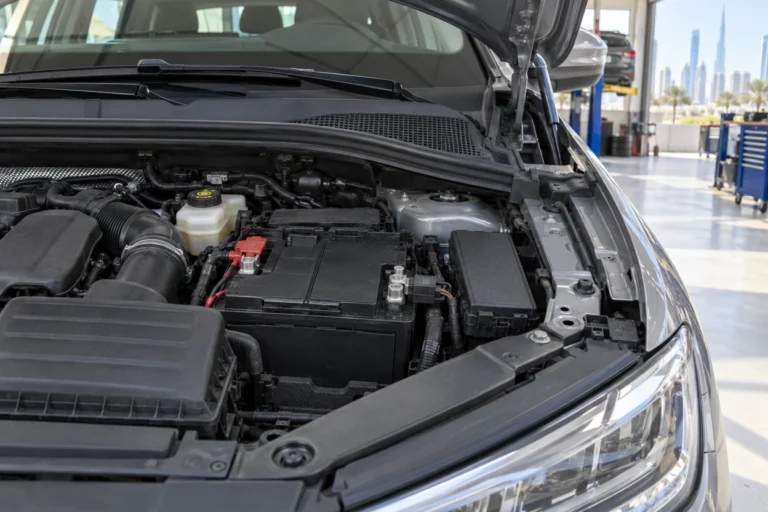
Open the bonnet
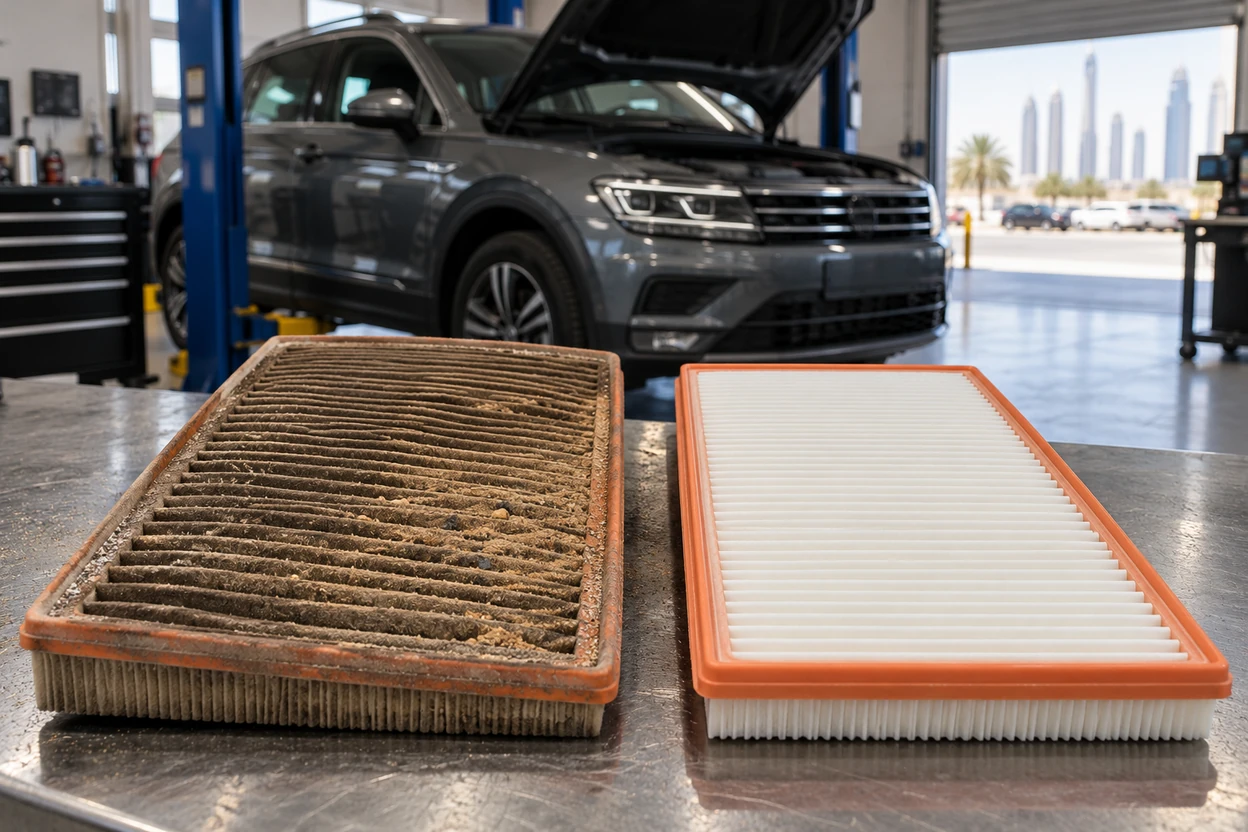
Look for mud, leaves or sand on top of the engine and around the air filter housing and its intake.
-
Check the boot
Lift the boot floor and check the spare wheel well. Water often collects there and can reach wiring and modules.
Why will a VW not start after rain?
Most rain related no starts come from water reaching something electrical. Deeper floods add mechanical risk. These are the causes we find most often, from the most common after normal rain to the more serious ones after a flood.
| Cause | Typical clue | How it is checked |
|---|---|---|
| Wet ignition or sensor connectors | Engine cranks but does not fire, or runs rough and then stops | Connector inspection, drying and fault code reading |
| Weak battery or wet terminals | Slow crank, clicking, warning lights flicker | Battery load test, terminal and earth strap checks |
| Corroded earth connection | Several unrelated warnings at once | Voltage drop test across the earth points |
| Key or immobiliser problem | Key not recognised message, no response to start button | Key fob check and immobiliser reading with VW software |
| Flooded modules or wiring | Dead dashboard, random warnings, no communication | Module inspection under seats, in footwells and in the boot |
| Water in the air intake | Engine stopped in water, will not turn, or turns with a knock | Air filter, intake and cylinder checks with the engine off |
| Water in the fuel | Misfire, stalling or no start after a deep flood | Fuel sample and fuel system checks |
Khaleej Times reported in December 2025 that UAE garages saw water in air filters, moisture on spark plugs, temporary starting problems and battery problems after the rains, mostly on cars parked in waterlogged areas. For the wider list of starting faults, read our VW will not start diagnosis page.
Where does water do the most damage inside a VW?
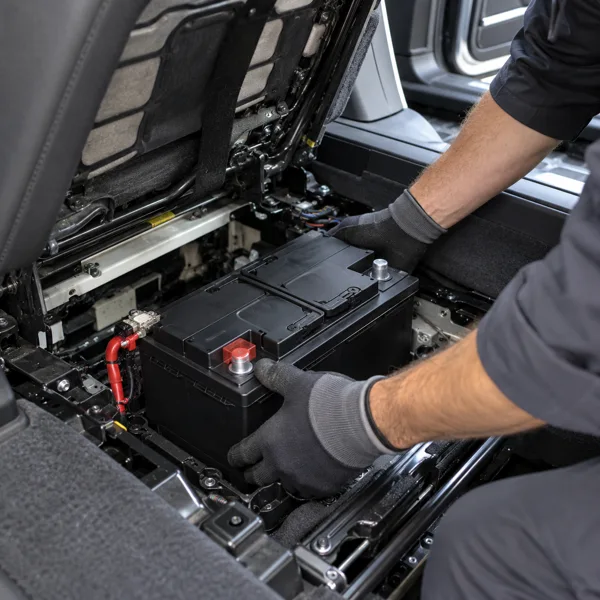
Modern Volkswagens carry a lot of electronics low in the car. On some models, control units, wiring junctions and even the battery sit under the front seats, in the footwells or below the boot floor. Water that seems minor on the carpet can still reach these parts.
- Under the seats some models carry control units, seat wiring and airbag connectors.
- In the footwells wiring looms run under the carpet and sound deadening, which holds water like a sponge.
- Below the boot floor the spare wheel well can collect water near wiring and modules.
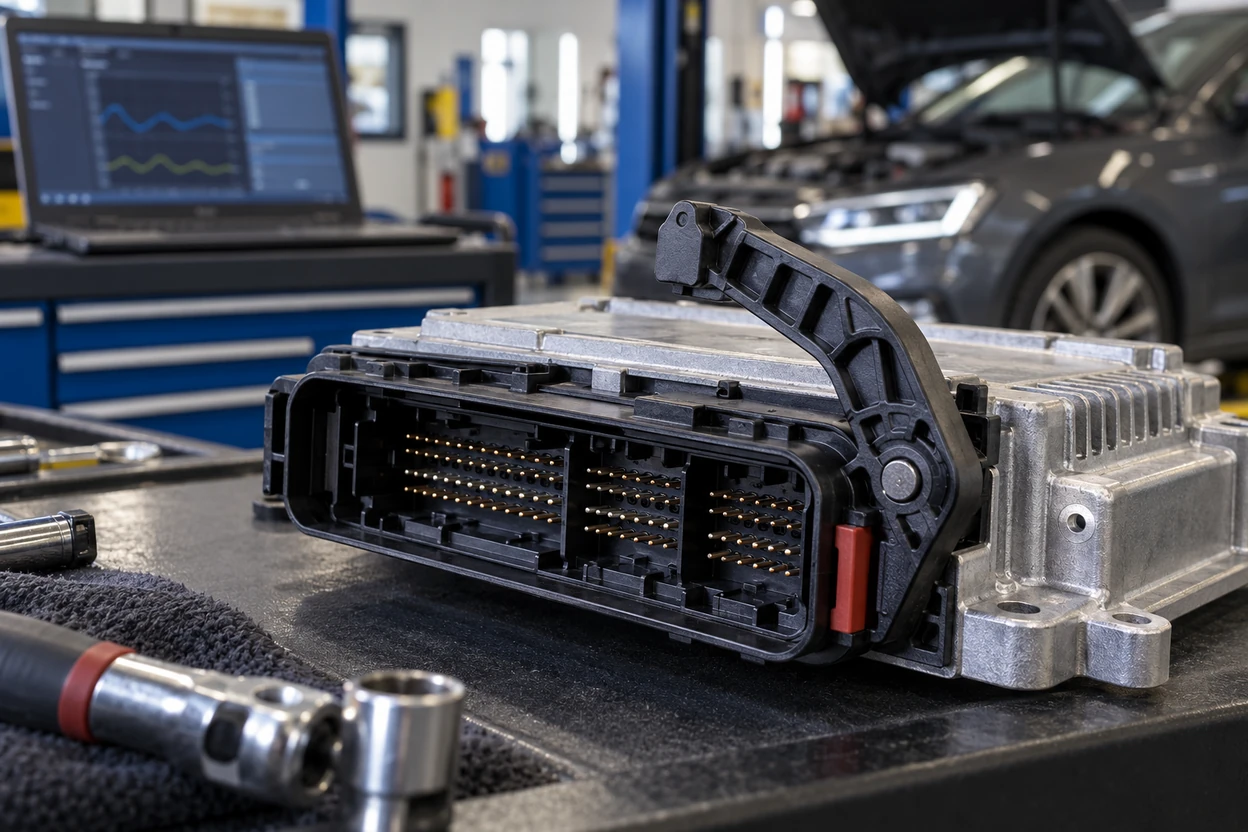
- In the engine bay the engine control unit, sensors, coils and fuse boxes are exposed to splash and standing water.
- Behind the bumper sensors, lights and their plugs sit low and take the first hit from water.
Wet carpet must be lifted and dried properly. Water left under the carpet keeps the wiring damp and can cause corrosion and smells weeks later.
What is hydrolock and why should you not crank the engine?
Hydrolock happens when water gets into the engine cylinders. An engine is built to squeeze a mix of air and fuel. Water cannot be squeezed, so when a piston comes up against water it is stopped, and the force has to go somewhere. SlashGear explains that the air intake is the main route for water, and that the counter pressure can bend or break connecting rods or damage bearings.
- 1Water enters the intake
Deep water, a bow wave or a flooded car park lets water reach the air intake.
- 2Water reaches a cylinder
The engine draws water in with the air, or water settles there while parked.
- 3The piston is stopped
Water cannot be compressed, so the piston cannot finish its stroke.
- 4Parts are damaged
Cranking or running forces the parts, which can bend a connecting rod.
This is why repeated cranking after a flood is the most expensive mistake. If the engine stopped while driving through water, or water reached the intake, leave it off. A technician can check the intake, remove the spark plugs or glow plugs and turn the engine by hand to find out whether water is inside before any start attempt.
Signs that point to water in the engine include the engine stopping suddenly in water, a starter that clicks but the engine will not turn, a knocking sound when cranking, white smoke after a restart and milky or watery engine oil. Any of these means the car should be recovered, not driven. Our VW engine repair page explains the engine work that follows a confirmed internal fault.
Car stuck after the rain? Send us a photo of the water line and tell us what happens when you press start, and we will tell you whether to try again or wait for recovery.
What should you not do with a VW after a flood?
Most of the costly damage we see after a flood is caused after the water has gone, by trying to get the car moving too quickly. Avoid these common mistakes.
Each attempt can pull more water in or force a locked engine.
Extra power through wet wiring and modules can cause short circuits.
A bow wave can push water straight into the intake.
High revs make any water in the intake more damaging.
Trapped water keeps wiring damp and leads to corrosion.
Stored faults are evidence of what the water reached.
The mechanic quoted by Khaleej Times put it simply. Let the car dry completely and do not force start it. If water has reached the engine, it needs time and checks before any attempt.
What are the electrical and airbag risks after flooding?
Water and electricity do not mix well in a car. The risks are not only a no start. Some faults appear days or weeks later as connectors corrode.
Treat a flooded car as electrically unsafe
Until it has been checked, assume wiring, modules and connectors may be wet inside, even when the outside looks dry.
Disconnect only if safe
If the battery and its terminals are dry and easy to reach, disconnecting it reduces the risk of short circuits. Some settings may need resetting afterwards.
Restraint wiring under the seats
Airbag and seat belt connectors under the seats can be affected by cabin water. An airbag warning after a flood needs checking before the car is used.
Corrosion takes time
Water left in plugs can cause warnings, flickering lights or a flat battery days after the car first starts again.
If an airbag or restraint warning appears, read our VW passenger restraint system malfunction page. If the engine control unit itself got wet, our VW ECU repair page explains how a control unit is tested before any repair or replacement.
Which fault codes can appear after water gets in?
A scan after a flood often shows a mix of codes from different control units. The codes point to what the water reached, but they do not prove a part has failed. Generic codes we often see after water ingress include these.
A misfire code such as P0300 can come from moisture on spark plugs or coils. A crankshaft sensor circuit code such as P0335 can come from a wet or corroded sensor plug. Lost communication codes in the U group often mean a module or its wiring has been affected, or the battery voltage dropped. VW specific software reads the control units that a basic engine code reader cannot see, including the airbag and comfort modules. Our guide to VW dashboard warning lights explains what each warning colour means.
What do we check on a VW after rain or flooding?
Every flood or rain car in our Al Quoz 4 workshop follows the same order, so nothing is started until it is safe to do so.
Water first, start last
The engine is only started once we know where the water went.
-
We record the water line inside and outside the car and photograph it, which also helps with insurance.
-
We check the engine oil, coolant and air filter housing for water, and inspect the intake. If water is suspected inside, the cylinders are checked with the engine turned by hand.
-
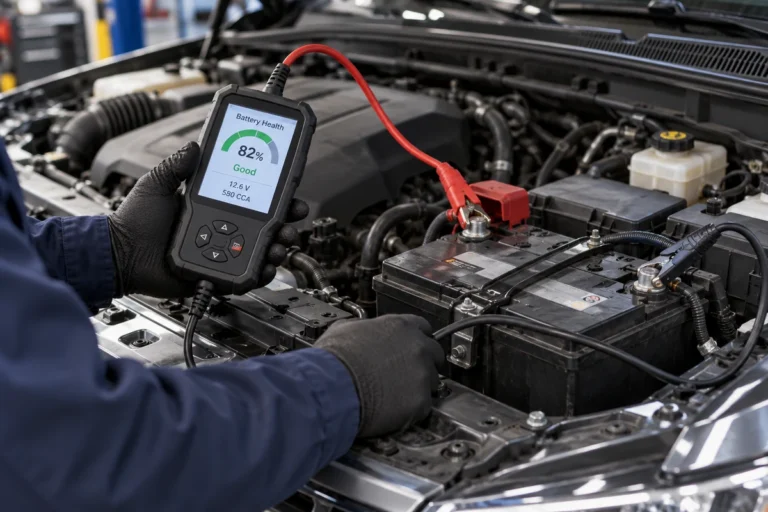
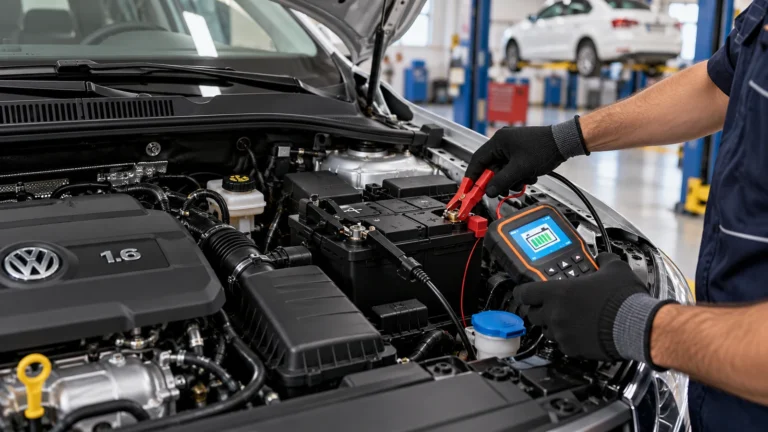
We test the battery, terminals and earth straps, because a weak or wet supply causes many rain related no starts.
-
We lift carpets where needed and inspect modules and connectors under the seats, in the footwells and below the boot floor.
-
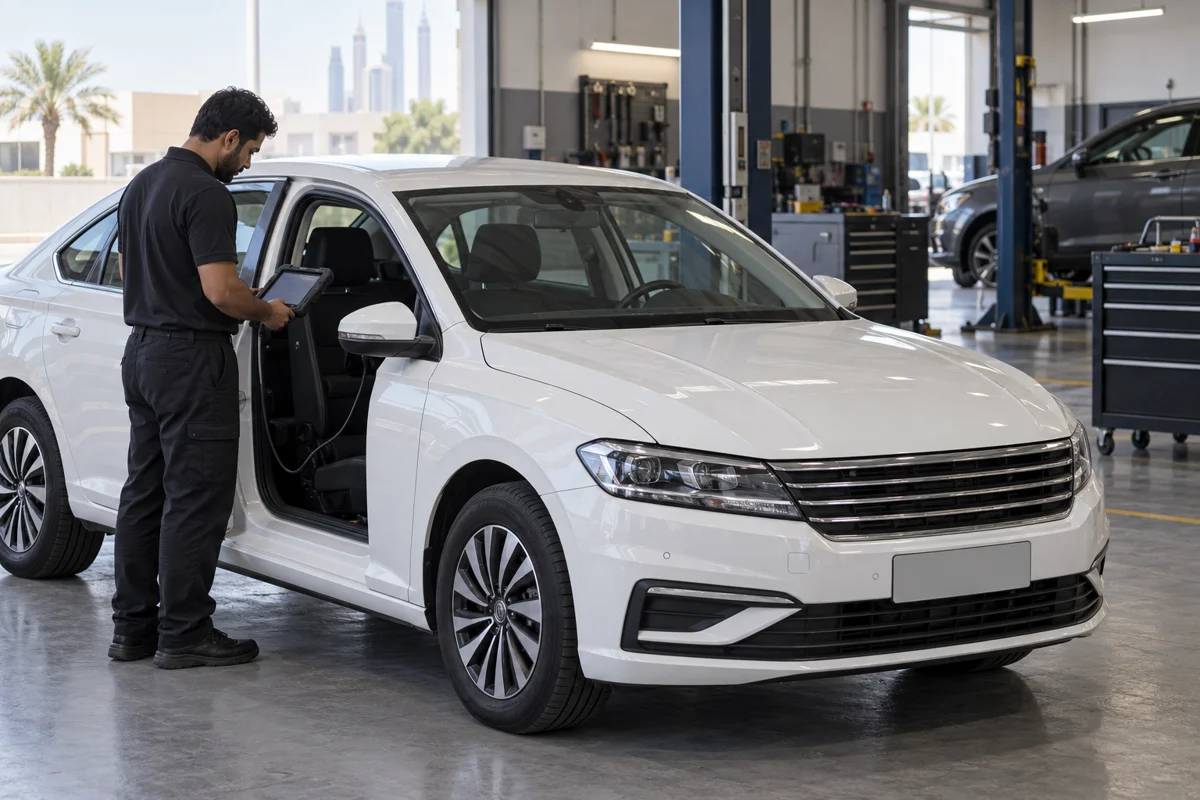
We read every control unit with VW specific diagnostic software, save the fault entries and check the key and immobiliser.
-
We explain what we found and give a written quote before any repair. Extra work only goes ahead after your approval.
Is it just the battery, or something more?
Rain does not usually kill a healthy battery, but a battery that was already weak often gives up when the car has stood in damp weather, and wet terminals add resistance. A battery test separates the two quickly.
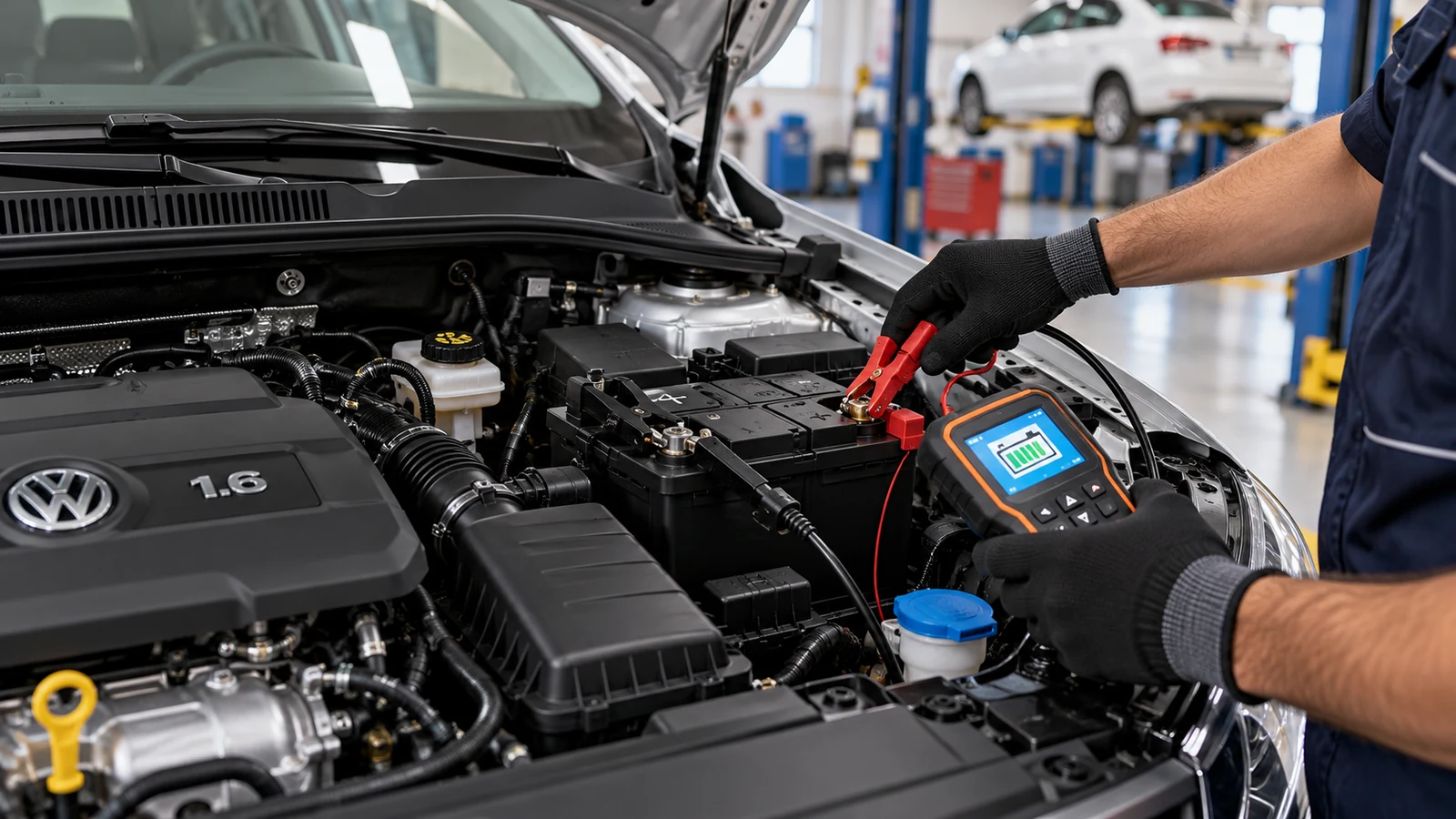
Signs that point to the battery or its connections, rather than flood damage, include a slow crank, a single click, a dashboard that dims when you press start and corrosion on the terminals. If water stayed outside the cabin and away from the engine intake, the battery is a sensible place to start.
If testing confirms only a failed battery, our no start page lists a battery replacement guide of AED 400 to 1,200, with the exact price confirmed in a written quote for your model. All flood related work is quoted after testing, because the damage depends on how high the water reached. See our VW battery replacement page for battery types and fitting.
How do I get a flooded VW to the workshop?
A car that has been in deep water should travel on a recovery truck, not under its own power. Driving a car with water in the intake or wet modules can turn a repairable problem into a much larger one.
- Our roadside service
- Our VW roadside assistance and recovery page describes a 24 hour roadside and recovery service in Dubai, with charges quoted for the job.
- Existing cover
- Your insurance or a breakdown package may include recovery. Check with that provider first, so you do not pay twice.
- Tell the operator
- Say that the car has been in water, whether it is in Park and whether the wheels turn, so the correct loading method is used.
- Location details
- Send a map pin, basement or ramp height limits and whether water is still present around the car.
Workshop diagnosis and repairs in Al Quoz 4 run Monday to Saturday, 9am to 7pm. A night time recovery and the workshop repair are separate arrangements, agreed when you call.
Get your VW checked after the rain
Our Al Quoz 4 workshop checks the water line, the intake, the oil, the battery and every control unit with VW diagnostics before the engine is started, with a written quote before any repair.
What should I know about insurance after flood damage?
Every policy is different, so this is general guidance only. Your insurer and your policy wording decide what is covered. Gulf News advised UAE drivers to contact their insurer promptly after significant flooding, to photograph all damage and to follow approved repair procedures to avoid disputes.
- Photograph the water line outside and inside
- Photograph the car where it stood
- Note the date, time and location
- Record whether you tried to start it
- Contact your insurer before repairs
- Ask whether recovery is included
- Keep all recovery and workshop papers
- Ask which repair route the insurer approves
Try to take your photos before the car is moved, dried or cleaned. Note honestly whether you tried to start it, because that can matter in an assessment.
How long does a VW need to dry out after rain?
There is no single drying time. It depends on where the water went and how much of it there was. These are the areas that need attention, and none of them should be rushed.
Cabin and carpets
Carpets and sound deadening hold water for a long time and may need lifting to dry fully.
Connectors
Plugs are opened, checked for water and corrosion, dried and reconnected.
Engine and intake
Any water in the air filter housing or intake is removed before the engine is turned.
Fluids
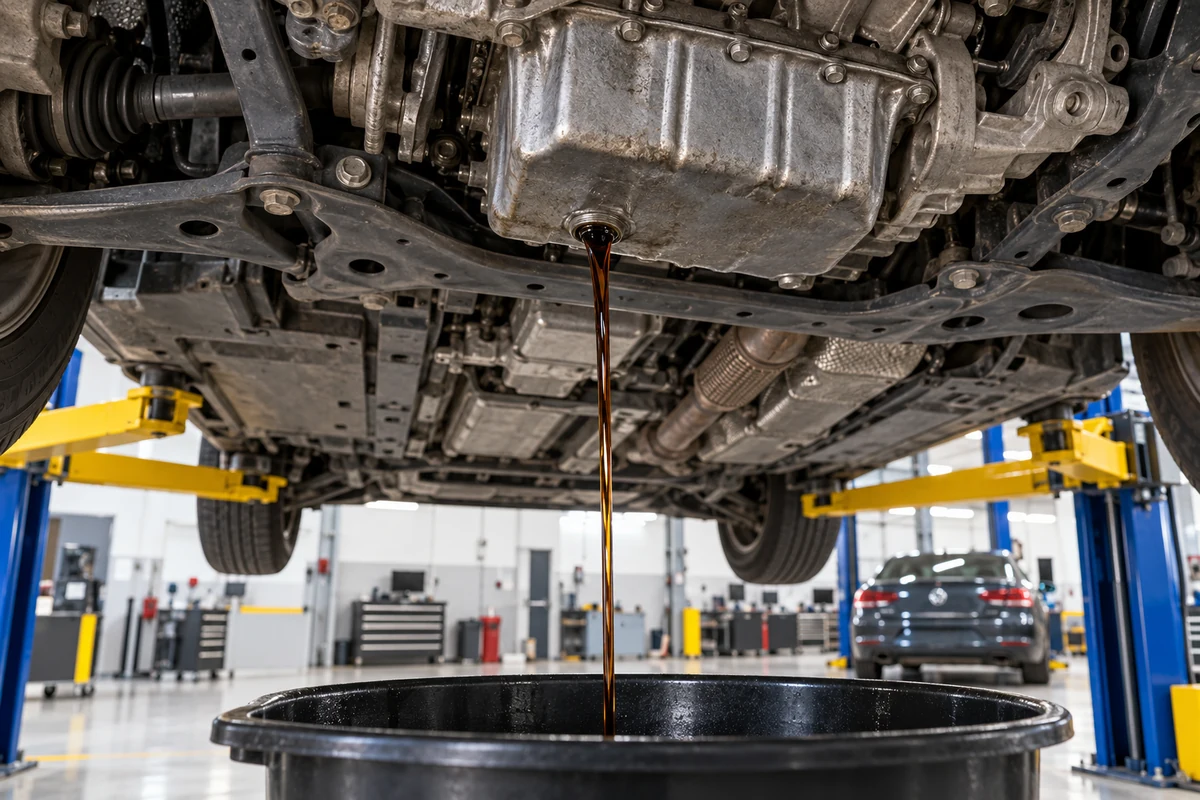
Oil, and other fluids where water may have entered, are checked and changed if contaminated.
After light rain on a parked car, opening the doors and windows on a dry day often helps. Gulf News also advised removing water from the cabin quickly with towels or a wet vacuum to prevent smells and mould. After a flood, drying is part of the repair, not a replacement for checking.
Can rain stop my VW key from working?
Yes. A key fob that got wet can stop working, and a car with a flat battery may not recognise the key at all. If the car shows a key not recognised message after rain, the problem may be the key, the battery or the immobiliser communication rather than the engine.
Your owner manual shows the emergency key position for your model, where the key is held against a marked area so the car can read it even with a weak fob battery. If that does not work, the immobiliser and key need checking with VW software. Our VW key programming page explains how keys are tested and matched to the car.
Quick answers about a VW not starting after rain
Should I try to start it? Only if water stayed below the sills and away from the engine intake.
Can I jump start it? Not if it has been flooded. Get it checked first.
Should I disconnect the battery? Yes, if it is dry and safe to reach.
What is the biggest risk? Cranking an engine with water inside, which can cause hydrolock.
Do I need photos? Yes, before the car is moved or dried.
Key flood damage terms explained
These terms appear on inspection reports and repair quotes after a flood.
- Hydrolock
- Water inside a cylinder stops the piston, which can bend or break internal engine parts.
- Water line
- The highest mark the flood water left on the car, inside or outside.
- Air intake
- The path that feeds air to the engine through the air filter housing.
- Earth strap
- The cable that connects the battery negative to the body and engine.
- Control unit
- An electronic module that runs one system, such as the engine, airbags or comfort functions.
- Immobiliser
- The security system that only lets the engine start with a recognised key.
Questions about a VW that will not start after rain
Why is my VW not starting after rain?
After normal rain, the usual causes are wet ignition or sensor connectors, a weak battery or wet terminals, a corroded earth connection or a key that is not recognised. After a flood, water in the air intake, wet control modules and water in the fuel are also possible. A check of the water line and a VW specific scan find the cause.
Should I try to start my VW after it was in flood water?
No, not until it has been checked. If water reached the door sills, the seats or the engine air intake, cranking the engine can cause hydrolock and bend internal parts. Leave the engine off, disconnect the battery if it is dry and safe to reach, take photos and arrange recovery to a workshop.
What is hydrolock on a car?
Hydrolock happens when water gets into the engine cylinders, usually through the air intake. Water cannot be compressed like air and fuel, so the piston is stopped. If the engine is cranked or running, the force can bend or break connecting rods or damage bearings. That is why a flooded engine should not be cranked.
Can I jump start a VW that has been flooded?
We advise against it. A flooded car may have wet wiring, connectors and modules, and extra power from a jump start can cause short circuits or further damage. If the engine took in water, a jump start also makes cranking possible, which risks hydrolock. Get the car checked before any start attempt.
Should I disconnect the battery after my car was in water?
If the battery and its terminals are dry and easy to reach, disconnecting the negative terminal reduces the risk of short circuits while the car dries. Do not reach into water or touch a battery that is hissing, smoking or damaged. Some settings, such as window positions, may need resetting after reconnection.
How do I know if water got into my VW engine?
Warning signs include the engine stopping suddenly in water, an engine that will not turn or knocks when cranked, mud or water around the air filter housing, white smoke after restarting and milky or watery engine oil. A technician checks the intake and cylinders with the engine turned by hand before any start.
Can rain damage the airbags or modules in my VW?
Cabin water can. On some models, control units, airbag connectors and wiring sit under the seats, in the footwells or below the boot floor. Water that reaches these areas can cause warnings straight away or corrosion later. An airbag warning after a flood should be checked with VW diagnostic software before the car is used.
Does car insurance cover flood damage in the UAE?
It depends on your policy type and its terms, so check with your insurer directly. Contact them promptly after significant flooding, photograph the water line and the damage before the car is moved or dried, and follow the repair route they approve. Keep all recovery and workshop papers for the claim.
Can you recover a flooded VW to your workshop?
Our roadside assistance and recovery page describes a 24 hour roadside and recovery service in Dubai, with charges quoted for the job. Tell the team the car has been in water, whether it is in Park and whether the wheels turn. If your insurance includes recovery, check with that provider first.
How much does it cost to fix a VW after flooding?
It depends on how high the water reached and what it damaged, so flood work is quoted after inspection and testing. If testing shows only a failed battery, our no start page lists a battery replacement guide of AED 400 to 1,200. Wider electrical or engine damage is quoted in writing before work starts.
Get your VW checked after rain in Al Quoz 4
Volkswagen Repair Dubai is an independent VW workshop in Al Quoz 4, open Monday to Saturday, 9am to 7pm. Send a photo of the water line and tell us what happens when you try to start, and we will advise the safe next step.
For other starting faults, see our VW will not start page and our roadside assistance page.
How this guide was written
Written by the Volkswagen Repair Dubai workshop team in Al Quoz 4 and reviewed by our technical team in October 2026. It is based on the starting and water damage checks we carry out on Volkswagens in Dubai, and on the UAE news reports and technical article listed below.
Every flood is different, and battery locations, module positions and emergency key procedures vary between models, so always follow the owner manual for your car. The battery price is the indicative guide published on our own no start page, not a fixed quote. Insurance notes are general and do not replace your policy wording.
Sources
- Gulf News, heavy rain raises risk of vehicle damage, March 2026, advising UAE drivers not to start a car if water may have reached the engine, to check oil, coolant and air filter, to photograph damage and to contact the insurer.
- Khaleej Times, garages packed after December rains, December 2025, reporting water in air filters, wet spark plugs, starting and battery problems, and mechanic advice to let the car dry and disconnect the battery.
- SlashGear, common causes and signs of a hydrolocked engine, July 2024, explaining how water enters through the air intake and why it can bend connecting rods.