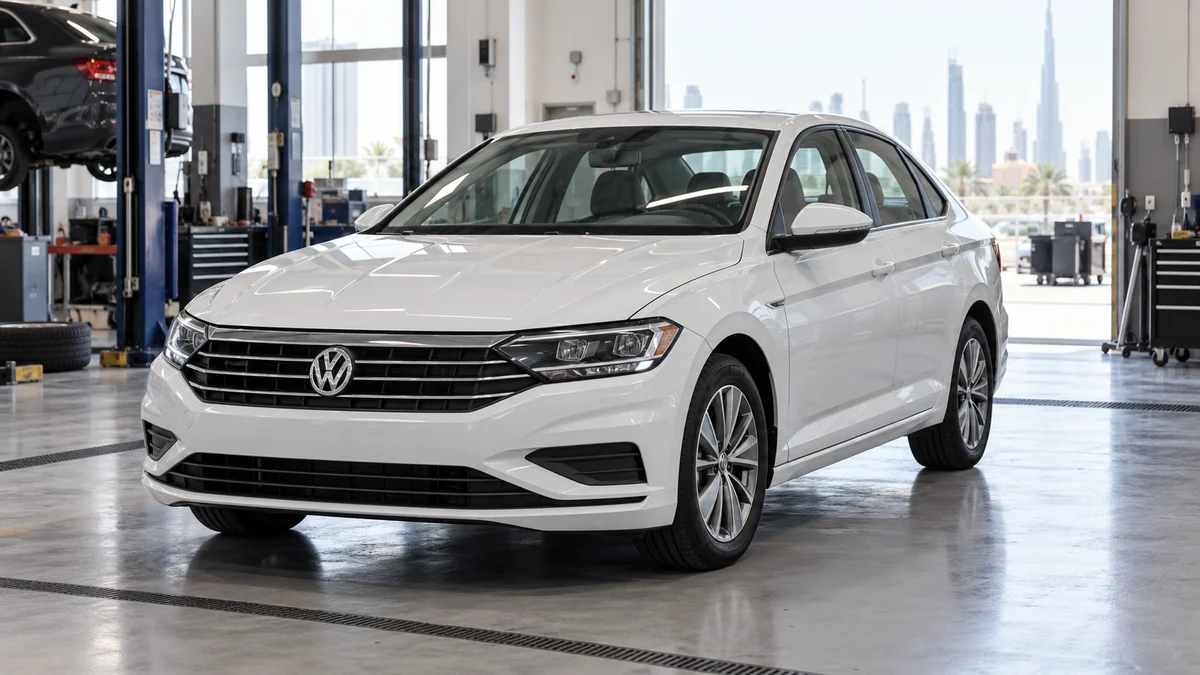
A 1.4 TSI, later a 1.5 TSI, both with a timing belt, and a 2.0 TSI with a timing chain in the GLI. Most cars use an 8 speed automatic, and the GLI uses a 7 speed DSG.
Volkswagen Jetta Problems by Year and Engine
The most common Volkswagen Jetta problems we see in Dubai are overheating and coolant loss, battery and start stop warnings, harsh automatic shifts, misfires from coils and plugs, fuel pump faults and wheel bearing or CV joint noise. On the Mk5, timing belt age and cam follower wear matter most. Each fault is tested before parts are replaced.
- VW specific diagnostics
- Written quote before work

Key takeaways
- Coolant loss and overheating are the faults that grow fastest in Dubai summer traffic.
- Start stop Jettas need the right EFB or AGM battery, registered to the car.
- Harsh or delayed automatic shifts often start with fluid, codes and adaptations, not a new gearbox.
- Misfires on TSI engines usually trace to coils, plugs or carbon on the intake valves.
- A Mk5 timing belt that snaps can bend the valves, so belt age matters as much as mileage.
- Every Jetta is tested with VW specific software before any part is ordered.
What are the most common Volkswagen Jetta problems?
These are the Jetta faults that come through our Al Quoz 4 workshop most often, in rough order. They cover the Mk5, Mk6 and Mk7 Jetta, the three generations still common on UAE roads. Each one links to the part of this page, or the repair guide, that explains how we test and fix it.
Overheating and coolant loss
Water pump, thermostat housing, radiator or cooling fan faults, often showing first in summer traffic.
Read moreBattery and charging warnings
Slow starts, a battery light or start stop that stops working, from a tired battery or an alternator fault.
Read moreHarsh or delayed shifts
Flare between gears, a jolt into drive or limp mode on the 6 speed or 8 speed automatic and the DSG.
Read moreMisfires and rough idle
Coil packs, spark plugs and carbon build up on TSI engines, with a flashing engine light in bad cases.
Read moreFuel pump and starting faults
Long cranking, cutting out or no crank at all, traced to the pump, relay, wiring, battery or starter.
Read moreNoises from the wheels
Clicking on turns from a CV joint, humming at speed from a wheel bearing, or a knock from a broken coil spring.
Read more
Which problems affect each Jetta generation?
The weak points change from one generation to the next, because the engines, timing drives and gearboxes changed. The model year on your registration card tells us where to look first, and the engine code on the VIN confirms it.
Naturally aspirated 2.0 and 2.5 engines, 1.4 and 1.8 TSI turbo engines, and the 2.0 TSI in the GLI. Gearboxes are a 6 speed automatic, a manual, or a DSG on some TSI and GLI cars.
The 2.0 FSI and 2.0 TFSI with a timing belt, and the 2.5 five cylinder with a chain in some markets. A 6 speed automatic, a manual, or a 6 speed DSG on the GLI.
Not sure which you have? Our Jetta repair page compares the engines, gearboxes and service needs of each generation.
Which Jetta years and engines have which faults?
This table joins the model years to the engine family and the drive, so you can see the likely weak spots for your exact car. The engine family names, EA113, EA888 and EA211, are the Volkswagen Group codes printed in parts catalogues and used by our diagnostic software.
The 1.5 TSI arrived with the 2022 mid cycle refresh of the Mk7. Engine family and timing drive are always confirmed by VIN before a quote, because some markets used different engines.

Why does my Jetta overheat or lose coolant?
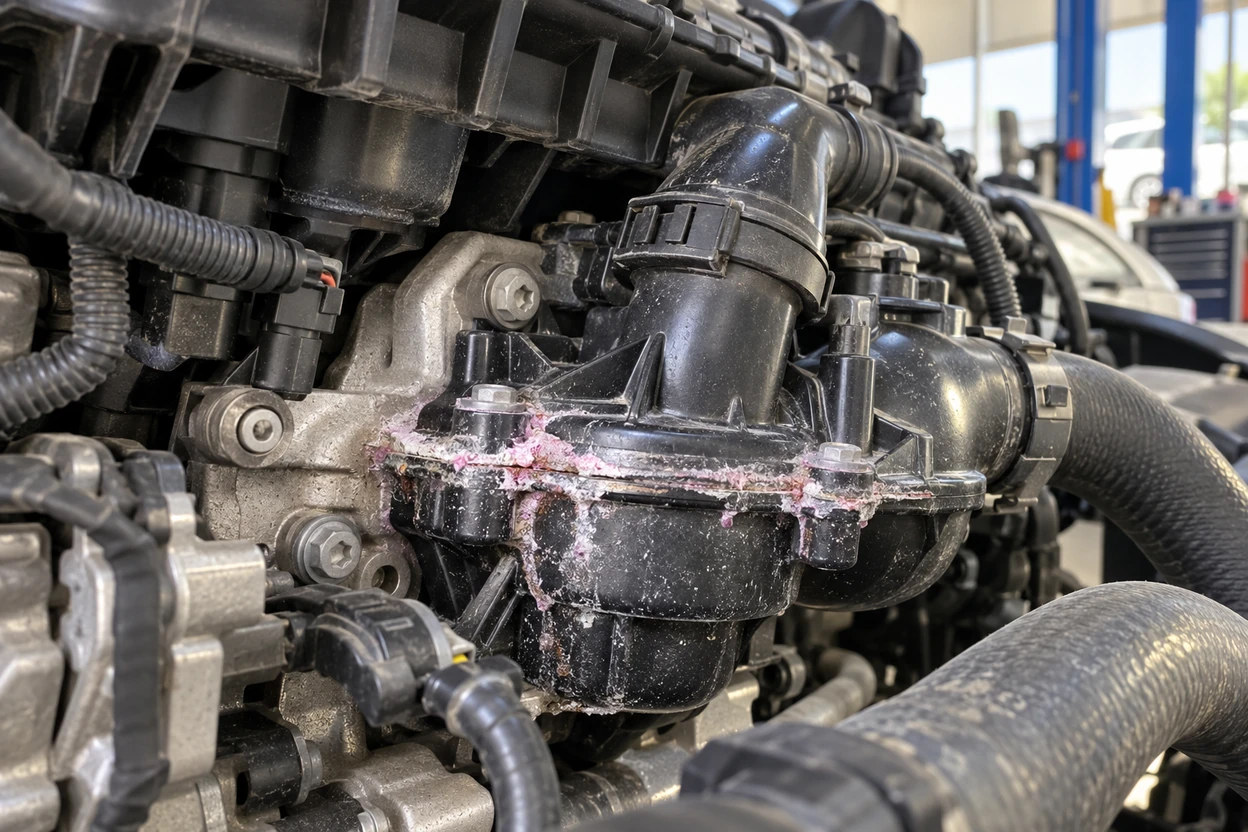
Overheating and coolant loss on a Jetta usually come from the water pump, the plastic thermostat housing, the radiator or the cooling fan. The Mk6 is the generation we see most for water pump and thermostat leaks, and the Mk7 can show cooling leaks too. A small seep often dries in the heat, so the level falls for weeks before the temperature gauge rises in summer traffic with the AC on.
- Coolant warning or a level that keeps dropping
- Temperature rising in traffic, then falling on the highway
- Sweet smell after a drive, or pink residue near the engine
- Fan running loudly or not at all
We pressure test the system and check fan operation before replacing anything. The pump repair and its test are explained in our Jetta water pump guide.
Why does my Jetta misfire or idle rough?
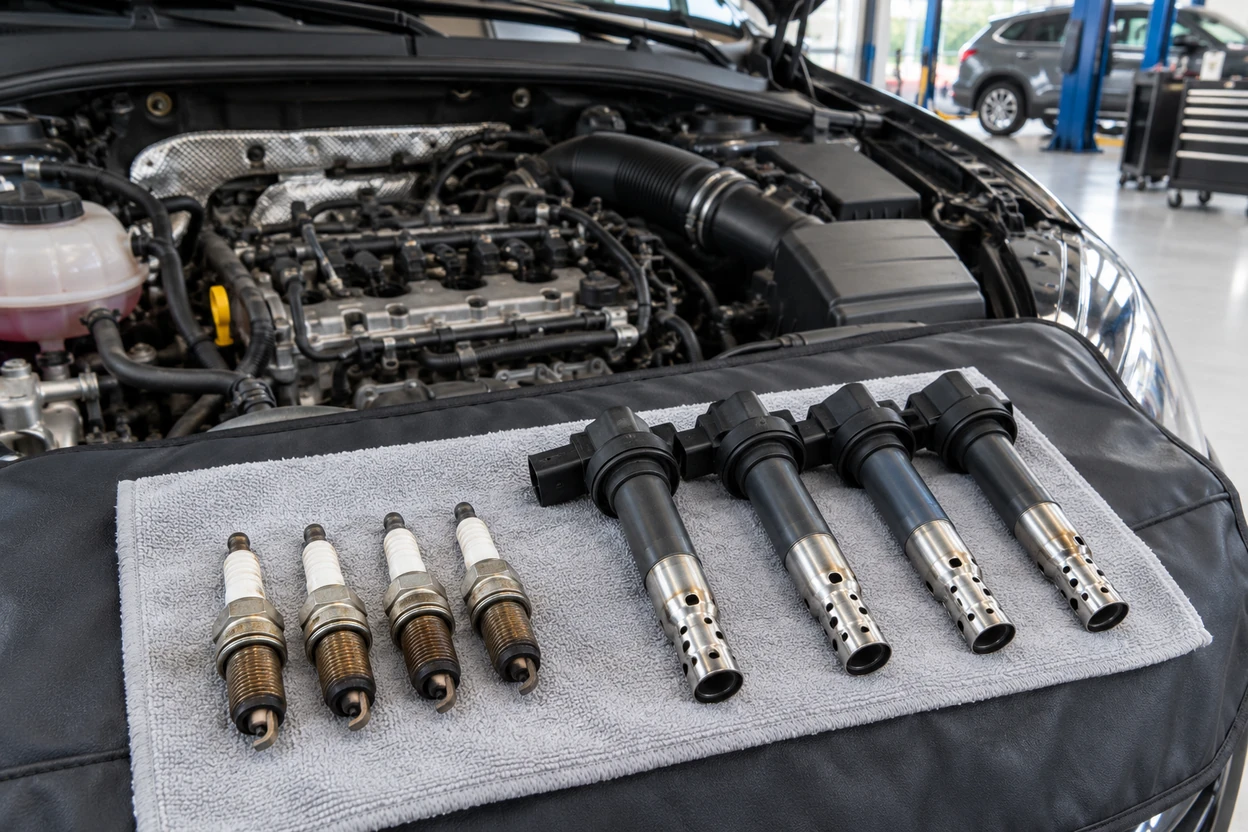
A Jetta that shakes at idle, hesitates under load or flashes the engine light is usually misfiring. On every generation the first suspects are the ignition coil packs and spark plugs. On the direct injection TSI and TFSI engines, carbon build up on the intake valves is the next cause, because fuel no longer washes over the valves. A lean mixture from a vacuum leak can feel the same, so we read the codes and live data before swapping parts.
P0300Random misfire, several cylinders, often plugs, carbon or a lean mixtureP0301Misfire on cylinder 1, with P0302 to P0304 for the others, often a single coilP0171System too lean, a vacuum leak or a fuel delivery faultP0016Cam and crank position do not agree, a timing drive or sensor faultA P0016 code on a chain engine can point to a stretched timing chain, and on a belt engine to a belt that has moved. It can also be a sensor. Our Jetta camshaft position sensor guide explains that test, and our VW timing chain page covers chain wear on the TSI engines. In rare cases the engine control unit itself is at fault, which our Jetta ECM page explains.
Is your Jetta showing one of these signs?
Send the year, engine, mileage and what you notice. We tell you the likely cause and the test we would run before quoting, so you know what happens next.
What to include in your message
- Model year and generation
- Engine size, for example 1.4 TSI or 2.5
- Mileage on the dash
- Warning lights and when the fault appears
- A short video of any noise
Why does my Jetta shift harshly or go into limp mode?
Harsh or delayed shifts, flaring between gears, a jolt when selecting drive and limp mode are the gearbox complaints we hear most. The Mk5 and Mk6 use a 6 speed automatic, the Mk7 an 8 speed automatic, and the GLI a DSG. The cause is usually low or old fluid, stored codes, adaptations that have drifted or a valve body fault. Code P0700 tells us the gearbox control unit has stored a fault, and we read that unit directly. We work up this ladder from the simplest fix, and most cars stop on the first or second rung.
Fluid change and adaptation reset
Correct fluid level and condition, then the shift adaptations relearned.
Minor repair
A solenoid, sensor, seal or wiring fault found by testing.
Valve body
The hydraulic control unit that causes flare and harsh shifts when it fails.
Rebuild
Internal wear confirmed after the simpler checks.
Replacement
Only when the gearbox cannot be repaired economically.
On a GLI with a DSG, judder and slow engagement can also come from clutch wear or the mechatronic unit. Our DSG gearbox repair page explains those tests in detail.
Why do Mk5 Jetta owners worry about the timing belt and cam follower?
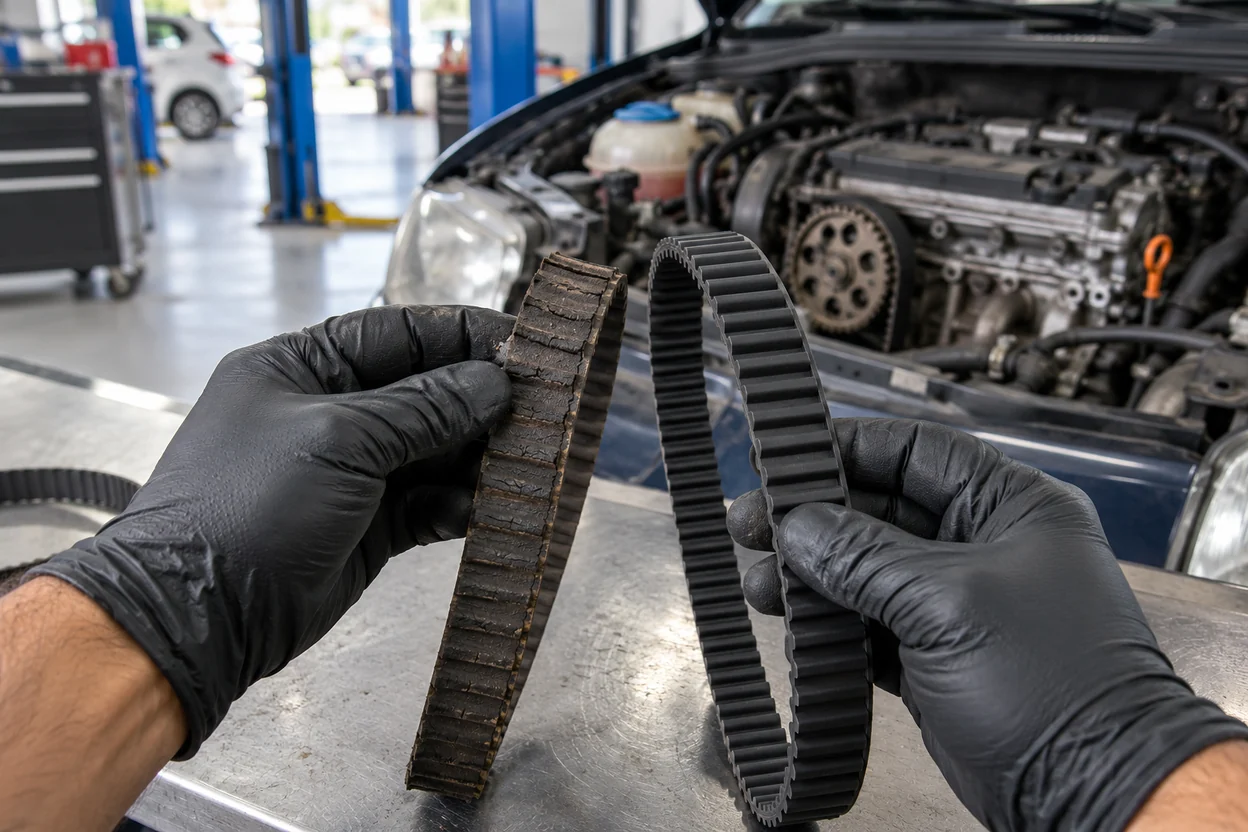
The Mk5 2.0 FSI and 2.0 TFSI turn their camshafts with a rubber timing belt. If an old belt snaps, the pistons can hit the valves and bend them, which turns a planned belt change into major engine work. In the heat of the UAE the rubber ages with time as well as distance, so a belt with few kilometres but many years on it still needs attention.
The 2.0 TFSI, which wears an FSI badge on its engine cover, has a second weak point. A small cam follower rides on a camshaft lobe and drives the high pressure fuel pump. When it wears through, it can damage the camshaft, the fuel pump or both, and metal particles can reach the cylinder head. One parts specialist suggests checking it every 20,000 to 30,000 miles on a standard car.
Timing belt kit, fitted
AED 1,500 to 3,500, quoted with the parts listed by engine code.
Signs of follower wear
Low fuel pressure codes such as P0087, power loss and hesitation under load.
Why does my Jetta crank but not start, or cut out?
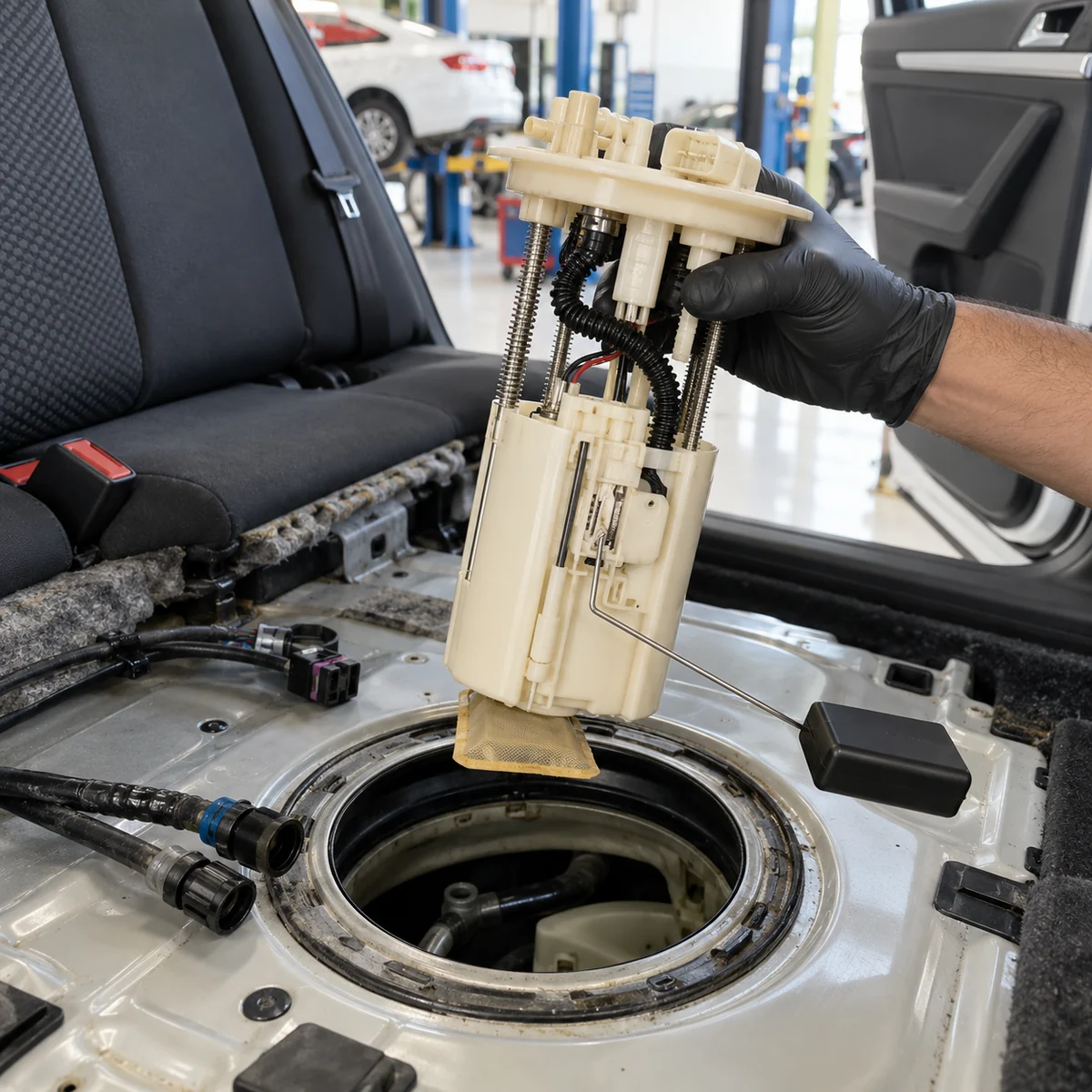
A Jetta that cranks for a long time, cuts out while driving or does not crank at all has a fuel delivery or starting fault. We separate the two quickly. A fuel pressure test shows whether the in tank pump is delivering, and a battery and starter test shows whether the engine is turning as it should.
Weak or failed pump
Long cranking, stalling or power loss. A pressure test costs AED 300 to 600, and a fuel pump repair AED 1,000 to 3,500.
No power to the pump
A failed relay, a corroded connector or damaged wiring can stop the pump while the pump itself is fine.
Clicking or no crank
A single click with good battery voltage points to the starter. A starter repair is AED 1,000 to 1,800, see our Jetta starter guide.
Rapid clicking
Rapid clicks or dim lights on start usually mean a weak battery, the first thing we test in summer.
A fuel filter that is overdue can also starve the engine, so it is checked as part of the same test. Nothing is replaced until the test shows which part has failed.
Is it the battery or the alternator?
Battery warnings, slow starts and start stop that refuses to work are among the most frequent Jetta complaints in UAE heat, especially on the Mk7. The battery and the alternator cause similar signs, so we test both before recommending either. A low voltage code such as P0562 points us to the charging side.
Usually the battery
- Slow cranking, worse after the car sits
- Start stop stops working, with a message on the dash
- Odd electrical faults that come and go
- An older battery that has been through several summers
Usually the alternator
- Battery light on while driving
- Lights dim at idle and brighten with revs
- A new battery that goes flat again
- Whine from the front of the engine
Start stop Jettas need the battery type the car was built with, registered to the car after fitting, or the warnings return. Infotainment freezes on the Mk7 are checked against battery health first, since a weak battery can cause them.
What do Jetta noises from the wheels and brakes mean?
Many Jetta faults announce themselves with a sound before a warning light. Describe the noise and when it happens, and we can usually tell you which part to check first.
- Clicking on turns
- A worn outer CV joint, usually after a split boot let the grease out and dust in. Worst on full lock in car parks.
- Joint AED 600 to 1,200, axle AED 1,200 to 2,500
- Humming at speed
- A wheel bearing. The hum rises with road speed and can change when you steer gently left or right on the highway.
- AED 300 to 800
- Squeal or grinding
- Worn brake pads, or pads worn down to the backing plate. Brake wear is one of the points to watch on the Mk7.
- Front pads AED 600 to 1,200
- Shake when braking
- Warped brake rotors, often after hard stops from highway speed in the heat.
- Rotors AED 600 to 1,200 per axle
- Knock over bumps
- A broken coil spring, or worn suspension bushes on older Mk5 cars. A broken spring can damage the tyre, so it should not wait.
- Quoted after testing
- Revs rise, car slows
- Clutch slip on a manual Jetta, felt most when overtaking or climbing a ramp in a high gear.
- Clutch kit AED 1,000 to 3,500
Rear brake pads are AED 450 to 900, and a brake fluid change AED 150 to 300. We road test with you where possible, so we hear the same noise you do.
A turbo is never condemned on a feeling. We read boost against what the engine asked for, then look for the leak, the valve or the sensor that explains the gap.
Our approach to turbo faults
Is my Jetta turbo failing?
The turbo engines in the Jetta, from the Mk5 2.0 TFSI to the Mk7 1.4 TSI, 1.5 TSI and GLI 2.0 TSI, can lose boost or start to smoke. Loss of power with an underboost code such as P0299 is often a split hose, a leaking intercooler pipe or a control fault rather than the turbo itself. Blue smoke or oil in the intake pipes points closer to the turbo seals, and that is when the unit is inspected.
Turbo repair is quoted after testing, because the price depends on whether the fault is a hose, a valve or the turbo.
How do we diagnose a Jetta problem?
Every Jetta follows the same order, so you know the cause and the price before any part is ordered.
Listen and read the codes
We take your description, then read the fault memory of every control unit with VW specific software. A diagnostic scan is AED 150 to 300.
Test the cause
Live data, pressure tests, leak tests, battery and charging tests or a road test confirm which part has failed.
Quote in writing
You get the cause, the parts and the labour in writing, with photos where they help you decide.
Repair after approval
We only start once you approve, and any extra work found on the way is only done after you approve it too.
Clear, check and hand over
Codes are cleared, adaptations relearned where needed and the car is road tested before handover.
How much do Jetta repairs cost in Dubai?
These guide ranges come from our Jetta repair page. They include typical parts and labour, and your written quote lists the exact parts and VAT for your car.
Guide prices, not fixed tariffs. Coil packs, spark plugs, carbon cleaning, cam followers and turbo work are quoted after testing. Extra work is only done after you approve it.
What should you check before buying a used Jetta?
A used Jetta with a clear history is a sensible buy, and most of the problems on this page are easy to test for. Before you pay, these are the points we look at on every generation.
Engine and timing drive
Confirm the engine code, then the timing belt record on a Mk5 or 1.4 and 1.5 TSI, or chain noise on a TSI with a chain.
Fault memory
A full scan of every control unit shows stored faults the dash may not, including gearbox and misfire codes.
Cooling system
Look for residue at the pump and thermostat housing and a coolant level that holds after a long idle.
Gearbox behaviour
Shifts from cold and hot, engagement into drive and reverse, and fluid service history on automatic and DSG cars.
Battery and start stop
Battery health and whether start stop works, which shows if the right battery has been fitted and registered.
Wheels and suspension
CV boots, wheel bearing noise on a road test, spring condition and brake rotor wear.
Our VW pre purchase inspection covers these checks and gives you a written report before you buy.
Jetta problem questions
Quick answers for Jetta owners in Dubai.
What are the most common problems with a Volkswagen Jetta?
The faults we see most are overheating and coolant loss from the water pump or thermostat housing, battery and start stop warnings, harsh or delayed automatic shifts, misfires from coils, plugs or carbon, fuel pump faults and wheel bearing or CV joint noise. On the Mk5, timing belt age and cam follower wear also matter. Each one is tested before parts are ordered.
Which Jetta years have the most problems?
The Mk5 Jetta, built from 2005 to 2010, is the oldest and needs the most care, with timing belt age, cam follower wear on the 2.0 TFSI, window regulators and ageing electrics. The Mk6, from 2011 to 2018, is known for water pump and thermostat leaks and coil packs. The Mk7, from 2019, is mostly about batteries, infotainment and brakes.
Does the Jetta have a timing belt or a timing chain?
It depends on the engine. The Mk5 2.0 FSI and 2.0 TFSI and the Mk7 1.4 TSI and 1.5 TSI use a timing belt. The 2.0 TSI in the GLI uses a chain, and the 2.5 five cylinder uses a chain in some markets. Send the VIN or engine size and we confirm which drive your car has before quoting.
Why does my Jetta overheat in Dubai traffic?
Long idling with the AC on puts the most load on the cooling system, so a weak water pump, a leaking thermostat housing, a blocked radiator or a cooling fan fault shows up first in summer traffic. A slow leak often dries before it drips. We pressure test the system and check the fan, so only the failed part is replaced.
Why does my Jetta jolt into drive or shift harshly?
A jolt into drive, flare between gears or limp mode usually comes from low or old fluid, stored codes, drifted adaptations or a valve body fault. We check fluid level and condition, read the gearbox codes and reset the adaptations first. A fluid change is AED 200 to 400, and many cars need nothing more once the cause is fixed.
What causes a Jetta to misfire?
Ignition coil packs and spark plugs are the usual causes on every generation. On direct injection TSI and TFSI engines, carbon on the intake valves is common at higher mileage. A vacuum leak causing a lean mixture can feel the same. Codes such as P0300 and P0301 tell us where to start, and swapping coils between cylinders proves the fault.
What happens if a Mk5 Jetta timing belt snaps?
On the Mk5 2.0 FSI and 2.0 TFSI, a snapped timing belt can let the pistons hit the valves and bend them, which turns a routine job into major engine work. A fitted timing belt kit is AED 1,500 to 3,500. In UAE heat the rubber ages with time as well as distance, so an old belt with low kilometres still needs checking.
Is my Jetta battery or alternator causing the warning?
Slow cranking and start stop not working usually point to the battery, while a battery light while driving or a new battery that goes flat points to the alternator. We test both before recommending either. A battery is AED 400 to 1,200 depending on type, and a fitted alternator is AED 1,500 to 3,400. Start stop cars need the battery registered.
How much does a Jetta diagnostic check cost in Dubai?
A diagnostic scan with VW specific software is AED 150 to 300. It reads the fault memory of every control unit, not only the engine, so gearbox, airbag and body faults show up too. After the scan and any tests, you get the cause and a written quote, and no repair starts until you approve it.
Is the Volkswagen Jetta a reliable car?
A well serviced Jetta is a sound sedan. Most costly repairs we see come from missed services, overdue timing belts, ignored warnings or leaks left too long, rather than the car itself. The weak points of each generation are well known and easy to test for, so a used Jetta with a good history and a clean inspection is a sensible choice.
Get your Jetta problem diagnosed
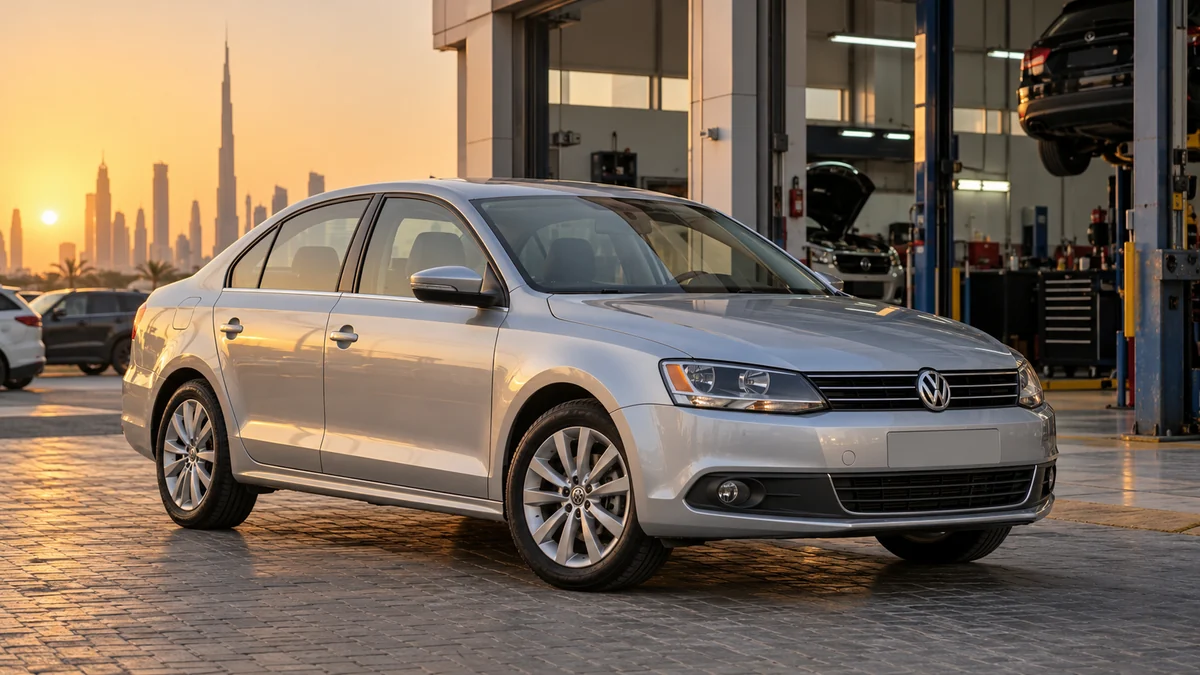
Volkswagen Repair Dubai is an independent VW workshop in Al Quoz 4, open Monday to Saturday, 9am to 7pm. We test the fault with VW specific software, explain what we find and quote in writing before any work starts.
How this page was written. Prepared by the Volkswagen Repair Dubai workshop team in Al Quoz 4 and reviewed in October 2026. Fault rankings reflect the Jettas we see at our workshop. Prices are the guide ranges published on our Jetta repair page, not fixed tariffs. Fault codes listed are generic OBD codes, and the exact codes on your car are read during diagnosis.
Sources. VW of Akron, The history of the Jetta, for generation years and the 2022 arrival of the 1.5 TSI. Euro Sport Tuning, cam follower replacement kit, for how the 2.0T FSI cam follower drives the fuel pump, the damage a worn follower causes and the suggested inspection interval.