Every Tiguan sold in the UAE has a turbocharged TSI petrol engine with direct injection.Turbo engines squeeze the air and fuel mixture much harder than older engines, so the plug needs a strong, precise spark to light it. As the electrode wears, the gap grows and the coil has to work harder to jump it. Eventually the spark becomes weak under boost, and you feel it as hesitation, a rough idle or a misfire.
VW lists a long service interval for Tiguan plugs, but that figure assumes moderate conditions.In Dubai the engine spends long periods in hot stop start traffic with the AC running, then runs at high load on the highway. We suggest changing the plugs a little earlier than the book, around 40,000 to 50,000 km for most cars, and sooner on a Tiguan R or any car with a performance remap.
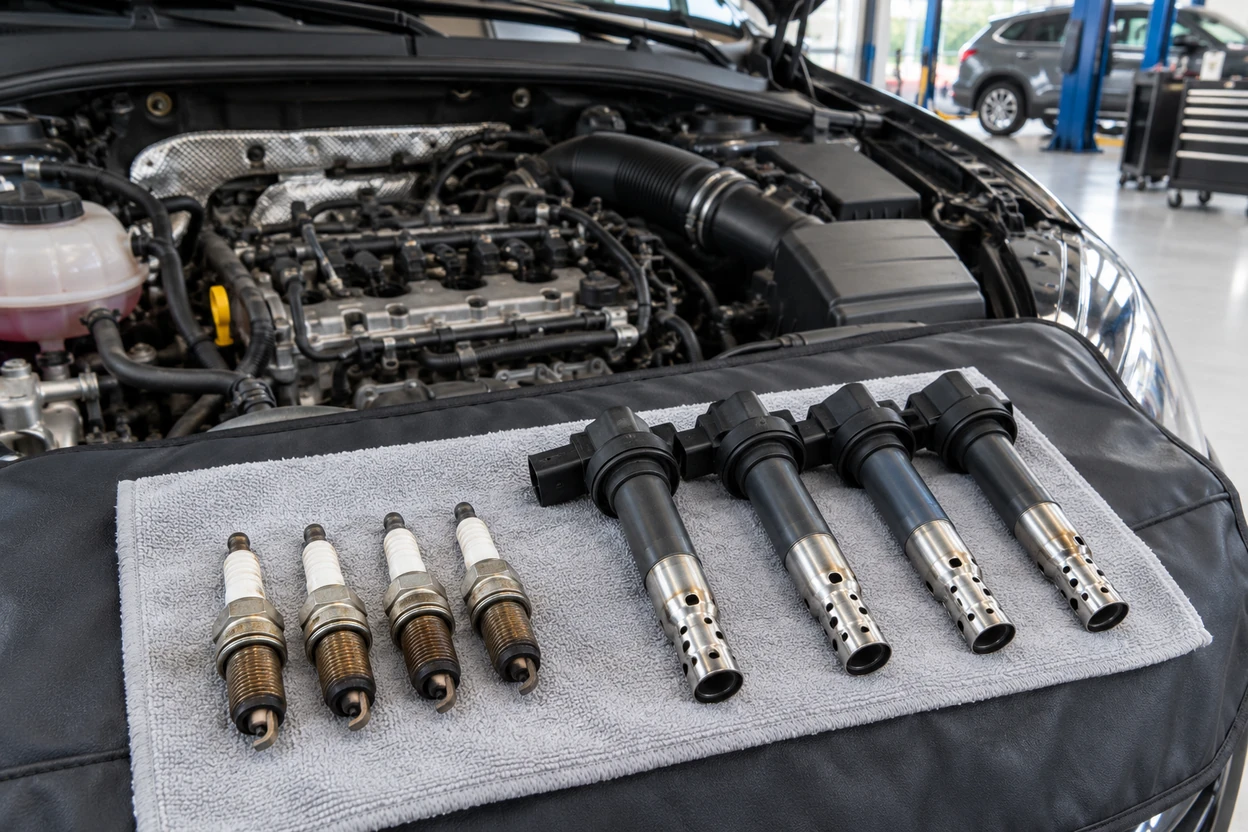
Plugs and coils work as a team.Each cylinder on the 2.0 TSI has its own pencil coil sitting directly on the plug. A worn plug puts extra strain on its coil, and a cracked coil boot can let the spark track to earth. When we change plugs we read the misfire counters in live data and inspect each coil, so you know whether the coils are fine or one is starting to fail.
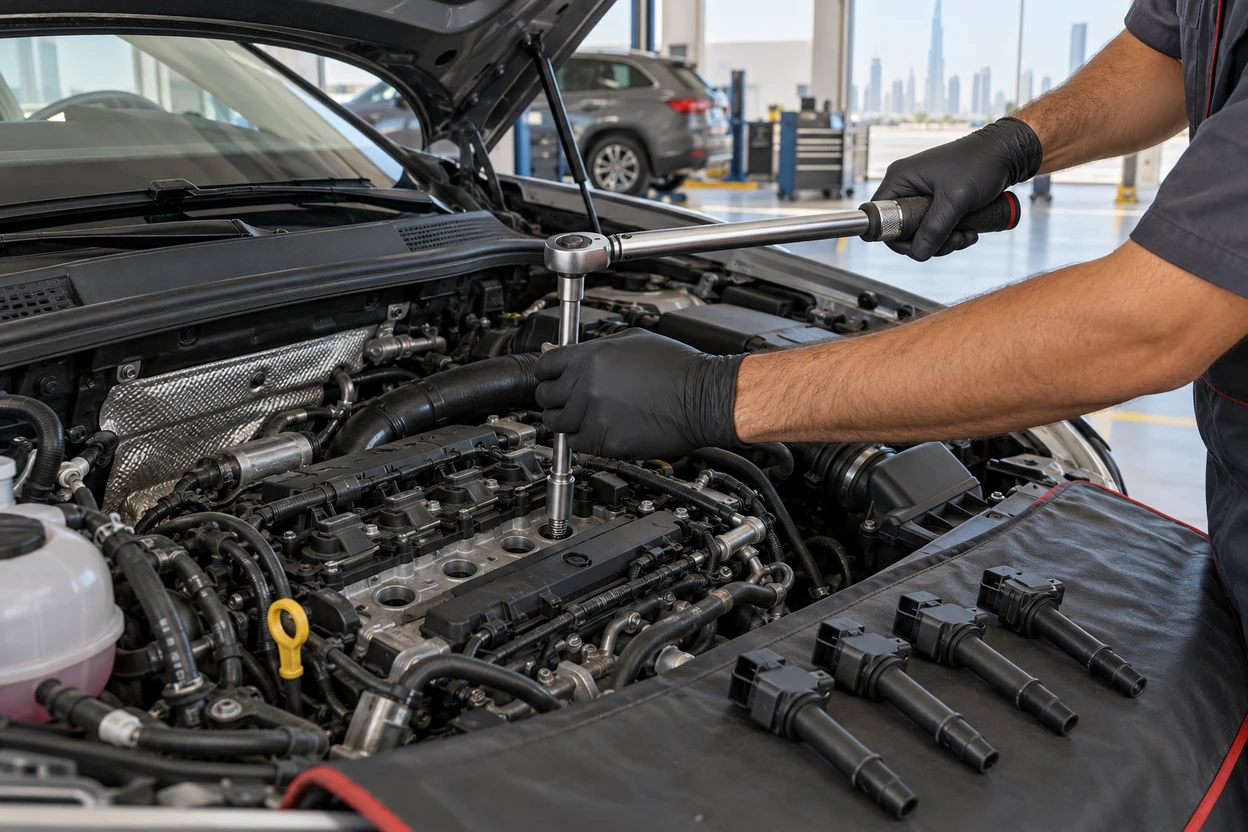
Using the right plug matters.The engine was designed for a specific heat range and gap, and the wrong plug can cause misfires or even pre ignition under boost. We fit genuine or OEM supplier plugs to the VW specification, torque them correctly into the aluminium head and apply nothing that could change the heat transfer. Your new plug change date and mileage go on the invoice for your records.