
This blow by gas carries oil mist and fuel vapour, and it has to go somewhere. The positive crankcase ventilation system draws it back into the intake to be burned, rather than venting it to the air. On the Tiguan 2.0 TSI this is handled by an oil separator, which spins or baffles the oil out of the gas and returns it to the sump, and a valve with a rubber diaphragm that controls how much vacuum the crankcase sees.
VW Tiguan PCV Valve Replacement in Dubai
Whistling, rough idle, lean codes or rising oil use can involve the Tiguan crankcase-ventilation system, but other faults can look similar. We assess the exact engine, crankcase pressure and relevant leak tests before quoting a PCV or oil-separator repair.
FromAED 450
Tiguan PCV valve replacement from AED 450. Indicative Dubai guide. Smoke testing and diagnosis from AED 200 if the cause is not yet clear.
- Suction and smoke tested
- Correct valve for your engine
- Often done in two to three hours
Written quote firstVW diagnostics, Al Quoz 4
Quick answer
A Tiguan PCV or oil-separator fault can affect crankcase pressure, idle and oil consumption. A noise, P0171 code or oil-cap feel alone does not confirm failure. Test the ventilation system and other possible intake or fuelling faults for the engine. Volkswagen Repair Dubai in Al Quoz 4 tests and replaces Tiguan PCV valves from about AED 450.
2 to 3 hoursTypical time in the workshop
From AED 450PCV valve fitted on most Tiguans
Same dayUsual turnaround once parts are in
5 minutesInitial ventilation-system check
1Warning signs
Signs that need a PCV or intake-system check
PCV faults often start with a noise and end with oil leaks, so they are worth fixing early.
| What you notice | What it means | How urgent |
|---|---|---|
| Whistle or howl at idle | A high pitched noise from the top or side of the engine that may change with revs. | Book soon |
| Rough or hunting idle | The rev needle wanders and the car shakes at lights. | Book soon |
| Lean fault codes | System too lean codes such as P0171, often with a check engine light. | Book soon |
| Oil cap hard to remove | Strong suction on the oil filler cap with the engine running. | Book soon |
| Rising oil consumption | Topping up more often with no visible leak. | Book soon |
| Oil leaks from seals | Crankcase pressure pushing oil past the rear main or cam seals. | Stop and call |
| Blue smoke | From the exhaust, as oil is drawn into the intake. | Stop and call |
| Misfires and stalling | When the vacuum leak gets big enough to upset the mixture. | Stop and call |
Ignored for long, crankcase pressure can force oil out of seals that are far more expensive to replace. If oil is leaking already, see our Tiguan rear main seal guide.
2How it works
What the PCV valve does on a Tiguan
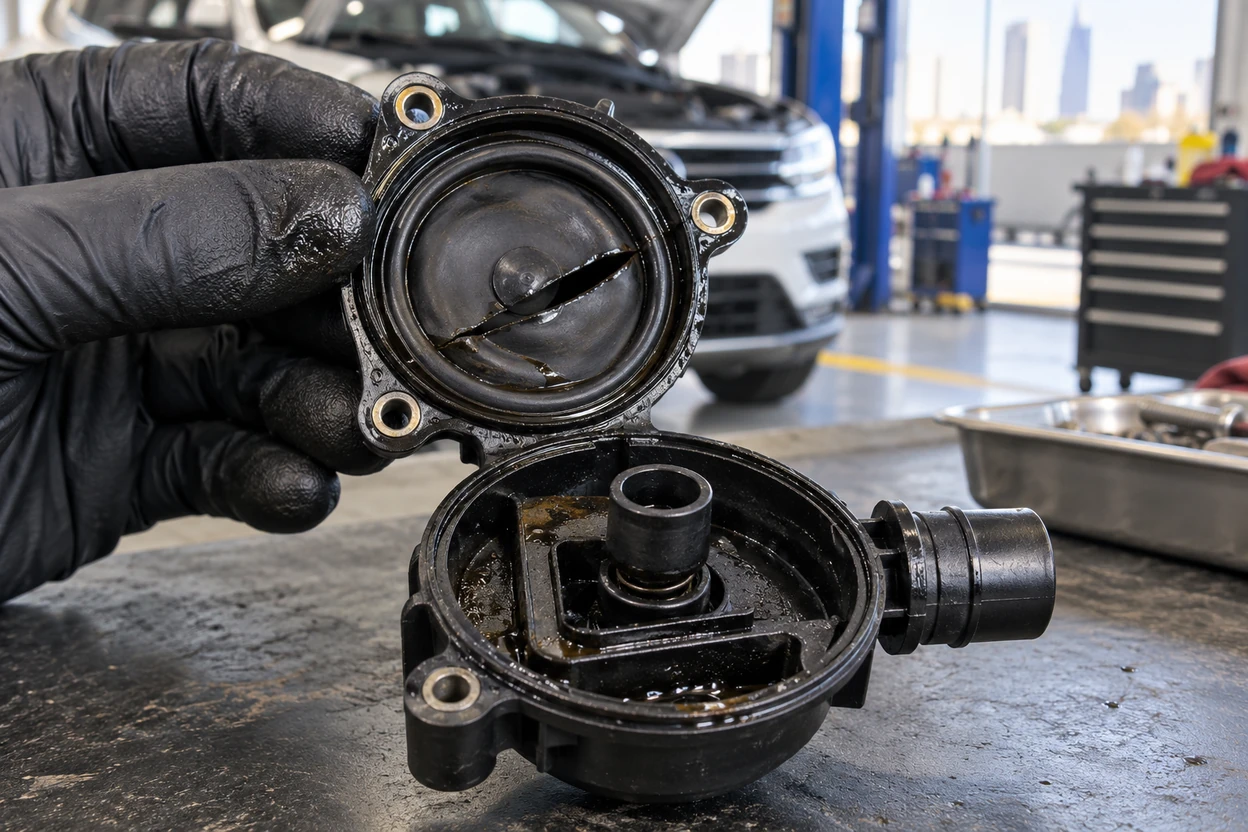
It sits on a hot engine and flexes thousands of times every drive. Age, heat and component condition can affect the diaphragm, but not every noise or lean code comes from it. Once torn, the valve lets unmetered air straight into the intake. The engine management sees more air than it measured and adds fuel to compensate, until it reaches its limit and logs a lean code. The torn diaphragm is also what makes the typical whistle or howl.
Too much vacuum draws oil mist into the intake, which raises oil consumption and adds to carbon on the intake valves. Too much pressure pushes oil past seals and gaskets. Both lead to bigger repairs later, which is why a cheap valve is worth replacing as soon as it is confirmed.
An oil-cap observation can guide inspection but is not a calibrated pressure test. Compare measured crankcase pressure with the engine-specific procedure and conditions. We then read fuel trims with VW diagnostic software and use controlled leak testing where appropriate to distinguish the PCV, hoses, seals and other intake faults. Spark plugs and coils suffer from a lean, oily intake, so we often check them too, and you can read more on our Tiguan spark plug page.
3Why it happens
Why Tiguan PCV valves fail in the UAE
Heat and short, slow journeys are the main enemies of the PCV system.
Under bonnet heat
Summer temperatures harden the rubber diaphragm until it cracks.
Age
Age and repair history affect component condition; inspect rather than assume the original part is still fitted.
Stop start traffic
Long idling creates more moisture and sludge in the crankcase.
Overdue oil changes
Old oil forms sludge that blocks the separator and breather hoses.
Brittle hoses
Plastic breather pipes crack with heat and cause similar symptoms.
4By generation
Tiguan PCV valve by generation
Where the valve sits and how it is built depends on the engine.
| Generation | Engine | PCV layout | What it means for this job |
|---|---|---|---|
| Tiguan Mk12008 to 2016 | 2.0 TSI EA888 Gen 1 or Gen 2 | Separate PCV valve on top of the engine with breather hoses | Common failure, quick to reach, check hoses at the same time |
| Tiguan Mk22016 to 2024 | 2.0 TSI EA888 Gen 3 | Fine oil-separator/pressure-regulation module associated with the cylinder-head cover; confirm engine code | Do not assume block-side access or greater labour from the Mk2 badge alone |
| Tiguan Mk2 base trim2016 to 2020 | 1.4 TSI EA211 | Breather built into the cylinder head cover | Identify the fitted breather, separator and hoses before selecting a repair |
| Tiguan R2021 to 2024 | 2.0 TSI about 320 PS | Oil separator module similar to the Gen 3 | Genuine part recommended due to higher boost |
Recheck pressure, leaks, fault memory and relevant fuel trims after repair. Perform basic settings or adaptations only where the applicable procedure requires them.
1.5 TSI, newer-generation, diesel and hybrid engines need their own ventilation-system identification. Volkswagen’s EA888 Gen 3 training document distinguishes the fine separator at the cylinder-head cover from other separation stages. Use current repair information for your engine.
5How we fix it
How we test and replace a Tiguan PCV valve
Most PCV jobs are finished the same day once the part is confirmed.
- 1Oil cap suction test
Use the appropriate pressure measurement and inspection for the engine; cap resistance alone does not diagnose a valve.
- 2Fuel trims and codes
Read live fuel trims and stored lean codes with VW diagnostic software.
- 3Smoke test
Use the specified test points and pressure limits where smoke testing is appropriate. Interpret leakage alongside pressure and diagnostic readings.
- 4Replace valve and hoses
Fit the correct PCV valve or oil separator and any cracked breather hoses.
- 5Clear and road test
Verify the confirmed fault is resolved; recheck pressure, trims and leaks, and perform required settings only where applicable.
Volkswagen Repair Dubai, independent workshop in Al Quoz 4. Updated 20 October 2026. About our workshop.

6In the workshop
Tiguan PCV work in our workshop
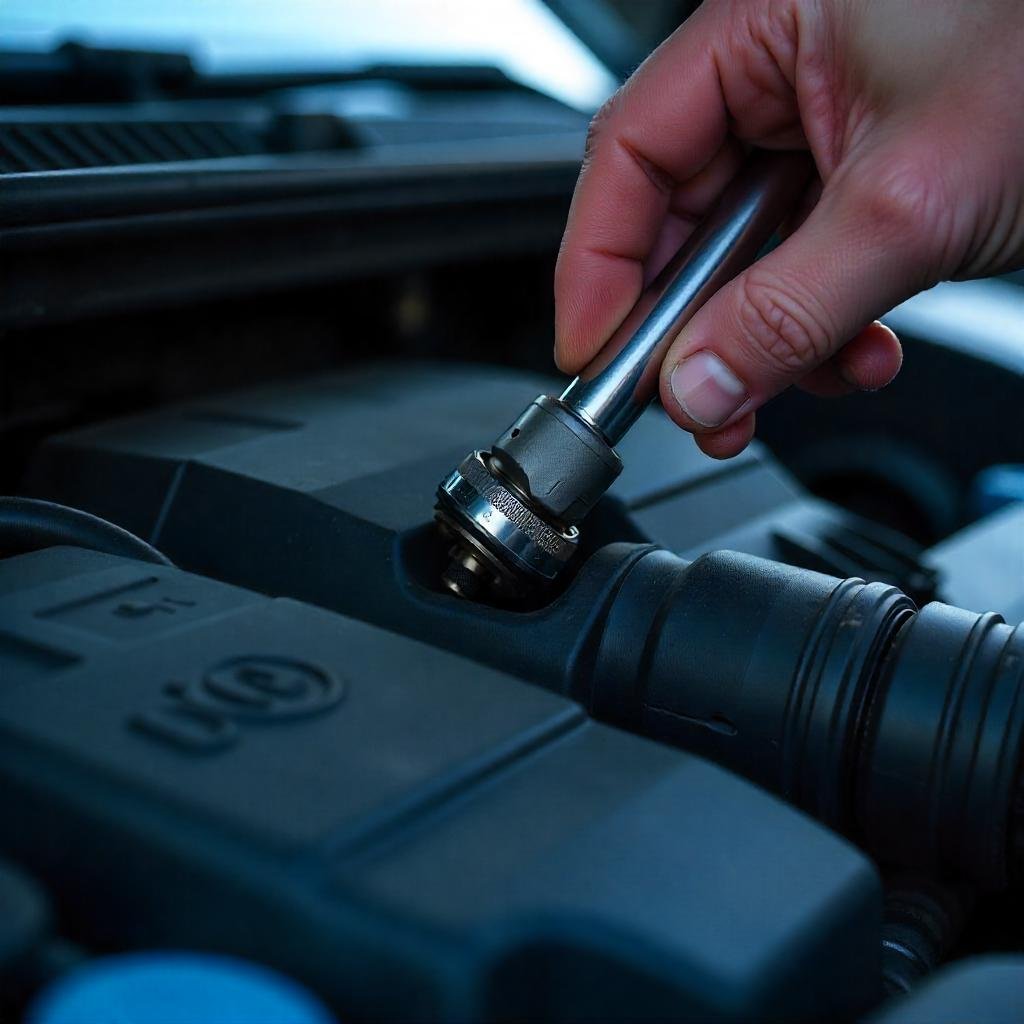
Ventilation components checked when investigating pressure, idle or whistling faults.

7Price factors
What affects the price of a Tiguan PCV valve
These are the main things that change your quote.
Engine generationThe exact engine and module arrangement determine access and labour; generation alone is not enough.
Genuine or OEM supplierCompare genuine VW and named compatible aftermarket assemblies, including the correct revision and pressure-regulation specification.
Breather hosesCracked hoses found during testing are priced separately.
Carbon cleaningRecommend intake cleaning only where inspection and symptoms support it; an oil film alone is not a reason.
Related faultsInspect plugs, ignition, fuelling and mechanical condition where symptoms require it; a misfire does not prove the coils are damaged.
8Price guide
How much does a Tiguan PCV valve replacement cost?
Plan around AED 450 to 1,300 depending on the generation and parts, plus AED 200 if a smoke test is needed first.
Main job fromAED 450
Diagnosis and smoke testSuction test, fuel trims and smoke test
AED 200 to 350PCV valve, Tiguan Mk1Valve fitted, adaptations cleared
AED 450 to 850Oil separator, Tiguan Mk2Module with diaphragm fitted
AED 700 to 1,300Breather hoseCracked hose replaced
AED 250 to 550Indicative guides, not fixed tariffs. Genuine and OEM supplier parts are both priced on your written quote.
Confirm the diagnostic charge, VAT treatment and total payable in your written quote. Ask for the applicable parts and labour warranty terms, including exclusions, before authorising work. Additional repairs require approval.
Get your Tiguan quote
- 1Year and engine
- 2What you notice
- 3Fault codes
9Same visit
Worth doing at the same visit
Only combine additional work when inspection, service history and genuinely shared access justify it.
Spark plugsInspect plugs if service-due or affected by contamination or misfires; replacement is not automatic.
Oil and filter changeFresh oil helps the new valve last, especially if the old oil was sludgy.
Intake valve carbon cleanUseful on high mileage direct injection engines with oil in the intake.
Air filterA quick check while the intake side is being inspected.
01What are the symptoms of a bad PCV valve on a Tiguan?
Possible symptoms include whistling, rough idle, lean codes, abnormal crankcase pressure or rising oil use. Other intake, ignition, fuelling and mechanical faults can cause similar symptoms, so test before choosing a valve.
02How much does a Tiguan PCV valve cost in Dubai?
Existing fitted guides are AED 450–850 for selected Mk1 applications and AED 700–1,300 for selected Mk2 modules. Diagnosis is separately guided at AED 200–350. Confirm engine, part revision, hoses, VAT and total payable.
03Can I drive with a bad PCV valve?
There is no guaranteed safe distance. Avoid driving with stalling, severe misfire, flashing engine warning, smoke, rapid oil loss or a red pressure warning. Have milder symptoms assessed promptly and follow the inspection advice.
04How do you test a PCV valve?
Compare crankcase pressure with the engine-specific specification, review relevant codes and fuel trims, inspect hoses and seals, and use controlled leak tests where appropriate. Oil-cap feel alone is not sufficient.
05Why is my Tiguan whistling at idle?
A ventilation diaphragm or valve can whistle, but intake leaks, seals and other components can sound similar. Locate the noise and check pressure before replacing the separator.
06Can a bad PCV valve cause oil consumption?
A ventilation fault can carry excessive oil into the intake, but leaks, turbo or internal engine wear can also increase oil use. Measure consumption and diagnose the source.
07Is the PCV valve the same as the oil separator?
The pressure-regulation and oil-separation functions may share an assembly on some 2.0 TSI engines. Layouts vary, so confirm engine code and the exact component or revision before ordering.
08How long does the job take?
Two to three hours is an indicative workshop allowance for some confirmed repairs once parts are ready. Diagnosis, access, broken hoses or another fault can change the time.
09Can a PCV fault cause a check engine light?
Yes, abnormal air flow or pressure can contribute to mixture or misfire codes. A code describes a detected condition; it does not identify the PCV as the failed part.
10How often does the PCV valve need replacing?
Replace a confirmed faulty component rather than applying a universal mileage interval. Follow any applicable engine-specific maintenance or repair guidance.
11Can a bad PCV valve damage the turbo?
Abnormal crankcase pressure or oil carry-over can affect related systems, but turbo damage is not automatic. Assess any turbo, oil-supply or seal symptoms separately.
12Do you replace the PCV valve on the 1.4 TSI Tiguan?
Confirm the 1.4 TSI engine code and whether the fault is in a hose, separator, valve or cover assembly. Do not authorise a complete cover solely from the model badge.
Tiguan whistling or idling rough?
Send the year, engine and what you notice. We discuss diagnosis and guide costs. Remote symptoms cannot establish the failed part or guarantee safe driving.
- WorkshopAl Quoz 4, Dubai
- Workshop hoursMonday to Saturday, 9 am to 7 pm
- Call or WhatsApp+971 56 464 6081