
PCV valve / separator replacement
AED450–1,250Parts and fitting guide for a four-cylinder CC. Engine version and genuine/OEM-supplier part choice affect the total. V6 work is quoted separately.
Whistling, rough idle or rising oil use? Our independent Volkswagen workshop in Al Quoz 4, Dubai, tests the crankcase breather and oil separator, identifies the cause and provides a written repair quote.
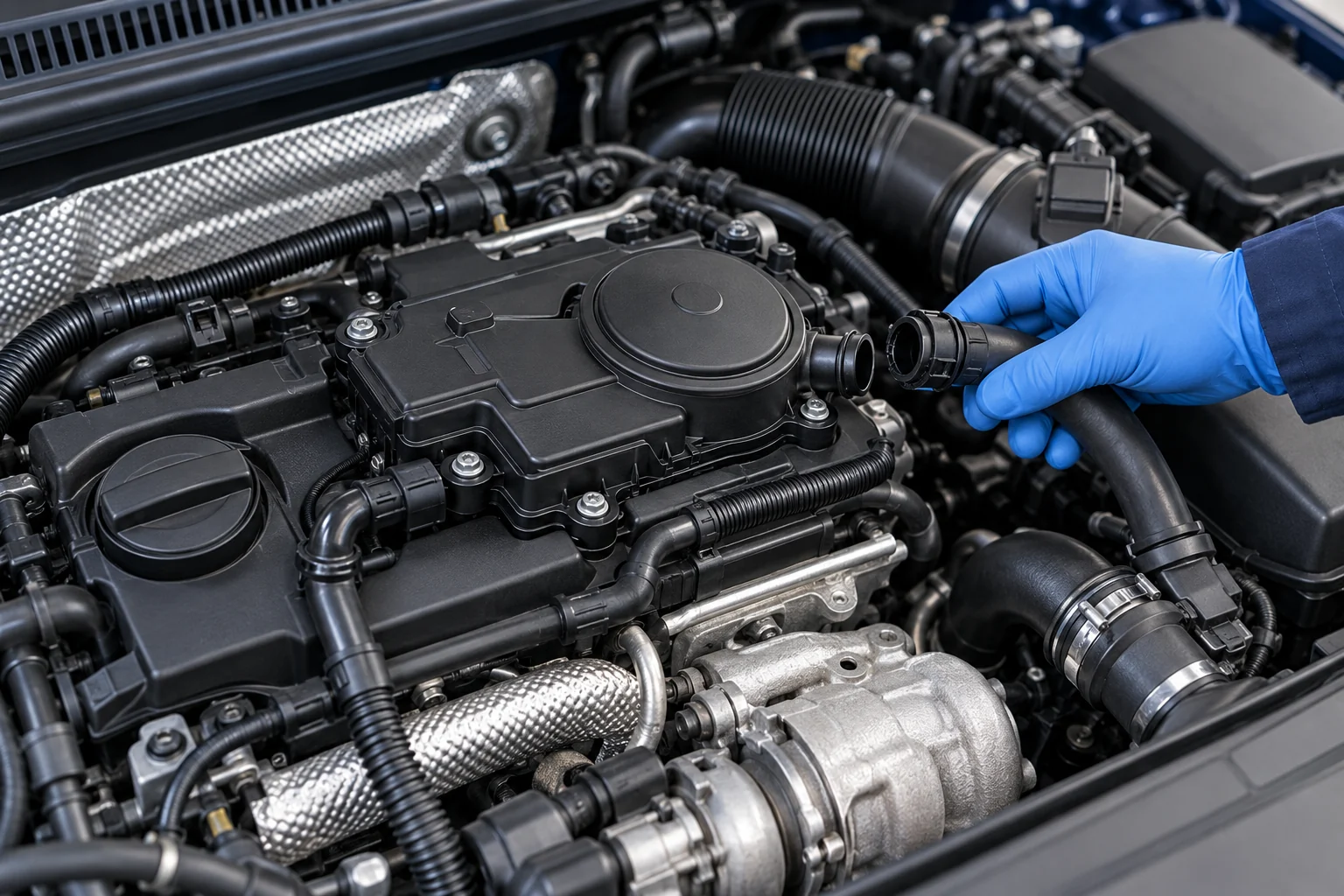
The CC PCV guide and Tiguan breather guide show how engine generation changes the job. These are model examples, not one price for every VW.
Parts and fitting guide for a four-cylinder CC. Engine version and genuine/OEM-supplier part choice affect the total. V6 work is quoted separately.
AED 700–1,300 fitted in the model guide. Identify the engine and correct assembly before comparing quotes.
Generation-specific repair exampleAED 150–300 guide covering codes, fuel trims and crankcase-pressure / leak checks.
Assessment price · separate from repairA breather fault is one possibility. Intake leaks, ignition faults, turbo issues or engine wear can produce overlapping symptoms.
Positive crankcase ventilation removes combustion gases that pass the piston rings. The separator removes oil mist; valves and passages control the gases returning to the intake.
Pressure behaviour, leak location and the fitted engine identify the repair. A scan alone cannot establish that an oil separator needs replacing.
Review fault history, relevant mixture correction and idle behaviour. A lean code does not distinguish a PCV leak from another source of unmetered air.
Use a suitable gauge and the correct engine procedure. Oil-cap suction or a change in engine note is a clue, not a complete pass/fail test.
Inspect the separator, breather lines, seals and intake connections. Use controlled low-pressure smoke testing where appropriate to locate leakage.
Investigate intake or purge-system leaks, ignition misfires, turbo oil paths or mechanical condition when the findings point elsewhere.
Cleaning a passage, replacing a hose and renewing a failed separator are different jobs. The proposal explains what failed and which parts are necessary.
A sound separator may remain when testing identifies a replaceable hose, connection or specified seal as the cause.
Use the compatible complete assembly where the diaphragm, check valves or housing have failed. A diaphragm-only kit is considered only when suitable for that assembly and procedure.
Some engines integrate ventilation into a larger cover. A cracked housing or non-serviceable valve changes the parts and access; a new gasket alone will not fix it.
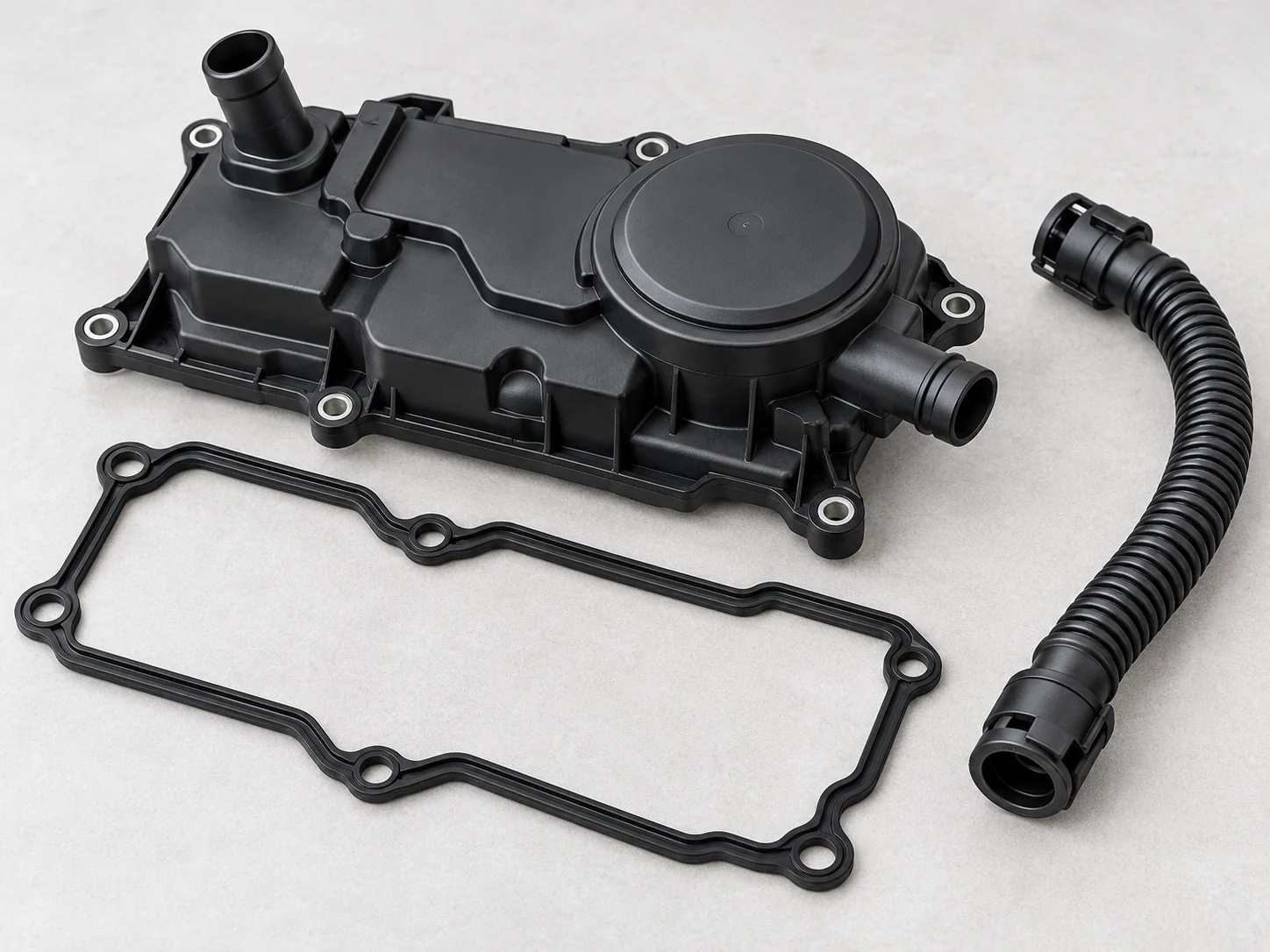
A similar-looking housing is not enough. Match the engine application, compatible part revision, hose connections and pressure-regulation design.
The quotation identifies the compatible genuine assembly and required fitting items, with availability and applicable cover.
OEM means original-equipment manufacturer. Compare the named supplier and correct specification; an unbranded diaphragm or housing is not automatically equivalent.
Protect open connections and inspect the mating surfaces.
Renew the seals and service items required by the procedure.
Check hose condition, clips and correct breather routing.
Verify pressure, idle behaviour and relevant leak findings.
A “2.0 TSI” badge covers different engine families and generations. Engine code and VIN identify the breather design and compatible replacement.
A diaphragm or separator fault is worth investigating with matching symptoms. CC, Golf/GTI, Jetta, Passat and Tiguan applications cannot be assigned one universal part or pressure reading.
V6 and diesel ventilation arrangements, access and parts differ from the four-cylinder examples above. Electric-only vehicles such as ID.4 do not have a combustion-engine PCV system.
The CC guide estimates about an hour for straightforward four-cylinder work, including testing. Parts supply, access, cover replacement or an existing seal leak can extend the visit.
Identify the pressure or leak fault, compatible assembly and any separate hose or seal work.
Written quote before repairFit the specified parts and seals, follow the fitting procedure and inspect the breather connections.
Engine-specific installationRecheck pressure behaviour, idle and relevant fault data. Explain any remaining oil-use monitoring or further diagnosis.
Invoice and follow-up advice
Volkswagen-specific diagnostic software, genuine/OEM parts choices and a written quote before approved work starts.
Know whether the evidence supports a separator, hose, cover or further investigation.
See the selected assembly and required fitting items in your quotation.
Workshop open Monday–Saturday, 9 am–7 pm. Share the symptoms and any recent repair history.
The CC four-cylinder TSI guide is AED 450–1,250 fitted. A Tiguan Mk2 separator-module example is AED 700–1,300 fitted. These are model-specific budgets. CC PCV/smoke assessment has a separate AED 150–300 guide. Your quote identifies engine, parts, labour, assessment charge, VAT treatment and applicable cover.
Whistling, uneven idle, lean or intake-leak faults, rising oil use and new leaks can justify checking the breather. They do not prove it has failed. Crankcase-pressure measurement, inspection and suitable leak testing distinguish a PCV fault from intake, ignition, turbo or mechanical problems.
Not on its own. These mixture or intake-leak codes can accompany a ventilation fault on relevant engines, but other leaks or system faults can produce them. The engine identity, live data, pressure behaviour and leak location determine the repair. Replacing parts solely from a fault-code description can miss the cause.
PCV means positive crankcase ventilation; CCV refers to crankcase ventilation. The oil separator removes oil mist from the gases. Depending on the engine, regulating valves and the separator may share one module or sit in a larger assembly. These names do not automatically justify separate replacement charges.
No. Some crankcase vacuum is expected on relevant engines. Excessive suction, whistling or a pronounced running change can be useful clues, but a cap check does not measure the pressure or identify every leak. The appropriate gauge, specification and complete system checks establish the diagnosis.
A serviceable hose, seal or passage may need limited work when testing supports it. Cleaning does not mend a torn diaphragm, failed regulator or cracked housing. A diaphragm-only repair must be suitable for the exact assembly and procedure; otherwise the compatible separator or cover assembly is the appropriate replacement.
It can address oil use caused by the confirmed ventilation fault, but it cannot guarantee a cure for every oil-consumption problem. A damaged seal can continue leaking after pressure is corrected. Existing leaks, turbo oil paths and engine condition may need separate assessment and repair.
Driving advice depends on the warning and symptoms, not the suspected part. Oil-pressure warnings, heavy smoke, severe shaking or rapid oil loss call for stopping safely and arranging assessment or recovery. A mild whistle still needs prompt diagnosis; do not assume it is harmless or keep topping up without investigating.
For a straightforward four-cylinder CC job, the model guide estimates about an hour including testing. Engine access, parts supply, cover replacement or existing leaks can extend the visit. Your written quote gives the completion plan and applicable parts/workmanship terms for the agreed work.
There is no single replacement mileage for all VW breathers; follow the vehicle schedule and investigate symptoms. A conventional mechanical breather replacement generally does not require individual coding, but engine-specific setup and verification still apply. Clearing a fault code alone is not a successful repair check.
Send model, year, engine and symptoms. Include oil-use details or a fault report so we can explain the assessment and required work.