
Low coolant warning
Follow the exact message and handbook. A falling cold level needs investigation; do not wait for repeated top-ups.
Losing coolant, noticing a sweet smell or seeing a temperature warning? We diagnose Touareg leaks and cooling faults in Al Quoz 4 using engine-specific checks before quoting repairs. Pressure testing, relevant live data and compatible dye where needed help identify the cause.
Touareg coolant leak repairs from AED 350; diagnosis from AED 150. Indicative Dubai guide. V8 coolant pipes and radiators sit higher because of access and parts.
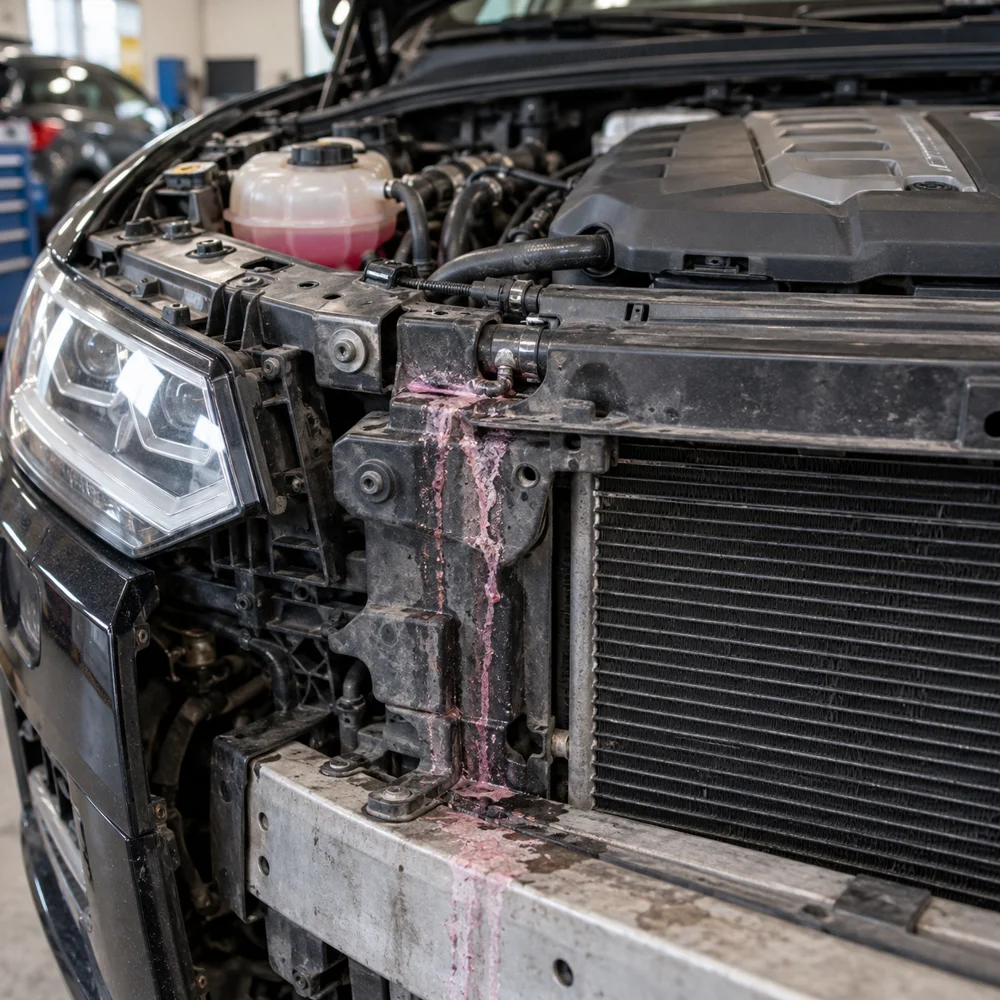
Touareg coolant loss can involve a pipe, housing, pump, tank, radiator or another fitted circuit. Identify the engine and confirm the source before replacing parts. For Touareg coolant system repair, Volkswagen Repair Dubai in Al Quoz 4 diagnoses Touareg cooling faults from about AED 150 and fixes most leaks from about AED 350.
Coolant loss can worsen suddenly. Stop safely and switch off for a red cooling warning, steam or overheating. Do not open the expansion tank while hot.
Follow the exact message and handbook. A falling cold level needs investigation; do not wait for repeated top-ups.
Hot coolant dripping on the engine or exhaust gives a syrupy smell when you park.
Dried coolant on hoses, the radiator, the front of the engine or under the car.
Fan after-run can be normal. Persistent unusual operation with coolant loss, warnings or rising temperature needs diagnosis.
The needle moves above its normal spot when towing, climbing to Hatta or idling with the AC on.
A red cooling warning can indicate high temperature, low level or another system fault. Stop safely, switch off and follow the handbook or seek assistance.
Coolant is boiling or spraying onto hot parts, so pull over safely and switch off.
This points to very low coolant or an air lock in the system.
Oil/coolant contamination needs investigation. A small film on the filler cap alone can be condensation; do not diagnose a head gasket from appearance alone.
If the leak is at the pump itself or the thermostat housing, our Touareg water pump guide covers that part by engine. This page covers finding every other leak and cooling fault.
Pump, thermostat, valve and auxiliary-pump arrangements vary. Coolant carries heat from the engine to the radiator and other fitted heat exchangers. Fans support airflow at low speed. Some versions have additional heater, turbo or hybrid circuits that need their own checks.
In Dubai the system sits at high temperature for hours, then cools in the car park, then heats again. After years of this, plastic becomes brittle, rubber hardens and O rings flatten. Leaks may leave crust and a falling level, but a hose, connection or pump can also fail suddenly. The age and condition of the individual part matter.
Early 4.2 V8 5V and later 4.2 FSI engines use different pipe and connection arrangements. Coolant can travel before it drips. Inspect the exact engine’s housings, connections, pump, heat exchangers and fitted turbo lines rather than transferring a valley-pipe diagnosis between variants.
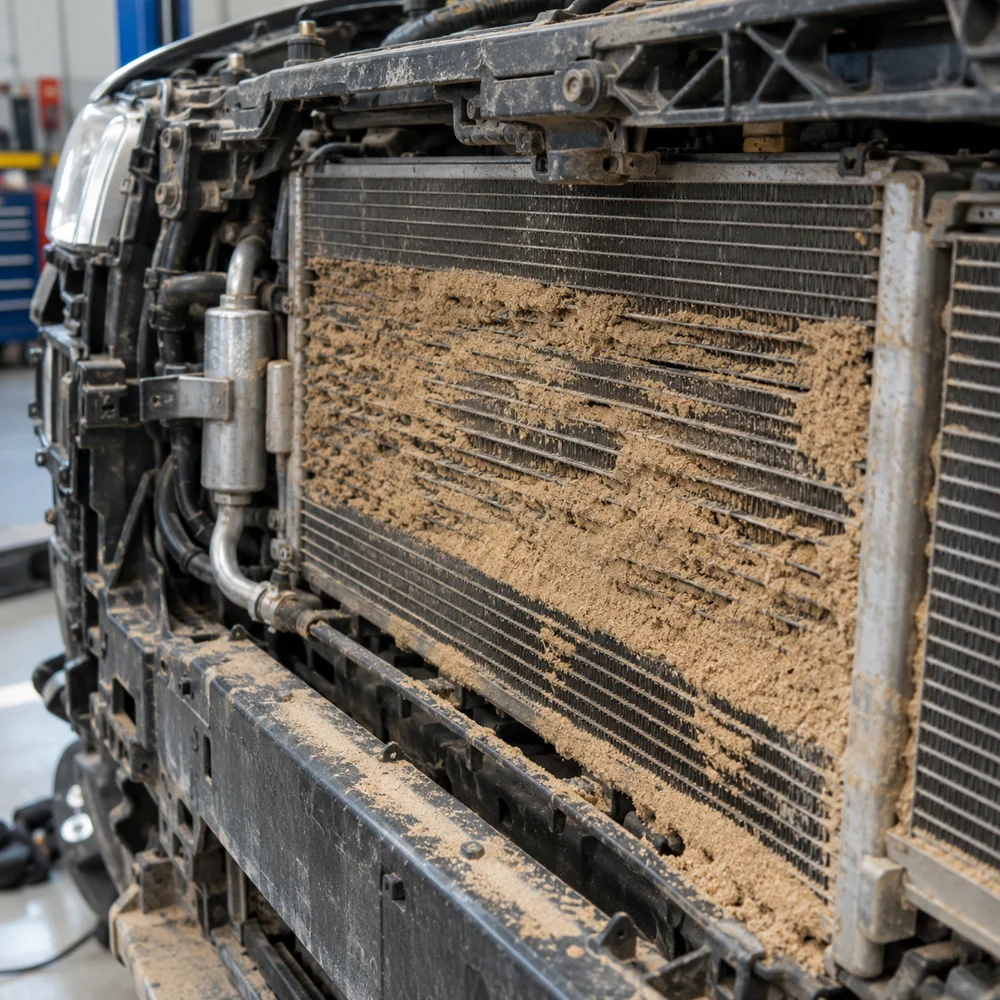
Sand and dust packed between the AC condenser and the radiator block airflow, a failing fan will not pull enough air in traffic, and a stuck thermostat or a weak expansion tank cap changes how the system behaves. That is why we read live coolant temperature, fan speed and thermostat data with VW diagnostic software alongside the pressure test. Fixing the real cause first time saves you paying for parts that were never faulty.
Heat, weight and age all work against plastic and rubber cooling parts.
A big engine under a closed bonnet stays hot for a long time after parking in summer, which ages pipes and connectors.
Boats, caravans and soft sand keep the engine under load and push coolant temperature to the top of its range.
Fine sand packs into the radiator and condenser fins after desert trips and dusty days, cutting airflow.
Coolant loses its protection with age, and topping up with the wrong type can leave deposits and attack seals.
A tired expansion tank cap lets pressure rise or fall incorrectly, which stresses hoses and lowers the boiling point.
Stop leak products and cheap hoses fitted at the roadside often block passages or fail again within months.
A quick guide to what we usually find behind each sign. We confirm it on your car before quoting.
| Symptom | Likely cause | What we do |
|---|---|---|
| Low coolant warning | A leak at a hose, pipe, expansion tank or radiator | Pressure test, then repair the leaking part |
| Sweet smell after a drive | Coolant dripping on the hot engine or exhaust | UV dye trace and repair of that joint |
| Pink or white crust | A slow weep at a joint or connector | Replace the hose or connector with new clips and O rings |
| Fans running hard, gauge higher | Sand in the radiator or a thermostat fault | Live data check, radiator clean or thermostat repair |
Prices for each job are in the price guide below, and every job starts with a written quote.
Each generation has its own typical leak points, which is where we look first.
For the water pump and thermostat housing as a part, see the Touareg water pump page. We confirm the leak point on your car before quoting.
TDI, supercharged V6, Hybrid and eHybrid versions need their own engine and circuit checks. Hybrid systems may have separate low-temperature circuits and high-voltage precautions. Confirm the VIN, coolant approval, capacity and filling procedure before work.
Testing first, so you only pay for the part that is actually leaking.
We read fault codes and watch coolant temperature, fan speed and thermostat values with VW diagnostic software.
Use the specified test pressure and suitable adapters on a cold system. Inspect pressure loss and leakage without exceeding the vehicle’s test limit.
Use compatible dye where it helps. Investigate heat-related leakage under controlled conditions; road-test only when coolant level, temperature and system condition make it safe.
We replace the pipe, hose, tank, radiator or seal that failed, with new clips and O rings at every joint we open.
We refill with the correct VW coolant, bleed out the air, run the fans through a full cycle and recheck the level.
Volkswagen Repair Dubai, independent workshop in Al Quoz 4. Updated 20 October 2026. About our workshop.
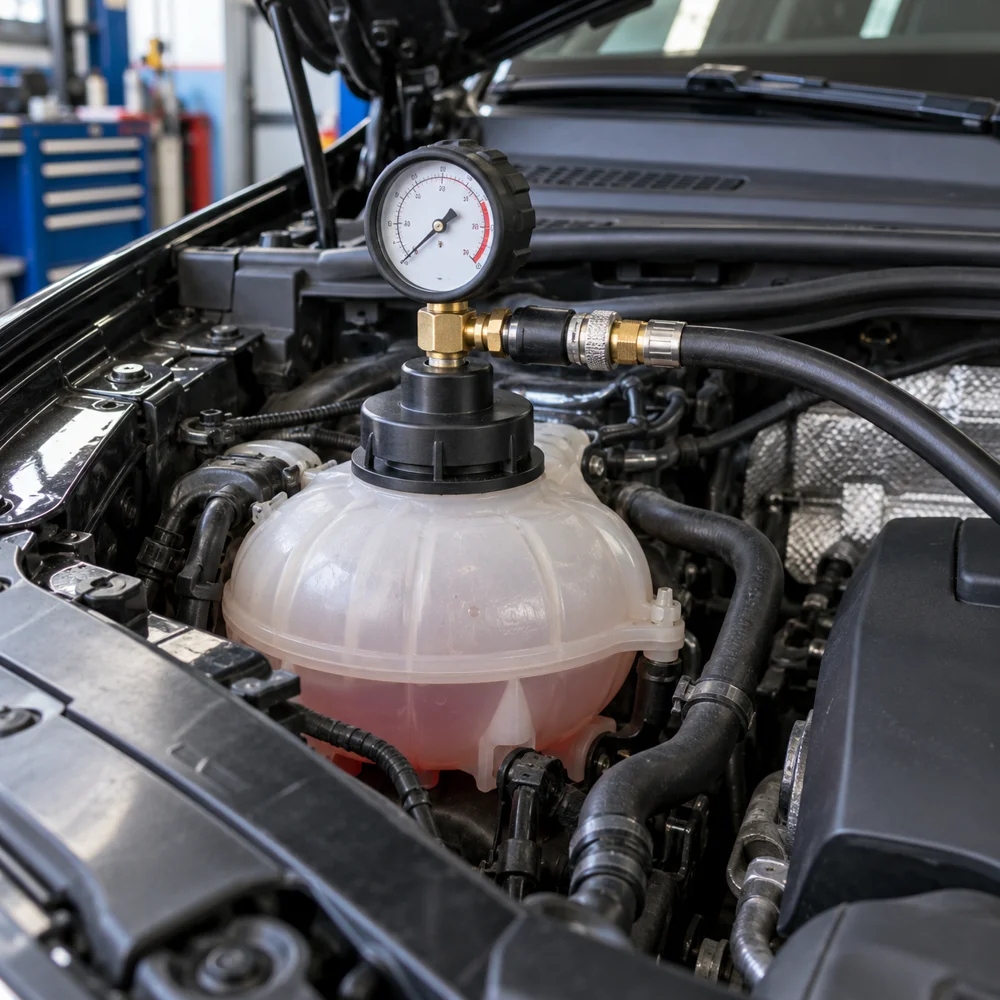
What a typical leak hunt and repair looks like on a Touareg.
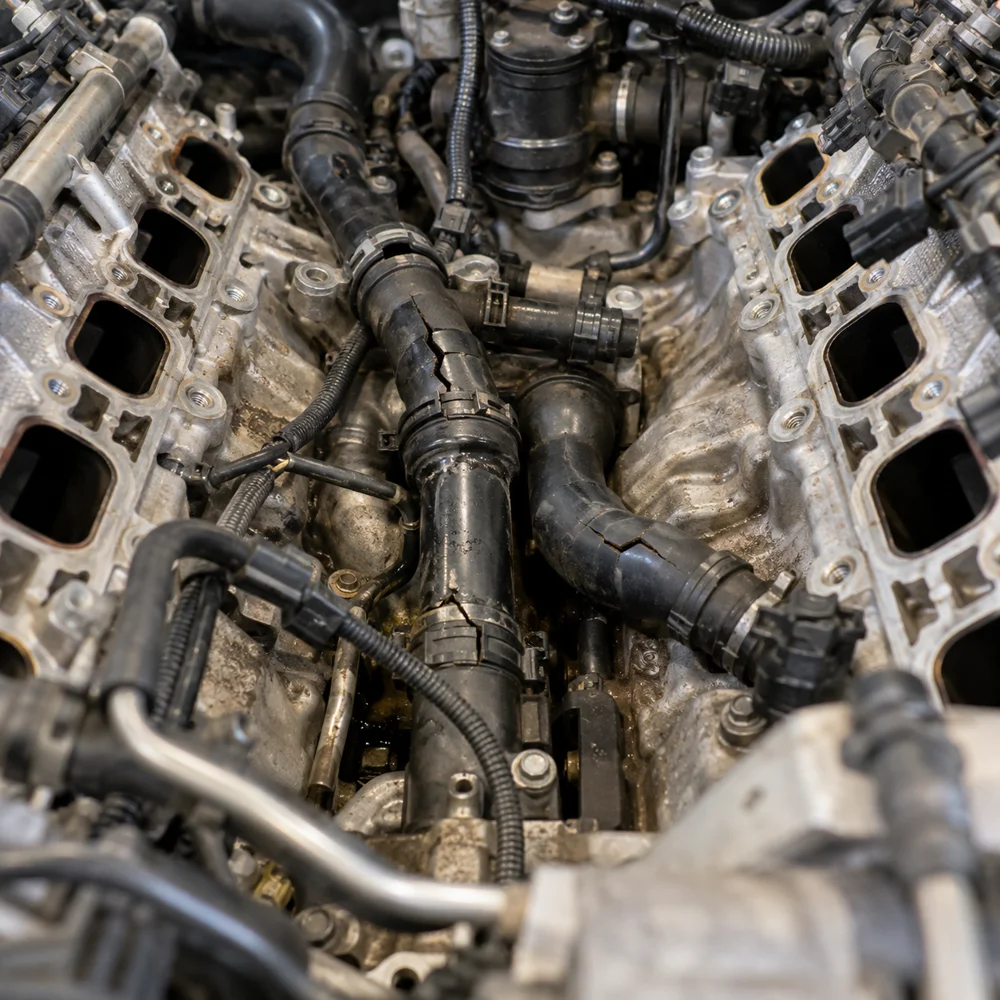

What makes sense depends on the age of your Touareg and how many parts are tired.
These are the main things that move your quote.
Plan around AED 350 to 3,500 depending on which part is leaking, including coolant and bleeding.
Indicative guides for the stated repair, not fixed prices for every engine. Confirm the diagnostic fee, compatible coolant, required quantity, bleeding and post-repair checks, parts and labour in the quote. Internal engine damage and additional circuits are separate work.
Confirm the diagnostic charge, VAT treatment and total payable in your written quote. Ask for the applicable parts and labour warranty terms, including exclusions, before authorising work. Additional repairs require approval.
Only check with the engine cold. Never open a hot expansion tank.
With the engine cold, note the level against the min and max marks each morning for a few days.
Look for pink or purple drops under the front and under the back of the engine after parking overnight.
With a torch, look for dried white or pink crust on hoses and around the radiator.
Note when the temperature rises, in traffic, on the highway, when towing or with the AC on high.
Report residue, oil in the expansion tank or unexplained level changes. Cap residue alone can be condensation and needs interpretation.
Possible sources include hoses, connectors, the expansion tank, radiator, pump, thermostat housing and engine-specific pipe joints. Location and access differ between early V8, FSI, VR6, diesel and hybrid versions. Test before selecting parts.
Start with an engine-specific inspection and a pressure test at the prescribed limit. Compatible dye or controlled heat-cycle checks can help with intermittent leaks. A road test is only appropriate when safe.
Coolant can run from a higher pipe or connection before reaching the rear of the engine. Identify the exact engine and trace the source rather than assuming valley pipes or a rear seal.
There is no universal safe distance. Stop safely and switch off for a red cooling warning, overheating, steam or rapid level loss. Do not open the hot tank. Ask for recovery advice if the condition is uncertain.
Guide hose and tank repairs are AED 350–950; some V8 pipe repairs are AED 1,800–3,500. Engine, access, coolant quantity and additional faults change the price. Diagnosis is listed separately from AED 150.
Possibly, but a puddle location does not prove a pump fault. Test the system and inspect the pump, housing and nearby connections for the exact engine. The water-pump page explains that repair in more detail.
Towing increases heat load. Check coolant level, airflow, fan operation and the engine’s pump and thermostat controls. Stop if overheating occurs; towing does not make a high-temperature warning normal.
Follow the handbook after stopping safely and allowing the system to cool. If the specified coolant is unavailable, any emergency water addition must follow that guidance and be corrected afterwards. Do not use topping up as permission to continue with a persistent warning or major leak.
A sealing additive can obstruct cooling passages or complicate diagnosis. Repair the confirmed fault and use the specified coolant rather than treating an additive as a permanent repair.
Use the Volkswagen coolant approval and concentration specified for your VIN and the current replacement guidance. Colour alone cannot establish compatibility. Do not mix products simply because both look pink or purple.
An accessible hose or tank may be repaired the same day after diagnosis and parts confirmation. Radiator, hidden pipe or additional damage work can take longer; agree the handover estimate in the quote.
If inspection confirms restricted airflow, cleaning may form part of the repair. Use a method suitable for the condenser and radiator fins and investigate any fan or circulation fault as well.
Send the year, engine and what you notice. We reply with the likely cause, a guide price and whether it is safe to drive in.