Knocking over bumps, a bouncy ride or one corner sitting low? Our independent Al Quoz 4 workshop checks your Volkswagen's suspension, identifies the worn or faulty parts and gives you a written repair quote before work starts.
Repair guides from AED 900 for one control armAllow AED 1,500 to 3,500 for a pair of passive shock absorbers. Adaptive and air systems have different costs.
Air-suspension strut One compatible assembly where fitted; design and parts choice matter.
AED 2,500 to 4,500
Air compressor replacement One unit after testing; associated leak repairs are separate work.
AED 1,800 to 3,200
Front, rear or electronically controlled? A passive rear damper, front strut and DCC damper are different parts. The guide is not a promise that every Volkswagen fits the lowest figure. Springs, links, bushes and electrical repairs are quoted for the identified work.
What changed in the ride?
Describe when it happens: over a speed bump, while braking, on full steering lock, at motorway speed or after parking overnight. That helps us reproduce the concern without guessing the failed part.
Knocks or creaks
Drop links, anti-roll bar bushes, control-arm bushes, ball joints or strut mounts can make similar noises. We check movement and condition before selecting a replacement.
Bouncing, diving or body roll
Weak damping can let the body keep moving after a bump. Springs, load, tyres and mounting condition also affect the ride, so a bounce complaint needs more than a visual glance.
Pulling, vibration or tyre wear
Tyre pressure, damaged wheels, balance, wheel bearings, steering joints and brake faults can mimic suspension trouble. Loose or bent suspension parts must be resolved before geometry is adjusted.
A low corner or warning
A broken coil spring, air leak, height-sensor fault or pressure-control issue can alter the stance. An overnight change or repeated compressor running is useful information, not proof of one failed component.
Severe lean, rubbing or loose steering?
Stop somewhere safe if the tyre rubs, a spring is broken or displaced, a wheel looks out of position, or the car feels unstable. Arrange an assessment and suitable recovery rather than driving on to test it.
A “chassis stabilization” concern needs the exact warning checked. Volkswagen stability-control, adaptive-damper and ride-height faults are different problems; none automatically calls for a complete suspension replacement.
ESC / ESP or ABS lamp
Electronic stability control (ESC/ESP) can flash its lamp during intervention. A persistent warning needs checking against the selected mode and handbook. For ESC or ABS faults, arrange ABS and stability-system diagnosis, rather than assume a failed shock absorber.
Adaptive-damping warning
A DCC fault needs the fitted dampers, electrical connections and relevant control data checked. A warning alone does not identify which damper needs replacing. See the adaptive-damping repair options below.
Ride-height or air-suspension message
On an air-equipped VW, record a low corner, height changes or repeated compressor running. Leaks, air supply and height signals need different repairs. An air-system message is not the same as an ESC warning.
Red brake warning, abnormal braking or severe instability? Stop safely and arrange assistance if a brake-system warning remains with the parking brake released, braking changes, a tyre rubs or the car is severely uneven. Follow the dashboard and handbook instructions; a warning photo cannot establish that driving is safe.
A mechanical check comes first
Find the part losing control
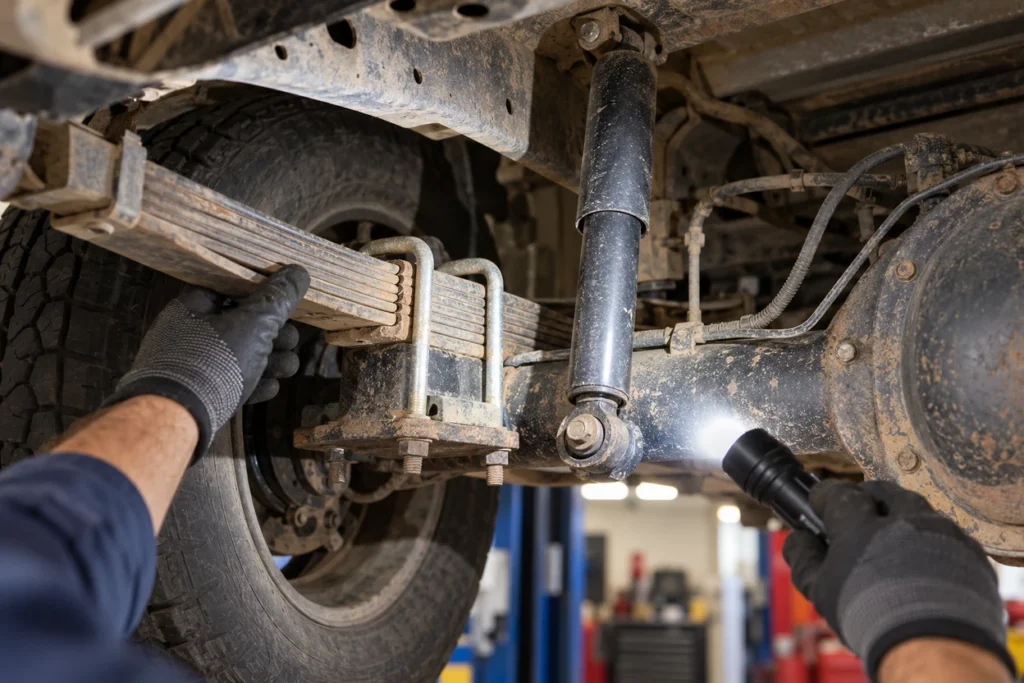
We inspect the front and rear suspension for play, damage, leakage and insecure mountings, using checks appropriate to the axle and loading condition. A scan alone cannot establish that a bush, joint or spring is sound.
Springs and dampers
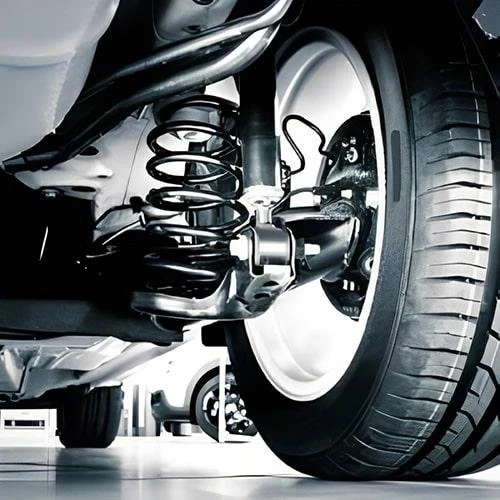
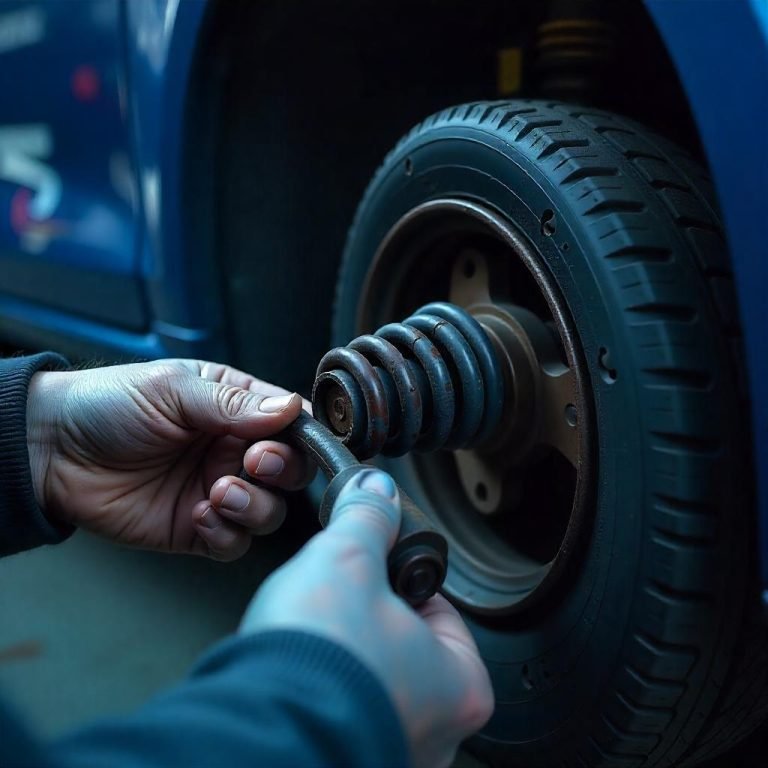
The spring supports the vehicle's weight and contributes to ride height. The shock absorber, or damper, controls spring movement. A strut combines the damper with a structural suspension role; the spring may surround it.
Arms, bushes and joints
Control arms and wishbones locate the wheel; upper and lower arm arrangements depend on the axle. Rubber or hydraulic bushes isolate movement; ball joints allow articulation. Rear links, trailing-arm bushes and subframe mounts are checked where fitted.
Mounts and protection
Top mounts and bearings can cause clunks or noise during steering. Dust boots and bump stops protect damper operation and travel. These supporting parts are assessed when a shock or strut is replaced.
Anti-roll components
Stabiliser bars limit body roll. Their drop links and bushes can knock even when the main shock absorbers are serviceable. Loose fasteners or damaged mounting points also need attention.
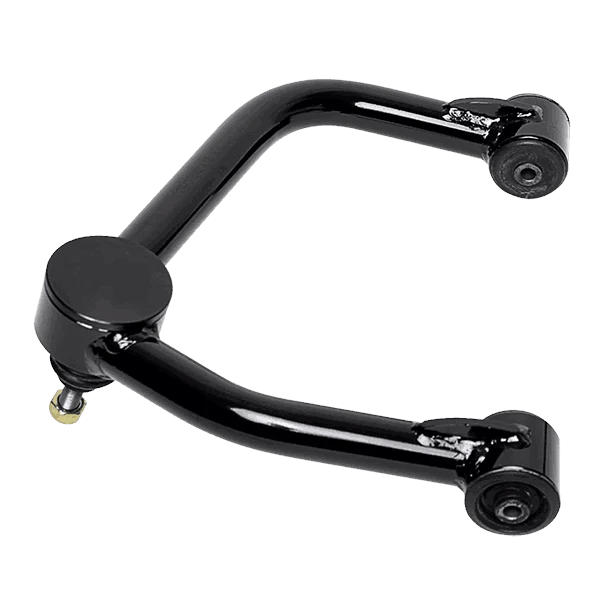
Control-arm reference. This image does not establish fitment for a particular Volkswagen.
A ball joint lets the suspension articulate while locating the wheel. A knock, vague steering or uneven tyre wear can point to several faults; we confirm the affected joint before recommending parts.
Inspect the joint for excessive movement, stiffness, a damaged dust boot and insecure mounting using the correct axle and loading procedure. Distinguish joint wear from bushes, steering joints or wheel-bearing play.
Choose the appropriate replacement
Renew a separately serviceable joint when the arm is sound and the design permits it. An integral joint, damaged arm or several worn components may require a complete arm. The quote identifies the part, fitting and required fasteners.
Match the position and finish the checks
Front or rear, upper or lower joint arrangements vary by axle and version. Match the application before ordering, inspect the opposite side, and check alignment after geometry-affecting work. Replacing both sides is based on condition and manufacturer guidance, not assumed.
DCC is different from air suspension
One controls damping. The other supports ride height. Your fitted equipment decides the repair.
DCC / DCC Pro
Controls damping
Electronically adjusts the damper response.
What you may notice
A damping warning or a change in ride response.
What we check
Correct damper, connectors, wiring, power supply and control data, alongside mechanical condition.
After repair
Required basic settings and functional checks. Passive dampers are not equivalent replacements for specified DCC units.
Comfort mode does not prove air suspension.DCC can work with steel springs. DCC Pro is a different damper generation.
Air suspension / level control
Supports ride height
Uses air springs and controlled air pressure.
What you may notice
A level-control warning, overnight sagging, slow adjustment or repeated compressor running.
What we check
Air springs, pipes, fittings, valve block and reservoir; compressor, dryer and electrical supply; height sensors and linkages.
After repair
Leak and pressure-holding tests, height readings and required calibration. Fix leaks before replacing an overworked compressor.
A reset cannot seal an air leak.Some Touareg versions use air suspension; others use steel springs.
Different faults, different quotes. Air support needs no routine fluid top-up. Damper oil leaks, active roll control and rear-wheel steering need separate assessment.
Model and year start the enquiry. VIN, factory PR equipment codes, axle load and the fitted suspension specification resolve the application before parts are ordered.
Front and rear
A front MacPherson strut and a separate rear spring/damper use different components. Rear axle layouts, including torsion-beam or multi-link designs, vary by model and version.
Standard, sport or adaptive
Spring specification, damper type and ride height must match. 4MOTION, heavier engines and factory options can change the application.
Electric and hybrid models
ID. models and plug-in hybrids still need suspension checks. Vehicle weight, approved lifting points and the correct component specification remain important.
Your replacement choices
Genuine Volkswagen
VW-branded new parts matched to the required application. The quotation identifies what is included in the assembly.
Suitable OEM supplier
A named supplier-brand option where available. Part number and specification matter; the OEM label alone does not make every product identical.
One side or a pair?
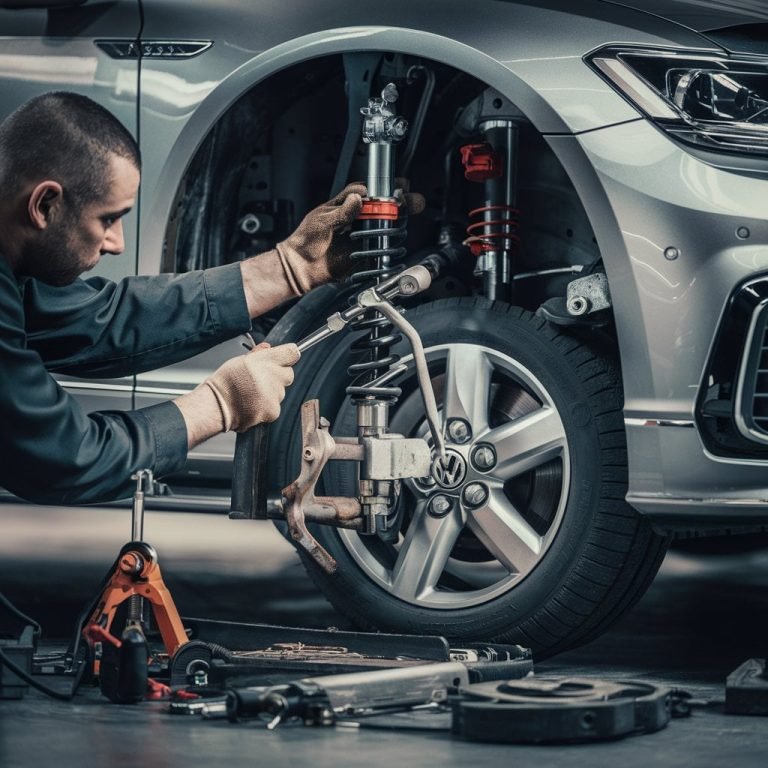
Shock absorbers are normally replaced as a matching pair on the same axle to maintain balanced damping. Spring replacement also considers the axle pair and manufacturer guidance. Arms and links follow the actual wear findings; a worn part does not automatically justify a complete suspension set.
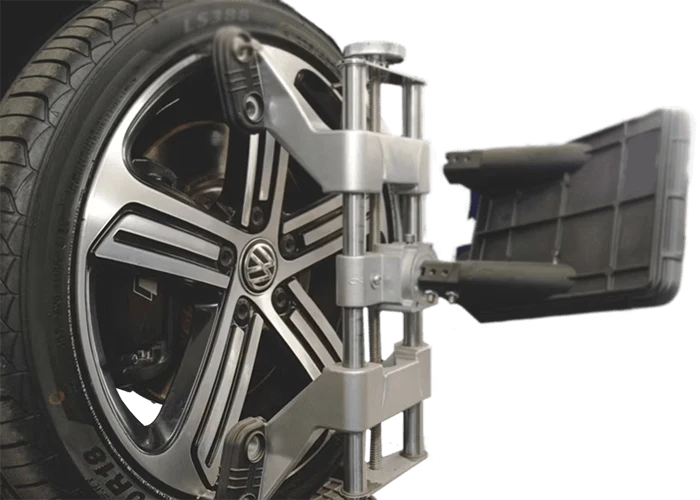
Wheel-alignment reference image. Final checks depend on the work and vehicle.
Finish with geometry and checks
Replacing the noisy part is only part of the job. The repair must leave the suspension correctly assembled, the ride height appropriate and the wheels pointing where they should.
1
Fit to the correct procedure
Use the specified fasteners and tightening method. Rubber-bushed joints are secured at the manufacturer's prescribed suspension position to avoid unwanted preload.
2
Check alignment and height
Assess toe, camber and caster as applicable after geometry-affecting work. Set the correct ride height before alignment and carry out required electronic calibration. See our Volkswagen wheel alignment service.
3
Verify the repaired system
Check related height-sensor or headlamp settings and driver-assistance calibration where the manufacturer requires them. Recheck warnings and leaks, then road-test the car when safe to assess noise, steering and ride.
Approve a complete job scope. The quote separates inspection, replacement work and any necessary alignment or calibration. Parts availability and the findings determine the completion time; additional work is explained before approval.
Suspension repair questions
Practical answers before you arrange an inspection.
Can a video identify the failed part?
A short video or sound recording can help us understand the complaint, especially if you describe the speed and road condition. It cannot prove which joint, mount or damper has failed. Physical inspection and relevant tests establish the repair.
Can you repair a leaking shock absorber?
A worn or leaking sealed shock absorber is generally replaced with a suitable unit. Repairing an electrical connection or an air-system leak is different from restoring worn internal damping. We distinguish these faults before recommending parts.
Will alignment stop a suspension knock?
Alignment changes wheel geometry; it does not remove play from a worn bush, joint or mount. The mechanical fault should be resolved first, then alignment checked when the work affects geometry. Wheel balancing addresses another type of problem and is not the same service.
Does a worn ball joint mean I need a complete control arm?
Not always. Some joints can be renewed separately when the arm and mounting are sound. Others are integral to the arm, or additional wear makes an assembly the appropriate repair. We identify the fitted design, explain the findings and quote the required parts; alignment is checked after geometry-affecting work.
Does a level-control warning mean I need a new compressor?
No. A leak, air-supply fault, height-sensor or linkage problem can require different work. We compare the warning and diagnostic findings with physical checks before selecting parts. The quote separates the confirmed repair from required calibration and testing; clearing the warning alone does not fix the cause.
Why does the car drop after parking?
On an air-equipped vehicle, overnight sagging can involve an air spring, pipe connection, valve block or control problem. We record the height change and test the system rather than assume the compressor is responsible. A steel-sprung vehicle needs a different investigation.
Should suspension be replaced at a fixed mileage?
There is no single replacement mileage for every Volkswagen suspension component. Maintenance requirements, condition, damage, driving use and test findings determine what needs attention. A regular service check can identify wear before a more obvious handling complaint develops.
Get the right suspension repair
Send your model, year and what has changed in the ride. Our workshop is in Al Quoz 4, Dubai, open Monday to Saturday, 9:00 am to 7:00 pm.