In this guide
Most Volkswagen electrical problems start with the 12V supply, a battery, an alternator, an earth point or a corroded connector, rather than a failed control module. Random warning lights, a dead battery, flickering lights or a screen that resets all point to a fault in power, wiring or one control unit. A scan plus voltage and circuit tests find which one.
Written by the Volkswagen Repair Dubai workshop team in Al Quoz 4. Reviewed by the technical team, updated October 2026.
Key takeaways
- Check the 12V battery and charging first, because low voltage can light many warnings at once.
- Several warnings together usually share one cause, not several failed parts.
- A red battery warning while driving means the alternator may not be charging.
- Heat in Dubai shortens battery life and can harden wiring and connectors.
- Newer VWs need the battery registered and modules coded after some repairs.
- A control module is replaced only after its supply, earth and wiring are proven good.
How does the electrical system work on a modern VW?
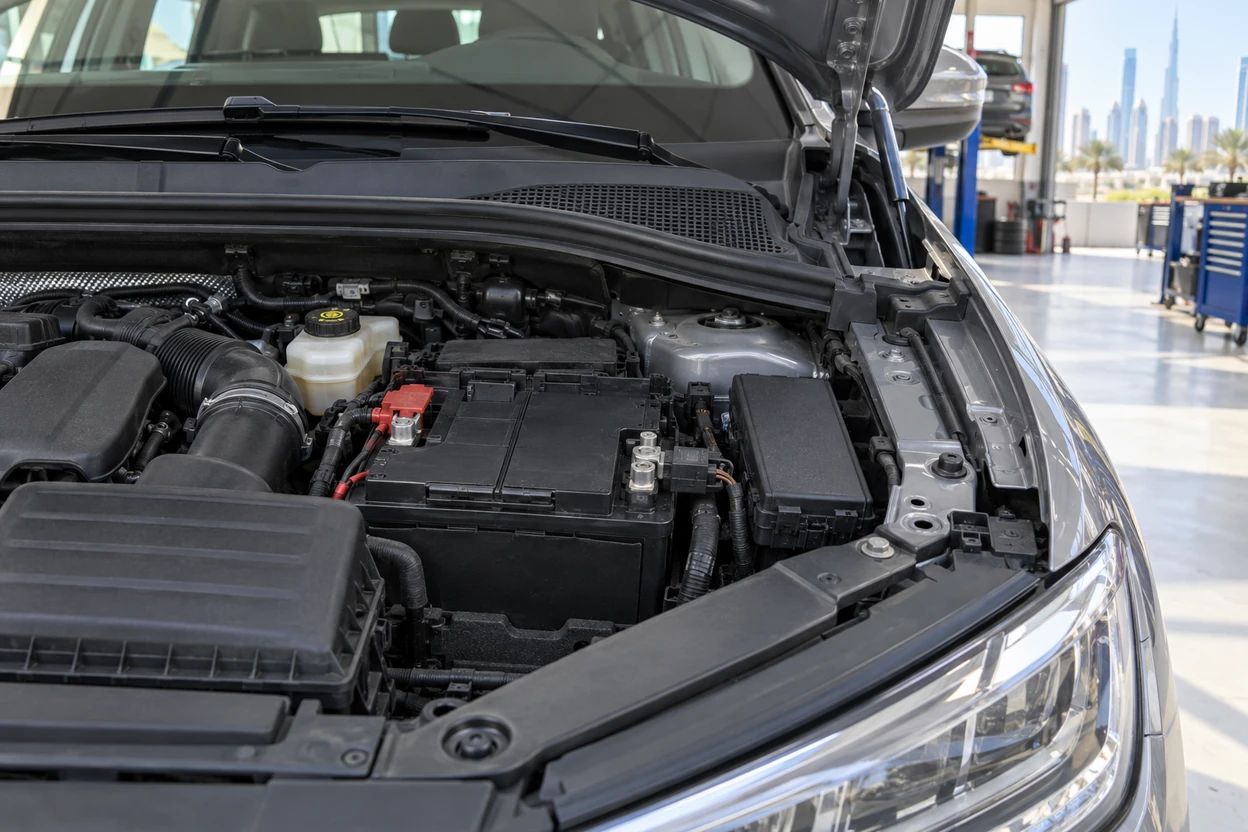
A current Volkswagen runs dozens of control units, for the engine, gearbox, brakes, lights, doors, climate, screen and more. They all share one 12V supply from the battery, charged by the alternator, and they talk to each other over data networks. When the supply drops or a network message goes missing, units can store faults or switch features off.
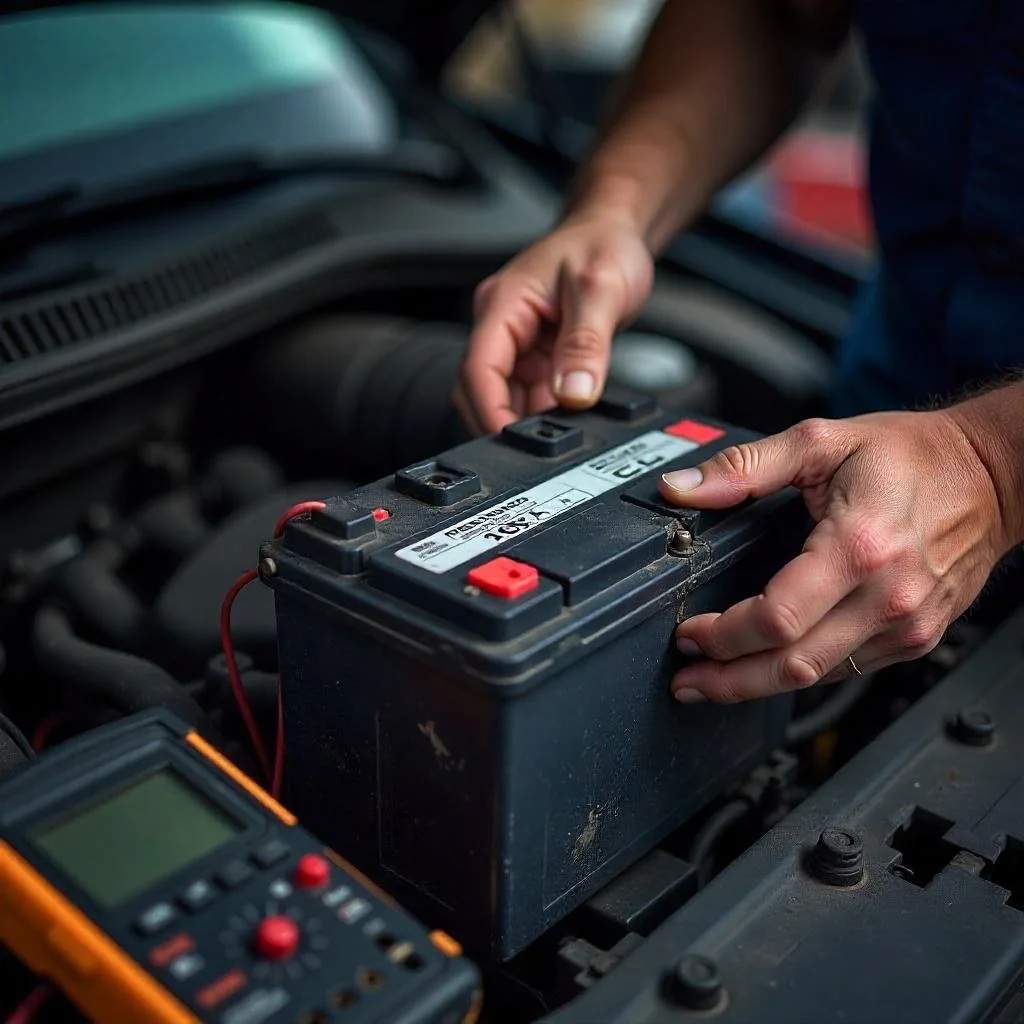
- The 12V battery starts the engine and keeps every control unit powered when the engine is off.
- The alternator recharges the battery and powers the car once the engine runs.
- Earth points complete each circuit through the body and engine.
- Fuses and relays protect and switch the individual circuits.
- Data networks carry messages between control units, so one fault can show in several places.
Which electrical symptom points to which system?
The symptom gives the starting point for testing. These are the links we see most often, not a diagnosis on their own.
| What you notice | System to check first | Typical test |
|---|---|---|
| Slow crank or no start | Battery, starter, main cables | Battery load test and starter current |
| Red battery warning while driving | Alternator and belt | Charging voltage with loads on |
| Flat battery after parking | A circuit that stays awake | Parasitic drain test |
| Many warnings at once | Supply voltage or a network fault | Full scan and voltage logging |
| Gauges or display freeze | Instrument cluster or its supply | Cluster faults, supply and earth |
| Lights flicker or dim | Charging, earth points or a light module | Voltage under load and earth tests |
| A window or lock stops | Door wiring, switch or motor | Switch data and door harness checks |
| Engine warning with a sensor code | The sensor circuit | Signal, supply and wiring tests |
Why do random warning lights appear on a VW?
A sudden set of warnings that come and go is one of the most common electrical complaints. In most cases there is one shared cause.
- Low battery voltage
- When the battery is weak, voltage dips during starting and several control units log faults at the same moment.
- Charging faults
- A failing alternator or slipping belt lets voltage fall while driving, so warnings appear on the move.
- A poor earth
- A loose or corroded earth point can upset every circuit that shares it.
- Network faults
- A damaged data wire or a unit that stops talking can make other units report missing messages.
- Water or corrosion
- Moisture in a connector or harness can cause faults that come and go with heat and humidity.
- Aftermarket fitments
- Poorly wired cameras, trackers or lights can drain the battery or interfere with circuits.
Our guide to VW dashboard warning lights explains what each symbol means and which ones mean stop.
Is it the battery, the alternator or the starter?
These three are behind many electrical complaints, and the symptoms overlap. The pattern usually separates them.
Weak when parked
Slow crank after standing, a car that starts after a jump, warnings at start up. Our VW battery issues guide covers this in detail.
Fails while driving
A red battery warning on the move, dimming lights and a battery that goes flat during the journey.
Click or no crank
A single click or no crank with a battery that tests healthy points to the starter or its supply.
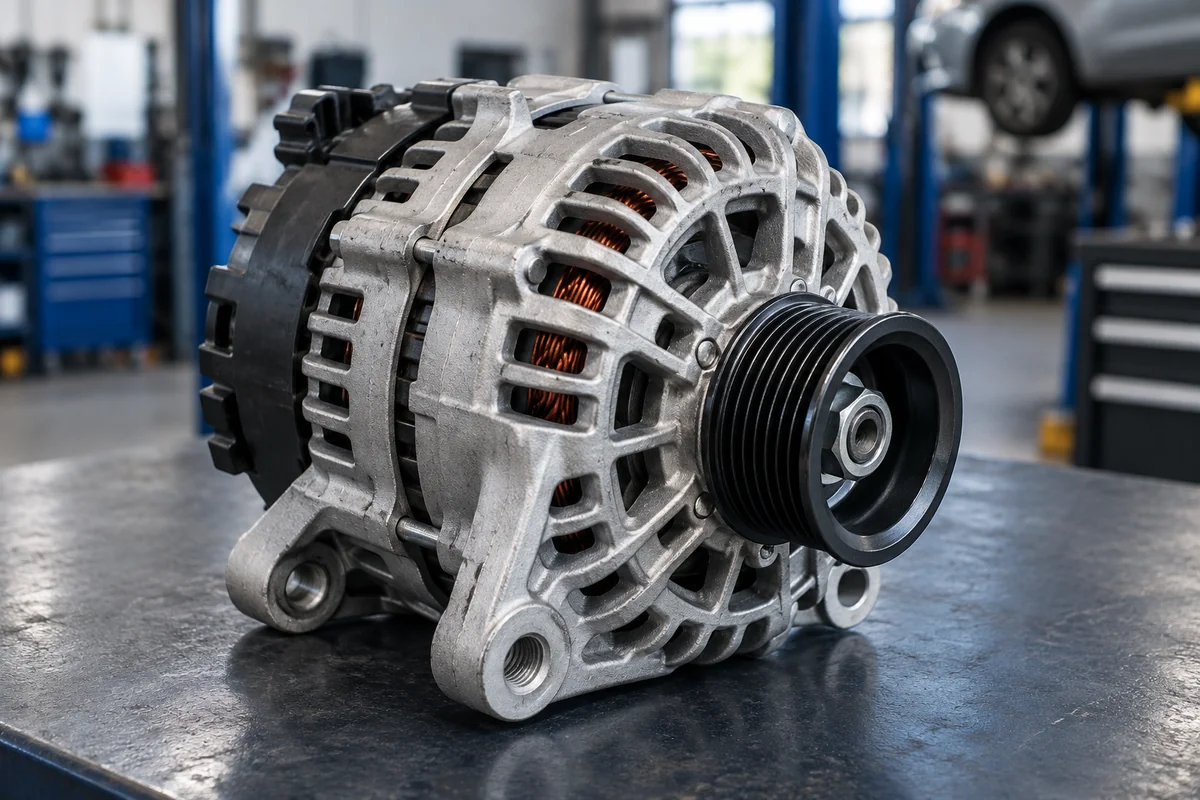
See our alternator replacement page and starter motor page for how each repair is confirmed.
What should you do when an electrical fault appears?
A calm, simple response keeps you safe and keeps the clues for diagnosis.
-
Note the warning
Photograph the dashboard when parked safely and note what the car was doing.
-
Check for a red battery lamp
A red battery warning while driving means the car may soon lose power.
-
Reduce the load
Switch off non essential items such as seat heating and extra lights to save charge.
-
Avoid repeated restarts
Each restart drains a weak battery further and can leave you stranded.
-
Book a check
Arrange a diagnostic visit rather than clearing codes or disconnecting the battery.
Stop safely and arrange recovery if you smell burning plastic, see smoke, the steering or brakes feel different, a red warning appears with power loss, or the car starts to cut out. An electrical burning smell needs the car switched off.
Warnings appearing at random? Send us a photo of the dashboard and tell us when they come on, and a technician will suggest the next step.
Why does my VW battery go flat when parked?
A battery that is healthy but goes flat overnight usually means something keeps drawing power after the car is locked. This is called a parasitic drain.
Modules must sleep
After locking, the control units should shut down within a set time so the draw becomes very small.
A unit that stays awake
A faulty module, switch or relay can keep a network awake and drain the battery.
Aftermarket wiring
Dash cameras, trackers and added lights wired to a constant supply often cause drains.
Measure, then isolate
The current is measured after the car sleeps, then circuits are isolated one at a time.
How does Dubai heat affect VW electrics?
High temperatures and dust put extra strain on electrical parts, which is why some faults appear more often here in summer.
Shorter battery life
Heat speeds up the chemical wear inside a battery, so it can fail sooner than in cooler climates.
Hard connectors
Repeated heat cycles harden plastic connectors and seals, which can let moisture in.
Hot alternator
Long idling in traffic with the AC running asks a lot of the alternator in high heat.
Dust in switches
Fine dust can work into switches and door mechanisms and cause intermittent faults.
How is a VW electrical fault diagnosed?
Good electrical diagnosis follows evidence from the supply outward, so the cheapest real cause is found first.
- 1Test the supply
Battery health, charging voltage and the main cables come first.
- 2Scan every unit
Read all control units and save the faults with their conditions.
- 3Trace the circuit
Check fuses, relays, earths, wiring and connectors on the suspect circuit.
- 4Repair and code
Fix the cause, code or adapt parts where needed and recheck.
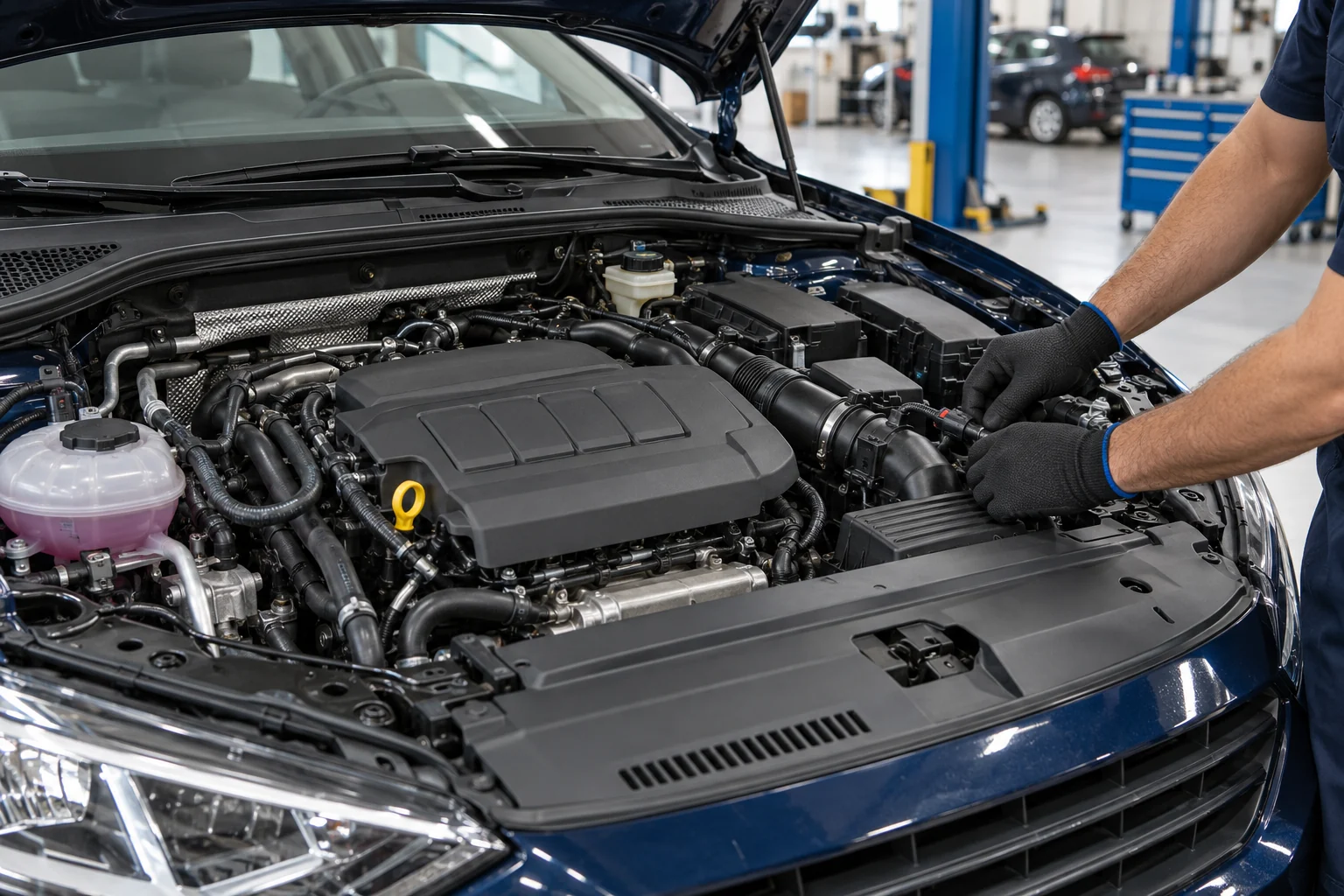
Our VW diagnostic test guide explains what a full scan includes and how live data is used.
When does a control module really need repair?
A module fault code does not always mean the module has failed. Many units are blamed for faults in their supply, earth or wiring.
Prove the unit last
The module is condemned only after everything around it tests good.
-
We confirm battery voltage and charging are within limits, because low voltage can make healthy units report faults.
-
We check the module supply, its earth and its fuses with the circuit under load.
-
We test the data wiring and connectors between the unit and the rest of the network.
-
We check for water entry or corrosion at the unit and its plug.
-
Only then do we quote repair, coding or replacement of the unit, with any programming it needs.
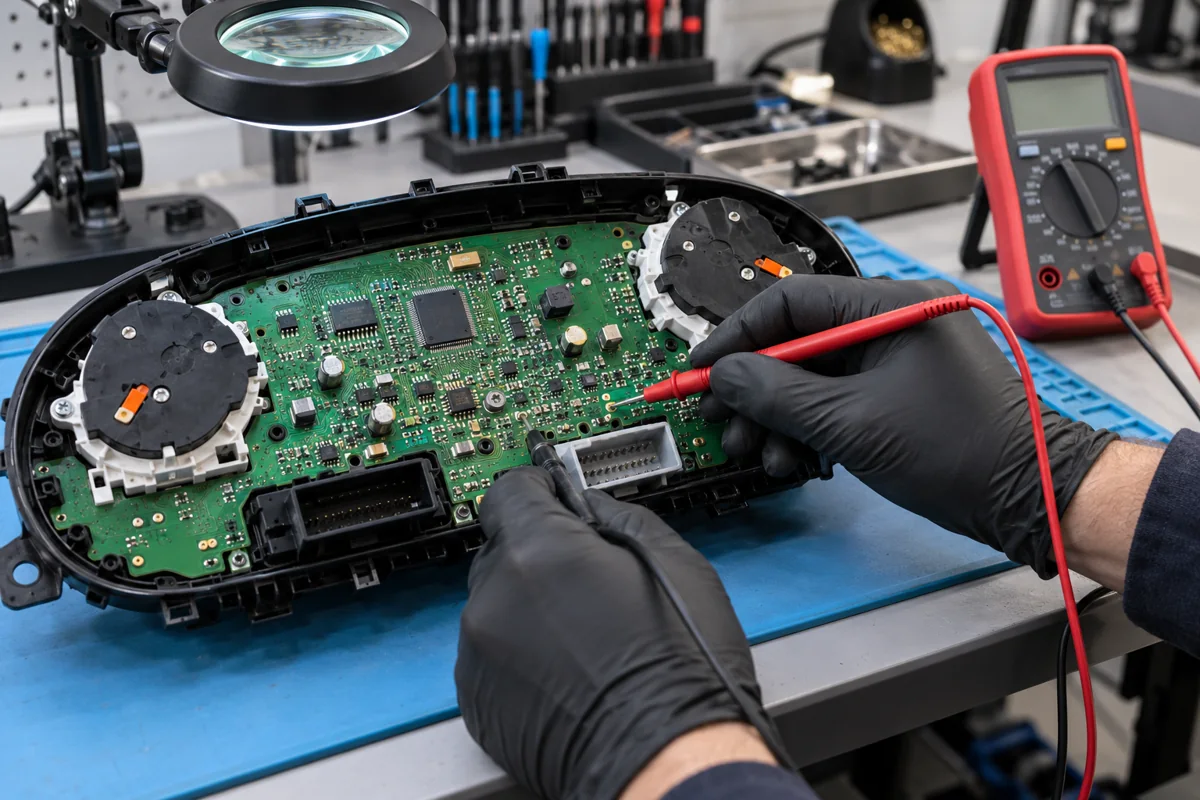
For engine control units, see our ECU repair page, and for gauges and displays our instrument cluster repair page.
How much do VW electrical repairs cost in Dubai?
Electrical repairs vary widely, from a connector to a control unit. These guide ranges come from our own service pages and are alternatives, not one bill.
| Work | Guide range | When it applies |
|---|---|---|
| Initial diagnostic assessment | AED 150 to 500 | Scan and first checks |
| 12V battery replacement | AED 400 to 1,200 | A confirmed weak battery |
| Coding or adaptation | AED 400 to 800 | Setup on a compatible module |
| Engine position sensor | AED 350 to 1,200 | Selected camshaft or crankshaft sensor jobs |
| Ignition switch | AED 500 to 1,200 | A conventional switch replacement |
| Instrument cluster repair | AED 650 to 2,000 | A supported unit |
| Starter motor, fitted | AED 800 to 2,000 | A confirmed starter fault |
| ECU electronics repair | AED 1,000 to 2,500 | A repairable module fault |
| Alternator replacement | AED 1,800 to 3,600 | Selected conventional applications |
Indicative guides. Wiring and connector repairs are quoted after tracing. You approve the written quote before work starts.
Find the real electrical fault
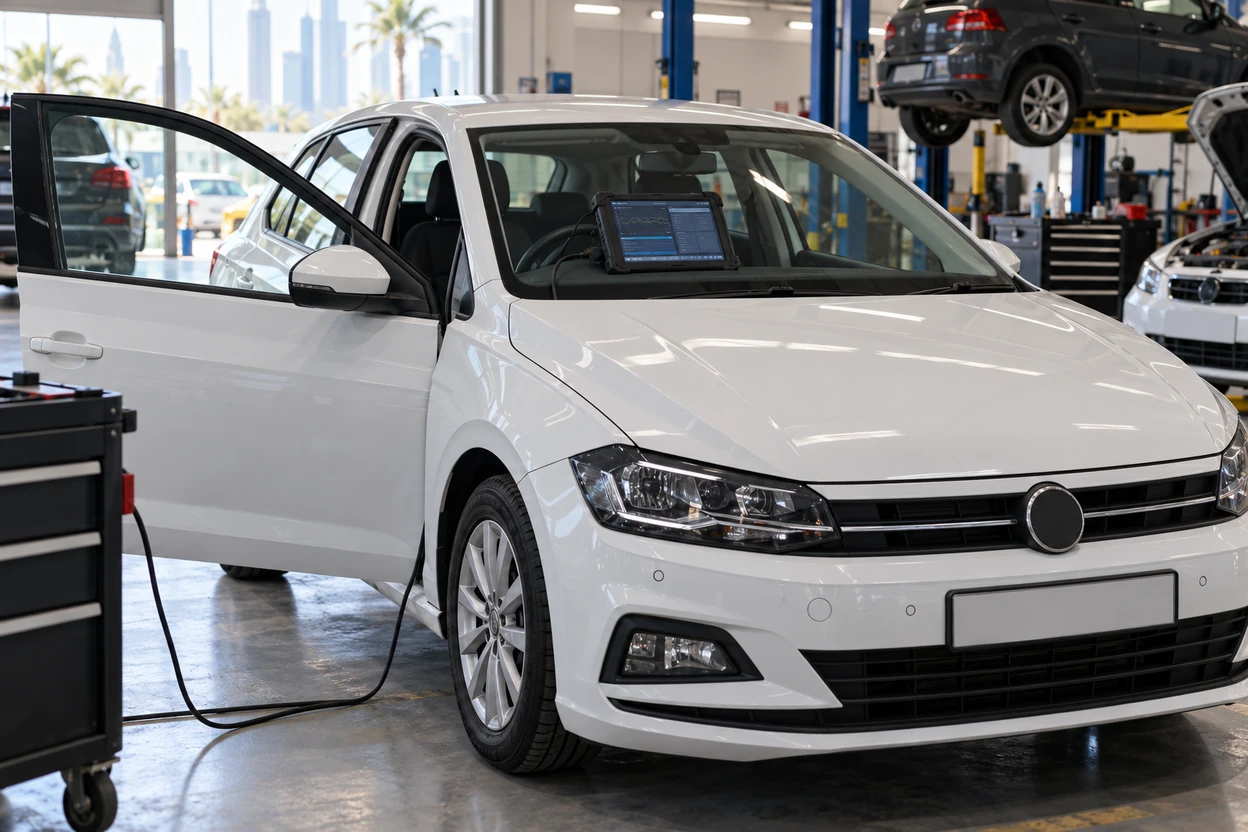
Our Al Quoz 4 workshop tests the battery and charging, scans every control unit and traces the circuit before any part is quoted, with a written quote before work.
How urgent is each electrical sign?
Read the scale from left to right, from signs you can book in for to signs that mean stop now.
A seat heater or one window. Book it in when convenient.
Have the battery tested soon, before it leaves you stranded.
Book a scan and voltage check within days.
Switch off extra loads and get to safety or help quickly.
Stop, switch off and arrange recovery.
Why do some VW electrical repairs need coding?
Many new parts must be introduced to the car before they work correctly. This is part of the repair, not an extra.
- Battery registration on start stop models
- Coding a replacement control module
- Adapting a new instrument cluster
- Window end position learning
- Key and immobiliser matching
- Steering angle basic settings
- Software updates where applicable
- Clearing and rechecking faults after work
Key and screen problems have their own causes, so tell us exactly which feature stopped working and when.
Are sensor faults electrical faults?
Often, yes. A sensor code names a circuit, and the fault can be in the sensor, its wiring, its plug or its supply.
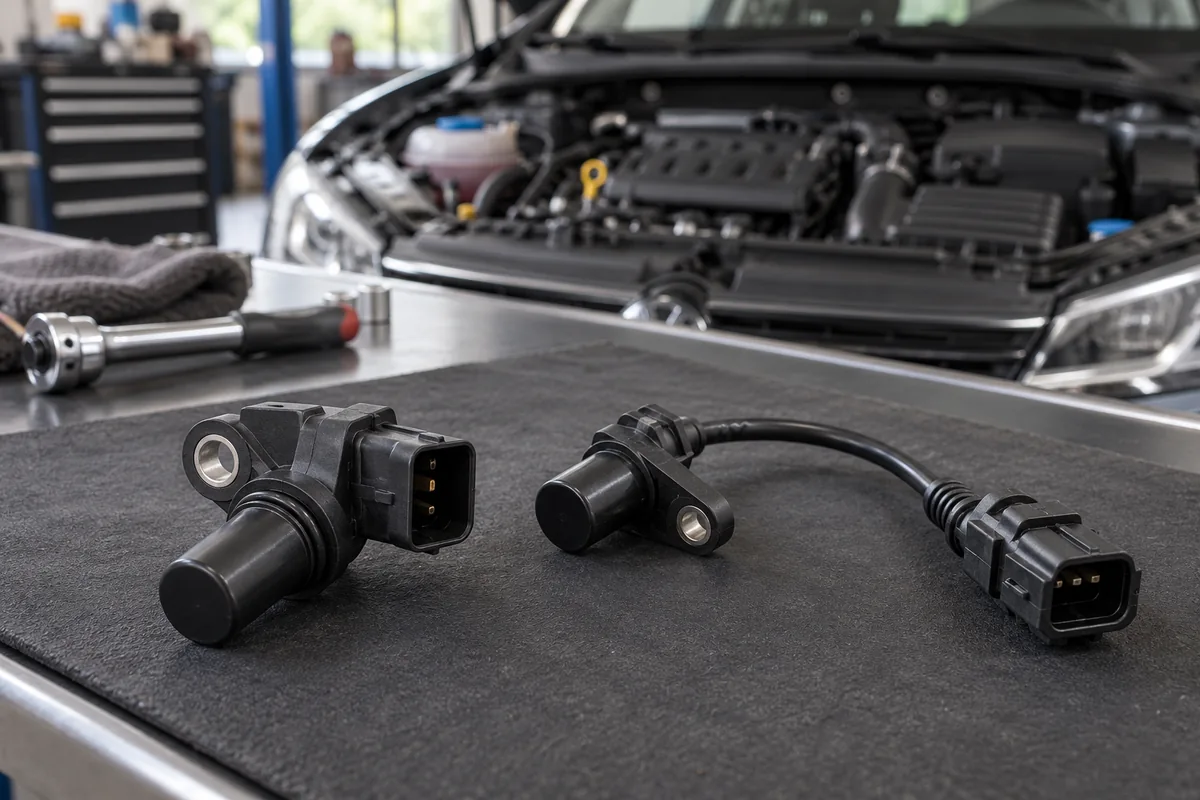
A crankshaft or camshaft sensor fault can stop the engine starting, while a wheel speed sensor fault can light the ABS warning. Each sensor is tested with its wiring and plug before a replacement is quoted.
VW electrical mistakes we see
Supply, earth and wiring cause many module codes.
Start stop cars need the matching AGM or EFB battery.
The charging system then treats the new battery as old.
The cause stays and the history is lost.
A battery that keeps going flat needs a test, not more jumps.
Poor connections create drains and faults later.
Key electrical terms explained
- Parasitic drain
- Power drawn from the battery after the car is locked and asleep.
- Earth point
- A connection to the body or engine that completes an electrical circuit.
- AGM and EFB
- Battery types made for start stop cars, which must be replaced like for like.
- Battery registration
- Telling the car a new battery has been fitted so it charges it correctly.
- Coding
- Setting a control unit to match the equipment fitted to the car.
- Data network
- The wiring that lets control units share messages with each other.
Quick answers about VW electrical issues
What is the most common cause? A weak 12V battery or a charging fault.
Why many warnings at once? Usually one shared cause such as low voltage.
Can I drive with a battery warning? Only a short distance to safety, as power may run out.
Does a module code mean a new module? No, supply and wiring are tested first.
Does a new battery need coding? On start stop models it needs registering.
Questions about VW electrical problems
What causes electrical problems in a Volkswagen?
The most common causes are a weak 12V battery, a charging fault from the alternator or belt, a poor earth point, corroded connectors and damaged wiring. Aftermarket accessories can also cause drains and faults. A failed control module is possible, but it is checked after the supply, earth and wiring, because those cause many module fault codes.
Why are all my VW warning lights coming on at once?
Many warnings at the same time usually share one cause. Low battery voltage during starting, a charging fault or a data network problem can make several control units log faults together. A full scan with voltage testing finds the shared cause, so you do not pay for several parts when one fix solves them all.
Can I drive with the red battery warning on?
A red battery warning while driving means the alternator may not be charging, so the car runs on battery power until it is flat. Switch off non essential loads and drive only a short distance to safety or a workshop. If the car starts cutting out or other systems fail, stop safely and arrange recovery.
Why does my VW battery keep going flat?
Either the battery is worn, the alternator is not charging it fully, or something keeps drawing power after the car is locked. Heat in Dubai also shortens battery life. A battery load test, a charging test and a parasitic drain test separate these causes, and short journeys alone can also leave a battery undercharged.
Does a new VW battery need to be coded?
On many start stop Volkswagens the new battery must be registered with the car, and its type and capacity set where required. This tells the charging system to treat it as new. Fitting the correct AGM or EFB type matters too, because the wrong type or a missed registration can shorten battery life and upset start stop.
Can heat cause electrical faults in a VW?
Yes. High temperatures speed up battery wear, harden plastic connectors and seals, and make the alternator work harder during long idling with the AC on. Faults that appear only on hot afternoons are common in Dubai. Telling the workshop when the fault happens helps them reproduce it and test the right circuit.
Does a module fault code mean the module has failed?
Not necessarily. A module can report a fault because its supply voltage is low, its earth is poor, its fuse has failed or its data wiring is damaged. We test all of these before quoting a repair, coding or replacement, so a working unit is not replaced when the real fault is in the wiring around it.
How long does electrical diagnosis take?
A battery, charging and scan check is often quick. Intermittent faults and parasitic drains can take longer, because the car may need to sleep before current is measured or the fault may need to be reproduced. We agree the scope and the assessment fee before starting and update you if more testing is needed.
How much does VW electrical repair cost in Dubai?
Our guide for an initial diagnostic assessment is AED 150 to 500. A 12V battery is AED 400 to 1,200, a starter AED 800 to 2,000 and an alternator AED 1,800 to 3,600. Coding is AED 400 to 800, and ECU repair is AED 1,000 to 2,500. Wiring repairs are quoted after tracing the fault.
Get your VW electrical fault checked in Al Quoz 4
Volkswagen Repair Dubai is an independent VW workshop in Al Quoz 4, open Monday to Saturday, 9am to 7pm. Tell us the symptoms and when they happen, and we will advise the next step.
See battery options on our battery replacement page.
How this guide was written
Written by the Volkswagen Repair Dubai workshop team in Al Quoz 4 and reviewed by our technical team in October 2026. It is based on the electrical diagnosis we carry out on Volkswagens in Dubai and on the Volkswagen owner information listed below.
Equipment, control units and coding needs differ between models and years, so always follow the owner manual for your car. Electric ID models have their own high voltage systems, which need separate assessment. Prices are the indicative guide ranges published on our own service pages, not fixed quotes.
Technical references
- Volkswagen Canada, warning and indicator lights, for the meaning of the battery and charging warnings.
- Volkswagen, warning and indicator lights, for symbol meanings and model specific handbook advice.