In this guide
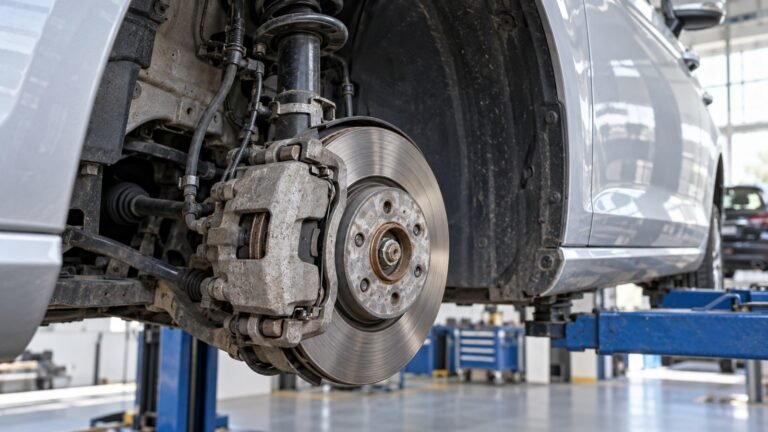
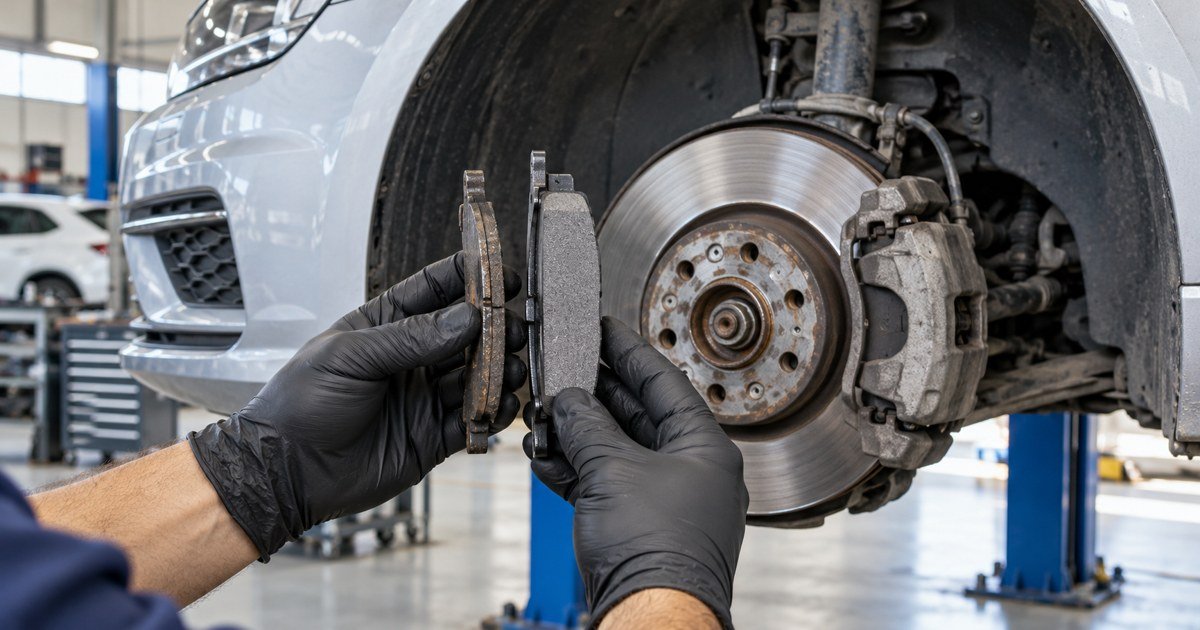
Replace VW brake pads when the friction material reaches the wear limit, usually about 2 to 3 mm, or sooner if the brake pad warning light comes on, the brakes squeal or grind, or stopping takes longer. There is no fixed mileage for every Volkswagen. Measured thickness on both axles decides it, and Dubai stop and go traffic often brings that point forward.
Written by the Volkswagen Repair Dubai workshop team in Al Quoz 4. Reviewed by the technical team, updated October 2026.
Key takeaways
- Knowing when to replace VW brake pads comes down to pad thickness in millimetres, not mileage.
- The amber pad wear light is a prompt to book soon. A red brake warning or a soft pedal means stop safely.
- On many models the wear sensor watches one pad position only, so a dark dashboard does not prove every pad is fine.
- Grinding usually means metal is touching the disc. Waiting at that stage turns a pad job into a pad and disc job.
- Front pads normally wear faster than rear pads, so each axle is checked and replaced as its own set.
When should you replace VW brake pads?
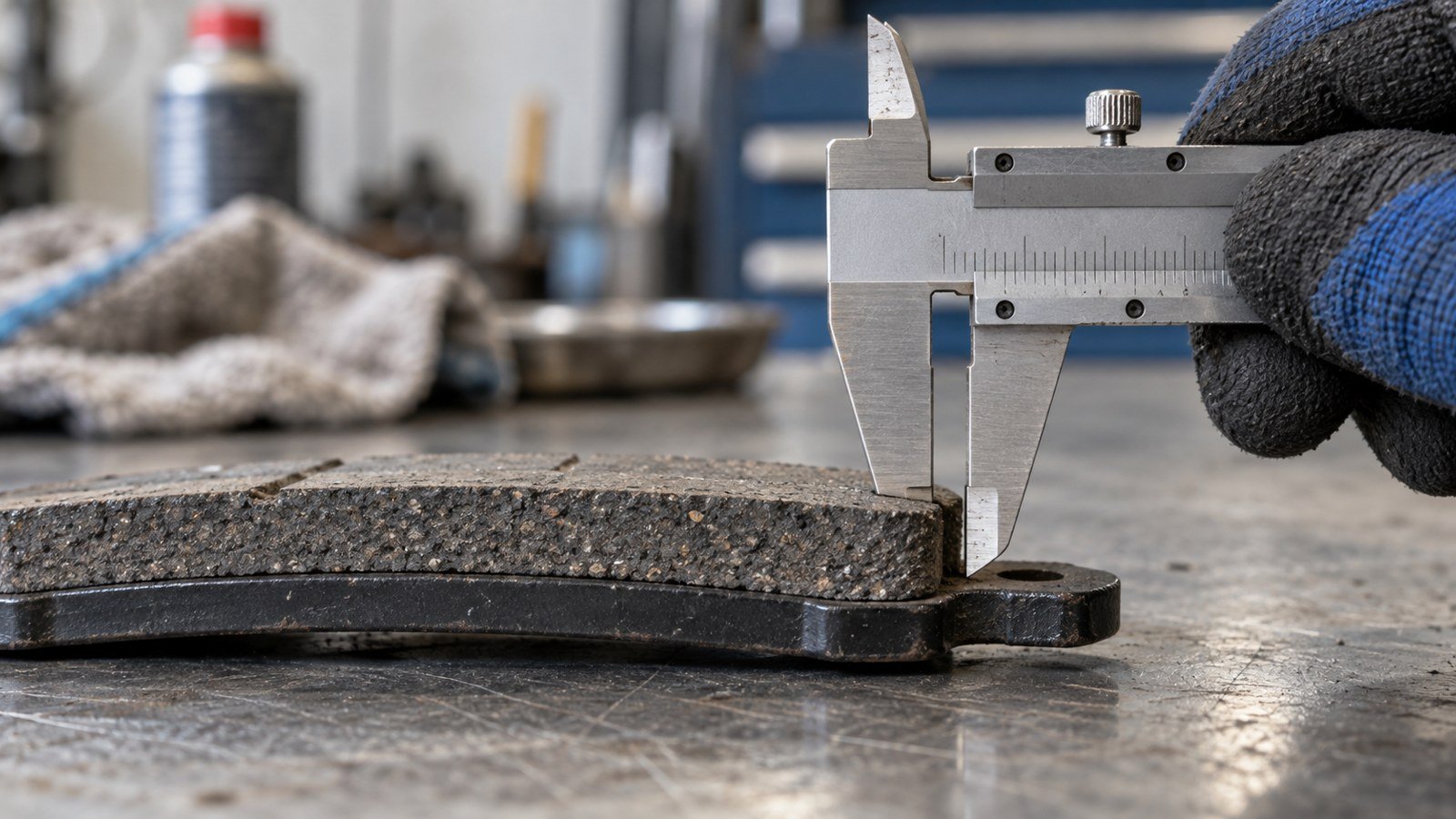
Replace them before the friction material reaches the minimum thickness for your car, typically around 2 to 3 mm. Measure the friction material only, without the steel backing plate.
New pads, around 10 to 12 mm
Ask for a measurement at your next service.
Some material remains. Recheck sooner if you spend much of your time in stop and go traffic.
Close to many wear limits. Have every inner and outer pad measured.
Use the minimum thickness in the repair data for your VW. Do not wait for the backing plate to touch the disc.
Grinding can mean the backing plate is scoring the disc. Arrange help if braking has changed.
The wear limit for your model takes priority. These are planning bands, not a Volkswagen specification. The correct limit for your Golf, Polo, Jetta, Passat, Tiguan or Touareg comes from its repair data. Bar lengths show wear and are not a measuring tool.
What are the signs your VW brake pads are worn?
The clearest signs are a pad wear warning, a high pitched squeal, a grinding noise and a longer stopping distance. Each points to something different, so match what you notice to the table before you decide what to do.
| What you notice | What it usually means | What to do |
|---|---|---|
| Amber pad wear warning | The wear contact on one pad has reached its set point. | Book a pad check and replacement soon. |
| Squeal when braking | Low pad, a metal wear tab touching the disc, or a glazed pad surface. | Have the pads measured. Do not just spray the brakes. |
| Grinding or scraping | Friction material is gone and the backing plate is on the disc. | Stop driving if braking feels unsafe. Pads and discs likely. |
| Longer stops or a deeper pedal | Worn pads, hot or glazed pads, or a hydraulic problem. | Get it checked promptly. A soft pedal is a stop sign. |
| Car pulls to one side | A sticking caliper, uneven pad wear or a tyre issue. | Ask for both sides of the axle to be inspected. |
| Pulsing in the pedal or steering | Disc thickness variation or runout, sometimes from overheated brakes. | Have the discs measured, not only the pads. |
| One wheel much dirtier with dust | That brake may be dragging or working harder than the others. | Check caliper movement before fitting new pads. |
What does the VW brake pad warning light mean?
The brake pad wear symbol means a monitored pad has worn down to the point where replacement is due. It is a warning to act soon, not a sign that the brakes have failed. Volkswagen lists it separately from the brake system warning, which needs a different response.
Brake pad wear warning
A monitored pad is near its limit. Keep driving gently to a workshop and book soon, unless you also hear grinding or feel a change in braking.
Brake system warning
Low brake fluid or a brake system fault. With a soft pedal or a fluid leak, stop safely and call for help. Pad wear alone does not explain it.
Two details catch many owners out. First, on many VW models the wear contact sits on one pad position only, so the other pads can wear further without any warning. Second, the light stays on after new pads are fitted if the sensor was not renewed or its wire is damaged.
A separate amber symbol shows when a brake light bulb is out at the rear. That is a lighting fault, covered on our VW brake light malfunction page. An ABS warning points to the anti lock system, explained on our Volkswagen ABS module repair page.
Not sure what your dashboard is telling you? Send a photo of the warning to a technician before you drive in.
How long do VW brake pads last in Dubai?
No single mileage applies to every Volkswagen, because use and conditions change wear so much. Two identical Golfs can need pads at very different points. These are the factors that matter most for Dubai drivers.
- Stop and go traffic
- Daily queues on Sheikh Zayed Road, Al Khail Road or school runs mean many short, repeated stops. That wears pads far faster than steady highway cruising.
- Heat
- Summer heat adds to the temperature the brakes reach. Repeated hard stops when pads are already hot can glaze the surface and reduce grip.
- Long descents
- Mountain roads such as Jebel Jais or the Hatta route load the brakes for minutes at a time. Using a lower gear spares the pads.
- Weight and model
- A Touareg, Teramont or a loaded Tiguan asks more of its brakes than a Polo. Larger SUVs and performance brakes use different pads and discs.
- Driving style
- Late, hard braking costs pad life. Leaving a gap and easing off early saves it, along with fuel.
- Pad compound
- Different friction materials wear at different rates, and a pad that suits one car may not suit another.
Hybrid models and electric ID models recover energy when slowing, so the friction brakes often do less work. Their pads still age, and they still need regular inspection.
Do front and rear VW brake pads wear at the same rate?
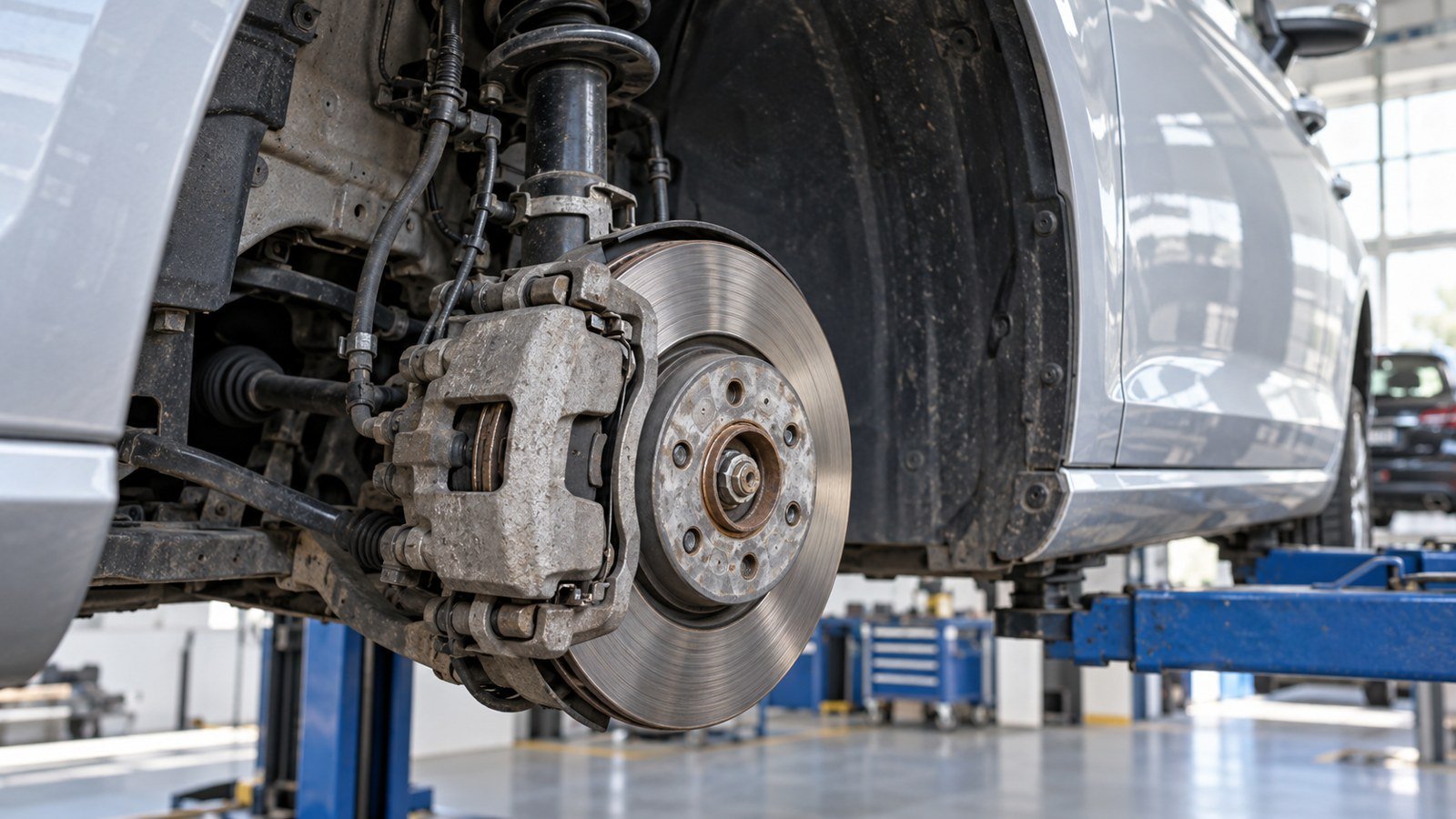
No. Front pads usually wear faster because weight moves forward when you brake, so the front axle does most of the stopping. That is why each axle is measured and replaced as its own set.
- Replace in axle sets. Both front wheels together, or both rear wheels together. Never one wheel alone.
- Rear pads need the right procedure. On cars with an electronic parking brake, the rear calipers are put into service mode with diagnostic equipment before work.
- Some VWs have rear drums. They use brake shoes, not pads, so a rear pad quote may not apply.
- Model matters. The same model can carry different brake packages, so fitment is confirmed by VIN.
Model specific pages cover the VW Tiguan brake pad replacement and the VW Touareg brake pad replacement.
How can you check your brake pads at home?
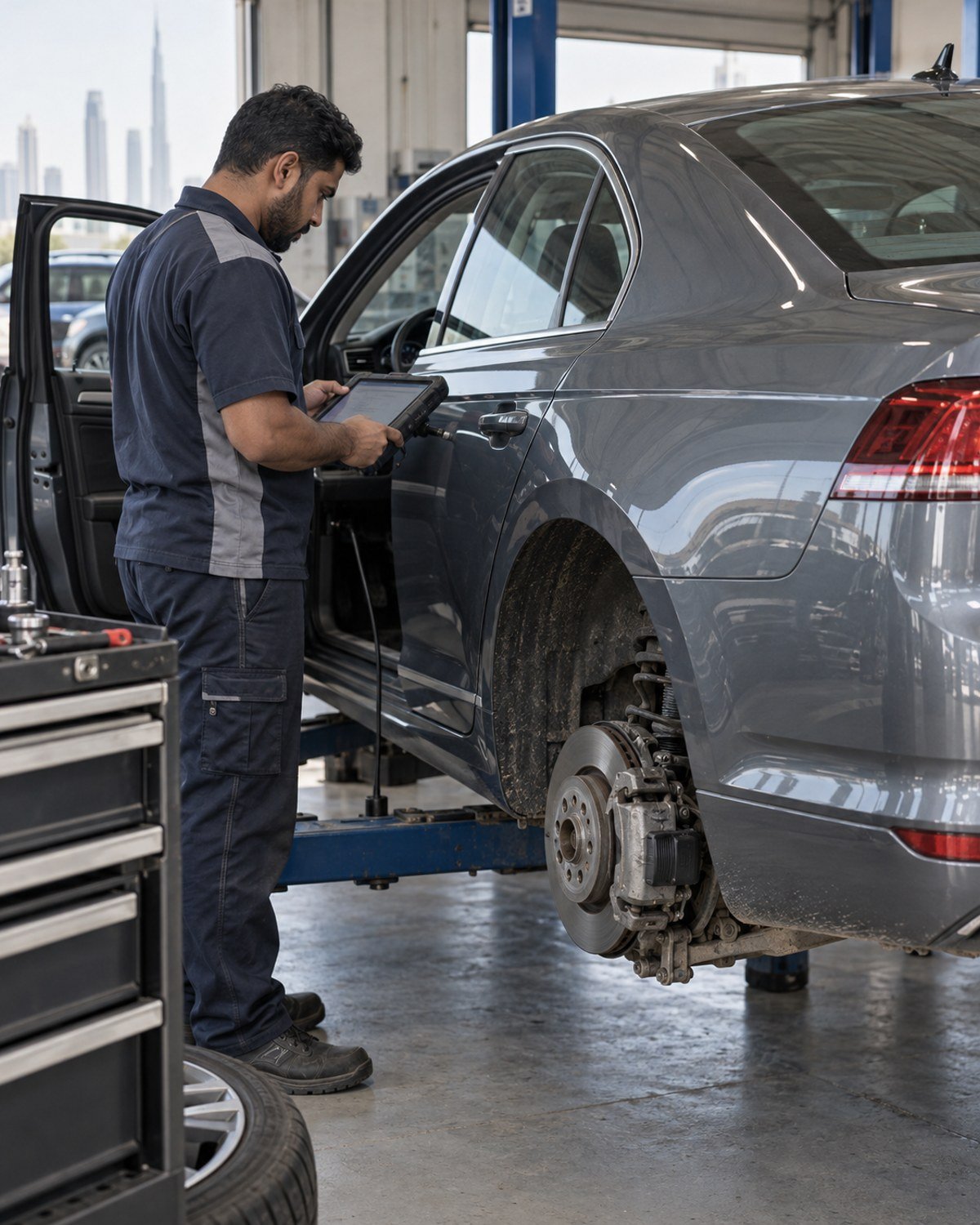
You can often see the outer pad through the wheel spokes and judge roughly how much friction material is left. It is only a rough look, because the inner pad is hidden and can wear faster.
-
Park safely
Use flat ground, engage the parking brake and let the brakes cool. Brake parts get very hot after driving.
-
Turn the steering
Turning the front wheels to full lock often gives a clearer view of the front caliper through the spokes.
-
Find the pad
Use a torch. Look for the dark friction block pressed against the shiny disc, and the steel plate behind it.
-
Compare the thickness
If the friction block looks about as thin as the steel plate behind it, or thinner, the pads are near the limit.
-
Look at the disc
A deep lip on the outer edge or heavy grooves on the face suggest the disc may also need checking.
Rear brakes with an electronic parking brake can be damaged without the correct service mode. If you are unsure, a workshop measurement takes little time and gives you the real figure.
What happens if you wait too long to replace them?
Waiting turns a simple pad change into a larger repair and weakens your braking. Wear follows a predictable chain once the pads pass the limit.
- 1Thin pads
Pads run hotter and fade sooner on long or repeated stops.
- 2Warning and squeal
The wear contact or tab signals that time is up.
- 3Backing plate on disc
Metal grinds into the disc face and scores it.
- 4Wider damage
Discs need renewal, and heat can harm the caliper piston and seals.
The cost gap is real. On our Volkswagen brake pads replacement service, a typical pad set with fitting is listed at AED 350 to 800 per axle. Pads with a conventional disc pair are listed at AED 900 to 2,400 per axle. Replacing pads on time is often what keeps you in the first range.
Brakes also form part of the periodic technical test at RTA approved testing centres in Dubai, so badly worn brakes can cost you a retest as well.
Think your pads are near the limit?
Tell us the model, year and what you hear or see. A technician at our Al Quoz 4 workshop will tell you whether it can wait, and give a written quote before any work.
Do you need new discs every time you change pads?
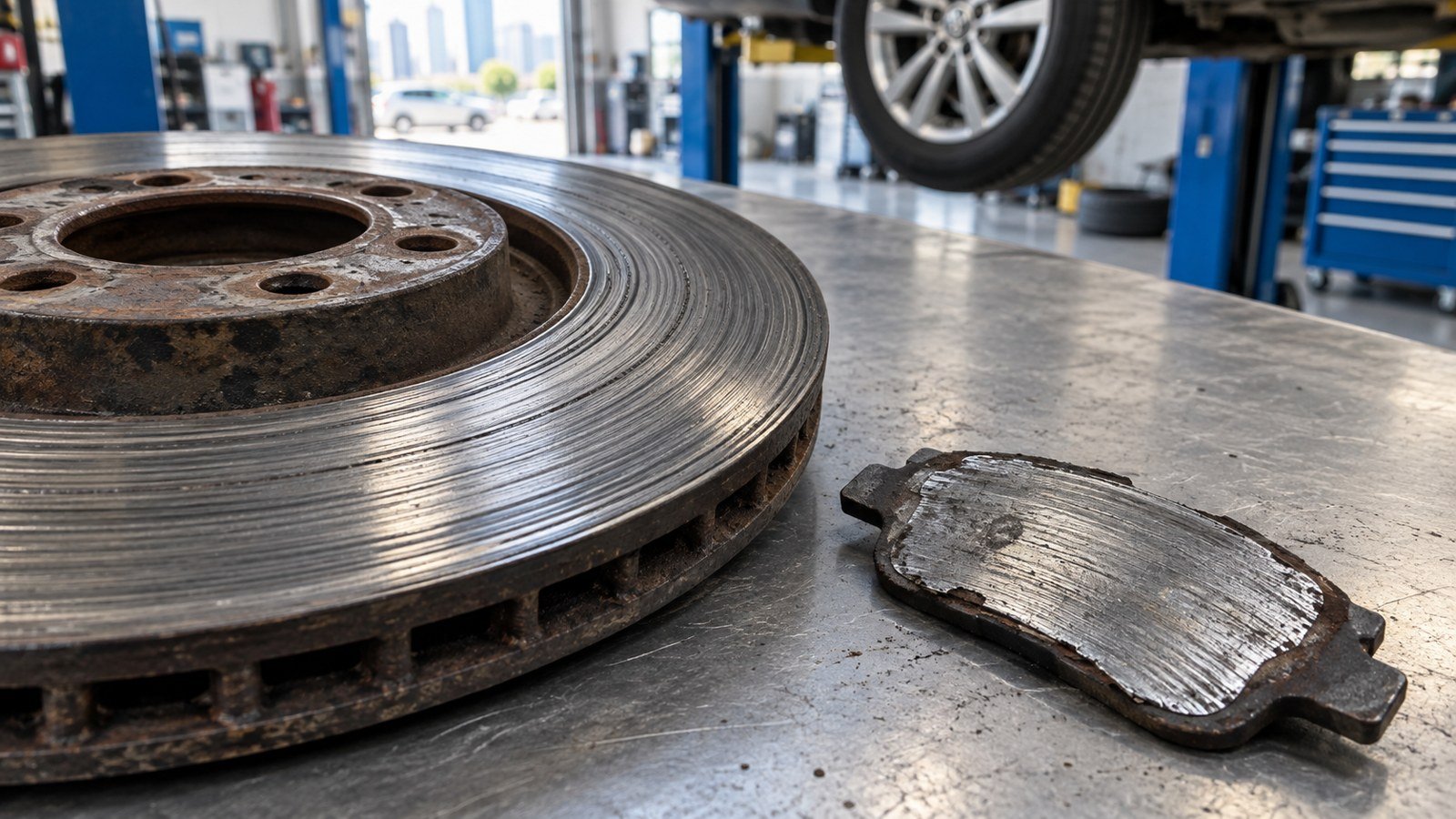
Not always. New pads can go on existing discs when the discs are above their minimum thickness and free of deep scoring, cracks or heat damage. The minimum thickness is usually stamped on the disc itself.
Discs are replaced in pairs across an axle, with new pads. A pulsing pedal or steering shake needs the discs measured, because new pads alone will not cure it. For what is included in a fitted price, see the VW brake pad replacement page.
Which brake pad type suits Dubai driving?
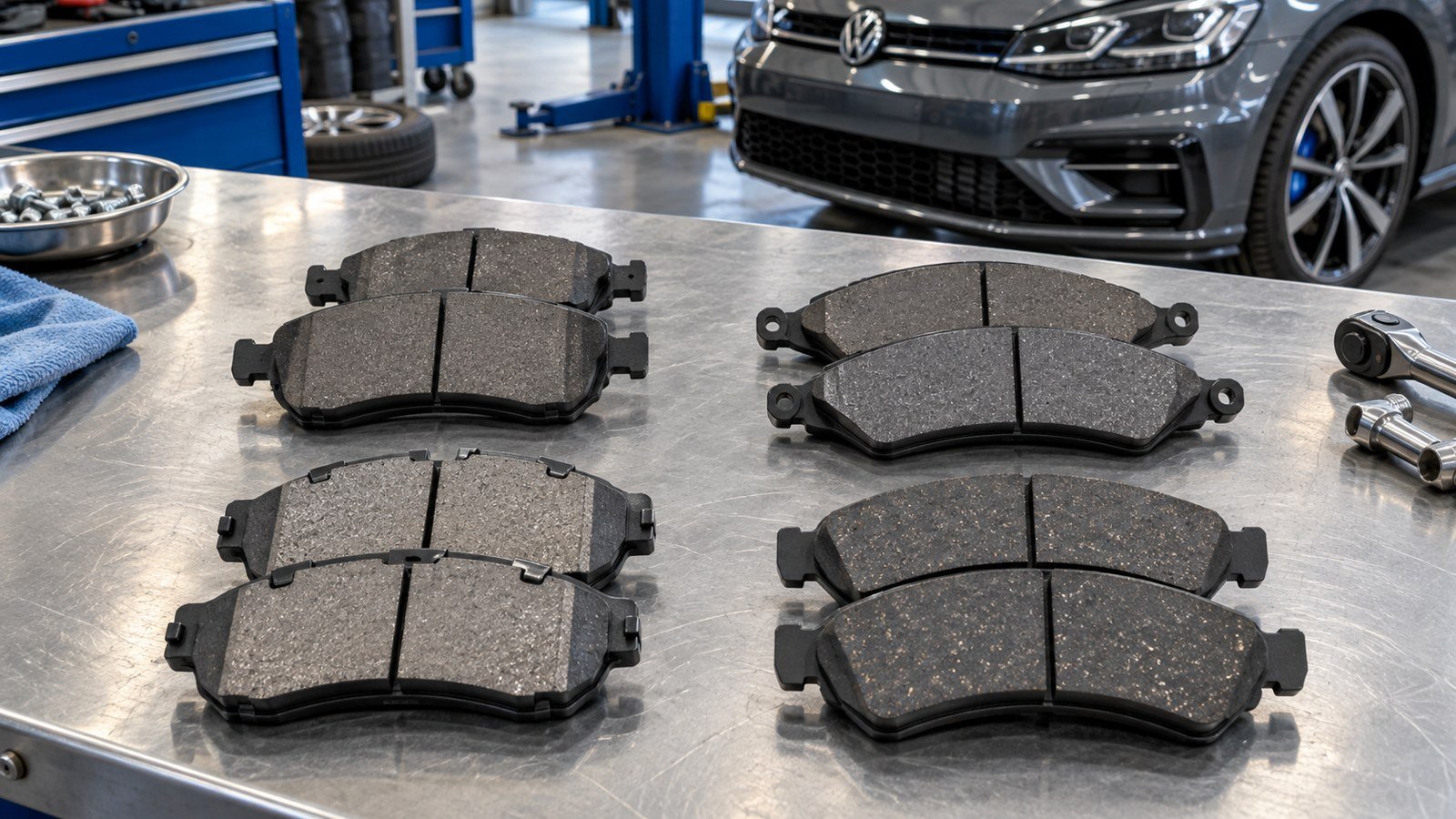
The right pad is the one specified for your exact brake package, then chosen for how you drive. Labels such as ceramic or low dust describe the compound, not whether a pad fits or performs well on your car.
Genuine Volkswagen
Follows the part selection Volkswagen uses for the car. A sound default for most owners and for cars still under a dealer service plan.
Matched OEM supplier
Made by a recognised brake manufacturer for that exact application. Compare the part number and friction specification, not just the brand name.
Low dust or ceramic
Popular for cleaner wheels and quieter city driving where a compatible option exists. Cold bite and feel can differ from the original.
Performance compounds
Built for high temperatures on GTI, Golf R or track use. Often noisier and dustier, and not automatically better for daily traffic.
Mistakes we see Dubai VW owners make
The sensor may watch one pad only. The inner pad on the other side can be worn through first.
Resetting or bridging the sensor hides the problem. It does not add pad material.
Uneven pads across an axle make the car pull and brake unevenly.
New pads on a sticking caliper wear out fast. The cause needs fixing first.
A pad that fits the caliper is not always the right friction specification for the car.
New pads need gentle use at first so the surfaces mate. Hard stops straight away can glaze them.
One honest note. If your VW is under a dealer warranty or a service plan that includes brake pads, check that first. Pads are wear parts, so warranty rarely covers them, but a prepaid plan might.
For pedal, caliper, fluid or hydraulic faults beyond pad wear, see our Volkswagen brake repair service. Buying a used VW? A Volkswagen inspection includes the brakes in the written report.
How urgent is each brake symptom?
Brake noises and warnings do not all carry the same risk. Read the scale from left to right, from symptoms you can book in for to symptoms that mean stop driving. If you are unsure which level fits, treat it as the higher one.
A short squeal on the first stops of the morning or after a car wash is often moisture or dust. Mention it at your next service.
A steady high pitched squeal or the pad wear light usually means the pads are near their limit. Book a pad check within days.
Shudder when braking from speed often points to uneven discs. Avoid hard braking and book an inspection soon.
Pulling under braking or a hot smell from one wheel can mean a sticking caliper. Drive gently and only as far as the workshop.
Grinding can mean metal on metal contact. That, a pedal that sinks, a red brake warning or fluid near a wheel means stop safely and arrange recovery.
Pad wear, disc condition and the hydraulic system are checked together on our Volkswagen brake repair service, so the cause of the symptom is fixed, not only the noise.
Questions VW owners ask about brake pads
How do I know when my VW brake pads need replacing?
The reliable answer comes from measuring the friction material on both axles. Signs that point the same way include the amber pad wear light, a squeal when braking, grinding, a longer stopping distance or the car pulling to one side. If you notice any of these, have the pads measured soon rather than waiting for the next service date.
How many mm of brake pad is too low?
Manufacturer wear limits are typically 2 to 3 mm of friction material, without counting the backing plate. Your exact VW has its own figure in its repair data. Many owners plan replacement at around 3 to 4 mm so they are not caught out between services, especially with heavy stop and go driving in Dubai traffic.
Can I keep driving with the VW brake pad warning light on?
For a short time and with care, usually yes, if braking feels normal and there is no grinding. The amber light means a monitored pad is near its limit, not that the brakes have failed. Book a replacement soon. A red brake warning, a soft pedal or a fluid leak is different. Stop safely and call for help.
How long do VW brake pads last?
There is no fixed mileage for every Volkswagen. Pad life depends on traffic, heat, vehicle weight, driving style and the pad compound. Cars that spend most of their time in Dubai stop and go traffic usually need pads sooner than cars driven mainly on open highways. Regular measurement is the only accurate guide for your car.
Why does my VW squeal when braking?
Squeal can come from worn pads with a metal tab touching the disc, a glazed pad surface, dust or missing anti noise parts. A brief squeal on a damp morning is often harmless. A squeal that stays, or comes with the wear light, means the pads should be measured. Grinding is more serious than squeal.
Do front and rear brake pads need replacing together?
Not necessarily. Pads are replaced as a set per axle, so both fronts together or both rears together. Front pads usually wear faster, so they often need changing before the rears. If both axles are close to the limit, replacing all four at once can save a second visit.
Will the brake pad warning light go off after new pads?
It should, once the correct pads are fitted and the wear sensor is renewed where required. If the light stays on, the sensor may not have been replaced, its connector may be loose, or the wire may be damaged. A dashboard reset alone does not fix worn pads or a broken sensor circuit.
Is it safe to change VW rear brake pads myself?
On cars with an electronic parking brake, rear pad work needs diagnostic equipment to put the calipers into service mode. Forcing the pistons back can damage the parking brake motor. Older cars with a manual handbrake have their own procedure. If you lack the right equipment, have a workshop do the rear pads.
What should I do if my brakes are grinding?
Grinding usually means the pad material is gone and metal is touching the disc. Braking weakens and the disc gets damaged with every stop. If braking feels unsafe, stop driving and arrange recovery. Expect the discs to need replacing along with the pads, and possibly a caliper check.
Get your VW brake pads measured in Al Quoz 4
Volkswagen Repair Dubai is an independent VW workshop in Al Quoz 4, open Monday to Saturday, 9am to 7pm. Send your model, year and what you have noticed, and we will tell you whether the pads are due.
Ready to book? See prices and what is included on our VW brake pads replacement page.
How this guide was written
Written by the Volkswagen Repair Dubai workshop team in Al Quoz 4 and reviewed by our technical team in October 2026. It is based on the brake inspections we carry out on Volkswagen cars in Dubai, together with Volkswagen owner information and the technical sources listed below.
Prices are the indicative guide ranges published on our own service pages. They are planning figures, not fixed quotes, and the final price always follows an inspection of your car. We update this guide when our service pages or the manufacturer guidance changes.
Technical references
- Volkswagen warning and indicator lights, explaining what the brake pad wear and brake system symbols mean. The handbook for your car gives the instructions for your model.
- HELLA TechWorld guide to brake disc minimum thickness, showing how disc wear limits are marked and measured.