In this guide
Uneven tread wear does not always mean a VW tyre must be replaced. Replacement is needed when any part of the tread is below the legal limit, when the wear has exposed the structure or caused damage, or when the tyre is too old. If the tyre is still safe, the cause, often alignment, pressure or suspension, is fixed first so the next tyres do not wear the same way.
Written by the Volkswagen Repair Dubai workshop team in Al Quoz 4. Reviewed by the technical team, updated October 2026.
Key takeaways
- Check the lowest point of the tread, not the average. Edge wear can hide below the limit.
- In the UAE, tread below 1.6 mm anywhere on the tread band means the tyre must be replaced.
- Bulges, cords showing, deep cuts or cracks mean replacement, whatever the tread depth.
- Uneven wear is a symptom. Alignment, pressure, worn suspension or balance are checked before or alongside new tyres.
- New tyres on a car with a geometry fault will wear unevenly again.
- Rotation can even out mild wear, but it cannot repair a tyre that is already unsafe.
When does uneven wear mean a new tyre?
The decision rests on what the inspection finds, not on the wear pattern alone. These are the points that decide whether a tyre stays on the car.
Wear is mild, tread is legal
Tread is above the limit across the full width and there is no damage. Fix the cause, then monitor or rotate if the vehicle allows.
One edge close to the limit
The worn edge is approaching the limit while the rest looks fine. Replacement is likely soon, after the cause is checked.
Below limit or damaged
Tread below 1.6 mm at any point, cords showing, a bulge, a deep cut or cracking. The tyre is not safe to keep using.
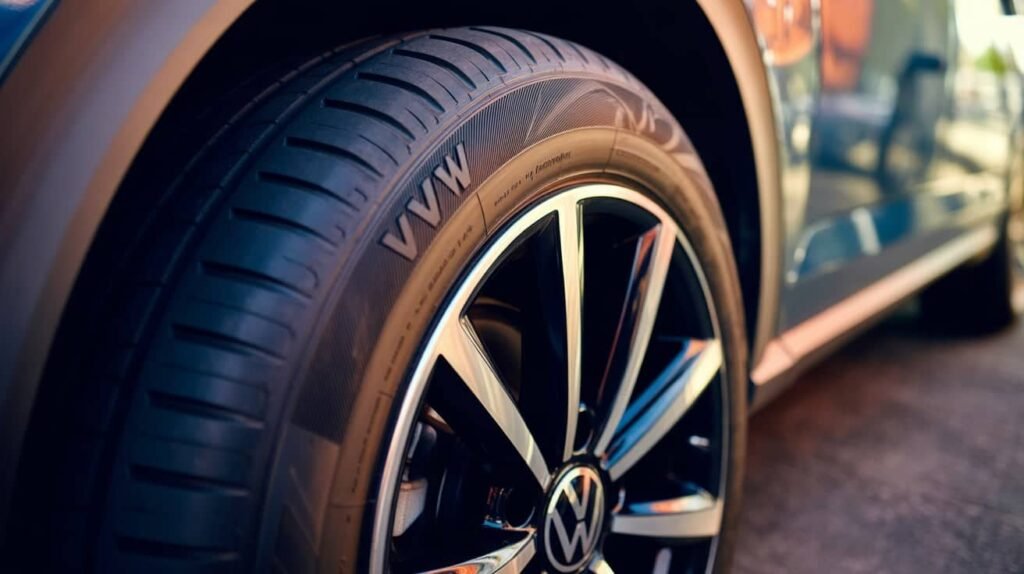
What causes each uneven wear pattern?
Tyres record how the wheels have been running. Each pattern points to a different cause, and that cause must be fixed or the new tyres will wear the same way.
| Wear pattern | Most likely cause | What to check |
|---|---|---|
| Inner or outer edge worn | Camber or toe out of specification | Wheel alignment, worn bushes, bent arm |
| Feathered tread | Toe out of specification | Wheel alignment and steering joints |
| Both edges worn | Running underinflated | Pressures, slow leaks, valves |
| Centre worn | Running overinflated | Pressure setting for the load |
| Cupping or patches | Worn dampers or wheel imbalance | Shock absorbers, balance, wheel bearings |
| Flat spot | Hard braking with the wheel locked | Brakes and ABS operation |
For a full picture of how tyre wear and steering pull connect, see the tyre wear section on our Volkswagen wheel alignment page. Flat spots from locked wheels point to the brakes, covered on our brake repair page.
How do you check your own tyres?
A few minutes with a torch tells you a lot. Check with the car parked on level ground and the steering turned to see the inner edges of the front tyres.
- Tread wear indicators are small bars in the grooves. Tread level with them means the tyre is at the limit.
- Run your hand across the tread. A saw tooth feel one way means feathering.
- Look at the inner shoulder, where camber wear hides from view.
- Check the sidewalls for bulges, cuts and cracks.
- Read the date code, four digits showing the week and year of manufacture.
Check pressures when the tyres are cold, using the figures on the door pillar or fuel flap, not the maximum printed on the tyre.
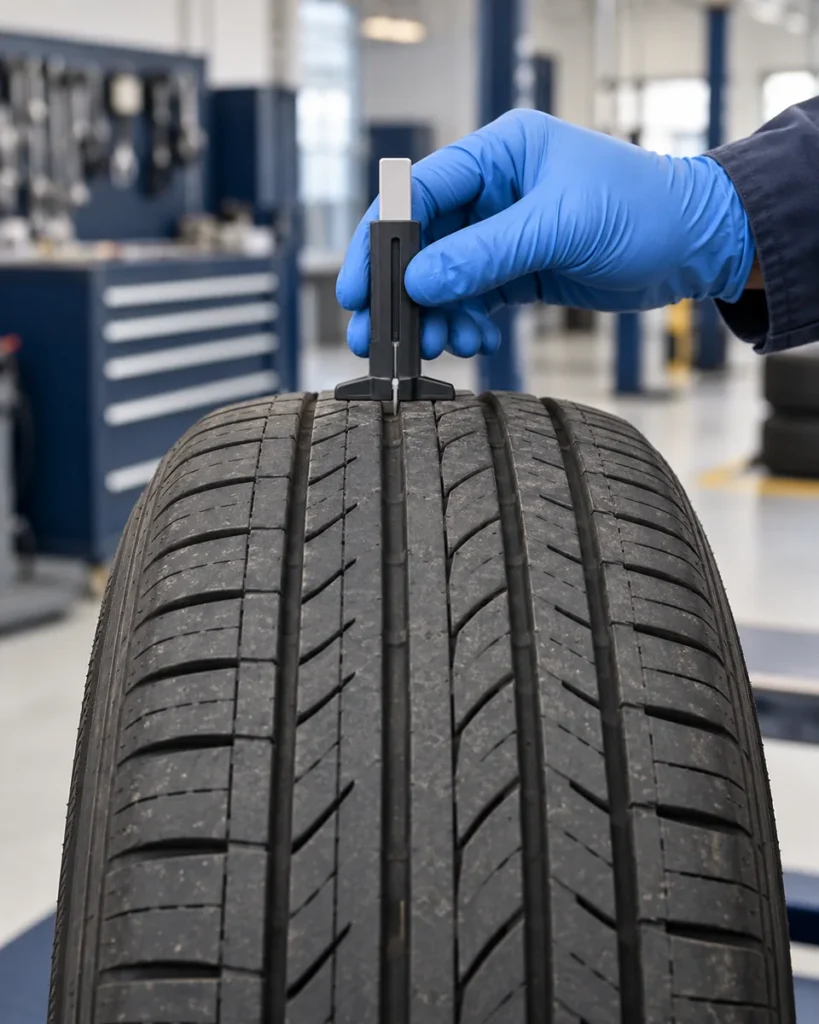
Not sure if your tyres can stay? Send us a photo of the tread and the size marking, and we will tell you what to check first.
What are the UAE rules on tyre wear and age?
UAE traffic rules set a minimum tread depth of 1.6 mm, and it applies across the full width of the tread, not just the middle. A tyre worn below that on one edge is below the limit, even if the centre looks healthy.
- Tread depth
- At least 1.6 mm across the whole tread band. Uneven wear often reaches this on one edge first.
- Damage
- Cuts, bulges, cracks or exposed cords make a tyre unfit regardless of tread depth.
- Tyre age
- Dubai guidance and vehicle testing commonly treat tyres more than five years past manufacture as due for replacement. Check the date code.
- Inspection
- Worn or damaged tyres can fail vehicle testing, and driving on unfit tyres can lead to fines.
Rules and enforcement can change. Check the current requirements with the RTA or your testing centre before relying on a specific figure. Gulf News summarises the RTA tyre guidance.
Should you replace one, two or four tyres?
The answer depends on the condition of the other tyres and your VW setup. The aim is a safe, matched set with a reason for every tyre replaced.
Every tyre needs a reason
The remaining tyres are inspected before a quantity is recommended. A worn pair does not automatically mean four new tyres.
Single damaged tyre
Possible when a matching tyre is available and the others still have similar tread depth.
A matched pair
Common when both tyres on one axle are worn by the same fault, such as front edge wear.
The full set
When all are worn or aged, or on some 4MOTION cars where tyre size differences must stay within limits.
See our Volkswagen tyre replacement page for how the correct size and specification are matched, and our guide to choosing tyres for your Volkswagen for load and speed ratings.
What should be fixed before new tyres go on?
New tyres fitted to a car with an unresolved fault start wearing unevenly from the first day. The right order protects your new set.
-
Inspect
Check tread, damage, age and wear pattern on all four tyres.
-
Find the cause
Check suspension joints, bushes, dampers and wheel bearings for wear.
-
Repair worn parts
A worn joint must be replaced first, or alignment cannot hold.
-
Fit and balance
Mount the agreed tyres, balance each wheel and set the correct pressures.
-
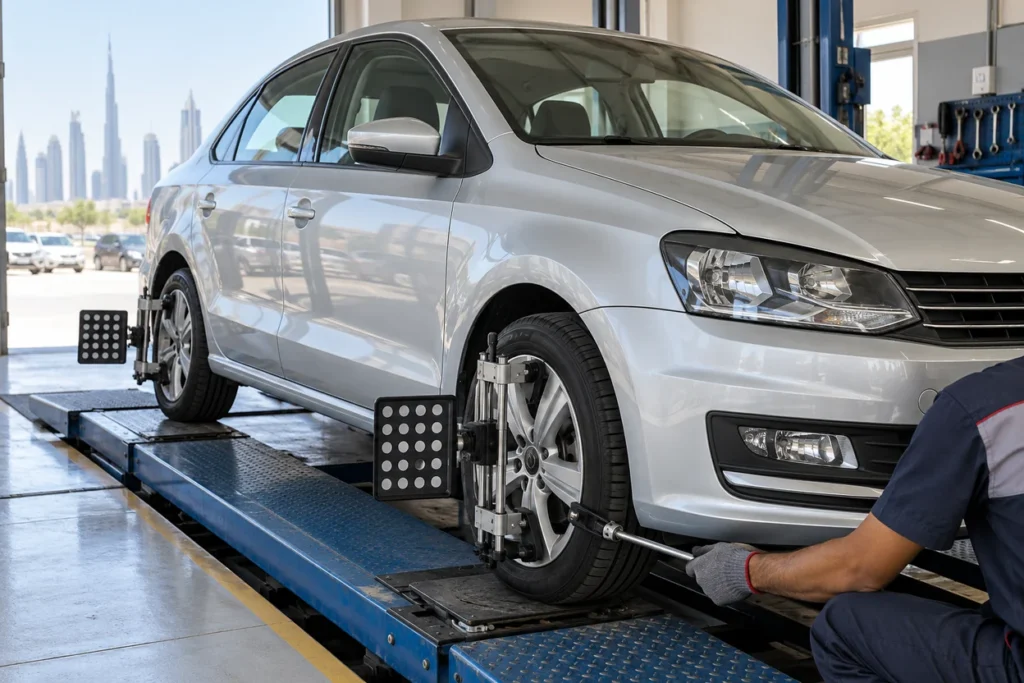
Align
Measure and adjust the wheel angles to VW specification.
Stop somewhere safe if a tyre bulges, loses pressure quickly or causes severe vibration. Fit the spare if safe, or arrange assistance rather than driving on a suspect tyre.
How does Dubai heat affect tyre wear?
Hot roads and high temperatures raise tyre pressure and soften the rubber, so wear patterns develop faster here. Pressure set on a hot afternoon can be too low by the next morning, and the reverse.
- 1Hot asphalt
Rubber runs hotter and wears faster.
- 2Pressure swings
Heat raises pressure, cool mornings lower it.
- 3Wrong setting
Pressure set hot leaves tyres underinflated when cold.
- 4Uneven wear
Edges or centre wear faster than the rest.
Check pressures cold, once a month and before long trips. A pressure warning that keeps returning may need our TPMS sensor service. Balancing problems also show up faster on smooth highways, so get wheels balanced when tyres are fitted. Our suspension repair page covers worn parts that cause cupping.
What does fixing uneven tyre wear cost in Dubai?
The total depends on what the inspection finds. These guide ranges come from our service pages. They are separate jobs, not one bill added together.
| Work | Guide range | When it is needed |
|---|---|---|
| Front wheel alignment | AED 150 to 280 | Front edge or feathered wear, pull |
| Four wheel alignment | AED 250 to 450 | Wear on both axles, rear geometry |
| Tyre replacement, per tyre | AED 500 to 2,500 | Below limit, damaged or aged |
Indicative ranges. Tyre size, brand and construction change the tyre price. Balancing and suspension repairs are quoted separately.
Find out if your tyres can stay
Our Al Quoz 4 workshop checks tread, damage and age, finds the cause of uneven wear and explains whether you need new tyres, alignment or a repair, with a written quote before work.
Tyre wear mistakes we see in Dubai
The worn inner edge is often the part below the limit.
The same fault wears the new set in the same way.
Moving a worn tyre to another corner does not make it safe.
Hot readings are high, so tyres end up underinflated.
An old tyre can look fine and still be unsafe in heat.
Alignment will not hold if joints or bushes are worn.
Quick answers about uneven tyre wear
Does uneven wear mean new tyres? Only if the tread is below 1.6 mm anywhere, or the tyre is damaged or too old.
What causes inner edge wear? Usually camber or toe out of specification, or worn suspension parts.
Will alignment fix worn tyres? No. It stops new uneven wear but cannot restore lost tread.
How old can a tyre be in Dubai? Tyres more than five years past manufacture are commonly treated as due for replacement.
Should I rotate unevenly worn tyres? Only if they are still safe, and after the cause has been fixed.
Key tyre wear terms explained
These terms come up when a technician explains tyre wear and alignment.
- Tread depth
- The depth of the grooves in the tyre. The UAE minimum is 1.6 mm across the full width.
- Camber
- The inward or outward tilt of the wheel. Too much wears one edge of the tyre.
- Toe
- Whether the front of the wheels point in or out. Incorrect toe causes feathered wear.
- Feathering
- Tread ribs that feel smooth one way and sharp the other, usually from toe errors.
- Cupping
- Scalloped dips around the tread, often from worn dampers or imbalance.
- Date code
- Four digits on the sidewall showing the week and year the tyre was made.
What we check before recommending new tyres
Our technicians follow the same steps before suggesting any tyre is replaced, so you only pay for tyres that need changing.
A reason for every tyre
The cause comes before the tyre.
-
We measure tread depth at the inner edge, centre and outer edge of every tyre, not just one point.
-
We check the sidewalls and tread for bulges, cuts, cracks and repairs, and read the date code.
-
We check pressures cold and look for slow leaks at valves and rims.
-
We check suspension joints, bushes, dampers and wheel bearings for wear that would ruin new tyres.
-
We explain which tyres can stay, which need replacing and whether alignment or balancing is needed.
What to send before your visit
A few photos and details let us tell you whether your tyres can stay before you come in.
- Model and year
- A photo of the tyre size marking
- A photo of the worn tread edge
- Which tyres show the wear
- Any pull or vibration
- Any recent kerb strike
- When tyres were last fitted
- Whether a warning light is on
Send them on WhatsApp to 056 464 6081 and we will reply with what we recommend.
Questions about uneven VW tyre wear
Do I need new tyres if they are wearing unevenly?
Not always. If the tread is above the legal limit across the full width and the tyre has no damage, it can often stay while the cause is fixed. It needs replacing when any part of the tread is below 1.6 mm, when cords show, or when there is a bulge, deep cut or cracking.
What is the legal tread depth in the UAE?
UAE traffic rules set a minimum tread depth of 1.6 mm across the full width of the tread. With uneven wear, one edge can reach this limit while the centre still looks good, so the lowest point is what counts. Rules can change, so check current RTA guidance if you are unsure.
Will a wheel alignment fix uneven tyre wear?
Alignment stops new uneven wear caused by incorrect wheel angles, but it cannot restore tread that has already worn away. If the tyre is still safe, alignment protects what is left. If worn suspension parts caused the problem, they must be repaired first or the alignment will not hold.
Why are my front tyres wearing on the inside edge?
Inner edge wear on the front tyres is usually caused by camber or toe out of specification, often after a kerb strike or pothole, or from worn bushes or joints. Lowered cars can also show it. A wheel alignment check with a suspension inspection finds the cause.
Can tyre rotation fix uneven wear?
Rotation can help mild, even wear spread across all four tyres, where the vehicle and tyre type allow it. It does not fix the cause and cannot make a tyre that is below the limit or damaged safe again. Directional tyres and different front and rear sizes limit how tyres can be rotated.
How old can a tyre be in Dubai?
Dubai guidance and vehicle testing commonly treat tyres more than five years past their manufacture date as due for replacement, even if the tread looks fine. Heat ages rubber faster. The four digit date code on the sidewall shows the week and year it was made.
Do I need to replace all four tyres on a 4MOTION VW?
Not automatically. Some 4MOTION models need the tyres to stay close in size and tread depth to protect the drivetrain. The remaining tyres are measured against the model requirements before deciding whether one, two or four need replacing. Your owner manual lists the limits for your model.
Why do my tyres wear faster in summer?
Hot roads raise tyre temperature and soften the rubber, so tread wears faster. Heat also raises pressure while driving, and pressure set when hot leaves tyres underinflated once they cool, which wears the edges. Checking pressures cold once a month helps.
What does cupping on a tyre mean?
Cupping shows as scalloped dips around the tread and often comes with noise or vibration. It usually points to worn shock absorbers, wheel imbalance or worn suspension parts rather than alignment alone. The cause is checked before new tyres are fitted.
Get your tyres checked in Al Quoz 4
Volkswagen Repair Dubai is an independent VW workshop in Al Quoz 4, open Monday to Saturday, 9am to 7pm. Send a photo of the tread and the tyre size, and we will tell you whether they can stay.
See tyre options and prices on our Volkswagen tyre replacement page.
How this guide was written
Written by the Volkswagen Repair Dubai workshop team in Al Quoz 4 and reviewed by our technical team in October 2026. It is based on the diagnosis steps we follow on Volkswagen cars in Dubai, together with Volkswagen owner information and the technical sources listed below.
Prices are the indicative guide ranges published on our own service pages. They are planning figures, not fixed quotes, and the final price always follows an inspection of your car. We update this guide when our service pages or the manufacturer guidance changes.
Technical references
- Gulf News summary of RTA tyre guidance, covering the 1.6 mm tread limit and tyre age.
- CarSwitch UAE summer tyre safety guide, explaining tread depth law and heat effects.