• Al Quoz 4, Dubai
  • Monday to Saturday, 9am to 7pm

Volkswagen Sensor Replacement in Dubai

Long cranking, hot stalling, ABS warnings or a tyre-pressure fault? Our independent VW workshop in Al Quoz 4 tests the sensor, wiring and related components before recommending a replacement.

Cam/crank replacement examples: AED 350–1,200

Selected Jetta camshaft and Caddy crankshaft jobs. Your sensor, access and required testing determine the quote; wheel-speed and TPMS work have separate guides below.

  • VW-specific diagnostics
  • Written quote before repair
  • Genuine or OEM options explained
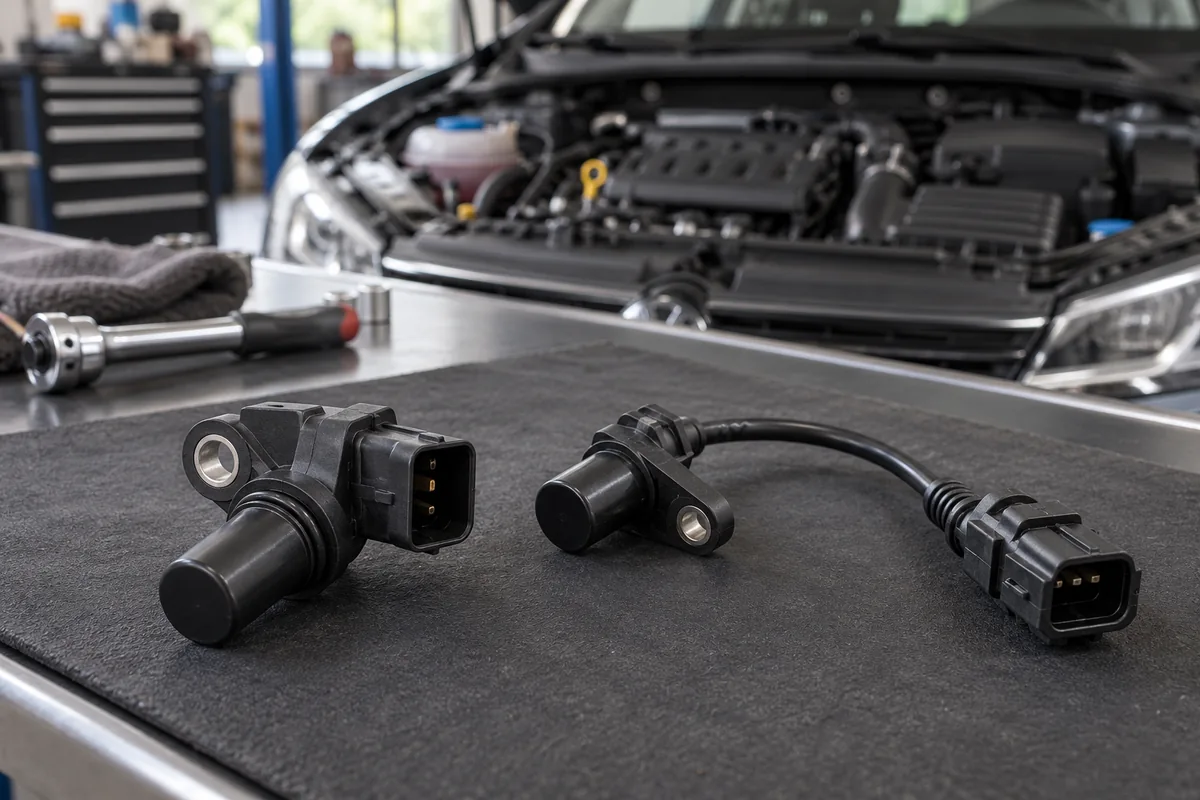
Illustration of two generic engine-position sensor designs on a workshop bench
Illustrative components; the correct part depends on your engine.

Budget for the confirmed fault

VW sensor replacement costs

There is no single price for every sensor. These guides separate engine-position sensors, ABS wheel-speed sensors and direct tyre-pressure sensors.

Camshaft position sensorSelected Jetta replacement, fitted and tested.AED 350–800
Crankshaft position sensorSelected Caddy replacement, parts, labour and testing.AED 600–1,200
Wheel-speed sensor, eachStandard compatible sensor and fitting, when confirmed faulty.AED 400–800
Direct TPMS sensor, per wheelMatch the fitted system, valve and required setup first.Vehicle-specific quote
Pay for the right repair

A warning or fault code identifies where to investigate. A damaged wire, poor supply, timing fault or wheel-bearing encoder may need repair even when the code names a sensor.

Engine position signals

Camshaft and crankshaft checks

The engine computer compares these signals to control injection and ignition. Losing a signal and finding incorrect mechanical timing are different faults.

Camshaft position

Identify cylinder phase

What it reports
Camshaft position, used with the crankshaft signal to identify the engine’s cycle.
What we check
Supply, earth, connectors and signal quality, with cam/crank correlation and timing or adjuster checks where indicated.
Replacement decision
Fit an engine-matched sensor when the circuit and evidence support failure. A P0016 correlation code can involve mechanical timing or an adjuster instead.
Crankshaft position

Track engine speed and position

What it reports
Crankshaft speed and position needed by the engine computer for engine operation.
What we check
Cranking speed/live data, wiring and signal quality. Check the trigger wheel and reproduce hot or intermittent loss safely where possible.
Replacement decision
A missing signal needs circuit and mechanical checks. Starting faults can also involve battery, fuel, ignition or start permission.
Signal testing suits the design

Hall-effect and inductive sensors require appropriate methods. No universal pin count, resistance value or sensor location applies across VW engines.

Engine cutting out?

Stop safely and arrange assessment rather than continue driving a vehicle that stalls unpredictably. Tell us if the fault appears only when hot.

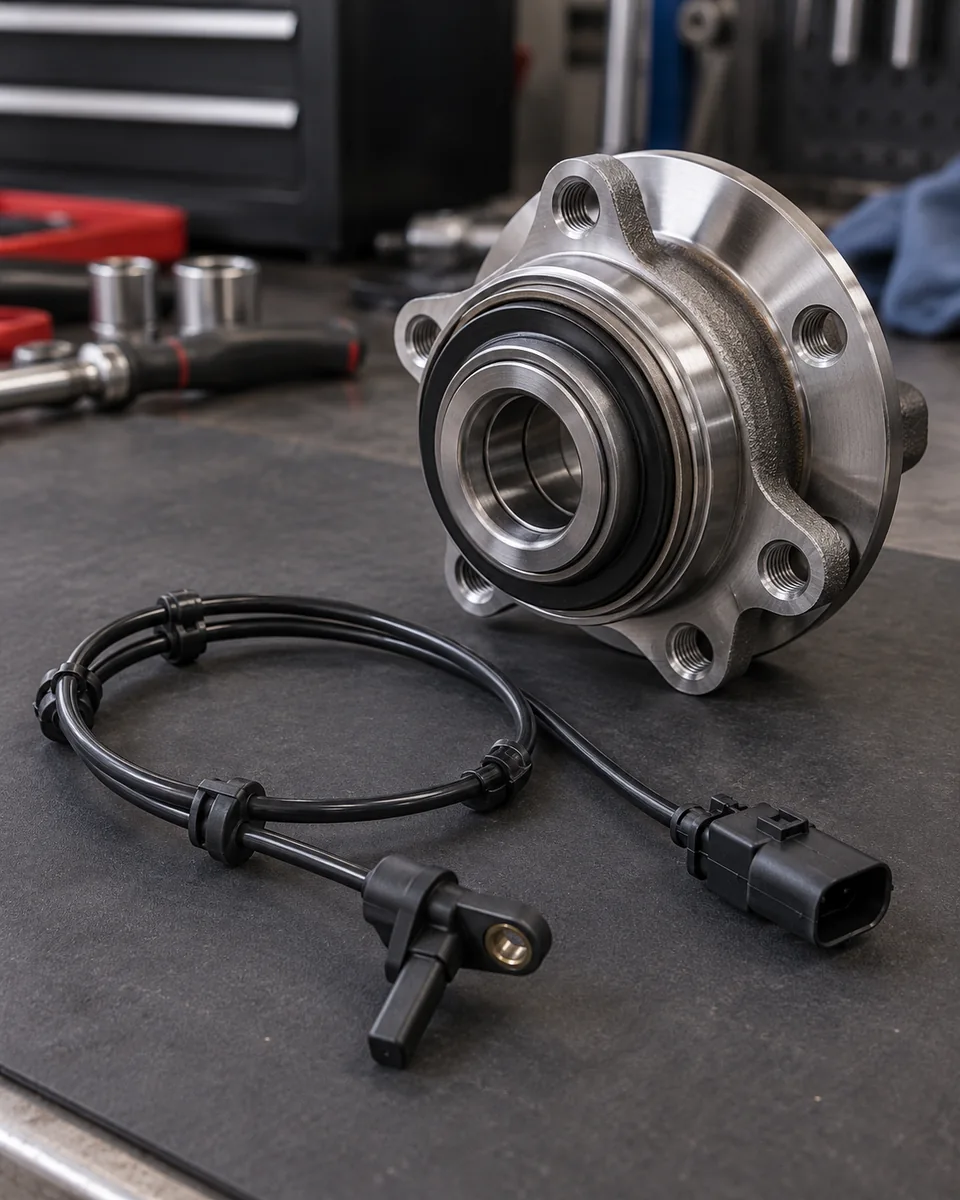
Illustration of a wheel-speed sensor and a separate wheel-hub bearing assembly on a bench
Illustrative parts; sensor and encoder arrangements vary by axle.

ABS and stability information

Wheel-speed sensor replacement

A wheel-speed sensor reports rotation to the ABS controller. The sensor, its wiring and the encoder it reads must work together.

  1. Compare all wheel speeds

    Scan the relevant brake/stability system and compare live readings under suitable conditions. One missing or erratic reading helps narrow the investigation.

  2. Check the complete signal path

    Inspect the connector, cable routing, mounting point and fitted tone ring or magnetic encoder. Bearing play, corrosion or encoder damage can imitate sensor failure.

  3. Fit and verify the confirmed repair

    Replace the correct corner-specific part, secure its cable and verify the signal. A new sensor cannot repair a damaged encoder or broken wiring.

Multiple warning lights do not prove a failed ABS module

A shared wheel-speed fault can affect several functions. If evidence points to the controller or hydraulic assembly, see our ABS module diagnosis and repair.

Abnormal braking or a red brake warning: stop safely and follow the vehicle’s instructions. Do not treat every brake warning as a routine sensor job.

Tyre-pressure monitoring

Does your VW have sensors in the wheels?

Identify the fitted system before ordering parts. A tyre-pressure warning does not mean every VW needs a new valve-mounted sensor.

Direct monitoring

Pressure measured in the wheel

A wheel-mounted sensor transmits pressure information. Check its response, identity and battery status where available, plus compatible protocol/frequency and valve condition, before choosing a replacement.

Possible work: sensor, valve service items and relearn.
Indirect monitoring

Pressure loss inferred from wheel data

The system uses wheel-speed information rather than a pressure transmitter in each tyre. Check tyre condition, inflation, wheel-speed faults and the specified reset or initialisation procedure.

No valve-mounted pressure sensor to replace.

Pressure first, setup second

  1. Check actual tyre pressures and investigate leaks or damage.
  2. Identify direct versus indirect monitoring and the exact fault.
  3. Complete the required repair and vehicle-specific setup, then verify operation.
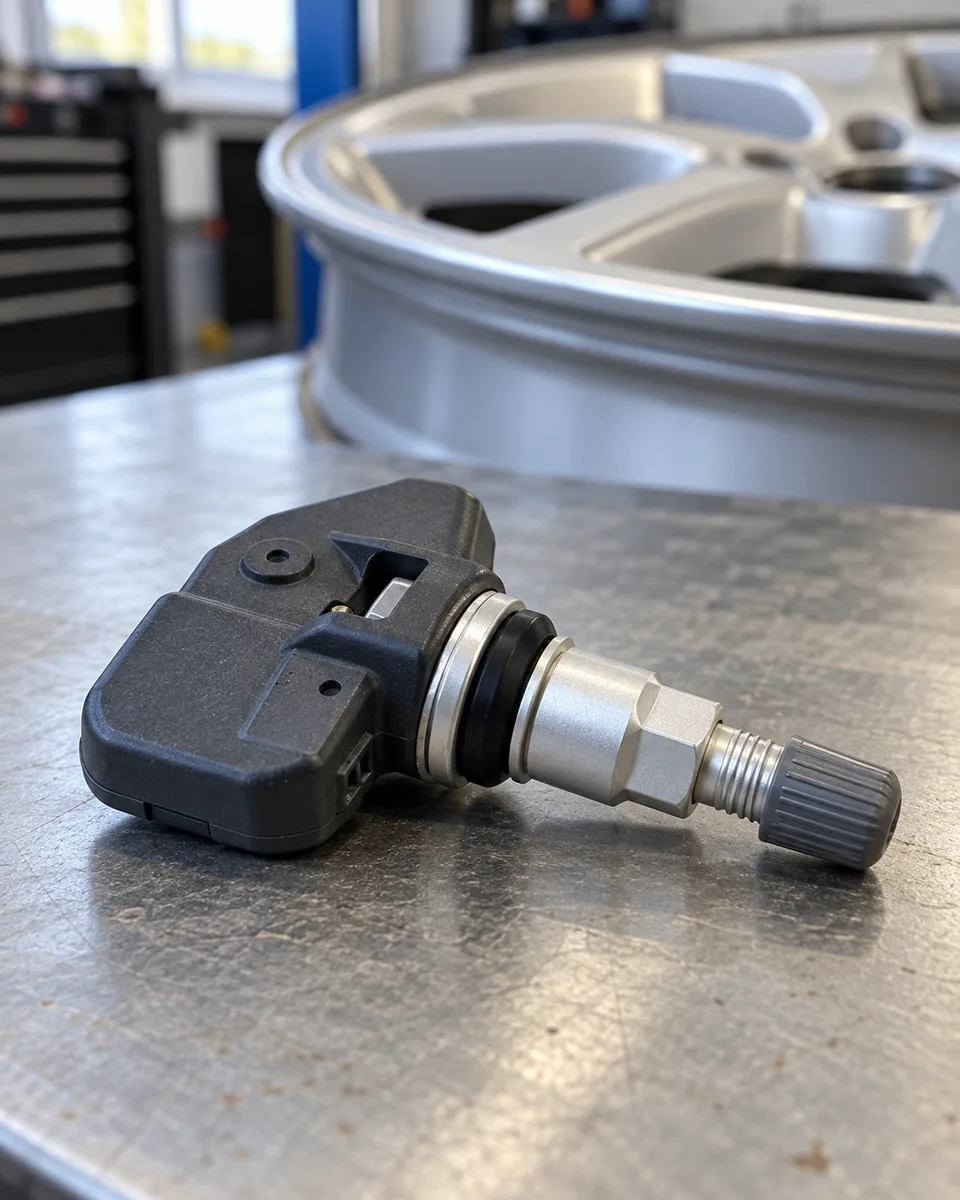
Illustration of a direct tyre-pressure sensor attached to a metal valve stem on a workbench
Direct-TPMS component illustration. Indirect systems do not use this type of sensor.
A reset does not fix a leak

Use the vehicle’s recommended cold pressures, not the tyre sidewall maximum. Follow its warning instructions and store or initialise pressures only after correcting the underlying problem. For damaged tyres or replacement, see our Volkswagen tyre service.

Parts and setup

Match the sensor to the vehicle

VIN, engine code, build specification and the affected position identify the part. Imported vehicles and different wheel packages can have different equipment.

Option A

Genuine Volkswagen

Volkswagen-branded parts matched to the application and identified in the quote.

Option B

Suitable OEM option

Manufacturer and specification stated so you can compare a suitable alternative clearly.

Engine sensors

Check the specified part, mounting and seals. Perform any required basic setting or learning procedure; not every sensor needs coding.

Wheel-speed sensors

Match the axle/corner, connector and encoder system. Verify live speeds after fitting and carry out required procedures for the vehicle.

Direct TPMS sensors

Programming a configurable sensor and teaching its identity to the vehicle are separate tasks. Required relearning may be automatic or tool-assisted, depending on the system.

Replace the confirmed failed item rather than a complete set by default. Sensor replacement follows condition and diagnosis, not one blanket mileage interval for every VW.

Assessment to handover

Get evidence before authorising parts

Send the model, year, mileage, exact warning and any fault-code report. Tell us whether the problem follows heat, starting, tyre work or a recent repair.

Make your enquiry useful

  • Photo of the warning or written code
  • When the fault appears and what still works
  • Recent timing, bearing, tyre or wiring work
Call 056 464 6081
  1. 01

    Identify and test

    Read the appropriate control systems and relevant live data. Test the supply, connection and signal path needed to confirm the fault.

  2. 02

    Agree the repair

    Explain sensor, wiring or mechanical findings and provide the written quote. Get your approval before adding work discovered during access or removal.

  3. 03

    Fit, set up and verify

    Complete the agreed repair, any required learning and appropriate functional checks. Recheck relevant faults and confirm the symptom under suitable conditions.

Repair timing

Agreed once access, parts and any additional findings are understood.

Repair terms

Applicable warranty stated with the quote or invoice. Old parts available on request.

Before you book

VW sensor replacement questions

Practical answers about testing, parts and setup.

How much does Volkswagen sensor replacement cost in Dubai?+

Selected Jetta camshaft sensor jobs are AED 350–800 and Caddy crankshaft examples are AED 600–1,200. A standard confirmed wheel-speed sensor and fitting guide is AED 400–800 each. Direct TPMS work is quoted for the fitted system. Diagnosis, extras, setup and VAT treatment are identified in your written quote.

Does a sensor fault code prove the sensor needs replacing?+

No. Wiring, supply, connectors, mechanical timing or the component being measured can create related faults. For example, a P0016 cam/crank correlation fault can involve timing or an adjuster. The code guides testing; it is not an instruction to order a sensor.

Can a crankshaft sensor cause hot stalling or a no-start?+

It can, but those symptoms are not exclusive to the sensor. Cranking/live data, signal and circuit checks help distinguish sensor failure from wiring, trigger-wheel, battery, fuel or other starting faults. Do not continue driving a car that stalls unpredictably.

Will a wheel-speed sensor fix all my ABS and ESC warnings?+

Only when its failure is confirmed as the cause. Check the wiring, mounting and tone ring or magnetic encoder, including bearing condition. Multiple warnings can share one bad signal, but controller, hydraulic or other brake faults need their own assessment.

Does every Volkswagen use valve-mounted TPMS sensors?+

No. Direct monitoring uses pressure sensors in the wheel assemblies. Indirect monitoring uses wheel-speed information and does not have a pressure transmitter in each tyre. The actual system must be identified before a valve-mounted sensor is quoted or ordered.

Do replacement sensors always need coding or calibration?+

No universal procedure applies. Some engine sensors need only the specified fitting and verification; others require a learning or basic-setting procedure. Direct TPMS may require compatible programming and relearning. Indirect tyre-pressure initialisation is a different operation and follows correction of pressures and faults.

Must all four tyre-pressure sensors be replaced together?+

Not automatically. On a direct system, test the installed sensors and identify the failed item, compatibility and valve condition. Any recommendation for additional replacements should be explained and priced. An indirect system has no valve-mounted pressure sensors to replace as a set.

How long does the job take, and is there a warranty?+

Timing depends on diagnosis, access, parts availability and any damaged wiring, mounting or related components. The workshop agrees the schedule after assessment. Applicable warranty terms are stated on the quotation or invoice rather than assumed to be identical for every sensor repair.

Volkswagen Repair Dubai

Tell us the warning. We’ll help identify the next check.

Al Quoz 4, Dubai · Monday–Saturday, 09:00–19:00.

Send your model, year and symptoms or an existing diagnostic report.