In this guide
If you smell exhaust inside your VW, open the windows, switch the ventilation to fresh air and stop somewhere safe as soon as you can. If anyone feels a headache, dizziness, nausea or drowsiness, get everyone out of the car and seek medical help. Exhaust gas contains carbon monoxide, which has no smell, so the fumes you notice may not be the only danger. Do not keep driving the car until the leak is found.
Written by the Volkswagen Repair Dubai workshop team in Al Quoz 4. Reviewed by the technical team, updated October 2026.
Key takeaways
- Exhaust smell in the cabin is a safety issue first and a repair second. Ventilate and stop.
- Headache, dizziness or drowsiness with the smell means get out of the car and seek medical help.
- Never run the engine in an enclosed space, such as a home garage, even with the door open.
- Common causes are a leak near the engine, a damaged pipe or joint, a failed seal or a smell from elsewhere such as oil or coolant.
- A burning oil or sweet coolant smell is a different fault and needs a different repair.
- A smoke test and inspection on a lift find the source before any part is replaced.
What should you do if you smell exhaust in your VW?
Act on the smell straight away. These steps put the people in the car first.
-
Open the windows
Lower the windows to bring in fresh air and dilute any fumes in the cabin.
-
Switch to fresh air
Turn off recirculation and set the fan to bring in outside air.
-
Stop safely
Pull over when it is safe, park in the open and switch the engine off.
-
Check how everyone feels
Headache, dizziness, weakness, nausea or confusion are warning signs. Get out and seek medical help.
-
Arrange an inspection
Do not keep driving with the smell. Call for advice or recovery before using the car again.
The US Centers for Disease Control and Prevention describes carbon monoxide as an odourless, colourless gas and warns never to run a vehicle in a garage attached to a home, even with the door open. If you smell exhaust, you may also be breathing gas you cannot smell.
What does the smell in your VW tell you?
Not every bad smell is exhaust. The type of smell narrows down where it comes from and how urgent it is.
| Smell | What it often points to | How urgent |
|---|---|---|
| Raw exhaust fumes | Exhaust leak near the engine or under the car | Stop and inspect before driving on |
| Burning oil | Oil leaking onto the hot exhaust or turbo | Book soon, stop if smoke appears |
| Sweet, syrupy | Coolant leak, possibly the heater core | Book soon, watch the temperature |
| Rotten eggs | Catalytic converter or rich running | Book an inspection |
| Raw fuel | Fuel leak or a fault in the evaporative system | Stop, no smoking, arrange help |
| Musty or damp | AC evaporator or cabin filter | Not dangerous, book a service |
A sweet smell with a rising temperature gauge is a cooling problem, explained in our guide to VW engine overheating. A musty smell when the AC starts is usually the evaporator or filter.
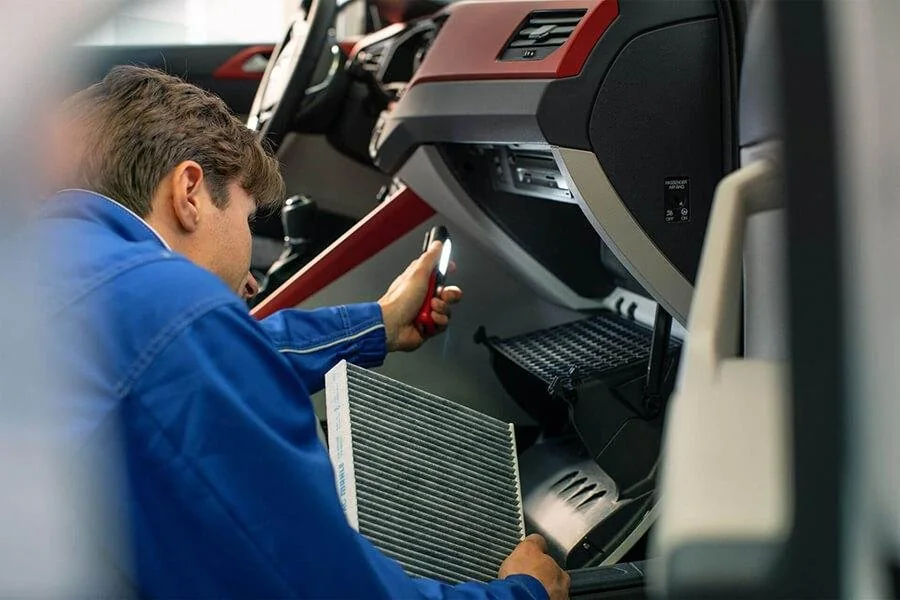
Why does exhaust get into a VW cabin?
Exhaust gas should leave the car only through the tailpipe. When it escapes earlier, it can be drawn into the cabin through the ventilation intake, door seals or gaps in the floor.
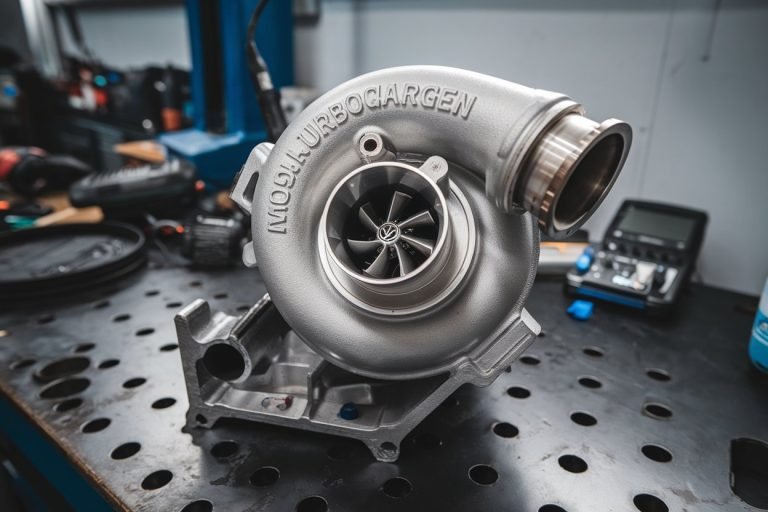
- Exhaust manifold or turbo joint leaks near the engine sit close to the ventilation intake.
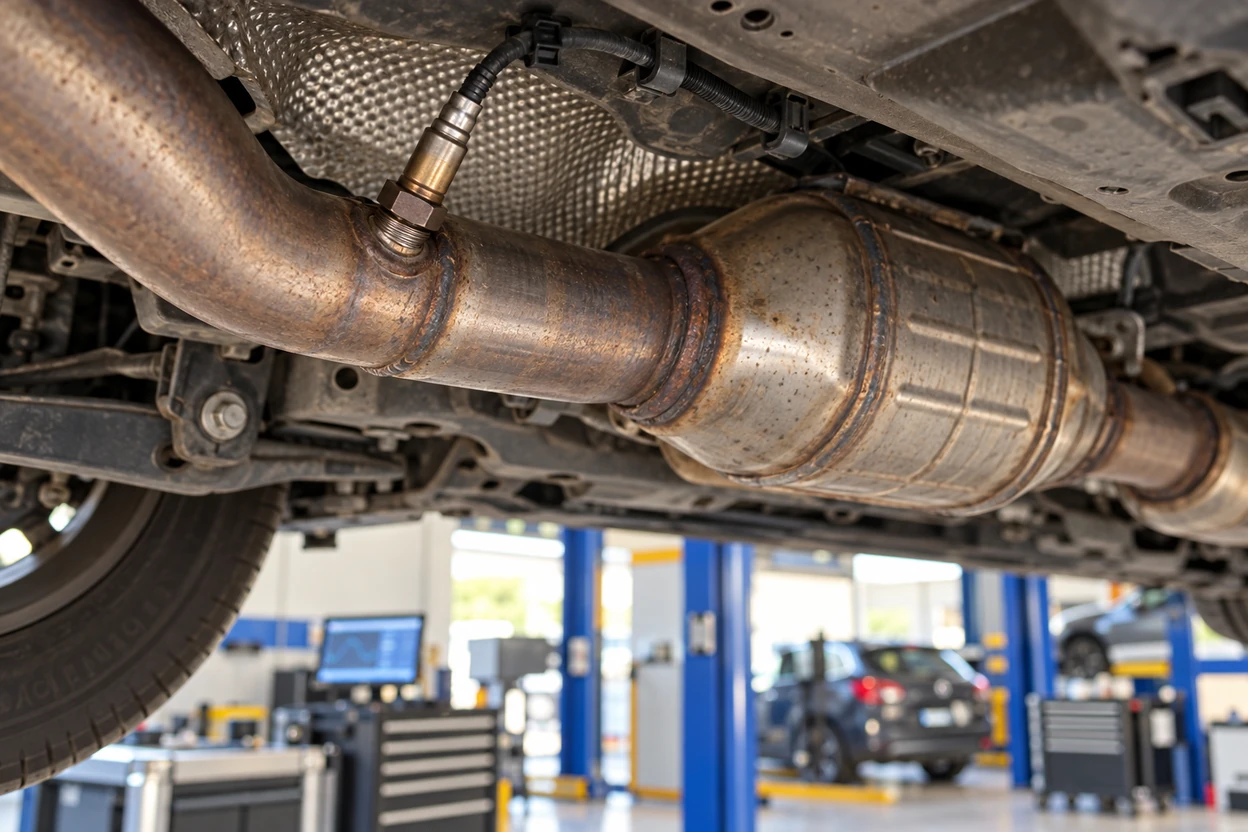
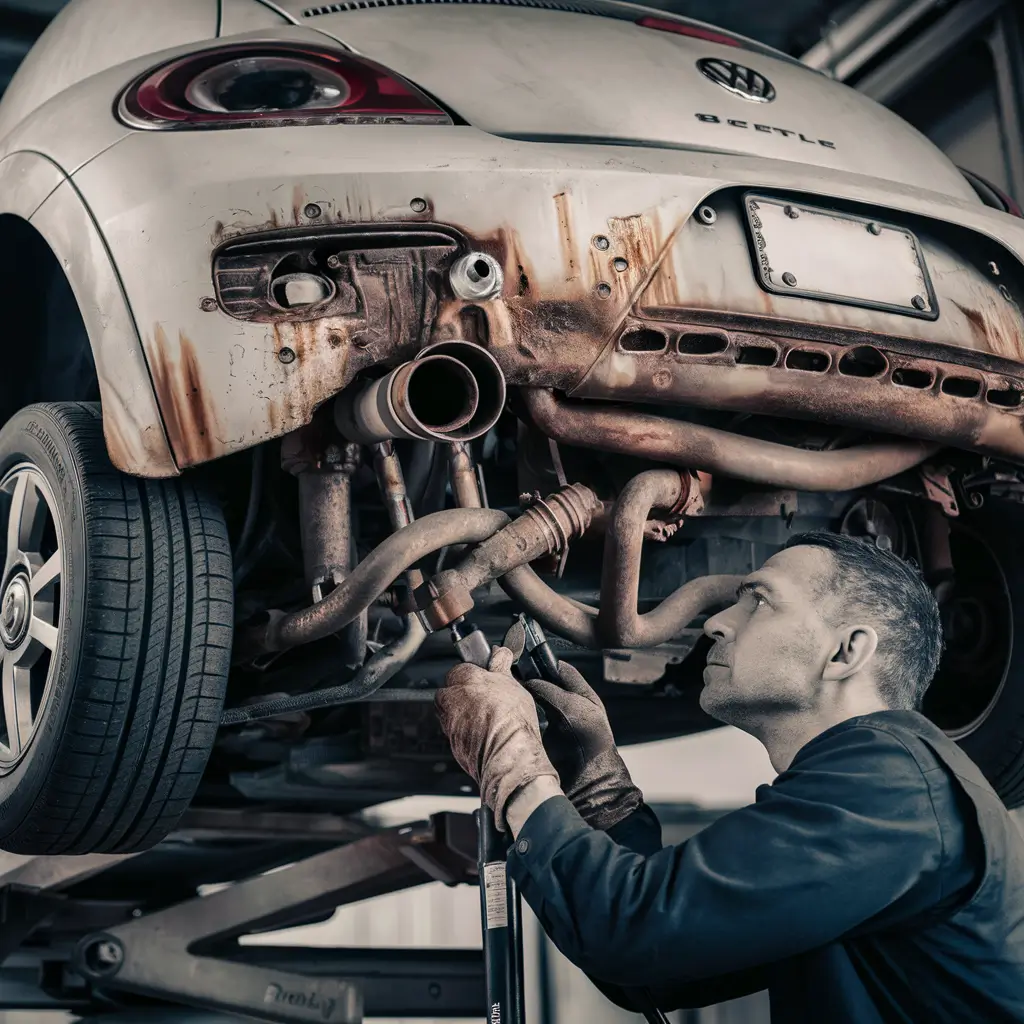
- Cracked pipes or flexible joints under the car let gas escape below the cabin floor.
- Worn hangers and clamps let the system move and open joints.
- Damaged door or boot seals let fumes from the rear be drawn in, especially at low speed.
- Driving with the boot open can pull exhaust gas into an SUV or estate.
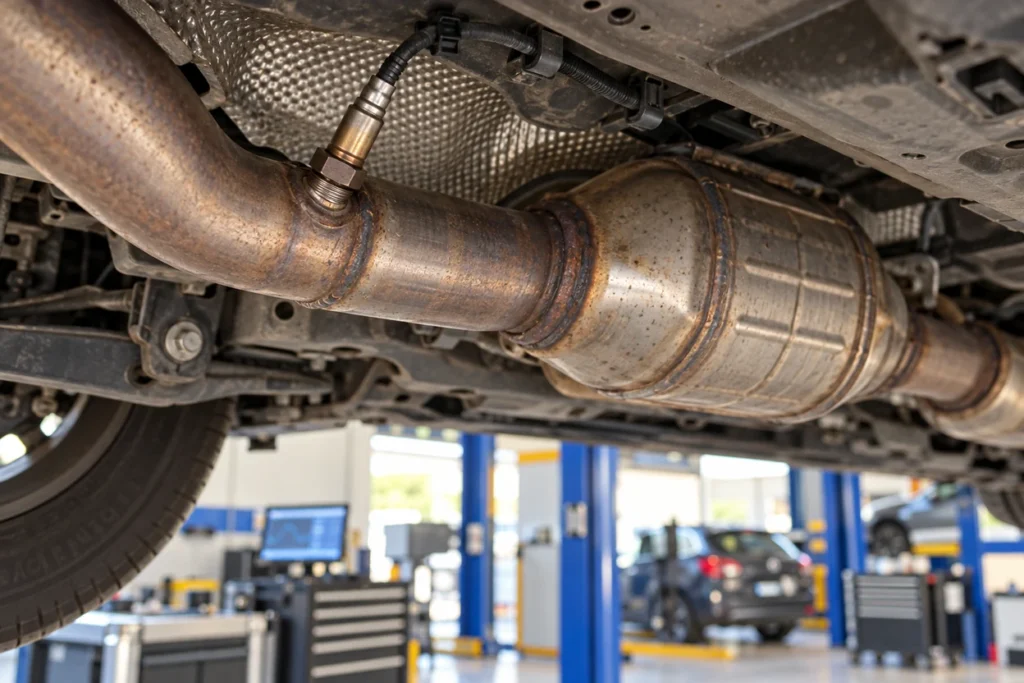
Dubai conditions add to this. Heat cycles stress joints and gaskets, speed humps and kerbs can knock the system, and sand works into worn hangers.
Smelling fumes in the cabin? Ventilate first, then tell us your model and what you smell, and we will advise the safest next step.
When is the smell most dangerous?
The same leak can be more or less risky depending on how and where the car is used. These situations raise the risk.
Slow traffic, windows shut
Gas has more time to build up when the car moves slowly with the cabin sealed and recirculation on.
Idling while parked
Sitting with the engine running and the AC on, especially in a covered car park, lets fumes collect.
Enclosed space
Running the engine in a garage or closed space can be fatal. Never do it, even briefly.
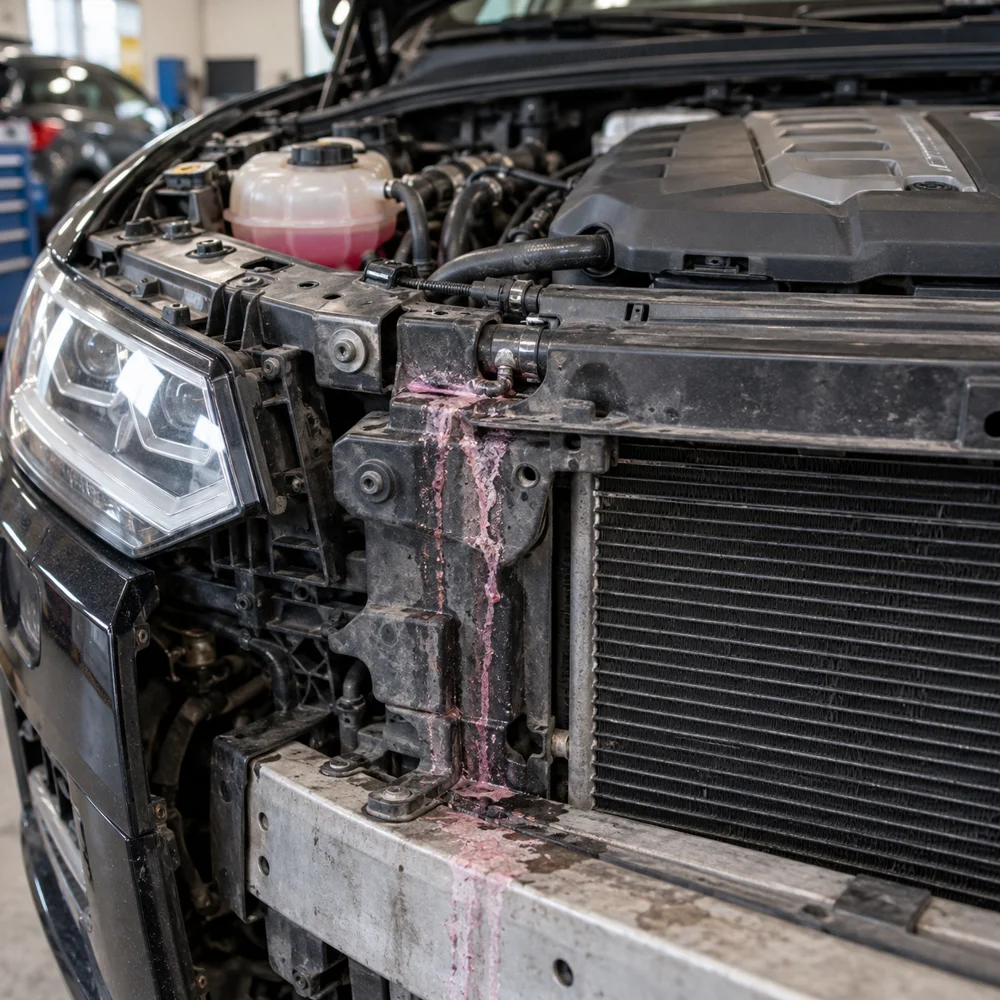
Could the smell be oil or coolant instead?
Many cabin smells are blamed on the exhaust when the cause is a leak landing on hot parts. These are the common lookalikes.
- Oil on the exhaust
- A leaking valve cover or turbo line drips oil onto hot metal. It smells of burning oil and may smoke from the bonnet.
- Coolant leak
- A sweet smell, sometimes with misting windows, can come from a leaking heater core or hose.
- Crankcase gases
- A failed PCV system can push oily fumes into the intake area and produce a smell near the front.
- Diesel EGR faults
- On diesels, a leaking EGR system can release soot and fumes into the engine bay.
Oil leaks are covered on our oil leak repair page, and coolant leaks on our coolant leak repair page.

How is an exhaust leak found?
Leaks are not always visible, and some only open up when the system is hot. A proper diagnosis follows a set order.
- 1Confirm the smell
Note when it appears, at idle, in traffic or at speed, and with the AC on or off.
- 2Visual check
Look for soot marks, cracks, broken hangers and loose joints on a lift.
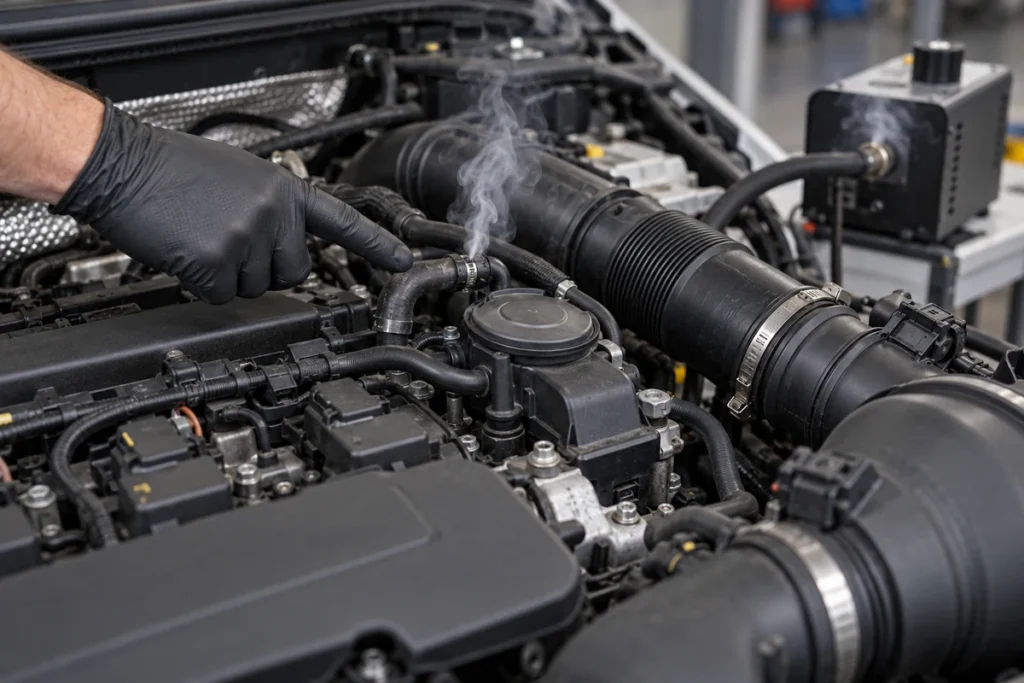
- 3Smoke test
Smoke shows leaks at joints, gaskets and seals that are hard to see.
- 4Data and seals
Read engine data, check oxygen sensor readings, and inspect body and door seals.
What else can an exhaust leak affect?
Beyond the safety risk, a leak can cause other problems that are worth fixing at the same time.
Engine warnings
Air drawn in at a leak can upset oxygen sensor readings and turn on the engine light.
Heat damage
Hot gas escaping near wiring, hoses or the floor can damage nearby parts.
Noise
Leaks often tick on cold starts or roar under load, getting louder over time.
Failed inspection
A leaking exhaust or excess emissions can fail vehicle testing.
Sensor faults caused by leaks are covered on our oxygen sensor replacement page.
What does it cost to fix an exhaust smell?
The cost depends entirely on what the inspection finds, so we quote after diagnosis rather than from a fixed list. These are the factors that decide it.
Diagnose, then quote
A smoke test and inspection confirm the source before any price is given.
Seals and fixings
A gasket, clamp, hanger or door seal is usually a smaller repair.
Pipes and parts
A cracked manifold, flexible joint or catalytic converter costs more.
Other leaks
Oil or coolant leaks found during the check are quoted on their own pages.
Find the source of the fumes
Our Al Quoz 4 workshop inspects the exhaust, seals and engine bay, smoke tests for leaks and explains what was found, with a written quote before any repair.
If the car should not be driven, our roadside assistance service can recover it to the workshop.
Exhaust smell mistakes we see
Air fresheners hide the warning, not the gas.
Recirculating cabin air can trap fumes inside.
Running the engine in an enclosed space can be fatal.
An open tailgate can pull exhaust into the cabin.
Headache or dizziness with the smell needs medical help.
Oil and coolant smells are often mistaken for exhaust.
Quick answers about exhaust smell in a VW
Is it safe to drive with an exhaust smell inside? No. Ventilate, stop and get the leak found before driving on.
Can you smell carbon monoxide? No. It has no smell, which is why any exhaust smell is a warning.
Why does it smell only at idle? Gas builds up more easily when the car is not moving and airflow is low.
Could it be oil burning instead? Yes. Oil dripping on the hot exhaust is a common cause of a burning smell.
What symptoms should worry me? Headache, dizziness, nausea, weakness or confusion. Get out and seek help.
Key exhaust terms explained
These are the parts a technician will mention when explaining an exhaust or fume problem.
- Exhaust manifold
- The part bolted to the engine that collects exhaust gas from each cylinder.
- Gasket
- A seal between exhaust parts. A failed gasket often ticks and leaks when cold.
- Flexible joint
- A braided section that lets the exhaust move with the engine. It can crack with age.
- Catalytic converter
- Cleans exhaust gas. A failing unit can smell of rotten eggs.
- Carbon monoxide
- A poisonous gas in exhaust that has no colour or smell.
- Smoke test
- A test that fills a system with visible smoke to show where it leaks.
What we check first for a cabin fume complaint
Every fume complaint in our Al Quoz 4 workshop follows the same order, so the real source is found.
Source before parts
The smell is a clue, not a diagnosis.
-
We ask what the smell is like and when it appears, because burning oil, coolant and exhaust point to different parts.
-
We inspect the engine bay for oil or coolant on hot parts, and check the exhaust manifold and turbo joints.
-
We lift the car and check every pipe, joint, hanger and clamp for cracks, soot and movement.
-
We smoke test the system to find leaks that are hard to see, and check door, boot and body seals.
-
We explain what was found and quote the repair before any work is done.
What to send before your visit
These details help us understand the smell and decide whether the car should be driven or recovered.
- Model, year and engine
- What the smell is like
- When it appears, idle, traffic or speed
- Whether it is worse with the AC on
- Any engine light or warning
- Any new noise from the exhaust
- Any recent impact under the car
- Whether anyone felt unwell
Send them on WhatsApp to 056 464 6081 and a technician will reply with the safest next step.
Questions about exhaust smell in a VW cabin
Why do I smell exhaust inside my VW?
The usual cause is a leak that lets gas escape before the tailpipe, such as a manifold or turbo joint, a cracked pipe or flexible joint, or worn hangers. Gas can then be drawn in through the ventilation intake or damaged seals. Oil or coolant dripping on hot parts can produce similar smells.
Is an exhaust smell in the car dangerous?
It can be. Exhaust gas contains carbon monoxide, which has no smell and can cause headache, dizziness, nausea and confusion. Open the windows, switch to fresh air and stop safely. If anyone feels unwell, get out of the car and seek medical help, and do not drive on until the leak is found.
Why does my VW smell of exhaust only at idle?
At idle the car is not moving, so less air flows around it and fumes can collect near the ventilation intake. Small leaks near the engine also show more at low speed. Smells that appear only when stopped in traffic still need checking, because that is when fumes build up most easily.
Can a cabin air filter cause an exhaust smell?
A blocked or old cabin filter does not create exhaust fumes, but it can hold odours and make smells linger. It is worth replacing during the repair. If the smell is exhaust, the source is a leak or a seal, and the filter alone will not fix it.
How do I tell burning oil from exhaust?
Burning oil smells sharp and acrid, often with light smoke from under the bonnet after driving. It usually comes from a leak landing on the hot exhaust or turbo. Raw exhaust smells more like a running car tailpipe. A check of the engine bay for oily residue usually tells them apart.
What does a rotten egg smell mean?
A rotten egg smell usually comes from sulphur compounds in the exhaust, often linked to the catalytic converter or the engine running rich. It is not normally a sign of a leak into the cabin, but it does need an inspection, as a failing converter can affect emissions and performance.
Is it safe to sit in a parked VW with the engine running?
Only in an open, well ventilated space, and not for long periods. Never run the engine in a garage or enclosed area, even with the door open. If there is any exhaust leak, gas can collect quickly in a stationary car. If you smell fumes while parked, switch off and get out.
How is an exhaust leak repaired?
It depends on the source. A failed gasket, clamp or hanger is replaced, a cracked pipe or flexible joint is renewed, and damaged seals are replaced. Oil or coolant leaks are fixed at their source. The inspection and smoke test confirm the cause before a repair is quoted.
Can I drive to the workshop with an exhaust smell?
Only if the smell is faint, no one feels unwell and you can drive with the windows open and fresh air on. If the smell is strong, or anyone has a headache or dizziness, do not drive. Arrange recovery and seek medical help if needed.
Get the fumes checked in Al Quoz 4
Volkswagen Repair Dubai is an independent VW workshop in Al Quoz 4, open Monday to Saturday, 9am to 7pm. Tell us your model and what you smell, and we will tell you whether to drive in or arrange recovery.
See engine diagnosis and repair options on our Volkswagen engine repair page.
How this guide was written
Written by the Volkswagen Repair Dubai workshop team in Al Quoz 4 and reviewed by our technical team in October 2026. It is based on the inspection steps we follow for fume and smell complaints on Volkswagen cars in Dubai, together with the public health source listed below.
This guide does not give fixed prices, because the repair depends on what the inspection finds. It is not medical advice. If anyone feels unwell, seek medical help.
Technical references
- US CDC information on carbon monoxide poisoning, explaining that carbon monoxide is odourless, its symptoms and why vehicles must not run in enclosed spaces.