In this guide
VW P2015 means the engine control unit sees an intake manifold runner flap position that does not match what it commanded, so it stores a range or performance fault for bank 1. On 2.0 TFSI, 2.0 TSI EA888 and 2.0 TDI engines the usual cause is a worn or broken flap linkage on the manifold, not the sensor. Most cars can be driven gently to a workshop, but an air leak or limp mode needs a prompt check.
Written by the Volkswagen Repair Dubai workshop team in Al Quoz 4. Reviewed by the technical team, updated October 2026.
Key takeaways
- P2015 is a generic OBD code for an intake manifold runner position sensor or switch reading that is out of range for bank 1.
- On many Volkswagen engines it is a mechanical fault, usually a worn stop tab, broken lever arm or loose linkage on the manifold.
- The 2.0 TSI and 2.0 TFSI EA888 first generation engine and the 2.0 TDI are the engines most often linked to this code.
- The check engine light is often the only symptom, but reduced power, rough idle and limp mode can follow.
- A VW specific scan with live data and an actuator test shows whether the flap moves, the sensor reports it or the linkage is loose.
- Repair choices range from a linkage repair kit to an actuator or a complete intake manifold, and each is quoted after testing.
What does the VW P2015 code mean?
P2015 is a generic powertrain code, so the base definition is the same on every make. It reads as intake manifold runner position sensor or switch circuit range or performance, bank 1. In plain terms, the engine control unit tells the runner flaps to move, then reads a position sensor to confirm where they went. If the reported position is outside the expected window, or it does not change the way the command says it should, the control unit decides the signal is not plausible and stores P2015.
The important word is plausibility. The sensor can be electrically healthy and still report a position that makes no sense, because the flap shaft it measures is no longer connected properly to the arm that moves it. That is why replacing the sensor alone often does not clear the code on a Volkswagen. Bank 1 simply means the side of the engine with cylinder one, and on a four cylinder TSI or TDI engine there is only one bank, so the code always refers to the single intake manifold.
P2015 often sits alongside other engine warnings. If you also see a flashing light or the car feels weak, our guide to the VW EPC light explains how the electronic power control warning relates to engine faults.
How do intake runner flaps work on a VW engine?
Inside the intake manifold, a row of flaps sits in the ports that feed each cylinder. They are mounted on a common shaft, and one lever arm on the end of that shaft is moved by an actuator. A position sensor on the shaft reports the angle back to the engine control unit.
- At low engine speed the flaps partly close to make the air swirl and tumble, which helps the fuel mix and burn cleanly.
- At higher engine speed the flaps open fully so the engine can breathe as much air as possible.
- The actuator moves the lever arm. On the EA888 first generation engine it is vacuum operated, while some engines use an electric motor.
- The position sensor lets the control unit confirm that the flaps really moved to the commanded angle.
- The linkage joins the actuator arm to the flap shaft, and this is the part that most often wears or breaks.
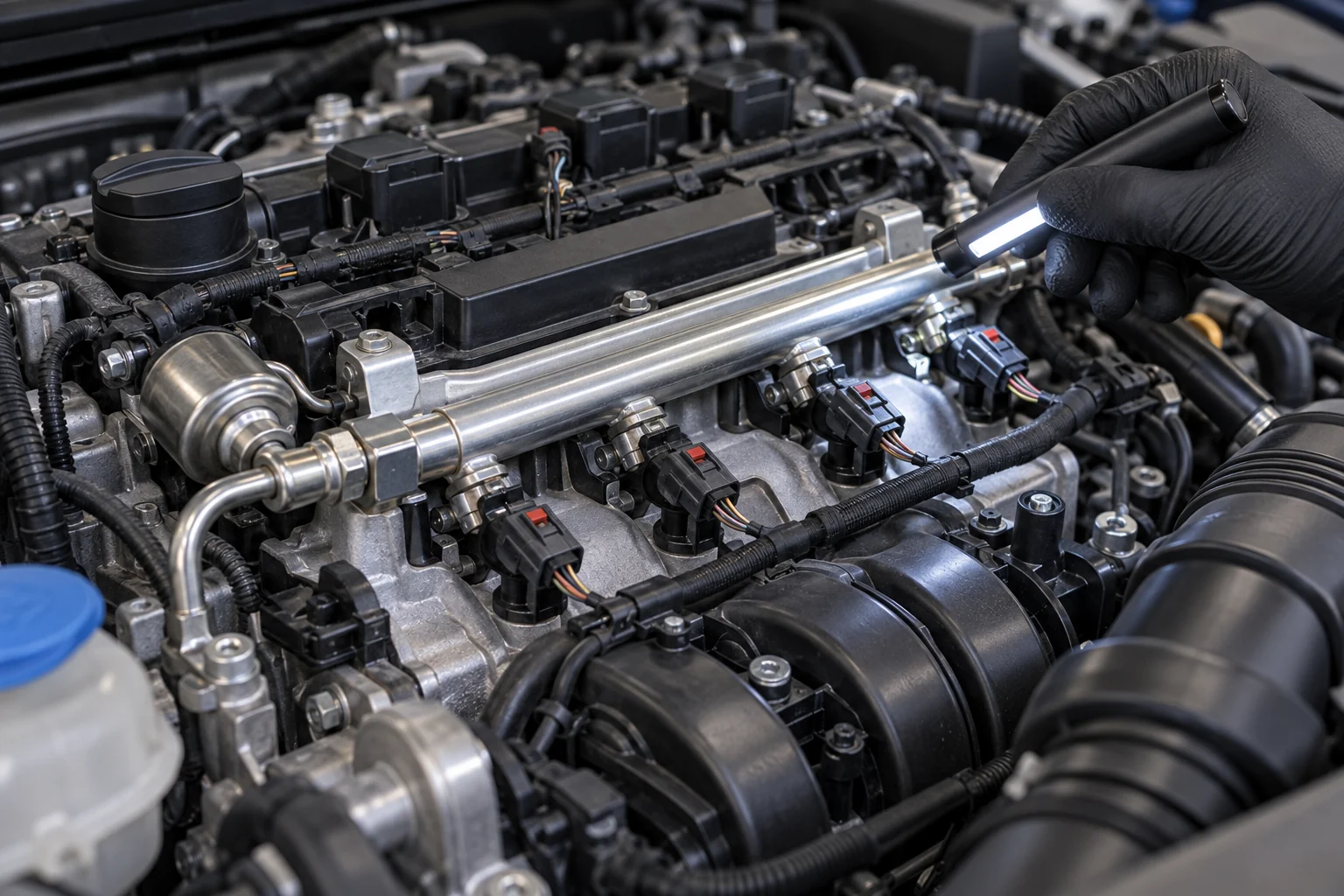
When the linkage loses its grip on the shaft, the actuator still moves but the flaps lag behind, travel too far or do not move at all. The sensor then reports a position that does not match the command, and P2015 is the result.
Which VW engines get the P2015 code?
Any engine with intake runner flaps can store P2015, but on Volkswagen group cars the code is most closely linked with two engine families. The table lists only the fitments confirmed by the sources at the end of this guide.
| Engine | Volkswagen models named in sources | What usually fails |
|---|---|---|
| 2.0 TSI and 2.0 TFSI EA888 first generation | Golf Mk5 and Mk6 GTI, Jetta Mk5 2.0 TFSI, Passat B6 2.0 TFSI, Tiguan Mk1 2.0 TSI, Eos 2.0 TSI | The lever arm on the runner flap shaft breaks at its drive hex and can pop out of the manifold |
| 2.0 TFSI in other group cars | Audi A3, A4, A5, Q3 and TT, Skoda Octavia Mk2 and SEAT Leon Mk2 Cupra with the same engine | The same lever arm and linkage weakness |
| 2.0 TDI | Volkswagen models with the 2.0 TDI diesel, for example the Golf and Jetta | A worn plastic stop tab lets the actuator arm travel too far, or the linkage breaks |
| Later manifold revisions | EA888 manifolds with a revised linkage arm | Less prone to the original lever arm failure, but the flaps can still stick or the sensor can fail |
Engine fitment varies by year and market. We confirm the engine code from the vehicle before any part is ordered.
If your Volkswagen has a different engine and still shows P2015, the same logic applies. The flap system is checked first, then the sensor and wiring.
What are the symptoms of P2015 on a VW?
Many owners only notice the warning lamp. When the flaps are stuck or the linkage has failed completely, the engine can feel different, especially at low engine speed where the flaps are meant to be closed.
Check engine light
The amber engine warning comes on and stays on. Often this is the only sign of the fault.
Reduced power
The engine feels flat or slow to pull, and on some cars the control unit limits power to protect the engine.
Rough idle or hesitation
Uneven idle or a stumble when pulling away, because the air swirl at low speed is no longer controlled.
Higher fuel use
Fuel economy drops because combustion is less efficient at the speeds most Dubai traffic is driven at.
On the EA888 first generation engine, a lever arm that has popped out can also leave an opening in the manifold. That can cause a hissing sound under boost, a lean running fault and a noticeable loss of power, because unmetered air enters the engine.
What causes the P2015 code on a Volkswagen?
The code describes a mismatch, not a single failed part. These are the causes we test for, starting with the most likely.
- Runner flap linkage
- The lever arm breaks at its drive hex, or a plastic stop tab wears so the arm travels too far. This is the most common cause on both TSI and TDI engines.
- Actuator
- A vacuum actuator can leak or a vacuum hose can split, so the arm does not move fully. Electric actuators can fail internally, but this is less common than linkage wear.
- Position sensor
- The sensor that reads the flap shaft can fail electrically. It is possible, but it is checked after the linkage, not before.
- Wiring and connector
- Heat, vibration and old repairs can damage the plug or wires near the manifold, giving an unstable signal.
- Carbon buildup
- Deposits inside the manifold and ports can make the flaps stiff, so they cannot reach the commanded position in time.
- Broken or jammed flaps
- Rarely a flap or the shaft itself breaks or seizes, and then the manifold usually has to be replaced.
Vacuum supply matters on engines with a vacuum actuator. If several vacuum operated parts are acting up, our vacuum leak repair page explains how the vacuum system is tested.
Can carbon buildup cause P2015?
Yes, carbon can be part of the story, although it is less common than a broken linkage. Both petrol and diesel Volkswagen engines collect deposits in the intake, but for different reasons.
Direct injection deposits
On direct injection engines the fuel does not wash the back of the intake valves, so oil vapour from the crankcase ventilation bakes into carbon around the ports and flaps over time.
Soot and oil mist
Exhaust gas recirculation brings soot into the intake, and it mixes with oil mist into a sticky layer that can stiffen the runner flaps.
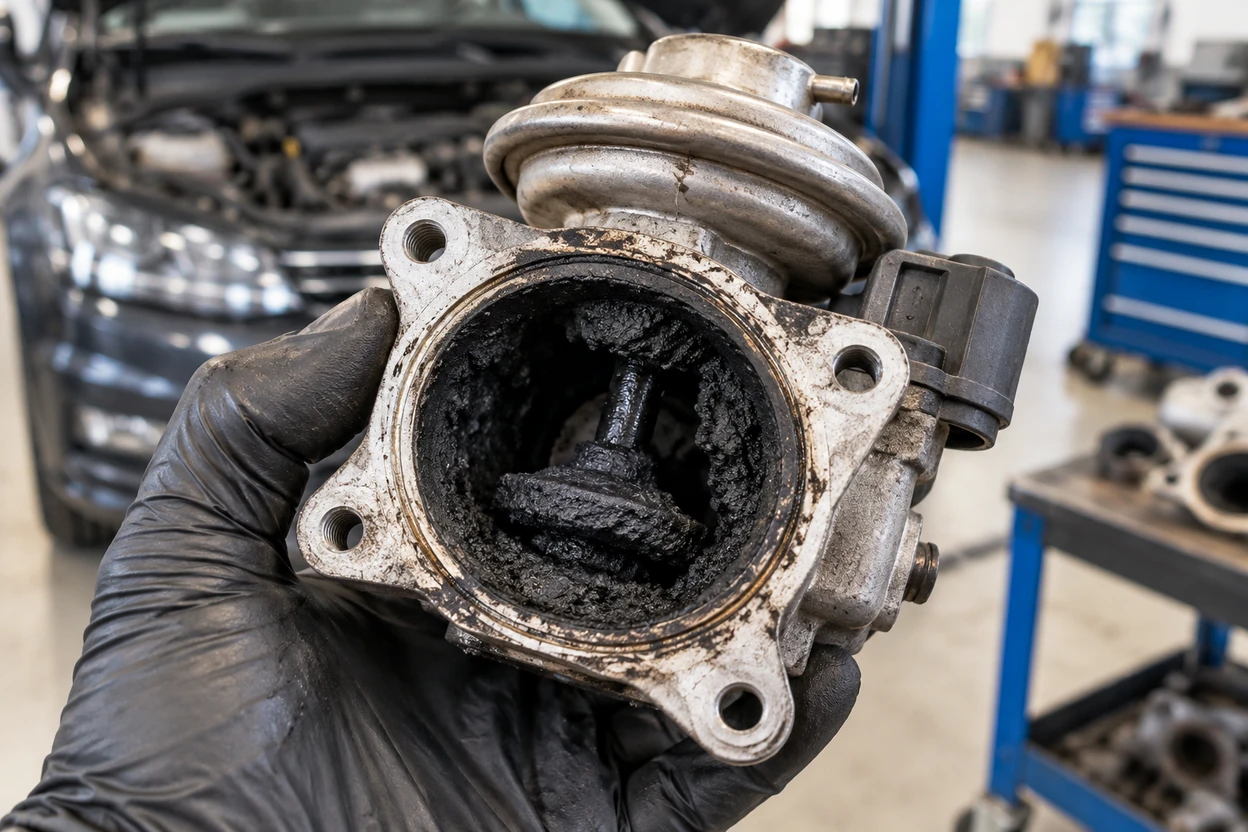
When the flaps are stiff with carbon, cleaning alone may not fix P2015 if the linkage has already been strained. We inspect both before advising a cleaning or a manifold. Carbon and other common engine faults are covered in our guide to VW engine problems in Dubai.
How do we diagnose P2015 on a VW?
A basic code reader shows the code but not why it was set. We use VW specific diagnostic software, which can read the engine control unit in detail, show the flap data and command the actuator.
- 1Full scan
Read P2015, any other runner or lean codes and the freeze frame data, then save the report.
- 2Live data
Compare the commanded flap position with the position the sensor reports.
- 3Actuator test
Command the flaps to move and watch the arm, the linkage and the sensor value together.
- 4Visual and circuit
Inspect the lever arm, stop tab, vacuum hoses, plug and wiring, then confirm the cause.
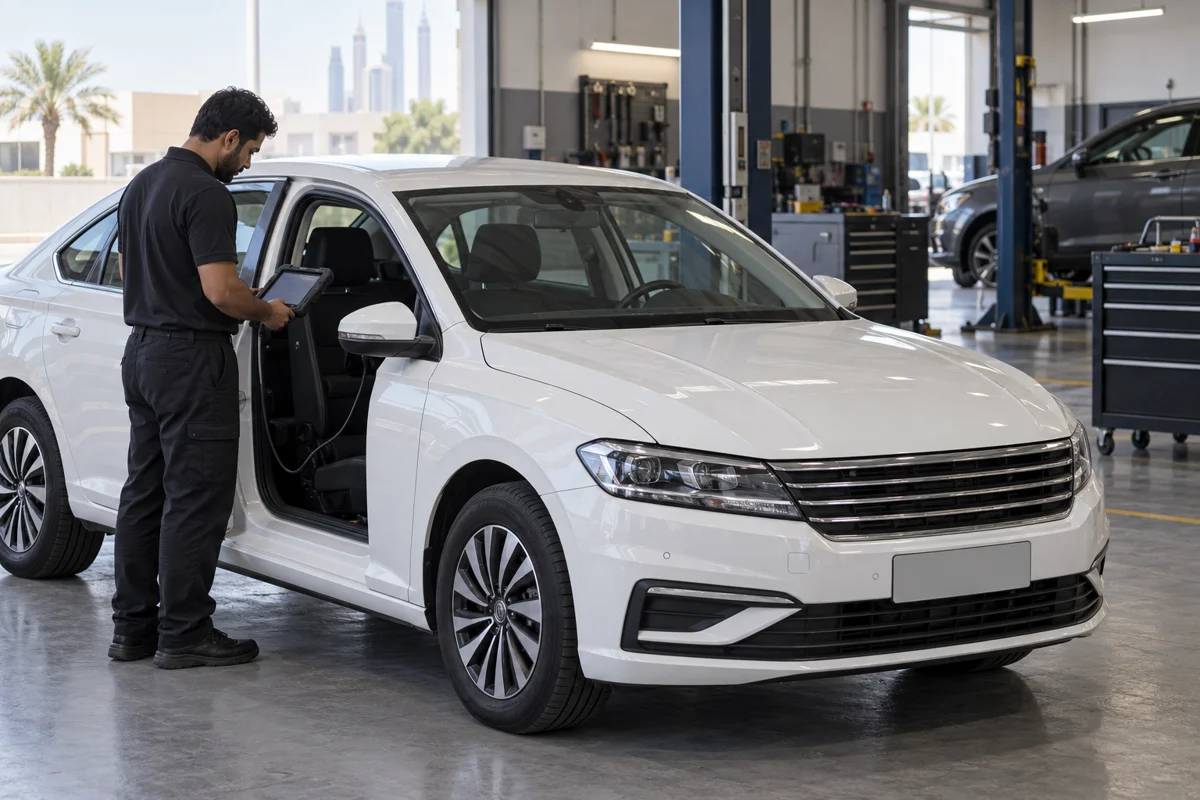
The order matters. If the arm moves but the shaft does not follow, the linkage is the problem and the sensor is fine. If the shaft moves smoothly but the reading jumps or stays fixed, the sensor or its wiring is suspect. If nothing moves, the actuator or its vacuum supply is checked. More on how a full scan works is in our VW diagnostic test guide.
What does live data show on a P2015 fault?
Live data is where P2015 becomes clear. These are the patterns we look for when the flaps are commanded open and closed with the engine running and with the engine off.
The actuator works but the flap shaft is not following, so the linkage has slipped or broken.Visual check of the lever arm, drive hex and stop tab.
The arm is over travelling, which matches a worn stop tab on the manifold.Check the stop tab and the arm for play.
The actuator is not working, or it has no vacuum or no electrical drive.Test the vacuum supply, hose, solenoid and actuator.
The mechanical side works but the sensor signal is unstable or missing.Test the sensor supply, signal, earth and plug.
The flaps are stiff, often from carbon or a binding shaft.Inspect the ports and flaps for deposits.
Exact values and test steps differ by engine code, so we always work from the data for the specific engine fitted.
What are the repair choices for P2015?
The right repair depends on what failed. We explain the choices after testing, and you approve a written quote before any work starts.
Fix the cause, not the code
We confirm whether the linkage, actuator, sensor or manifold has failed before any part is ordered.
Linkage repair
When the lever arm or stop tab has failed but the flaps and shaft are sound, an aftermarket linkage repair kit or bracket can hold the arm in place and keep the sensor in range.
Actuator or vacuum repair
If the arm does not move, the vacuum hose, control valve or actuator is repaired or replaced, then the flap travel is tested again.
Intake manifold replacement
When flaps are broken, the shaft is seized, carbon blocks movement or a kit does not fit the manifold revision, a new manifold is fitted with new seals.
A repair kit is not right for every car. Kits are made for specific manifold revisions, and later EA888 manifolds already use a revised linkage arm. Where the sensor itself has failed, it can often be moved to the replacement or repaired manifold if it tests healthy. After any repair the codes are cleared, the actuator test is repeated and the car is road tested.
P2015 on your scan? Send us the code, your model, year and engine, and a technician will tell you what we will check first.
Is it safe to drive a VW with P2015?
In most cases P2015 is not an immediate danger, and the car can be driven gently to a workshop. How long you can wait depends on what the car is doing.
Drive gently and book a check soon. The fault can get worse if a linkage is loose.
Avoid hard acceleration and long motorway runs, and book within days.
A loose lever arm may be letting air in. Drive only a short distance to the workshop.
Stop when safe and arrange recovery, because a misfire can damage the catalytic converter.
A broken flap linkage rarely mends itself. Driving for months with the fault can mean higher fuel use, a lean running fault from an air leak and, if a flap or fragment breaks, a more expensive repair.
What should you do when P2015 appears?
These steps keep the problem small and help us find the cause quickly.
-
Note how the car feels
Write down whether the idle, power or fuel use has changed since the light came on.
-
Listen for a hiss
A hissing sound from the engine under acceleration can point to a lever arm that has come out.
-
Do not just clear the code
Clearing it removes the freeze frame data that helps us see when the fault happened.
-
Avoid buying parts first
A sensor or manifold bought before testing may not be the part that failed.
-
Book a diagnostic check
Bring the car in, or send us the scan report and we will advise the next step.

How much does a P2015 repair cost in Dubai?
The cost depends on which part has failed, so the repair itself is quoted after testing. The only fixed guide we publish for this fault is the initial diagnostic assessment, taken from our diagnostic test guide.
| Work | Guide | When it applies |
|---|---|---|
| Initial diagnostic assessment | AED 150 to 500 | Reading faults and first checks for a warning or running fault |
| Linkage repair kit or bracket | Quoted after testing | Lever arm or stop tab failed, flaps and shaft sound |
| Actuator or vacuum repair | Quoted after testing | Arm does not move or moves only partly |
| Position sensor or wiring | Quoted after testing | Mechanism works but the signal is faulty |
| Intake manifold replacement | Quoted after testing | Broken flaps, seized shaft or no kit for the revision |
You receive a written quote before work starts, and extra work is only carried out after your approval.
Find the real cause of P2015
Our Al Quoz 4 workshop reads the engine control unit with VW diagnostic software, tests the runner flaps and actuator in live data and inspects the linkage before any part is quoted.
Which codes often appear with P2015?
A scan rarely shows P2015 completely alone. These codes belong to the same runner flap system or follow from the same fault, and reading them together helps narrow the cause.
- P2014
- Intake manifold runner position sensor or switch circuit, bank 1. Points more towards the sensor circuit than the mechanism.
- P2016
- Intake manifold runner position sensor or switch circuit low, bank 1. Often a wiring, plug or sensor supply issue.
- P2017
- A related runner position sensor code that is read with P2015 to judge whether the signal or the mechanism is at fault.
- P201D
- Intake manifold runner control actuator internal fault, which points to the actuator rather than the linkage.
- P0171
- System too lean, bank 1. Can appear when a lever arm has popped out and lets unmetered air into the manifold.
- P0300
- Random or multiple misfire. Can follow stiff flaps or an air leak and is covered in our VW engine misfire guide.
P2015 mistakes we see
On most VWs the linkage has failed, not the sensor.
The code returns because the cause is still there.
It can pop out again under boost.
Kits suit specific manifold revisions only.
An air leak can cause lean running and power loss.
A split hose can stop the actuator moving.
Quick answers about VW P2015
What does P2015 mean? The runner flap position does not match what the engine control unit commanded.
Is it the sensor? Usually not. The linkage on the manifold is the most common cause.
Can I drive with it? Gently, if the car runs normally and there is no flashing light.
Will it go away? It may go out for a while, but a mechanical fault usually brings it back.
Does it need a new manifold? Not always. A linkage repair or actuator may be enough.
What we check first on a P2015 fault
Every P2015 car in our Al Quoz 4 workshop follows the same order of checks, so the simplest real fix is found before larger parts are quoted.
Linkage, actuator, then sensor
The manifold is the last option, not the first.
-
We ask how the car drives, whether there is a hiss under boost and whether any intake or carbon work was done recently.
-
We read the engine control unit with VW diagnostic software, save the fault and freeze frame entries and identify the exact engine code.
-
We compare the commanded and actual flap position in live data and run the actuator test while watching the lever arm.
-
We inspect the lever arm, drive hex, stop tab, vacuum hoses, plug and wiring, and check the ports for carbon where access allows.
-
We then explain whether a linkage repair, an actuator, a sensor or a full manifold is needed, with a written quote before work.
What to send before your visit
A few details help us prepare and judge how urgent the fault is.
- Model, year and mileage
- Engine, for example 2.0 TSI or 2.0 TDI
- A photo of the scan report
- When the light first came on
- Any loss of power or rough idle
- Any hissing sound under boost
- Recent intake or carbon work
- Other warning lights on the dash
Send them on WhatsApp to 056 464 6081 and a technician will reply.
Questions about the VW P2015 code
What does the P2015 code mean on a VW?
P2015 means intake manifold runner position sensor or switch circuit range or performance, bank 1. The engine control unit commands the runner flaps to move and then checks the position sensor. If the reported position does not match the command, it stores the code. On most Volkswagens the cause is mechanical, usually a worn or broken linkage.
Which VW engines are known for P2015?
The code is most often linked with the 2.0 TSI and 2.0 TFSI EA888 first generation engine, found in cars such as the Golf GTI Mk5 and Mk6, Jetta Mk5, Passat B6, Tiguan Mk1 and Eos. It is also common on the 2.0 TDI diesel. The same engines in Audi, Skoda and SEAT models can show it too.
Can I drive my VW with the P2015 code?
If the car runs normally and the engine light is steady, you can usually drive gently to a workshop. Avoid hard acceleration and long trips. If the car goes into limp mode, you hear a hiss under boost or the engine light flashes, drive only a short distance or arrange recovery, because the fault may have become an air leak or a misfire.
Is P2015 caused by the sensor or the linkage?
On most Volkswagens it is the linkage. The lever arm on the flap shaft can break at its drive hex, or a plastic stop tab can wear so the arm travels too far. The sensor then reports a position that makes no sense. The sensor itself can fail, but it is tested after the linkage, actuator and wiring.
Do I need a new intake manifold for P2015?
Not always. If the flaps and shaft are sound and only the lever arm or stop tab has failed, a linkage repair kit or bracket may solve it, provided one is made for your manifold revision. A new manifold is needed when flaps are broken, the shaft is seized, carbon blocks movement or no kit suits your manifold.
What are the symptoms of a bad intake manifold runner flap?
The check engine light is often the only sign. Some cars also show reduced power, rough idle, hesitation when pulling away, higher fuel use or limp mode. On the EA888 first generation engine a lever arm that has popped out can cause a hissing sound under boost and a lean running fault, because air enters the manifold where it should not.
Can carbon buildup cause the P2015 code?
Yes, although it is less common than linkage wear. On direct injection petrol engines, oil vapour can bake into carbon around the ports and flaps. On TDI diesels, soot from exhaust gas recirculation mixes with oil mist. Either can make the flaps stiff, so they do not reach the commanded position and the code is stored.
How do you diagnose P2015 on a Volkswagen?
We read the engine control unit with VW diagnostic software and save the fault and freeze frame data. Then we compare commanded and actual flap position in live data, run the actuator test while watching the lever arm, and inspect the linkage, stop tab, vacuum hoses, plug and wiring. This shows which part has failed before anything is replaced.
Will clearing the P2015 code fix the problem?
No. Clearing the code switches the light off for a while, but a mechanical fault in the linkage or actuator does not repair itself, so the code usually returns. Clearing it also removes the freeze frame data that shows when and how the fault happened. It is better to keep the history and book a diagnostic check.
How much does P2015 repair cost in Dubai?
Our initial diagnostic assessment guide is AED 150 to 500, covering reading faults and first checks. The repair itself depends on whether the linkage, actuator, sensor, wiring or full intake manifold has failed, so it is quoted after testing. You receive a written quote before work starts and extra work is only done after your approval.
Get your P2015 fault checked in Al Quoz 4
Volkswagen Repair Dubai is an independent VW workshop in Al Quoz 4, open Monday to Saturday, 9am to 7pm. Send us your scan report or the code and engine, and we will advise the next step.
See all engine work on our VW engine repair page and warning diagnosis on our engine malfunction page.
How this guide was written
Written by the Volkswagen Repair Dubai workshop team in Al Quoz 4 and reviewed by our technical team in October 2026. It is based on the engine diagnosis we carry out on Volkswagens in Dubai and on the technical references listed below.
Engine fitment, manifold revisions and test values differ between models and years, so the exact engine code is always confirmed from the car. The only price shown is the diagnostic assessment guide published on our own site, and every repair is quoted after testing.
Technical references
- TaT scan data, P2015 code definition, giving the generic definition, the plausibility logic and the related codes P2014, P2016, P2017 and P201D.
- Free Auto Repair Advice, P2015 VW code explained, covering the 2.0 TDI and TSI, how the flaps work, the symptoms and the stop tab and linkage causes.
- ECS Tuning lever arm fix kit for the 2.0 TSI EA888 first generation, listing the affected models and describing the lever arm failure at the drive hex.