In this guide
VW drive shaft noises usually come from a worn CV joint. Clicking on tight turns points to the outer joint, and shudder when accelerating points to the inner joint. A clunk when pulling away can mean joint play, while vibration through the floor on a 4MOTION or Touareg can come from the prop shaft. When and where you hear the noise is the most useful clue.
Written by the Volkswagen Repair Dubai workshop team in Al Quoz 4. Reviewed by the technical team, updated October 2026.
Key takeaways
- Most VW drive shaft noise comes from the CV joints on the front shafts, not a long shaft under the car.
- Clicking on turns is the classic outer CV joint sign. Shudder under power often means the inner joint.
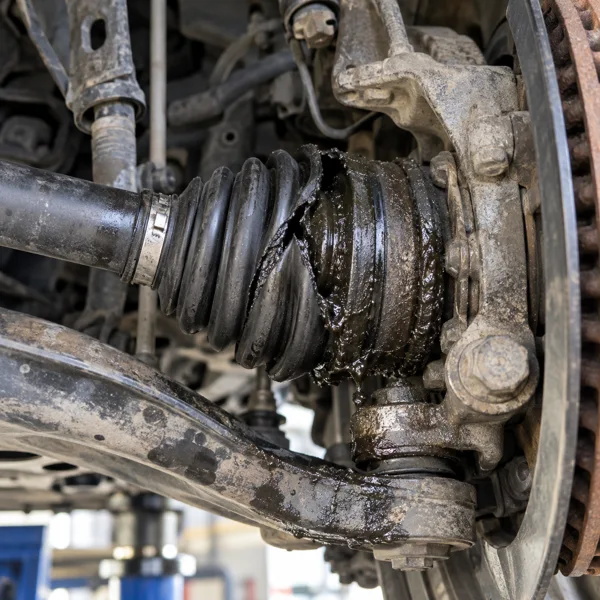
- Grease sprayed inside the wheel usually means a split boot, which is cheaper to fix early.
- Humming that rises with speed is more often a wheel bearing than a drive shaft.
- Heavy knocking, severe vibration or loss of drive means stop safely and arrange recovery.
Which drive shaft does your VW have?
Most VWs, including the Polo, Golf, Jetta and Passat, are front wheel drive. They have two short drive shafts, also called CV axles, running from the gearbox to the front wheels. Each has an inner and an outer CV joint protected by a rubber boot.
Cars with 4MOTION, such as some Tiguan, Golf R and Arteon versions, plus the Touareg, Amarok and Transporter, also have a long prop shaft running under the car to the rear axle. It has its own joints and often a centre support bearing.
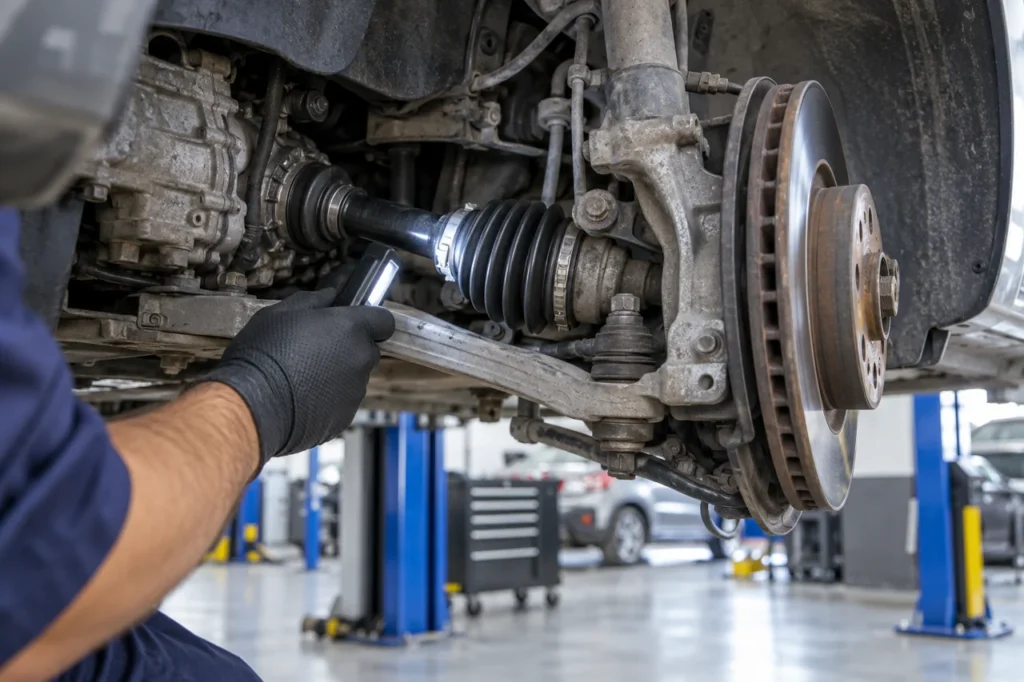
What does each VW drive shaft noise mean?
Match the noise to when it happens. This narrows the likely part before anyone lifts the car.
| What you hear or feel | When it happens | Most likely cause |
|---|---|---|
| Clicking or popping | Turning at low speed, especially on full lock | Worn outer CV joint |
| Shudder or shake | Accelerating, easing off when you lift | Worn inner CV joint, or engine and gearbox mounts |
| Clunk | Pulling away, or switching between drive and reverse | Joint play, a loose fixing or a worn mount |
| Vibration through the floor | At steady speed on 4MOTION models | Prop shaft joint or centre bearing |
| Hum or drone | Rising with road speed, changing in bends | Wheel bearing more likely than the shaft |
| Grease on the wheel | Seen when cleaning or parking | Split CV boot losing grease |
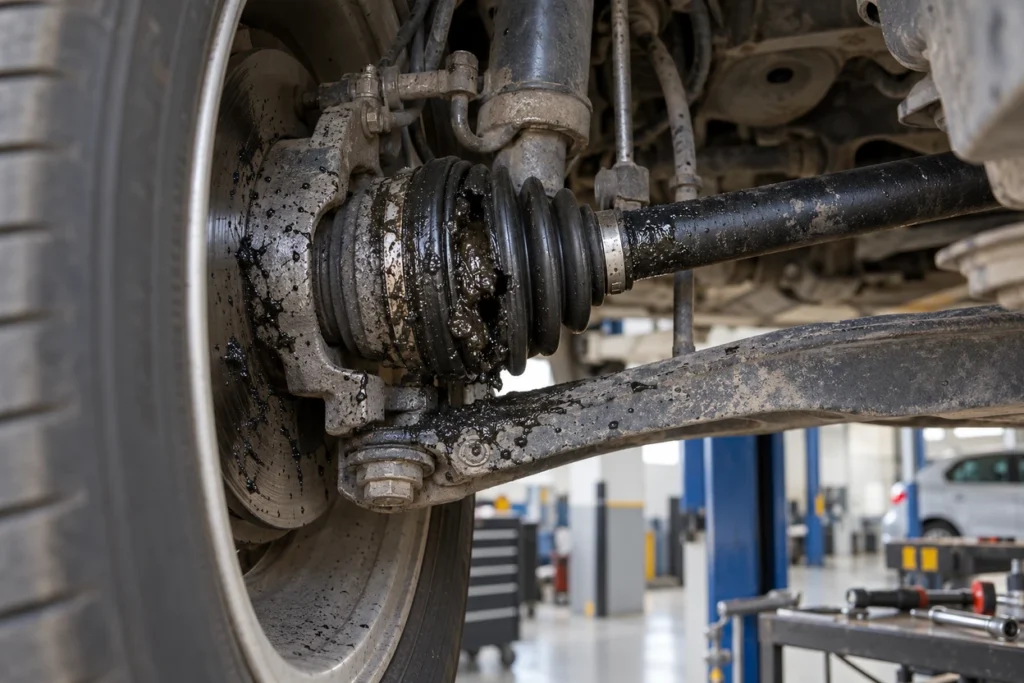
Why does my VW click when turning?
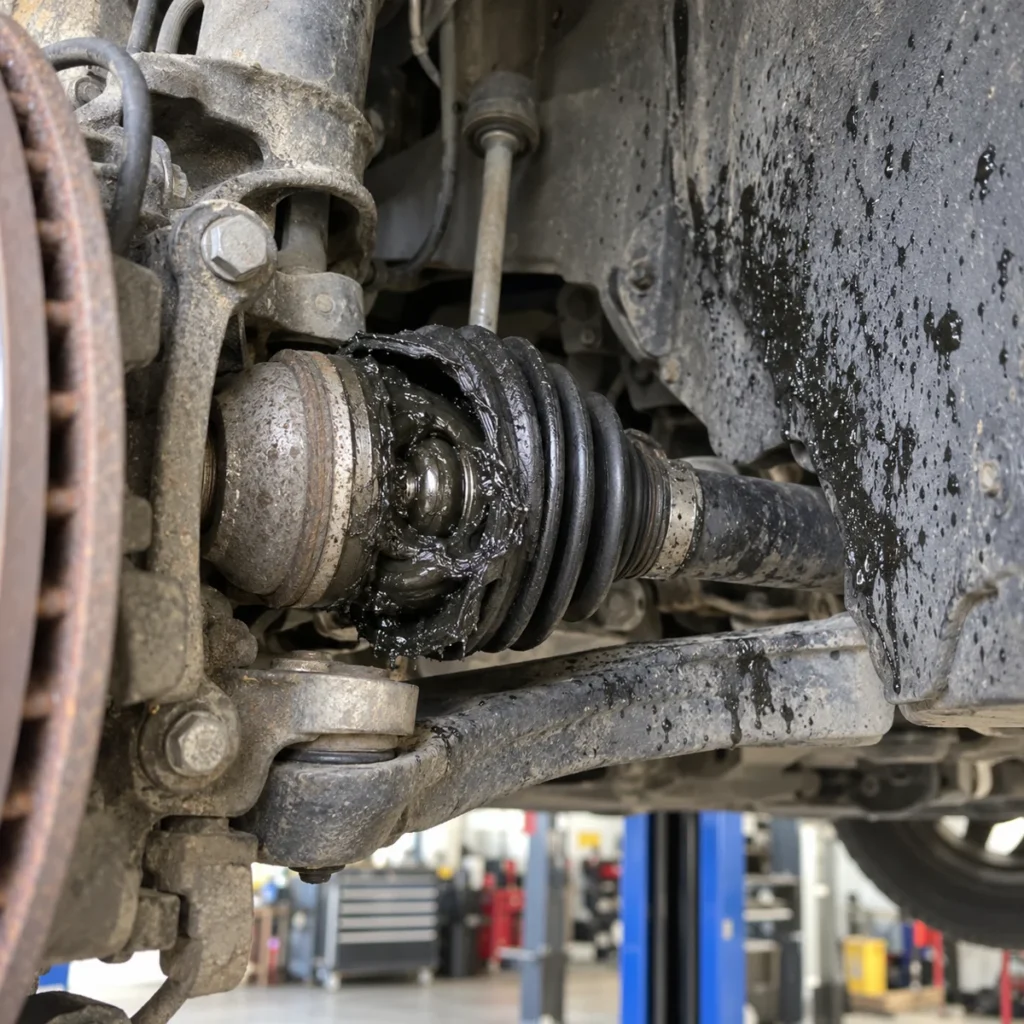
Clicking on tight turns is the most common drive shaft noise on front wheel drive VWs. It usually means the outer CV joint has worn, often after its boot split and the grease escaped.
- Louder on one lock usually points to the joint on the outside of the turn.
- Faster clicks with speed show it follows wheel rotation.
- Grease on the inside of the wheel confirms a boot problem on that side.
- Other parts can click too. Brakes, wheel bearings and suspension joints are checked as well.
Heard a click on turns? Tell us which side and when, and we will tell you what to check first.
Why does my VW shudder when accelerating?
A shake that appears under power and fades when you lift off often comes from a worn inner CV joint. The same feeling can come from worn engine or gearbox mounts, or from wheels and tyres, so all three are checked together.
- Inner CV joint
- Shudder under load, often between 30 and 70 km per hour, that changes with throttle.
- Engine mounts
- Clunk on take off, extra vibration at idle in drive. See our engine mount replacement page.
- Wheels and tyres
- Vibration at a set speed whether or not you accelerate points to balance or a damaged tyre.
- Gearbox
- Judder only when pulling away on a DSG can be a clutch issue rather than a shaft.
If the cause is not clear, our Volkswagen vibration diagnosis service looks at the wheels, engine and drivetrain together.
What noises come from a VW prop shaft?
On 4MOTION and Touareg models the long prop shaft can cause noise and vibration of its own. It is a different part from the front CV axles, with different repairs and prices.
Floor vibration
A steady vibration felt through the floor or seat at speed can come from a worn joint or an out of balance shaft.
Centre bearing
A rumble or knock from under the middle of the car often points to the support bearing or its rubber mount.
Clunk on drive
Play in a joint or coupling can clunk when drive is taken up or released.
Not always the shaft
Differential, transfer unit and coupling faults feel similar and are checked separately.
For differential and 4MOTION faults, see our differential and 4MOTION repair page.
How can you narrow down the noise safely?
You can gather useful clues without tools. Do these checks in an empty car park at walking pace, never on a public road.
-
Slow circles
Drive slow circles on full lock to the left, then to the right. Clicking on one side points to that outer joint.
-
Gentle take off
Pull away gently, then firmly, in a straight line. Shudder only under firm throttle points to the inner joints or mounts.
-
Drive and reverse
Switch between drive and reverse with the brake held lightly. A clunk suggests play or a worn mount.
-
Look at the boots
With the wheels turned, look behind the front wheels for torn rubber or thrown grease.
-
Note the details
Write down the side, speed and conditions. It saves diagnosis time.
Do not look underneath a car supported only by a jack. If the noise comes with heavy knocking, severe vibration or a loss of drive, stop and arrange recovery.
What happens if you ignore drive shaft noise?
A CV joint rarely fails without warning, but it does get worse. Waiting usually turns a cheap fix into a dearer one.
- 1Split boot
Grease leaks out, dirt and sand get in.
- 2Joint wear
Clicking starts on turns as the joint wears.
- 3Louder and constant
Noise spreads to gentle turns and straight driving.
- 4Failure risk
A badly worn joint can break and leave the car without drive.
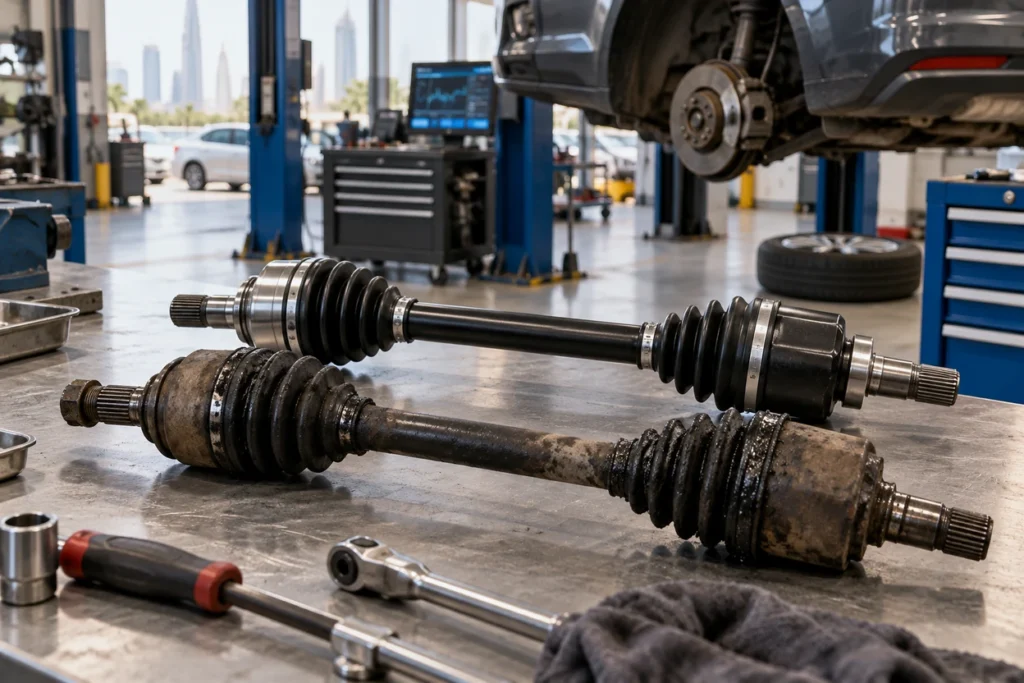
Dubai sand and heat speed up the first two stages, because grit gets into a torn boot quickly and hot rubber cracks sooner. Catching a split boot early can mean replacing only the boot.
How much does it cost to fix a noisy VW drive shaft?
The fix depends on what the inspection finds. These guide ranges come from our Volkswagen drive shaft repair service, and they are alternatives, not added together.
| Repair | Guide range | When it fits |
|---|---|---|
| CV boot kit, Polo example | AED 300 to 500 | Boot split early, joint still sound |
| CV joint replacement | AED 500 to 1,200 | One joint worn, shaft in good condition |
| Complete wheel side shaft | AED 1,500 to 3,500 per side | Worn joints, damaged shaft or no separate joint |
| Prop shaft, Touareg type | AED 3,000 to 6,500 | Long shaft joints or assembly worn |
Indicative ranges. Compact models can cost less, and genuine or larger assemblies can cost more.
Find the noise before buying a shaft
Our Al Quoz 4 workshop checks the boots, joints, mounts and bearings, then explains whether a boot, joint or full shaft is needed, with a written quote before work.
Mistakes we see with drive shaft noise
Each side needs its own reason. A fault on one side does not mean both are worn.
A boot found early can save the joint and the shaft.
A hum that rises with speed is usually a wheel bearing.
Wheel alignment cannot fix a worn joint or a bent shaft.
A used shaft can carry worn joints and needs the same fitting labour.
Loud knocking or loss of drive means stop and recover the car.
For other causes of similar sounds, see our wheel bearing replacement page and the Volkswagen strange noise diagnosis page.
Questions about VW drive shaft noises
What does a bad CV joint sound like on a VW?
A worn outer CV joint usually makes a clicking or popping noise when turning at low speed, getting faster as the wheels turn faster. A worn inner joint is more often felt as a shudder or vibration when accelerating. Grease sprayed on the inside of the wheel often shows the boot on that joint has split.
Is it safe to drive with a clicking CV joint?
For a short time, a light click on full lock is usually not an emergency, but it should be checked soon because the joint keeps wearing. Heavy knocking, severe vibration, a clunk when pulling away or any loss of drive means stop driving and arrange recovery, because a failing joint can break.
How do I know if the noise is the drive shaft or a wheel bearing?
Drive shaft joints usually click on turns or shudder under power. A wheel bearing usually hums or drones, getting louder with road speed and changing when you steer gently left and right. Both can happen on the same corner, so a workshop checks the joint, bearing and suspension together.
Can a CV boot be replaced without a new shaft?
Yes, if the boot split recently and the joint is still smooth with no play. The joint is cleaned, packed with the correct grease and fitted with a new boot and clamps. If grit has already worn the joint, a new boot alone will not stop the noise.
Why does my VW vibrate when accelerating?
Common causes are a worn inner CV joint, worn engine or gearbox mounts, or wheel and tyre problems. On 4MOTION models the prop shaft can also cause vibration. If it only happens under throttle and fades when you lift off, the inner joints and mounts are the first things to check.
Do all Volkswagens have a prop shaft?
No. Front wheel drive models such as most Polo, Golf, Jetta and Passat versions only have two short front drive shafts. A prop shaft is found on 4MOTION versions and on the Touareg, Amarok and Transporter, where it carries drive to the rear axle. The VIN or owner manual confirms which layout your car has.
Should both front drive shafts be replaced together?
Not automatically. Both sides should be inspected, but each replacement needs a reason. If the other shaft is quiet, smooth and its boots are intact, there is no need to replace it just because one side failed.
How long does a VW drive shaft repair take?
A boot or joint job on one side is often completed the same day, depending on parts. A complete shaft or a prop shaft repair can take longer if parts need ordering. The workshop confirms the timing after inspection and once the correct part for your engine and gearbox is identified.
Can Dubai sand damage CV joints?
Sand itself does not damage a sealed joint, but it gets in quickly once a boot splits. Heat also makes old rubber crack sooner. Checking the boots at each service, especially after desert driving, catches splits before grit wears the joint.
Get the noise checked in Al Quoz 4
Volkswagen Repair Dubai is an independent VW workshop in Al Quoz 4, open Monday to Saturday, 9am to 7pm. Tell us your model and when the noise happens, and we will explain what to check first.
See repair options and prices on our Volkswagen drive shaft repair page.