• Al Quoz 4, Dubai
  • Monday to Saturday, 9am to 7pm

Volkswagen Passat Problems by Year and Engine

The most common Volkswagen Passat problems in Dubai are warm AC, coolant loss from the water pump or thermostat housing, DSG or automatic shift faults, start stop battery warnings, misfires on TSI engines and ABS warnings. Which fault is likely depends on the generation, B6, B7, US built or B8, and the engine fitted.

  • VW specific diagnostics
  • Written quote before work
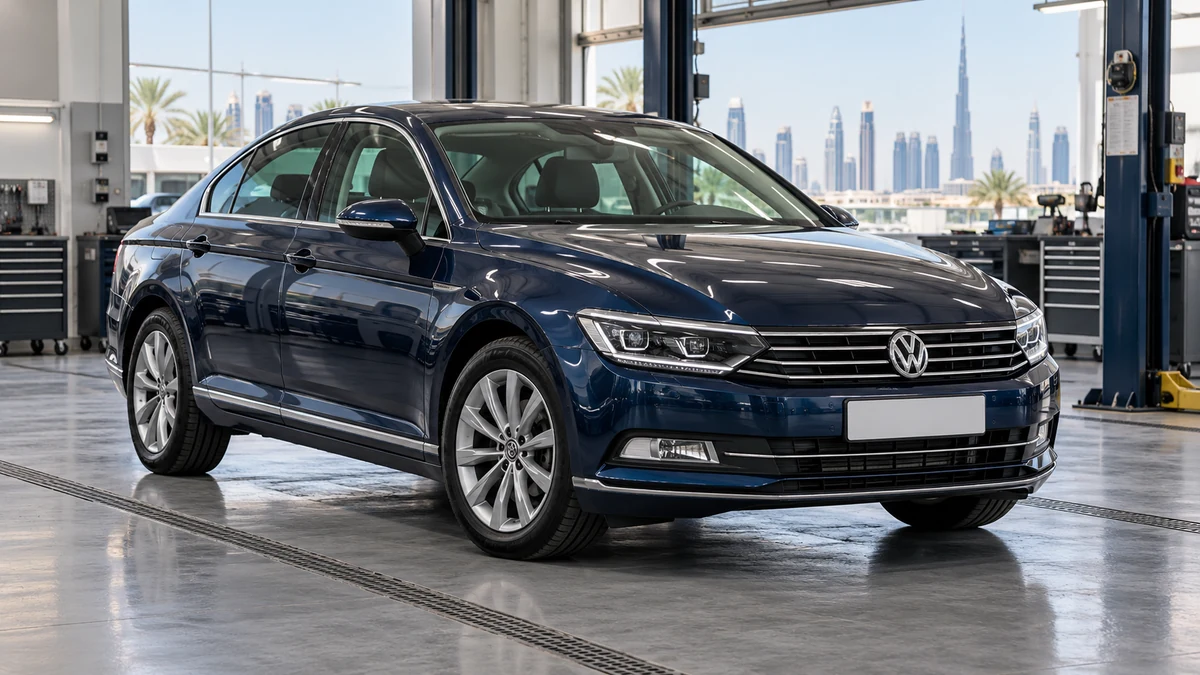
Dark blue Volkswagen Passat B8 parked inside a modern workshop
A Passat B8, the generation where water pump leaks, DSG service and the electronic parking brake are the points we check first.
Before you read

Key takeaways

Start with your model year, engine and symptoms.

  1. The generation and engine code decide which Volkswagen Passat common problems are most likely on your car.
  2. B6 cars from 2006 to 2010 with the 2.0 FSI or 2.0 TFSI need the timing belt age and the cam follower checked.
  3. B7 cars from 2011 to 2015 with the 1.8 TSI or 2.0 TSI use a timing chain, so tensioner wear is the point to watch.
  4. US built Passats from 2012 to 2022 most often show coolant leaks, AC compressor or condenser failure and battery warnings.
  5. B8 cars from 2015 onwards show water pump and thermostat housing leaks, DSG fluid service needs and parking brake faults.
  6. Every fault is tested with VW specific software and you approve a written quote before any part is replaced.
Symptoms first

What are the most common Volkswagen Passat problems?

These six faults are the Passat concerns owners raise most often when they contact our Al Quoz 4 workshop. They cover every generation, though the cause behind each symptom changes with the engine and gearbox. Each row links to the part of this page, or the dedicated guide, that explains the test and the repair.

  1. AC blowing warm

    Leaking condensers, failing compressors and low refrigerant, made worse by summer heat and long idles in traffic.

    Read more
  2. Coolant loss and overheating

    The water pump, thermostat housing, hoses or radiator, often shown by a sweet smell or the low coolant light.

    Read more
  3. DSG or automatic shift problems

    Judder, harsh or delayed shifts and limp mode, usually fluid, adaptations, mechatronics or clutch wear.

    Read more
  4. Battery and start stop warnings

    Heat shortens battery life, and newer cars need the right EFB or AGM battery coded to the car.

    Read more
  5. Misfires and rough idle

    Ignition coils, spark plugs and carbon build up on the intake valves of direct injection engines.

    Read more
  6. ABS and brake warnings

    Wheel speed sensors, damaged wiring or a failed ABS module, often with the traction light on as well.

    Read more
By model year

Which Passat years have which problems?

The Passat sold in the UAE comes from four different families, and each has its own engines, gearboxes and weak points. The model year on your registration card and the engine code in the service booklet tell us where to start before the car is even on the lift.

Passat B6

2006 to 2010

The B6 uses the 2.0 FSI and the turbocharged 2.0 TFSI, both with a timing belt, plus the 3.6 VR6 with a timing chain. Gearboxes are a 6 speed automatic or a 6 speed DSG. These are now the oldest Passats on UAE roads, so wear and age matter more than mileage alone.

  • Timing belt age and history
  • Cam follower wear on the high pressure fuel pump drive
  • Water pump leaks
  • Window regulator failure

Passat B7

2011 to 2015

The B7 moved to the 1.8 TSI and 2.0 TSI, which use a timing chain, with the 3.6 VR6 in some markets. It pairs a 7 speed dry clutch DSG, a 6 speed wet clutch DSG or a conventional automatic depending on the engine. The chain drive and the gearbox electronics are the two areas that cost the most when ignored.

  • Timing chain tensioner wear
  • DSG mechatronic faults
  • Oil use on some TSI engines

US built Passat

2012 to 2022

The larger US built Passat used the 2.5 five cylinder, then the 1.8 TSI and later the 2.0 TSI, with the 3.6 VR6 on early cars. Most have a 6 speed automatic, while the VR6 has a DSG. Many of these cars were imported into the UAE, so the history file is worth checking closely.

  • Coolant leaks
  • AC compressor and condenser failure
  • Battery and start stop warnings

Passat B8

2015 onwards

The B8 uses the 1.4 TSI with a timing belt or the 2.0 TSI with a timing chain, depending on the market, with a 6 or 7 speed DSG. It is the newest Passat on our lift, and its faults are mostly cooling, gearbox service and electronics rather than heavy engine wear.

  • Water pump and thermostat housing leaks
  • DSG fluid service
  • Electronic parking brake issues

For engines, gearboxes and services by generation, see our Passat repair page.

By engine

Which Passat engines have a timing belt and which have a chain?

Knowing the timing drive is the first step in planning maintenance. A belt has a replacement schedule, while a chain is checked for stretch and tensioner wear when it rattles or sets cam timing codes. The table below follows the engines listed on our Passat hub.

EngineGenerationTiming driveWhat we check first
2.0 FSIB6, 2006 to 2010BeltBelt age, carbon on the intake valves, ignition coils, thermostat and water pump
2.0 TFSIB6, 2006 to 2010BeltCam follower and high pressure fuel pump drive, belt history, fuel pressure codes
3.6 VR6B6, B7, early USChainChain noise, cam timing data, coolant leaks and gearbox behaviour
1.8 TSI and 2.0 TSIB7 and US builtChainTensioner wear, cold start rattle, oil use, misfires and carbon
2.5 five cylinderUS built, early yearsCheck by VINCoolant leaks, AC performance and automatic gearbox fluid condition
1.4 TSIB8, by marketBeltBelt age, water pump and thermostat housing, DSG service history
2.0 TSIB8, by marketChainWater pump and thermostat housing leaks, chain noise and DSG fluid

Engine codes vary by year and market, so we confirm the exact code from the VIN before quoting any timing work.

Older direct-injection engines

What goes wrong on the older 2.0 FSI and 2.0 TFSI engines?

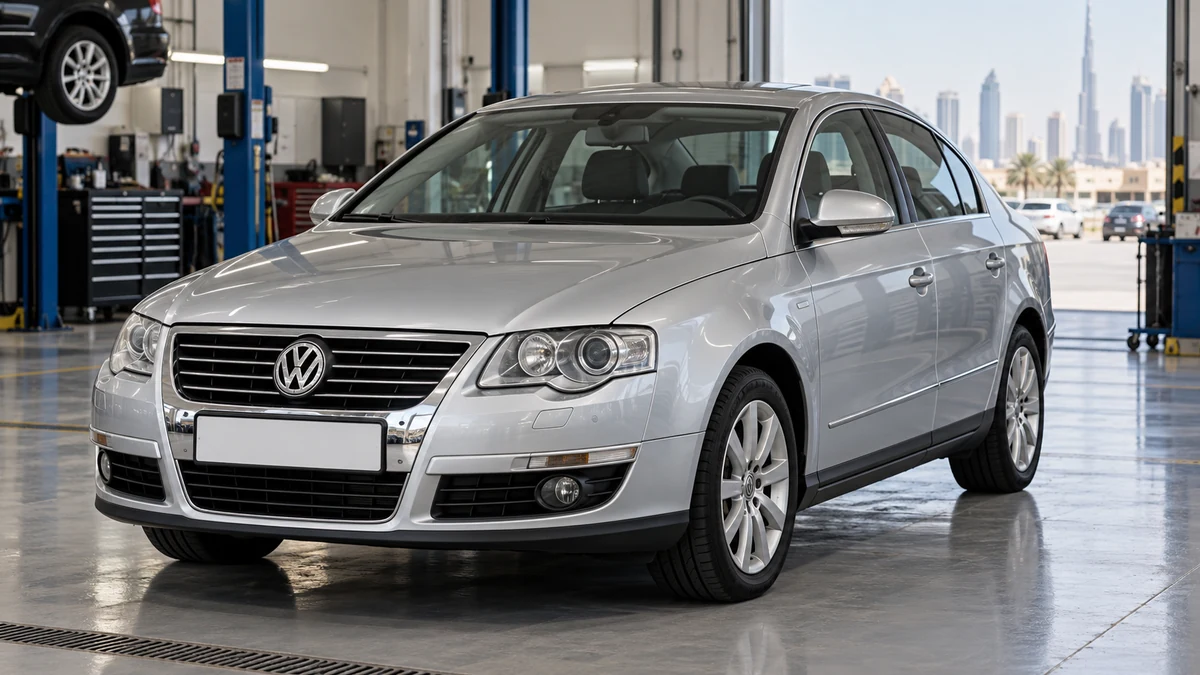
Silver Volkswagen Passat B6 saloon parked in a clean workshop
Older Passats with the 2.0 FSI and 2.0 TFSI need the belt, cam follower and carbon checked as a group.

Fuel-pump drive

The B6 2.0 FSI, with engine codes such as BLR, BVX and BVY, and the 2.0 TFSI share a direct injection design with a mechanical high pressure fuel pump. That pump is driven from a lobe on the intake camshaft through a small cam follower. The follower wears over time, and if it wears through, the camshaft lobe and the pump can be damaged as well.

Carbon, ignition and cooling

Direct injection also means fuel never washes the intake valves, so carbon builds up on them. Published owner data puts the first symptoms of rough idle, misfires and power loss at around 60,000 to 120,000 km. The same engines are known for ignition coil failure, a thermostat that sticks open and a water pump impeller that can crack or slip with age.

Symptoms to mention

  • Fuel pressure codes or a loss of power under load
  • Rough idle or a misfire once the engine is warm
  • Slow warm up and weak heat from the vents on cooler mornings
  • No record of a timing belt change on a car of this age

Codes and timing history

Fuel pressure codes P0087, P1093, P2293Misfire codes P0300 to P0304Timing belt AED 1,500 to 4,000

The VW service table for the 2.0 FSI lists the belt at 180,000 km, but in UAE heat age matters too, so we inspect the belt whenever the history is missing.

Tell us what happens

Does your Passat match one of these faults?

Describe the symptom and when it happens. We explain the next diagnostic check, then provide a written repair quote after testing. You approve the work before parts are replaced.

DSG and automatic

Why does my Passat gearbox judder, shift late or go into limp mode?

Gearbox complaints are among the most worrying Passat problems because the replacement cost is high. In practice most shift faults start with something smaller. The Passat has used a 6 speed automatic, a 6 speed wet clutch DSG and a 7 speed dry clutch DSG, and each one fails in its own way.

01

Judder pulling away

On a dry clutch DSG, judder from a standstill usually points to clutch wear or clutch adaptation values that have drifted. We read the clutch data and run a basic setting before suggesting any parts, because a fresh adaptation can cure a mild judder.

02

Harsh or delayed shifts

Old or low fluid on a wet clutch DSG or a conventional automatic, worn valve body parts or a mechatronic fault can cause clunks, flares and slow gear changes. The fluid condition and service history are checked first, then the live data from the gearbox control unit.

03

Limp mode and warning light

When the gearbox protects itself it may hold one gear or lose drive in some gears. B7 cars are known for DSG mechatronic faults, and many cases are a repair to the mechatronic unit rather than a full gearbox replacement.

A new automatic is guided at AED 8,000 to 15,000 and a DSG replacement at AED 12,000 to 18,000, which is why we test first. Our DSG gearbox repair page explains mechatronic repair, clutch packs and adaptations in detail.

Cooling system

Why is my Passat losing coolant or overheating?

Coolant loss is a fault that appears on every Passat generation. The usual sources are the water pump, the plastic thermostat housing, the coolant hoses and the radiator. B6 cars are known for water pump leaks, US built Passats for coolant leaks in general and the B8 for water pump and thermostat housing leaks.

In Dubai a small seep often dries in the heat before it drips, so the level falls without a puddle on the ground. The engine can then overheat in summer traffic with the AC working hard. A thermostat that sticks open does the opposite, keeping the engine too cool and setting code P0128, which is common on the older 2.0 FSI.

We pressure test the system so only the failed part is replaced. A water pump fitted is guided at AED 900 to 3,300 and a radiator fitted at AED 850 to 3,200. Our Passat coolant leak guide explains each source.

Air conditioning

Why is my Passat AC blowing warm air?

Warm AC is the most frequent Passat complaint in the UAE summer. The condenser sits at the front of the car, where it collects dust and stone chips, and a slow leak lets the refrigerant level fall until the compressor can no longer cool the cabin. US built Passats in particular show AC compressor and condenser failure. We follow the same checklist on every car so the fix matches the fault.

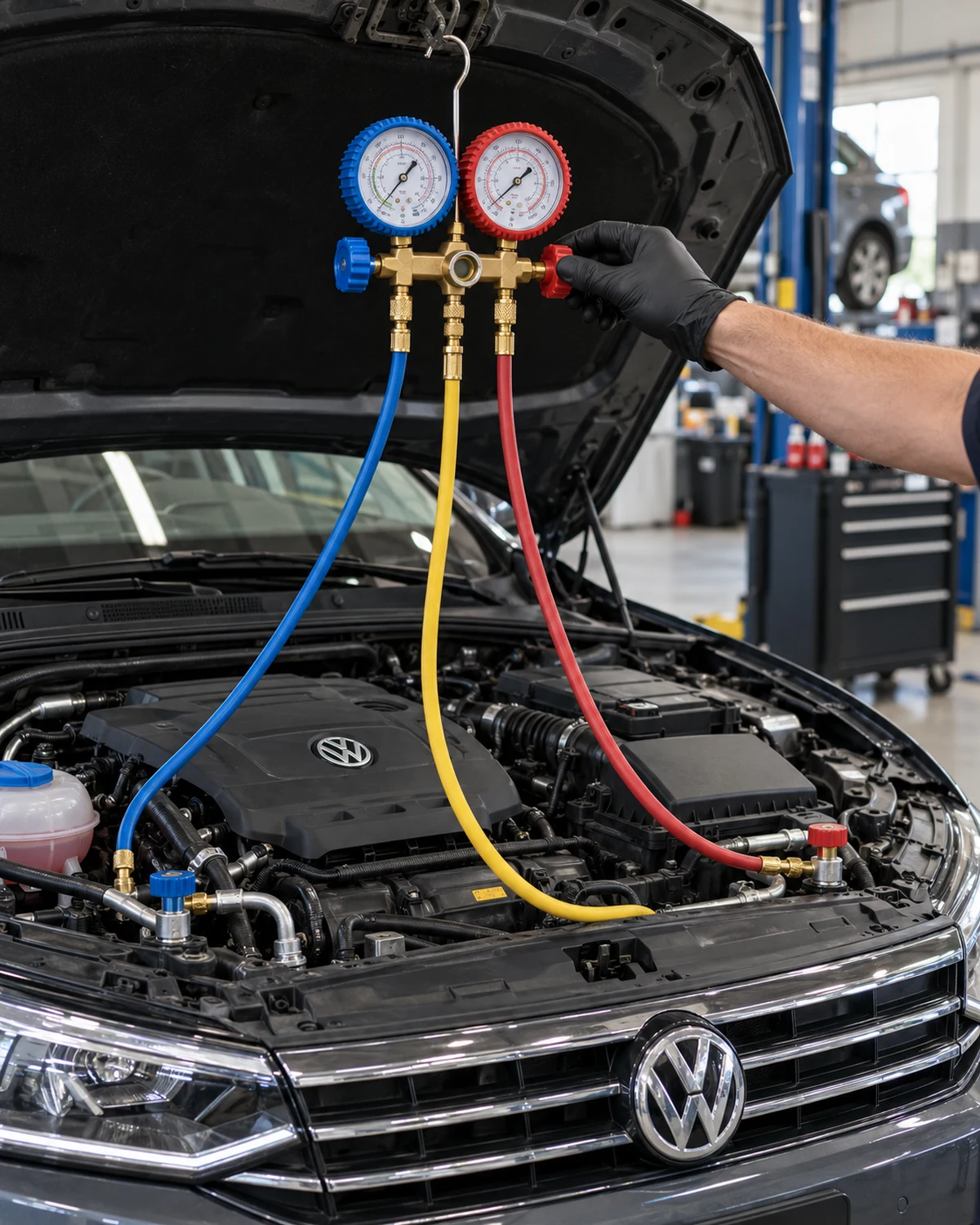
Technician adjusting AC pressure gauges connected to a Volkswagen Passat
Reading the high and low side pressures tells us whether the system is low, blocked or has a weak compressor.
  1. Scan and listen

    We read the climate control fault memory and listen for the compressor clutch or a noisy compressor when the AC is switched on.

  2. Read the pressures

    Gauges on the high and low side show whether the system is low on refrigerant, blocked or has a compressor that cannot build pressure.

  3. Find the leak

    A leak test locates the source, most often the condenser, a pipe joint or the compressor seal, before any refrigerant is added.

  4. Check the airflow

    A blocked cabin filter, a weak blower or a radiator fan that does not run can make a healthy system feel warm in traffic.

  5. Quote the repair

    An AC diagnostic is guided at AED 250 to 500 and a recharge at AED 300 to 600. Larger parts are quoted after testing.

Separate warnings, separate checks

What causes Passat battery, misfire and ABS warnings?

Battery, ignition and ABS warnings can have different causes. Testing the relevant system helps distinguish a supply-voltage problem from a failed sensor, ignition component or control unit.

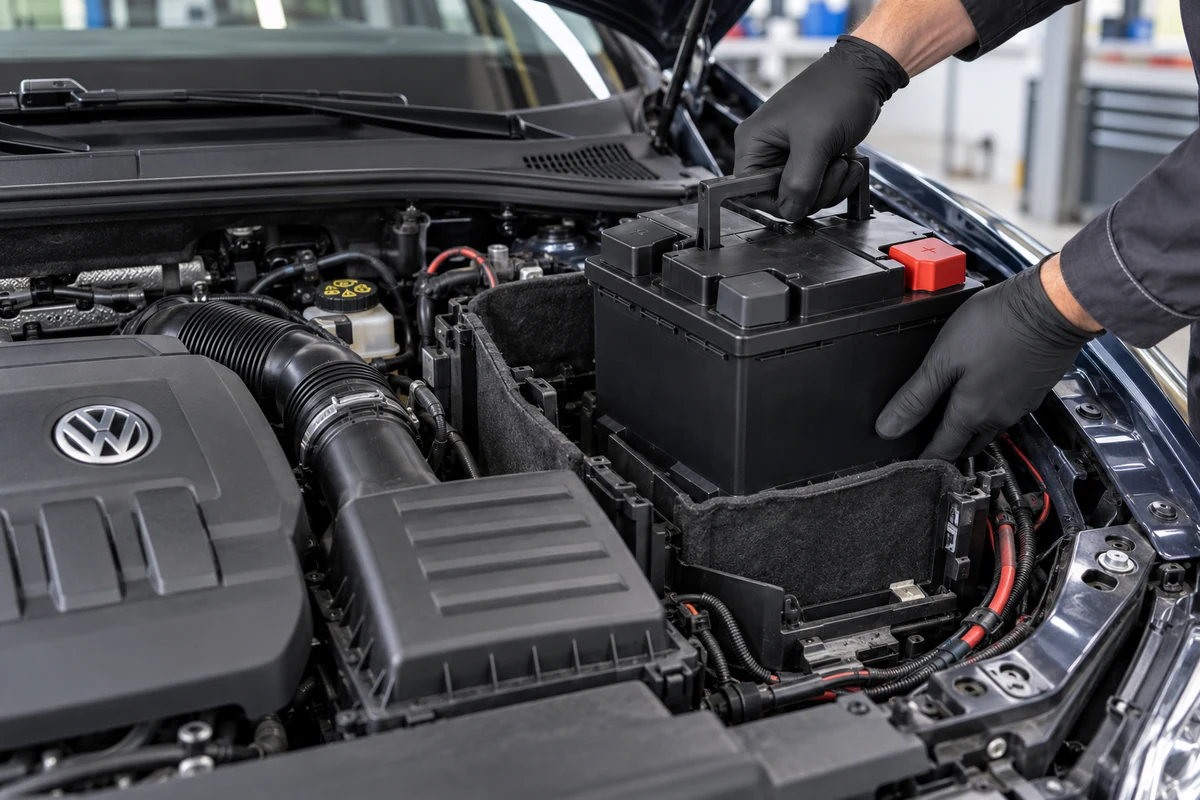
Technician fitting a new black AGM battery in a Passat engine bay
Battery testing belongs alongside charging-system checks.
All generations

Battery and start stop warnings

Heat ends batteries early. A tired battery causes start stop unavailable messages, slow cranking and odd electrical warnings. Newer Passats need an EFB or AGM battery of the right type, coded to the car so the charging system treats it correctly.

Passat battery guide
FSI and TSI engines

Misfires and rough idle

Worn spark plugs, failing ignition coils and carbon on the intake valves cause shaking at idle, a flashing engine light and codes P0300 to P0304. A lean code such as P0171 points us towards air leaks or fuel delivery instead. Spark plugs are guided at AED 300 to 1,000.

Passat spark plug guide
All generations

ABS and brake warnings

An ABS light, often with the traction control light, usually comes from a wheel speed sensor, damaged wiring or the ABS module itself. We read the module fault memory and test the sensor signal before quoting. ABS module repair is guided at AED 2,500 to 4,000.

Passat ABS module guide

On B8 Passats, and on older B6 cars as well, an electronic parking brake warning is often a seized rear caliper motor or a corroded connector rather than a failed control unit.

OBD fault codes

Which fault codes point to common Passat problems?

A generic code reader shows only part of the picture, but these codes are a useful starting point. We read every control unit with VW specific software, because the gearbox, ABS and climate modules store faults a basic reader cannot see.

P0300

Random or multiple misfire, often coils, plugs or carbon on FSI and TSI engines.

P0301 to P0304

Misfire on one cylinder, which helps us swap coils and plugs to confirm the cause.

P0016

Cam and crank correlation, checked for timing chain stretch or tensioner wear on chain engines.

P000A

Intake cam position slow response, linked on the 2.0 FSI to the cam phaser and oil condition.

P0087

Fuel rail pressure too low, a code that leads us to the cam follower on 2.0 FSI and 2.0 TFSI engines.

P2293

Fuel pressure regulator mechanical fault, also checked against cam follower wear on older engines.

P0128

Coolant below thermostat temperature, usually a thermostat stuck open.

P0171

System too lean, pointing to an air leak, a vacuum fault or a fuel delivery problem.

A code tells us which system to test, not which part to buy. We confirm the cause with live data before any quote.

Before you commit

What should you check before buying a used Passat in Dubai?

Check the car from cold, review its service file and have the known engine and gearbox concerns assessed before paying.

  1. Timing belt record on the 2.0 FSI, 2.0 TFSI and 1.4 TSI
  2. Cold start rattle on chain engines such as the 1.8 TSI and 2.0 TSI
  3. DSG or automatic behaviour from cold and when fully hot
  4. Coolant level, dried residue and pressure test results
  5. AC outlet temperature at idle and on the road
  6. Fault memory of every control unit, not only the engine
  7. Parking brake operation and window regulators

Our VW pre purchase inspection covers these points before you commit to a car.

Condition matters most

Is the Volkswagen Passat a reliable car?

A well-maintained Passat can be a dependable family car. The engine, gearbox and service history matter more than the badge alone.

Check the weak points for the exact car, then budget for any work the inspection identifies. Routine service prices do not predict the cost of an unresolved engine or gearbox fault.

Where to focus your inspection

B6
Timing-drive history and engine-specific fuel-pump checks.
B7
Timing-chain condition and gearbox behaviour.
US built
Cooling system, AC performance and the vehicle history.
B8
Water pump, gearbox servicing and parking-brake operation.
Our method

How do we diagnose a Passat problem?

Every Passat follows the same four steps, so you know the cause and the price before any part is ordered.

1

Listen and scan

We take your description of the fault, then read the fault memory of every control unit with VW specific diagnostic software.

2

Test the cause

Live data, pressure tests, leak tests, clutch values or a coil swap confirm which part has failed and why.

3

Quote in writing

You receive the cause, the parts and the labour in writing, with photos where they help explain the fault.

4

Repair and road test

After your approval we repair, clear the codes and road test the car. Extra work is only done after you approve it.

Guide prices

How much do Passat repairs cost in Dubai?

These guide ranges come from our Passat repair page and include typical parts and labour. The right figure depends on the generation, engine and parts chosen, and your written quote lists the exact parts and VAT.

Service and diagnosis

Diagnostic scanFrom AED 150
Oil changeAED 250 to 600
Spark plugsAED 300 to 1,000
Wheel alignmentAED 150 to 400
AC diagnosticAED 250 to 500
AC rechargeAED 300 to 600
Key fob codedAED 550 to 900

Engine and cooling

Water pump fittedAED 900 to 3,300
Radiator fittedAED 850 to 3,200
Oil leak repair, by sourceAED 600 to 5,000
Timing beltAED 1,500 to 4,000
Fuel injector, eachAED 600 to 1,200
Fuel pumpAED 1,000 to 3,800
O2 sensor fittedAED 400 to 1,500
Alternator fittedAED 800 to 2,500

Gearbox, brakes and chassis

Clutch replacementAED 3,500 to 6,500
Automatic replacementAED 8,000 to 15,000
DSG replacementAED 12,000 to 18,000
Brake pads, per axleAED 650 to 2,000
ABS module repairAED 2,500 to 4,000
Wheel bearing, per wheelAED 800 to 1,500
Control arm bushing, per armAED 400 to 1,200
Instrument clusterAED 800 to 4,500

Guide prices, not fixed tariffs. Anything not listed here is quoted after testing.

Passat problem questions

Quick answers for Volkswagen Passat owners in Dubai.

What are the most common Volkswagen Passat problems?

The faults we see most are warm AC from condenser leaks or compressor failure, coolant loss from the water pump or thermostat housing, DSG or automatic shift problems, start stop battery warnings, misfires on FSI and TSI engines and ABS warnings. The generation and engine decide which is most likely, and each one is tested before parts are ordered.

Which Passat years have the most problems?

The B6 from 2006 to 2010 is the oldest, so it shows the most age related wear, including timing belt age, cam follower wear, water pump leaks and window regulators. The B7 from 2011 to 2015 is known for timing chain tensioner wear and DSG mechatronic faults. Newer B8 cars mostly need cooling, gearbox service and electronic checks.

Does my Passat have a timing belt or a timing chain?

It depends on the engine. The B6 2.0 FSI and 2.0 TFSI and the B8 1.4 TSI use a timing belt. The 1.8 TSI, the 2.0 TSI and the 3.6 VR6 use a timing chain. Engine codes vary by year and market, so send us the VIN and we confirm the timing drive and whether it needs attention.

What is the cam follower problem on the 2.0 TFSI?

The high pressure fuel pump on the 2.0 FSI and 2.0 TFSI is driven by a cam lobe through a small follower. The follower wears, and if it wears through it can damage the intake camshaft and the pump. Fuel pressure codes such as P0087 or P2293 are a common sign, so we inspect the follower when those appear.

Why does my Passat DSG judder or jerk?

Judder is usually clutch adaptation that has drifted, clutch wear, old fluid on a wet clutch gearbox or a mechatronic fault. We read the gearbox data and fluid condition first. Many cases are fixed with an adaptation, a fluid service or a mechatronic repair, so a full DSG replacement at AED 12,000 to 18,000 is the last option.

Why is my Passat losing coolant with no visible leak?

In Dubai heat a slow seep from the water pump, thermostat housing or a hose often dries before it drips, so the level falls without a puddle. The car may run normally for weeks and then overheat in summer traffic. A pressure test finds the exact source, so only the failed part is replaced and the system is refilled correctly.

Why does my Passat show a start stop or battery warning?

Heat shortens battery life, and a weak battery is the usual reason start stop stops working or warnings appear. Passats with start stop need an EFB or AGM battery of the correct type, coded to the car after fitting. We test the battery and charging system first, because an alternator fault can give the same warnings.

What causes a misfire on a Passat TSI or FSI engine?

The usual causes are worn spark plugs, a failing ignition coil and carbon on the intake valves of direct injection engines. Codes P0300 to P0304 tell us whether it is random or one cylinder. We swap coils and read live data to confirm the cause, and spark plugs are guided at AED 300 to 1,000 with the rest quoted after testing.

Is the Volkswagen Passat expensive to repair in Dubai?

Routine work is moderate, with a diagnostic scan from AED 150 and an oil change at AED 250 to 600. Larger jobs cost more, such as a timing belt at AED 1,500 to 4,000 or a water pump fitted at AED 900 to 3,300. Testing early and fixing small leaks quickly keeps the large gearbox and engine bills away.

Should I get a used Passat inspected before buying?

Yes, because the known weak points are easy to check before you pay. An inspection looks at the timing belt record or chain noise, the gearbox from cold and hot, coolant and AC performance and the fault memory of every control unit. It gives you a clear list of what the car needs, so you can negotiate or walk away.

Al Quoz 4, Dubai

Get your Passat problem diagnosed

Volkswagen Repair Dubai is an independent VW workshop in Al Quoz 4, open Monday to Saturday, 9am to 7pm. We test the fault with VW specific software, explain what we find and quote in writing before any work starts.

Hand about to press the illuminated engine start stop button in a Passat

How this page was written. Prepared by the Volkswagen Repair Dubai workshop team in Al Quoz 4 and reviewed in October 2026. The generations, engines and fault list follow our Passat repair page and the Passats we see at the workshop. Prices are the guide ranges published on that page, not fixed tariffs.

Sources. CarChecker, Volkswagen Passat B6 2.0 FSI report, for engine codes, the timing belt interval, carbon build up, coils, thermostat and parking brake faults. DAP, VW and Audi 2.0T FSI cam follower and camshaft wear, for the cam follower design and related fuel pressure codes.