In this guide
Worn VW tie rods usually show as loose or vague steering, a knock when turning or going over bumps, the car wandering on the motorway, and wear on the inner or outer edge of the front tyres. The same signs can come from control arm joints, drop links or tyres, so the joint with play is found on a lift before parts are fitted. A tie rod repair is always followed by a wheel alignment, because it changes the toe setting.
Written by the Volkswagen Repair Dubai workshop team in Al Quoz 4. Reviewed by the technical team, updated October 2026.
Key takeaways
- Tie rods link the steering rack to the front wheels and set the direction the wheels point.
- Each side has an outer track rod end and an inner tie rod, and either can wear.
- Knocks and wandering can also come from ball joints, drop links, top mounts or tyres.
- Play is checked with the wheels off the ground, joint by joint, before anything is replaced.
- Sudden severe looseness means stop driving and arrange recovery.
- Alignment is needed after any tie rod replacement to set the toe and steering centre.
What does a worn tie rod feel like on a VW?
A tie rod joint wears slowly, so the change in steering is easy to miss until it becomes obvious. These are the signs owners usually notice first.
- Loose or vague steering, with a small dead zone before the car responds.
- A knock or clunk when turning at low speed or crossing speed bumps.
- Wandering on the motorway, so you keep correcting the wheel.
- Uneven front tyre wear on the inner or outer edge.
- Steering wheel off centre when driving straight.
- Vibration through the steering wheel that changes with speed.
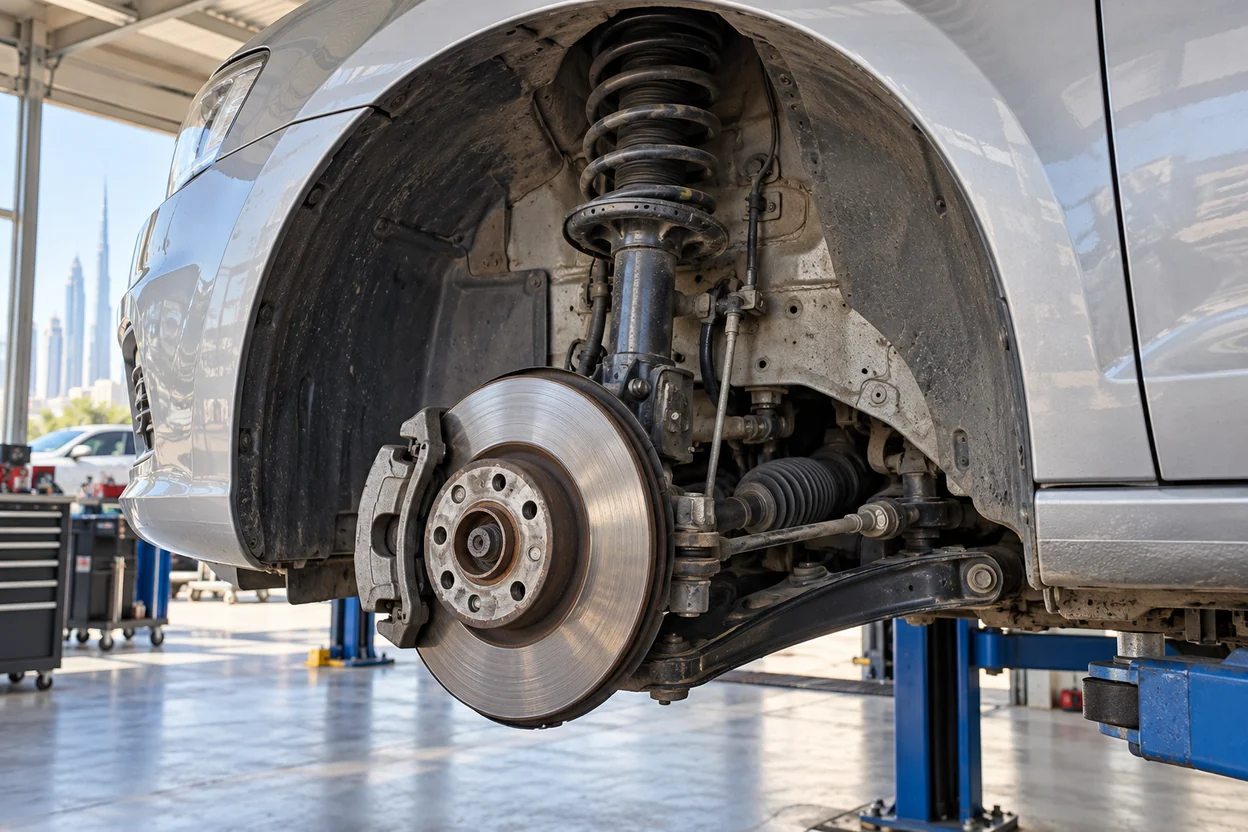
What is the difference between an inner and outer tie rod?
Each front wheel has two tie rod joints. They do different jobs and wear for different reasons, so the check looks at each one separately.
Outer track rod end
The ball joint at the wheel end that lets the linkage move as the wheel steers and the suspension travels.
Inner tie rod
The axial joint that connects the rod to the steering rack, protected inside a rubber bellow.
Rack bellow
The rubber boot that keeps dust and water out of the inner joint and rack. A split lets sand in.
Steering rack
The rack moves the tie rods left and right. Internal rack play is a separate repair.
Tie rods are also called track rods. They push and pull the wheels, so even a small amount of play changes how precisely the car steers. Our tie rod replacement page explains the repair options for each joint.
Is it the tie rod or something else?
Many front end parts make similar noises and steering changes. This table shows how the signs differ and why a lift check matters.
| Symptom | Tie rod | Other common causes |
|---|---|---|
| Knock over bumps | Play in an outer or inner joint | Drop links, control arm bushes, top mounts |
| Wandering | Play lets the toe change while driving | Tyre pressures, worn tyres, alignment |
| Edge wear on front tyres | Toe out of specification from wear | Alignment, camber, control arm wear |
| Vibration at speed | Worn joints can add to it | Wheel balance, bent rim, tyre damage |
| Clunk when turning | Joint play under steering load | Drive shaft joints, top mount bearings |
A tyre wear pattern alone cannot prove a tie rod has failed. Our VW tyre wear guide explains what different wear patterns mean.
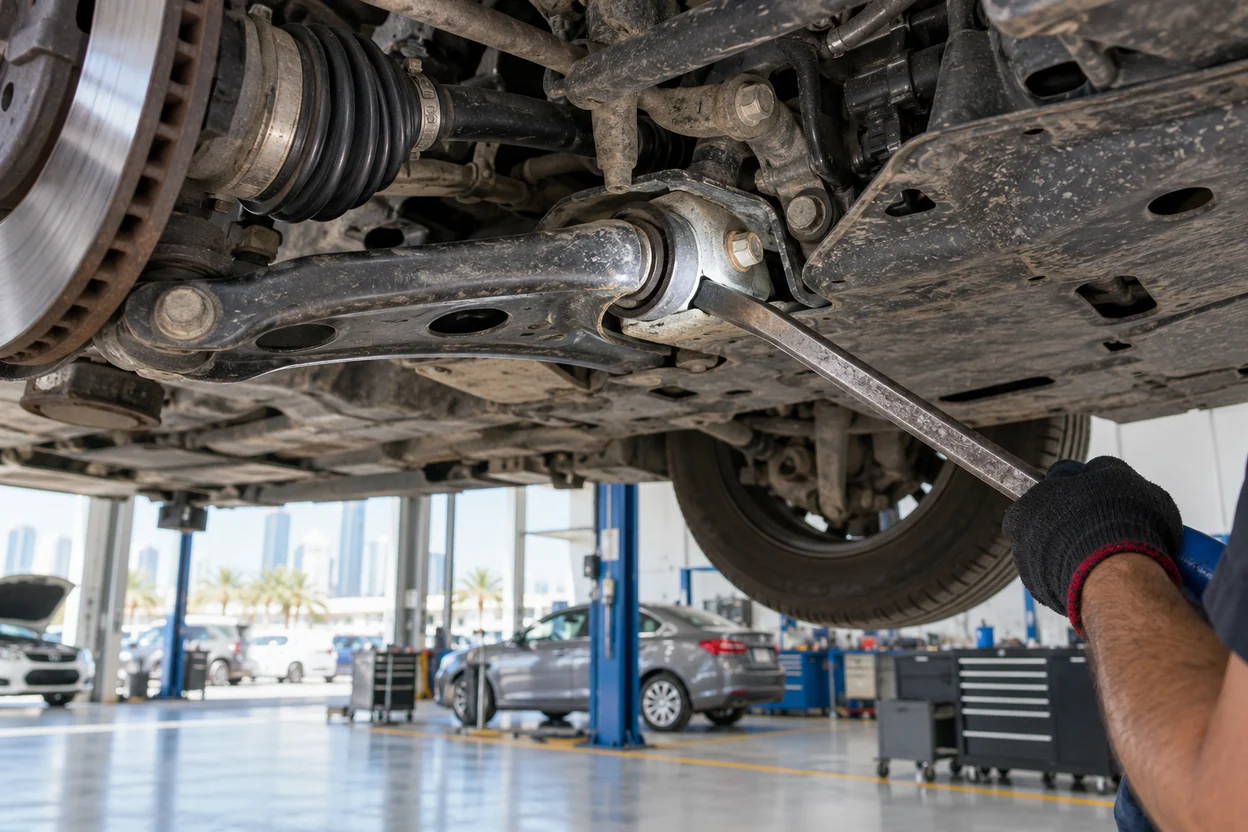
How is tie rod wear checked?
A road test describes the symptom, but the joint is confirmed with the car raised. These are the steps we follow.
- 1Road test
Note the knock, wander or steering feel with you in the car.
- 2Wheel play
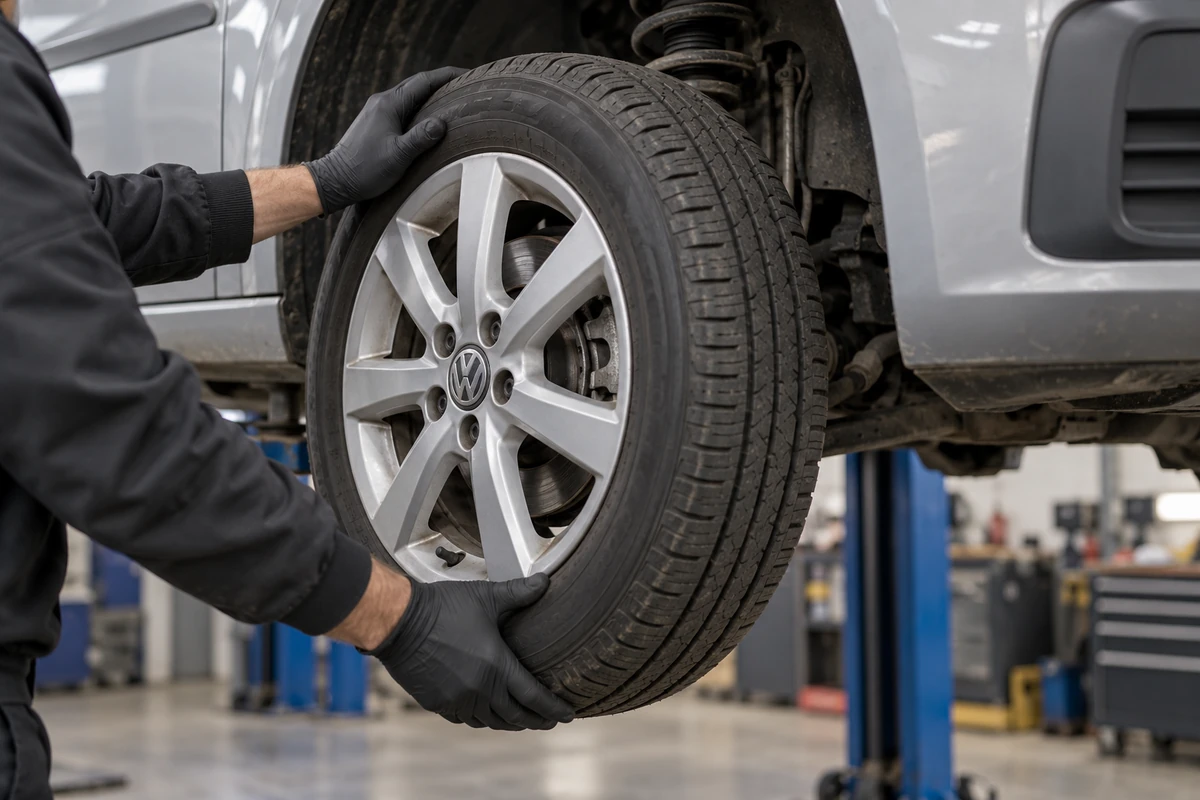
With the wheel raised, rock it side to side to feel steering play.
- 3Joint by joint
Watch each outer end, inner joint and rack mount move under load.
- 4Boots and tyres
Check the bellows and track rod end boots, and read the tyre wear.
Side to side play at the wheel usually points to the steering linkage, while top to bottom play points more to a wheel bearing or ball joint. Both are checked, because one worn part can hide another.
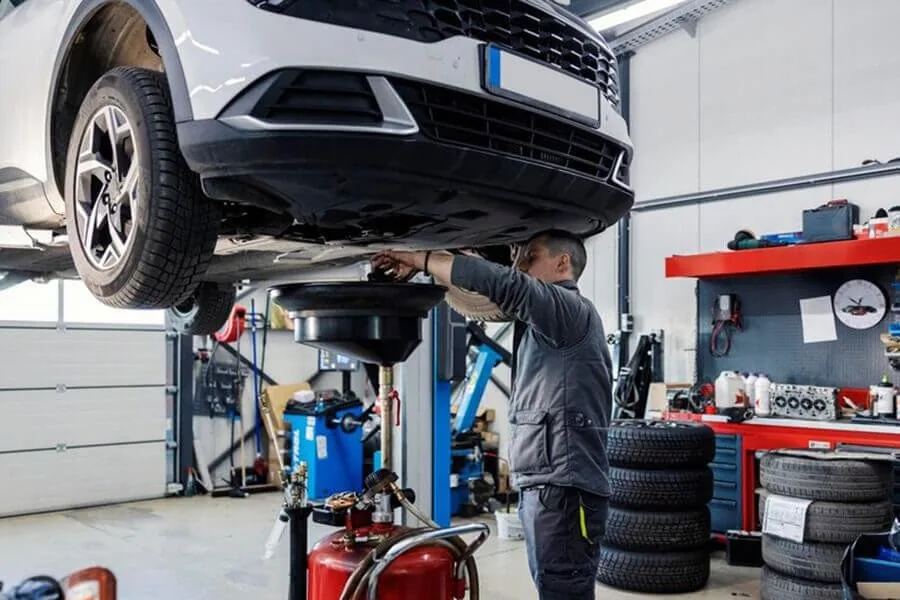
Is it safe to drive with a worn tie rod?
It depends on how much play there is. A tie rod is part of the steering, so any wear deserves a prompt check.
Slight vagueness
A small change in steering feel or early tyre edge wear. Book a check soon and avoid hard kerb strikes.
Knocks and wandering
A regular knock or noticeable wander. Drive gently and book the repair within days.
Sudden looseness
The wheel feels disconnected or the car pulls sharply. Stop safely and arrange recovery.
A badly worn or damaged steering joint can separate, leaving a wheel without steering control. If the steering suddenly becomes very loose after a pothole or kerb strike, stop where it is safe and arrange recovery rather than driving to the workshop.
Steering feels loose or knocks over bumps? Send us your model and what you feel, and we will tell you how urgent it is.
What wears tie rods faster in Dubai?
Tie rod life depends on use. These local conditions are the ones we see most often behind early wear.
Impacts and dirt cause most wear
Repeated impacts and grit inside a torn boot shorten joint life more than mileage alone.
Repeated shocks
Taking speed bumps and kerbs quickly loads the joints every time.
Rubber boots age
High temperatures harden and crack boots, letting sand and water in.
Full lock under load
Turning the wheel hard against a kerb while parking strains the linkage.
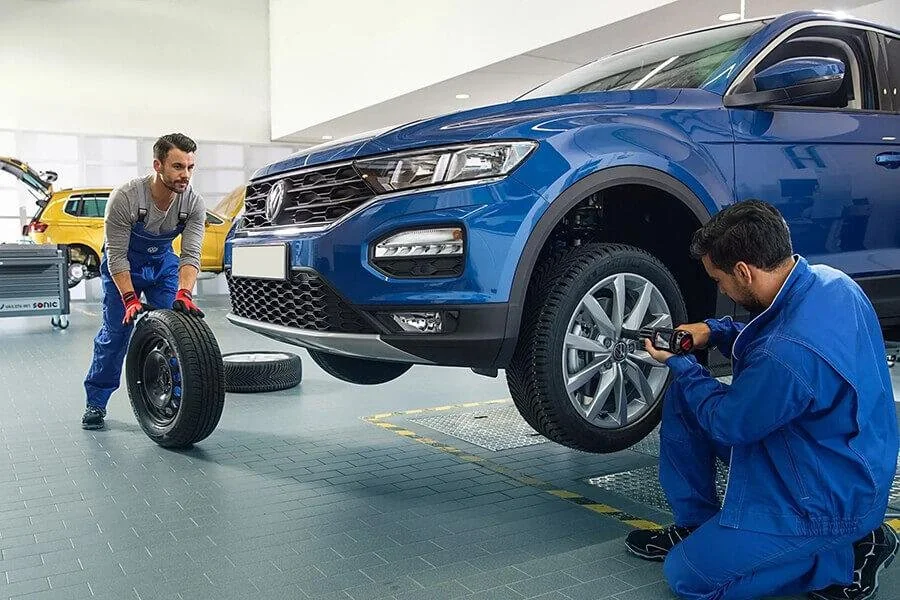
Why is alignment needed after a tie rod repair?
The tie rod length sets the toe, which is whether the front wheels point slightly in or out. Changing a joint changes that setting.
- Toe setting
- Counting turns during removal only gives a rough start. The toe is measured and set after the repair.
- Steering centre
- The steering wheel is set straight, so it is centred when the car drives straight.
- Tyre protection
- Wrong toe wears the tyre edges quickly, which costs more than the alignment.
- Electronic checks
- Some VWs need the steering angle sensor checked or set after the work.
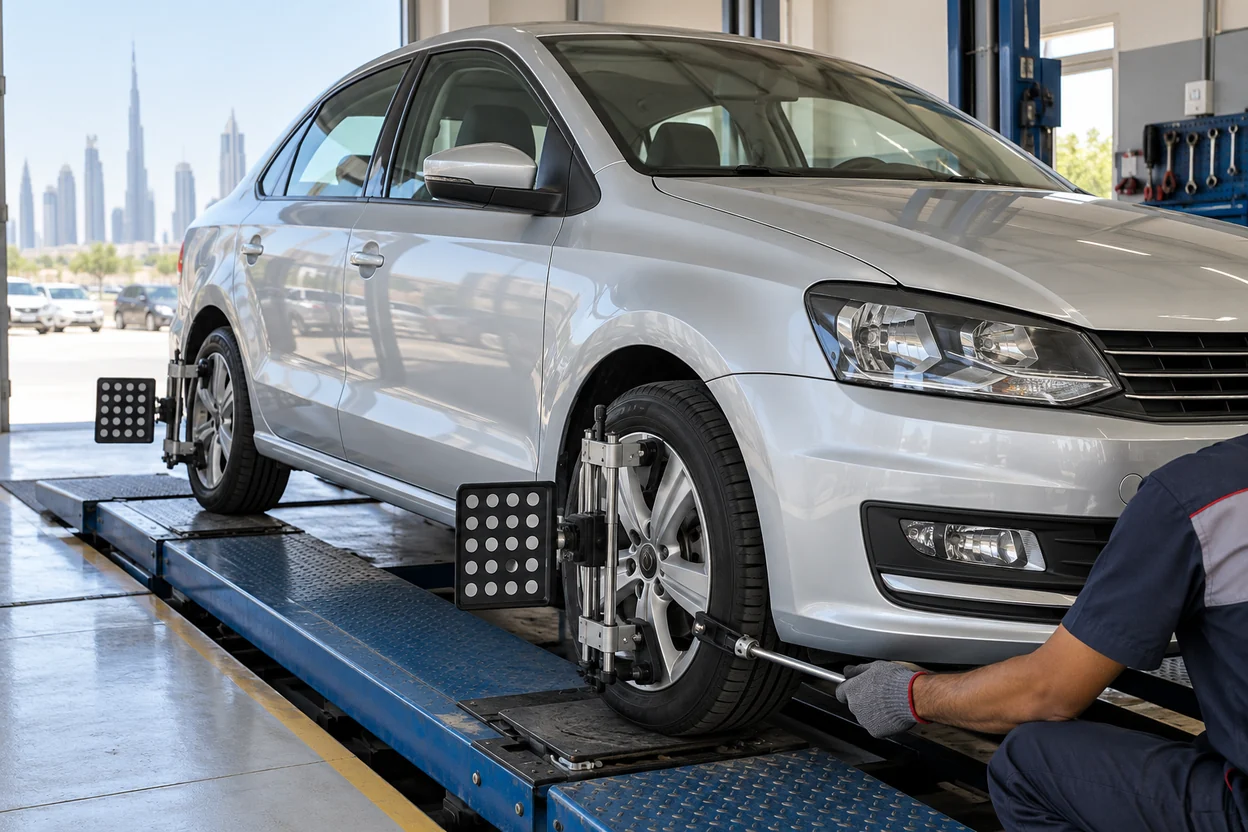
Our wheel alignment service covers the measurement and the adjustments that are possible on each model.
How much does VW tie rod repair cost in Dubai?
The cost depends on which joint has worn, how many sides need work and the alignment needed afterwards. These guides come from our own service pages and are alternatives, not one bill.
| Work | Guide range | What it covers |
|---|---|---|
| Outer track rod end | AED 200 to 500 | One end on one side, part and fitting |
| Inner tie rod | Quote by VIN | One inner joint or a complete assembly |
| Front wheel alignment | AED 150 to 280 | Front axle measurement and adjustment |
| Four wheel alignment | AED 250 to 450 | Both axles where adjustment is possible |
Indicative guides, not fixed tariffs. The written quote names the parts, fitting and alignment before you approve the work.
Fix the joint that is worn
Our Al Quoz 4 workshop checks each steering and suspension joint on the lift, explains which part has play and quotes the repair and alignment in writing before work.
How urgent is each steering symptom?
Read the scale from left to right, from signs you can book in for to signs that mean stop now.
Book an alignment and joint check at your next visit.
Book a check within days and look at the tyres.
Drive gently and book the inspection soon.
Limit driving and avoid motorway speeds until checked.
Stop safely and arrange recovery.
What can you check yourself?
These simple checks help you describe the problem. They do not replace a lift inspection.
-
Check tyre pressures
Set all four to the door label pressures before judging the steering.
-
Look at the front tyres
Run a hand across the tread and note wear on the inner or outer edge.
-
Listen at low speed
In a car park, turn lock to lock slowly and listen for knocks.
-
Watch the steering centre
On a straight road, note whether the wheel sits off centre.
-
Note recent impacts
Remember any pothole or kerb strike before the symptom started.
Tie rod mistakes we see
A knock can come from several joints, so each one is checked.
A new tie rod without alignment can ruin new tyres.
Sand gets in and the joint wears quickly.
Uneven wear can return if worn joints are left.
A failing steering joint is a safety risk.
Many cases need only an inner or outer joint.
Quick answers about VW tie rods
What are the signs of a bad tie rod? Loose steering, knocks, wandering and tyre edge wear.
Can I drive with a worn tie rod? Gently to a workshop, but not with sudden severe looseness.
Inner or outer, which fails more? Either can wear. The lift check shows which one.
Do I need alignment after replacement? Yes. The toe must be set again.
Should both sides be replaced? Only if both show wear or the procedure calls for it.
Key steering terms explained
These terms come up in inspection reports and steering quotes.
- Tie rod
- The rod linking the steering rack to the wheel, also called a track rod.
- Track rod end
- The outer ball joint at the wheel end of the tie rod.
- Inner tie rod
- The joint connecting the tie rod to the steering rack.
- Toe
- Whether the front wheels point slightly inwards or outwards when viewed from above.
- Steering rack
- The unit that turns steering wheel movement into side to side movement.
- Play
- Unwanted movement in a joint that should be firm.
What we check first on a steering complaint
Every steering complaint in our Al Quoz 4 workshop starts with the same checks, so the worn part is found before anything is ordered.
Road test, lift, then quote
The knock you hear is not always the part that failed.
-
We road test the car with you, so we feel the same knock, wander or vagueness you describe.
-
We set the tyre pressures and look at the tyre wear pattern on both front wheels.
-
We check each outer end, inner joint, ball joint, drop link and top mount on the lift.
-
We inspect the rack bellows and boots for splits that let sand in.
-
We quote the worn parts and the alignment, then measure and set the toe after the repair.
What to send before your visit
A few details help us plan the right checks.
- Model, year and mileage
- What the steering feels like
- When the knock happens
- Any recent kerb or pothole strike
- A photo of the front tyres
- Recent alignment or tyre work
- Any steering warning light
- Whether it pulls to one side
Send them on WhatsApp to 056 464 6081 and a technician will reply.
Questions about VW tie rod problems
What are the symptoms of a bad tie rod on a VW?
Common signs are loose or vague steering, a knock when turning or going over bumps, the car wandering at speed, the steering wheel sitting off centre and uneven wear on the inner or outer edge of the front tyres. Ball joints, drop links and tyres can cause similar signs, so a lift check confirms the cause.
How do I know if it is the inner or outer tie rod?
It takes a check with the wheels off the ground. The outer track rod end is checked at the wheel, and the inner joint is felt through the rack bellow while the wheel is moved side to side. Either can wear, and sometimes both do. The inspection shows which joint has play before parts are ordered.
Is it safe to drive with a worn tie rod?
With mild play you can usually drive gently to a workshop, avoiding motorway speeds and hard impacts. A worn tie rod is part of the steering, so it should be checked promptly. If the steering suddenly becomes very loose or the car pulls sharply, stop where it is safe and arrange recovery rather than driving on.
Do I need an alignment after replacing a tie rod?
Yes. The tie rod length sets the toe of the front wheels, and replacing a joint changes it. Counting turns during removal only gives an approximate start. The toe is measured and set on the alignment equipment, and the steering wheel is centred, so the tyres wear evenly and the car drives straight.
Should both tie rods be replaced at the same time?
Not automatically. If only one joint shows play, replacing that joint can be the right choice. When both sides show wear, the rod is bent or the vehicle procedure calls for it, replacing both can make sense. The inspection decides, and the quote explains why each part is being replaced.
Can a worn tie rod cause tyre wear?
Yes. Play in a tie rod lets the toe change while driving, which scrubs the tyre edges. A worn tie rod also makes it hard to hold the correct alignment. If you replace tyres without fixing the worn joint, the new tyres can wear unevenly too, so the joints are checked before new tyres are fitted.
What causes tie rods to wear out early?
Repeated impacts from speed bumps and kerbs, split boots that let sand and water in, and turning the wheel hard against a kerb while parking all shorten tie rod life. High temperatures also age the rubber boots. Checking the boots at each service helps catch damage before the joint wears.
Can a tie rod knock be confused with other noises?
Yes. Drop links, control arm bushes, top mounts and drive shaft joints can all knock in a similar way. A tie rod knock usually changes with steering input, while other noises may follow bumps or acceleration. A road test with you and a lift check separate the sounds before any part is replaced.
How much does VW tie rod replacement cost in Dubai?
Our guide for one outer track rod end is AED 200 to 500 per side, including the part and fitting. Inner tie rods are quoted by VIN. Alignment is separate, with guides of AED 150 to 280 for the front axle and AED 250 to 450 for four wheels. The written quote lists everything before work.
Get your steering checked in Al Quoz 4
Volkswagen Repair Dubai is an independent VW workshop in Al Quoz 4, open Monday to Saturday, 9am to 7pm. Tell us your model and what the steering feels like, and we will advise the next step.
See repair options on our tie rod replacement page and wider steering faults on our steering repair page.
How this guide was written
Written by the Volkswagen Repair Dubai workshop team in Al Quoz 4 and reviewed by our technical team in October 2026. It is based on the steering and suspension checks we carry out on Volkswagens in Dubai and the reference listed below.
Steering layouts and parts differ between models and generations, so the inspection and VIN decide the repair. Prices are the indicative guide ranges published on our own service pages, not fixed quotes. Control arm faults are covered on our control arm replacement page.
Technical references
- Tie rod, Wikipedia, explaining that automotive tie rods form part of the steering, work by both pushing and pulling and are also called track rods.